

★★★★★
The clinic was very professional from start to finish. Doctor Jung was excellent and gentle with the treatment. I felt well looked after and everyone was outstanding. Happy with my service!
Lines at the outer eye corner come from three tissues, and each answers to a different instrument. The examination decides which line you have before anything is bought. Toxin areas begin at ₩30,000; the eye radiofrequency protocol and the eye polynucleotide row are listed on their own.
Sorting them takes one test and about a minute. You smile hard while the fan of lines is photographed at full contraction, then let the face go completely slack while the same corner is photographed again. Whatever vanishes between the two captures is muscular. Whatever survives the relaxed frame belongs to the skin, and how it survives matters: fine parallel wrinkling that lifts when the cheek is supported points at laxity, while a dull, tissue-paper texture that stays put under support points at dermal thinning.
Most faces past their mid-thirties carry a blend, and the proportions often differ between the left and the right side of the same face. An eye plan written here therefore names a proportion before it names an instrument. Which zones of the face count as separate treated areas for injection work belongs on the wrinkle botox page, and the full set of applications this molecule has at the clinic is laid out under botox in Cheongdam.
The orbicularis oculi is a flat ring of muscle wrapped around the eye socket, sitting directly beneath very thin skin.
Squeezing that segment gathers the skin outward into a fan. Botulinum toxin type A reduces the signal arriving at those fibres, the fan gathers less tightly, and the folding that draws the line stops repeating.
Points are kept lateral to the bony rim and away from the muscles that raise the upper lip and open the eye. Those neighbours are why an eye map is drawn on a smiling face and never copied from a previous visit.
Where the crease is visible while the face is entirely still, the molecule has nothing to switch off. It slows further printing of that groove; it does not iron out what years of folding have set.
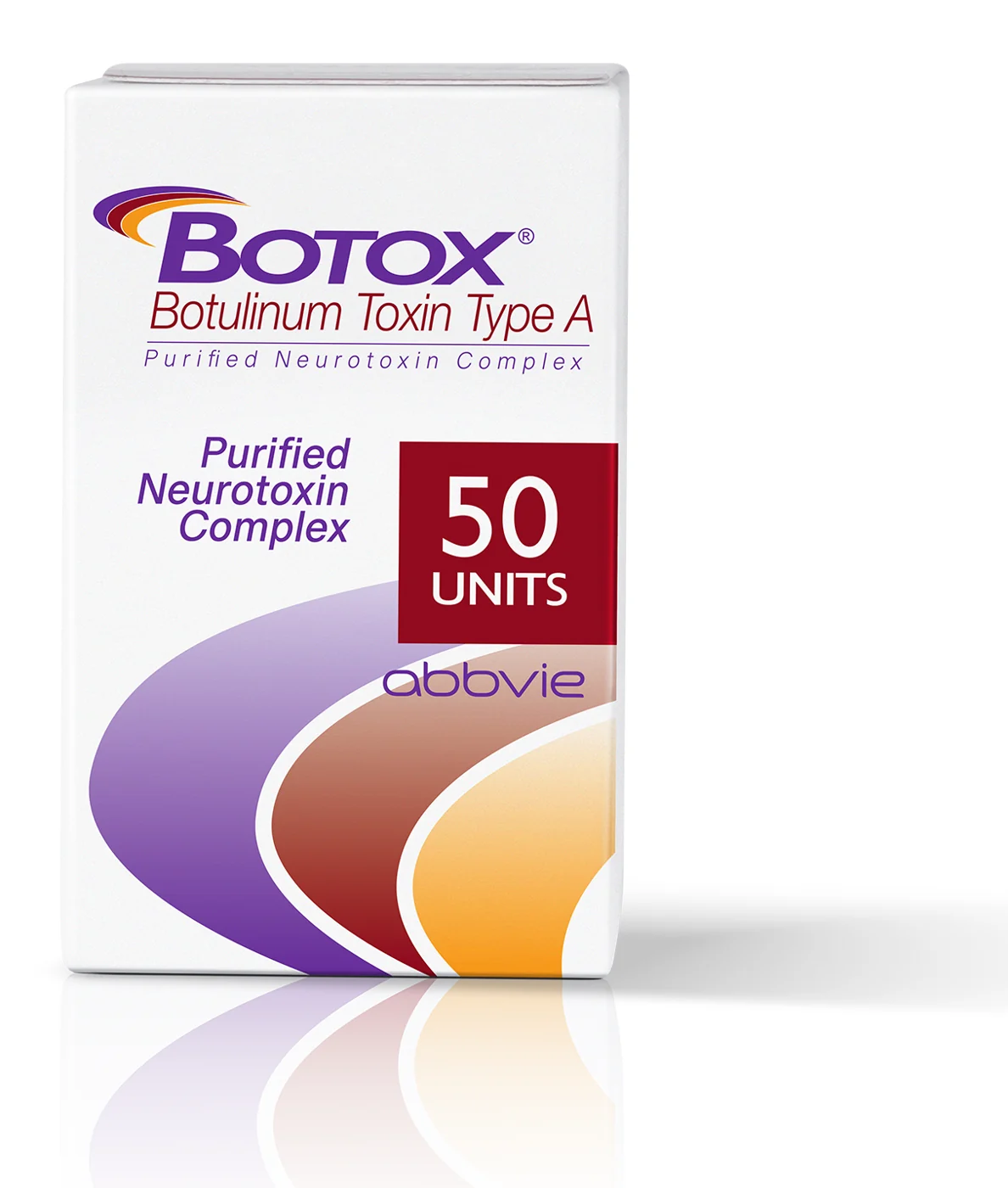
Both outer corners together are counted as one treated area on the published wrinkle line, so a plan aimed only at the smile fan is a single row on your quote. Two tiers are printed for that row, one made in Korea and one imported, and the tier is your choice at the consultation. Korean pharmaceutical advertising rules keep prescription toxin product names off public pages, so tiers appear here in place of manufacturers; your director names the product and shows you the vial in the room.
The references at the foot of this page include a multicentre account of noninvasive radiofrequency applied to exactly this tissue. What that literature establishes is mechanism and tissue response. It sets no schedule for your face and promises no measurement, so your director works from the reading taken on your own capture.
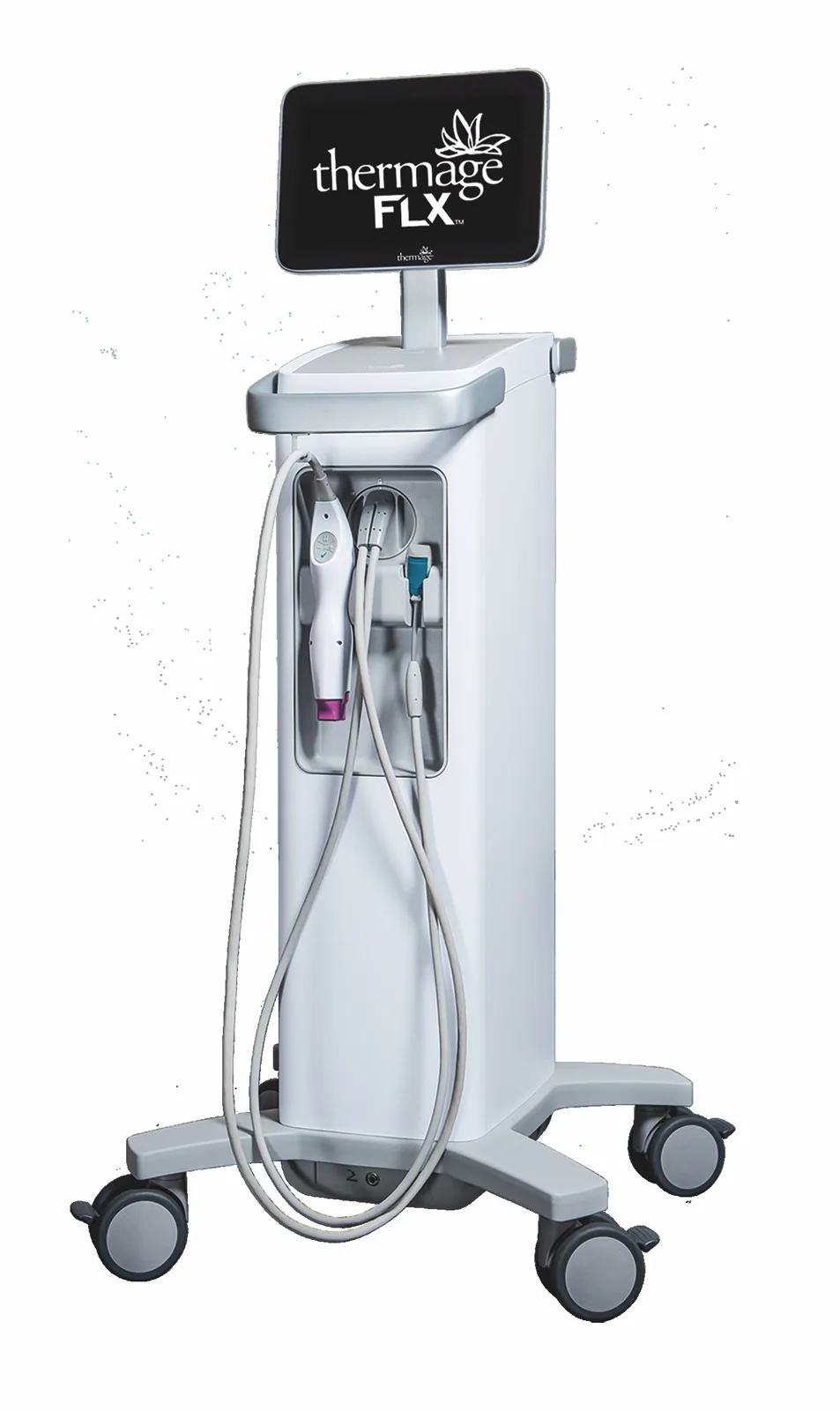
The eye protocol is listed and charged apart from the face protocol, because it uses its own tip and its own shot count and is frequently bought on its own. Where a face session is already planned, the two can sit in the same visit and are still approved as two lines. Everything the same platform does across the rest of the face and body is set out on the Thermage FLX page, with the full rate ladder on the Thermage price page.
Eyelid skin is the thinnest on the body, and some faces arrive with a dermis there that has simply run down. The giveaway is texture: the corner looks dull under angled light, makeup gathers in it by midday, and a gentle pinch produces fine wrinkling that takes a moment to settle. Neither softening a muscle nor heating a scaffold puts substance back into a layer that has thinned.
The row written for that finding is Rejuran HB, a polynucleotide preparation — PDRN, derived from salmon DNA — placed in small deposits through the thin skin around the eye and listed in 2 cc units. It is a quality treatment: what it is asked to change is how the skin behaves. The wider polynucleotide family, including the standard Healer line, is described on the Rejuran Healer page, and the published figure for this specific row sits on the Rejuran HB price page.
Two neighbouring complaints get confused with this one. A hollow throwing a shadow under the lower lid is a volume finding, read on the under-eye filler page. Colour sitting in the same hollow is a pigment and vascular question, taken up on the dark circle page. Treating either as a wrinkle wastes a session.
Where the capture shows a blend, the order matters more than the total. Stopping the folding first gives the skin time without being creased, and the corner after that is a truer picture of the skin finding underneath.

An eye consultation ends without a plan more often than any other zone on this floor. A corner whose lines are identical whether you smile or go slack, in skin that is also loose, is a surgical conversation and is named as one. An upper lid carrying a heavy fold of skin gives the whole region no margin and is left alone. Treatment is declined in pregnancy and while breastfeeding, over active infection or inflamed skin, and where a neuromuscular disorder is reported. Blood-thinning medication and supplements are asked about specifically, because this area bruises most readily.
The risks deserve naming one by one. Toxin placed too low or too medially can weaken part of the muscle that raises the cheek and leave a smile visibly flatter on one side. Product reaching the muscle that opens the eye can leave an upper lid heavy or a lid crease sitting lower than its twin. An uneven map softens one corner ahead of the other, which a review corrects. Bruising, small swellings at the entry points and brief redness are ordinary after any injection here. Radiofrequency around the orbit carries a burn risk if the handpiece is poorly coupled or cooling fails, and transient lid swelling is common. A polynucleotide row can leave small visible bumps while the deposits settle. Each of these is temporary and each still costs you the waiting. Results vary between individuals and are assessed on your own examination.
If an eye of yours has been treated before and the result upset you, bring the detail: roughly when, which route was used, and what bothered you. That history is worth more to your director than a phone photograph.
| Route | The finding it answers | How it is counted | Listed rate |
|---|---|---|---|
| Toxin — Korean tier | Fan lines drawn by the ring muscle when you smile or squint | Both outer corners together count as one treated area | ₩30,000 (≈ $20) |
| Toxin — imported tier | The same finding, on an imported premium-tier type A product | Same area count, same sitting | ₩150,000 (≈ $105) |
| Eye radiofrequency | Crepe and lost tension in the skin around the orbit | One periorbital protocol, 450 shots on the eye tip | ₩2,200,000 (≈ $1,570) |
| Eye polynucleotide row | A dermis around the eye that has thinned and lost quality | Listed per 2 cc unit | ₩400,000 (≈ $285) |
Every figure above is quoted identically to Seoul residents and to visiting patients, is confirmed with you before anything is drawn, and covers the session in front of you and never a course. Aftercare for your plan is explained at the appointment. Each row also appears on the price list, with the injection ladder broken down on the botox price page.
Injection, radiofrequency and polynucleotide rows share one price list here, so naming the finding costs the clinic nothing either way.
Three-dimensional imaging under five light sources records the outer corner at full smile and at complete rest, and the AI analysis compares the two frames. The difference between them is the muscular share of your eye line; what remains in the relaxed frame is the skin share. That split is written into your chart before a single row is quoted.
Injection points around the eye are marked on your own contracting face and kept lateral to the orbital rim, and treatment is director-performed. The same director opens the baseline capture at the review, evens the two sides and decides whether anything more is needed.
Director-performed treatment is a Dear promise — your procedure is planned and performed by the doctors below.





Real verified reviews from our Google Business Profile.
4.9★★★★★ 310 Google ReviewsThe clinic was very professional from start to finish. Doctor Jung was excellent and gentle with the treatment. I felt well looked after and everyone was outstanding. Happy with my service!
I've visited clinic for LDM procedure. I don't speak Korean, so there was an interpreter who assisted me while consulting. The staff was very attentive, they asked me every time before applying products/covering my face during the procedure and it went smoothly. Planning to visit the clini…
All the staff are kind, the doctor is professional. They recommended us the treatment that fit us best and last the longest. A very nice experience overall.
I did a hydrofacial, white/black head removal, and 1 day lasers. Really kind staff and reasonable prices. The only thing I would advise is that your first consultation is with a salesperson and you don’t see the doctor until after you decide what you want and after you pay.
Had a great experience here as a foreigner! The doctors and staff were knowledgeable, friendly, and not pushy. They made recommendations in my consultation and were happy to work within my budget.
Send one photograph smiling hard and one with your face completely relaxed — answered in English as soon as possible.
Six references cover the two instruments named above. Three concern botulinum toxin type A on expression lines: the first published report of its use on frown lines, a consensus education initiative on aesthetic application, and a laboratory account of how the licensed type A products differ. Three concern radiofrequency: a multicentre report on the tissue around the eye, a review of radiofrequency for skin laxity, and a randomised split-face trial against microfocused ultrasound.
None of them describes your eye corner, sets a dose or a shot map for it, or attaches a timeline to it. That comes from the capture taken at your own examination.
References are provided for information — outcomes vary by individual and are assessed at your diagnosis.