★★★★★
The clinic was very professional from start to finish. Doctor Jung was excellent and gentle with the treatment. I felt well looked after and everyone was outstanding. Happy with my service!
Dear's signature acne and acne-scar programme. Scars differ in depth, shape and fibrosis, so one device rarely settles them all — D-ARC works the deep layer, then the mid layer, then the surface, inside a single protocol built around your scar map.
Post-acne skin is rarely one problem. A single face can carry red marks left by inflammation, shallow dips where tissue has thinned, and narrow pits anchored by fibrous tethering — each of which answers to a different kind of energy at a different depth. Treating all of them with the same setting flattens the good areas and under-treats the stubborn ones.
So D-ARC is written as a sequence. Your director reads the depth, the shape and the degree of fibrosis of each scar group, decides which layer has to move first, and orders the components from that. A step that would not earn its place on your face is left out, and the ones left out are named at the consultation.
Depth, shape and the state of the tissue around each scar decide the order of treatment. These are the four patterns the EVE Muse scan sorts a post-acne face into.
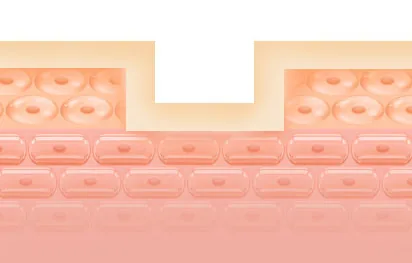
Box-shaped depressions with defined edges. Because the walls are steep, the base and the rim need different handling — the floor is lifted before the edge is softened.
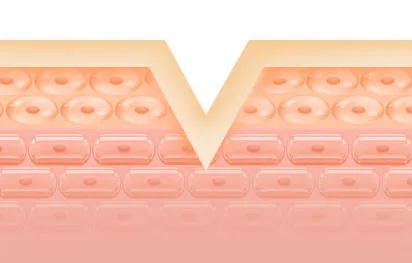
Narrow, deep pits shaped like a pick mark. Their depth sits far below the reach of surface work, so they are approached from underneath and around, then refined on top.
Flat red traces left where inflammation has settled. There is no dip to fill here — the aim is to even the colour without over-stimulating skin that is still calming down.
Deep, pressurised lesions whose contents are hard to clear. These are addressed before scar work begins, because treating a moving target only postpones the result.
Boxcar and ice-pick scars on the same cheek can differ by several millimetres of depth and by how fibrotic the base has become, so one setting either overtreats the shallow ones or leaves the deep ones untouched. The programme groups them first and gives each group its own depth and energy.
Each stage prepares the tissue for the one that follows, and the interval between them is set at diagnosis.
Depressed scars are often tethered from below, so the first stage works underneath them — loosening the tissue that pins the floor of the scar and supporting regeneration in the space that opens up.
Once the base can move, the middle layer is stimulated to reorganise texture and support the thinned tissue around the scar, so the dip fills from within instead of being covered over.
The final stage evens the marks and refines the surface, spaced to your skin's regeneration cycle. Pushing this stage too early is the most common way a scar programme stalls.
Dear's own combination protocol. Not every component appears in every plan — the scar map decides.
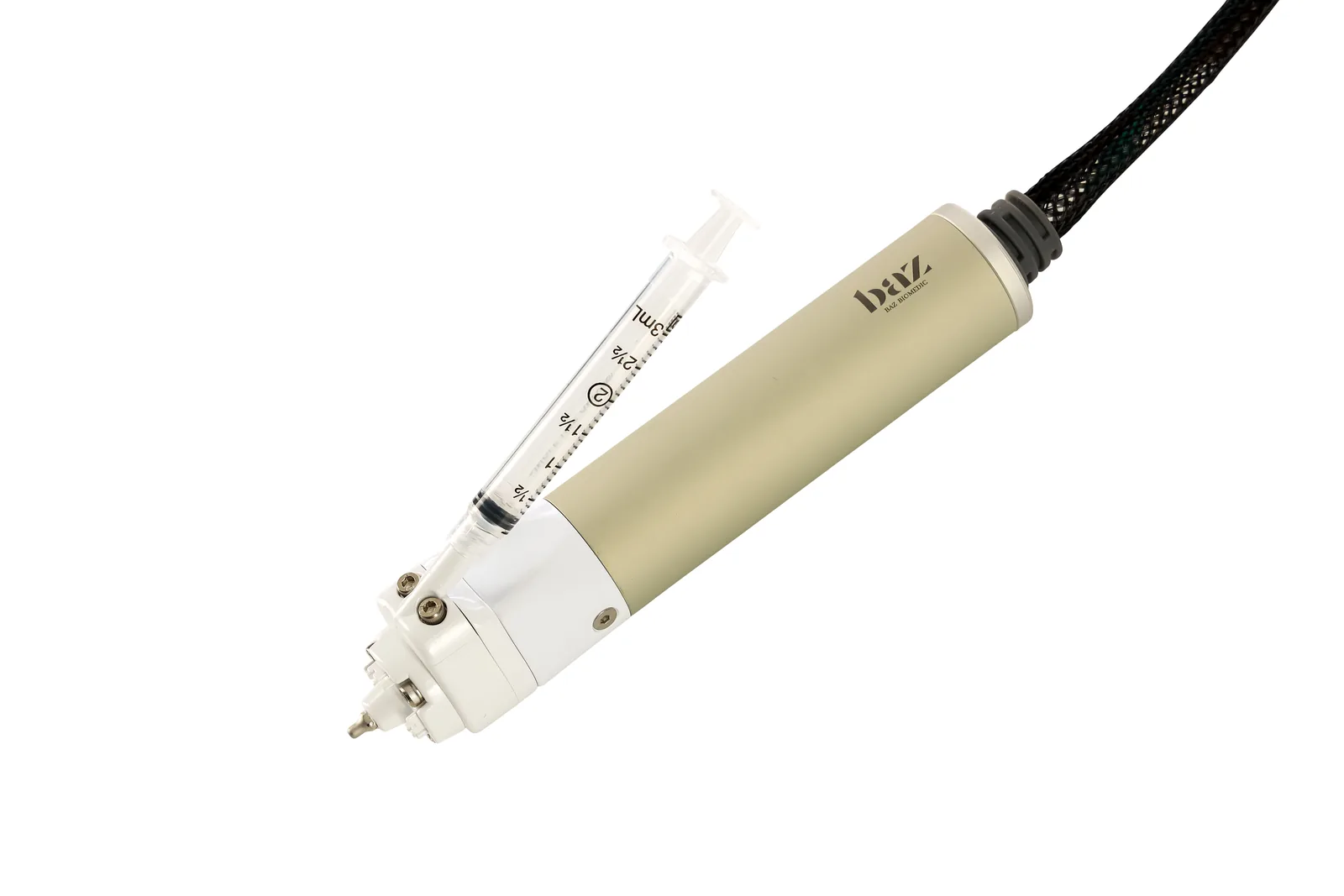
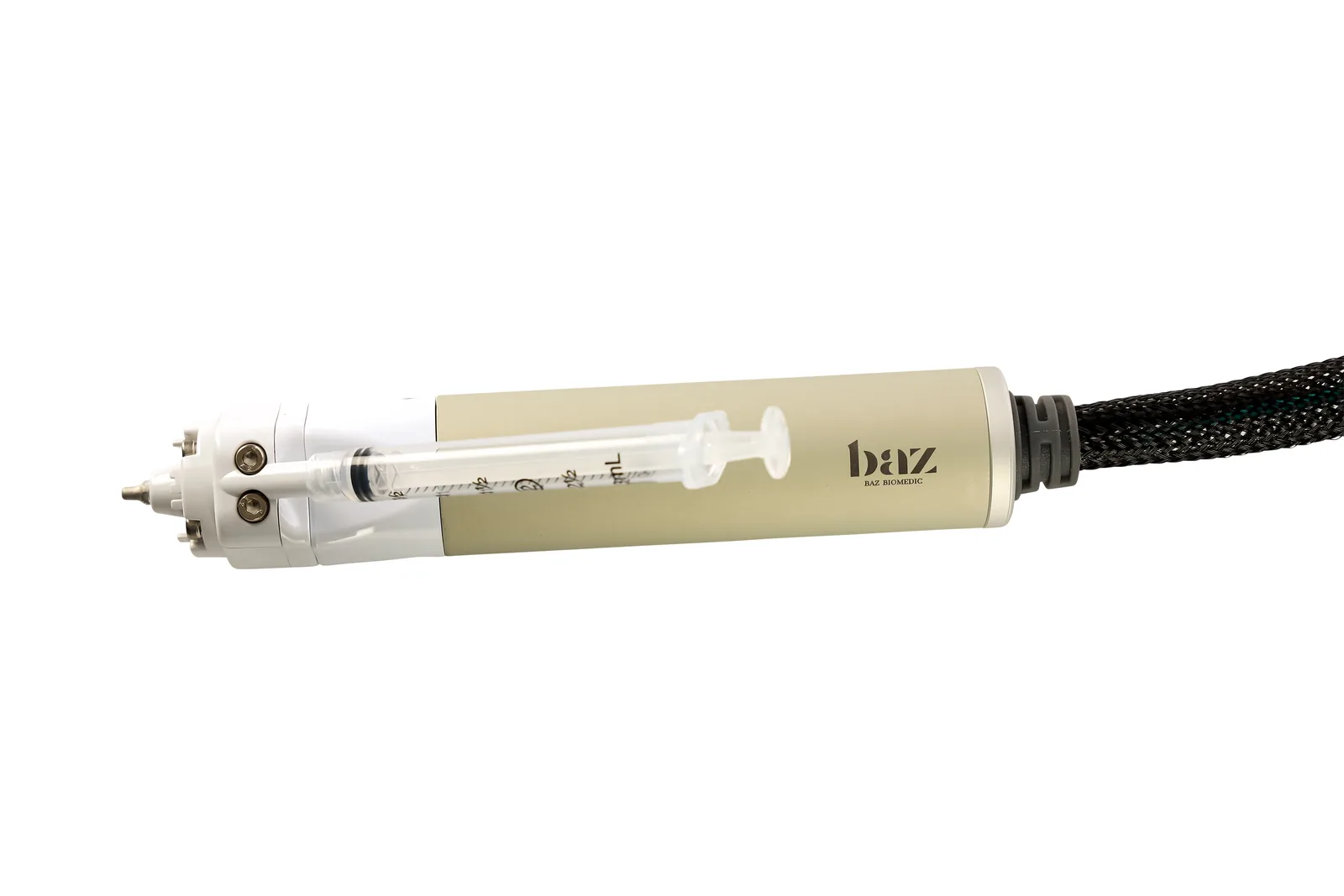
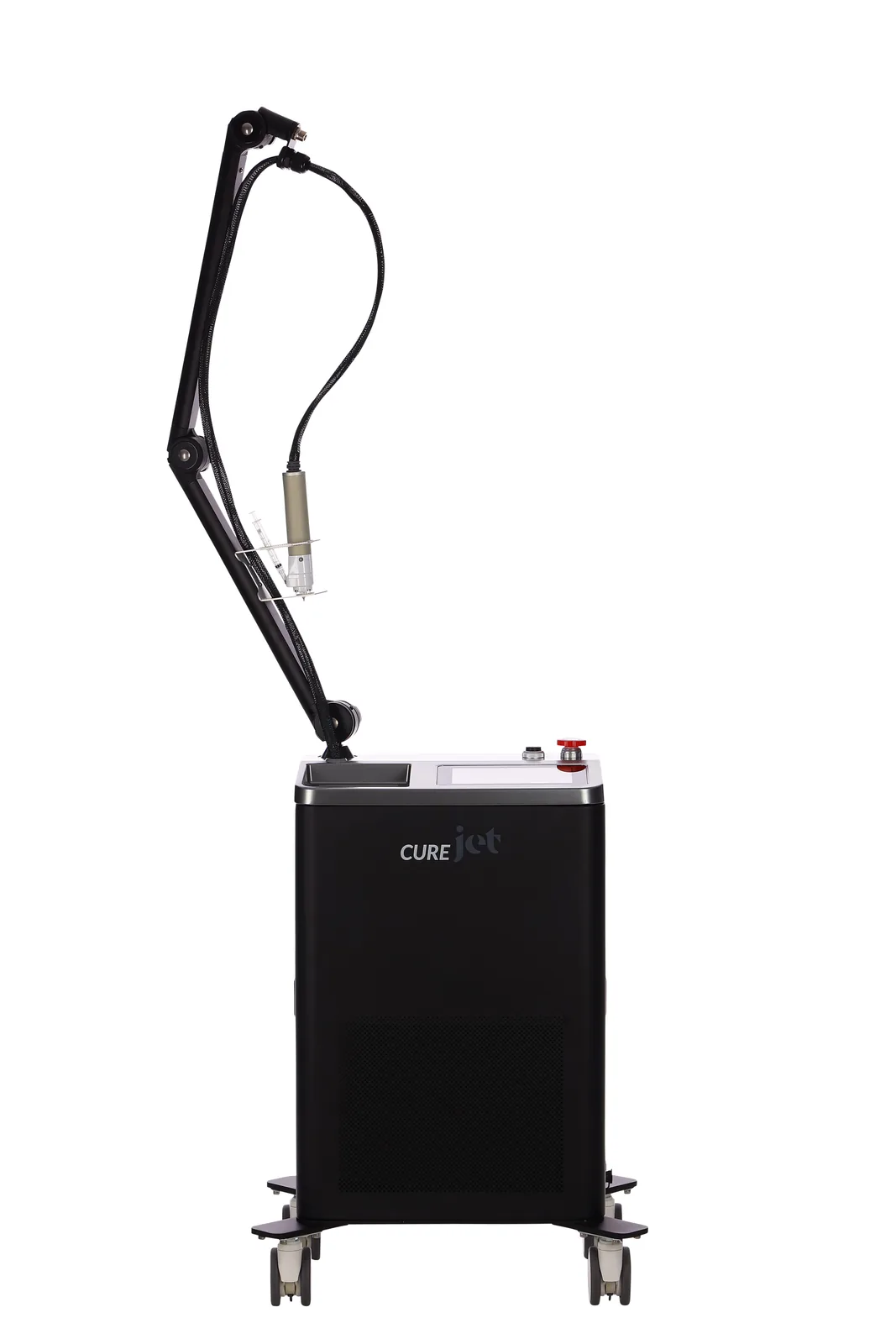
A jet injector that works without a needle. It assists clearance in deep pustular and cystic lesions whose contents are difficult to express, and its micro-subcision effect helps release scar tissue while supporting collagen formation.
Settles pigment and the traces left by inflammation. Repeated at sensible intervals, without excessive stimulation, it helps stabilise overall tone.
Micro thermal columns approach skin texture and the entry of the scar. Sessions are deliberately spaced to the regeneration cycle, because the rebuilding happens between appointments, not during them.
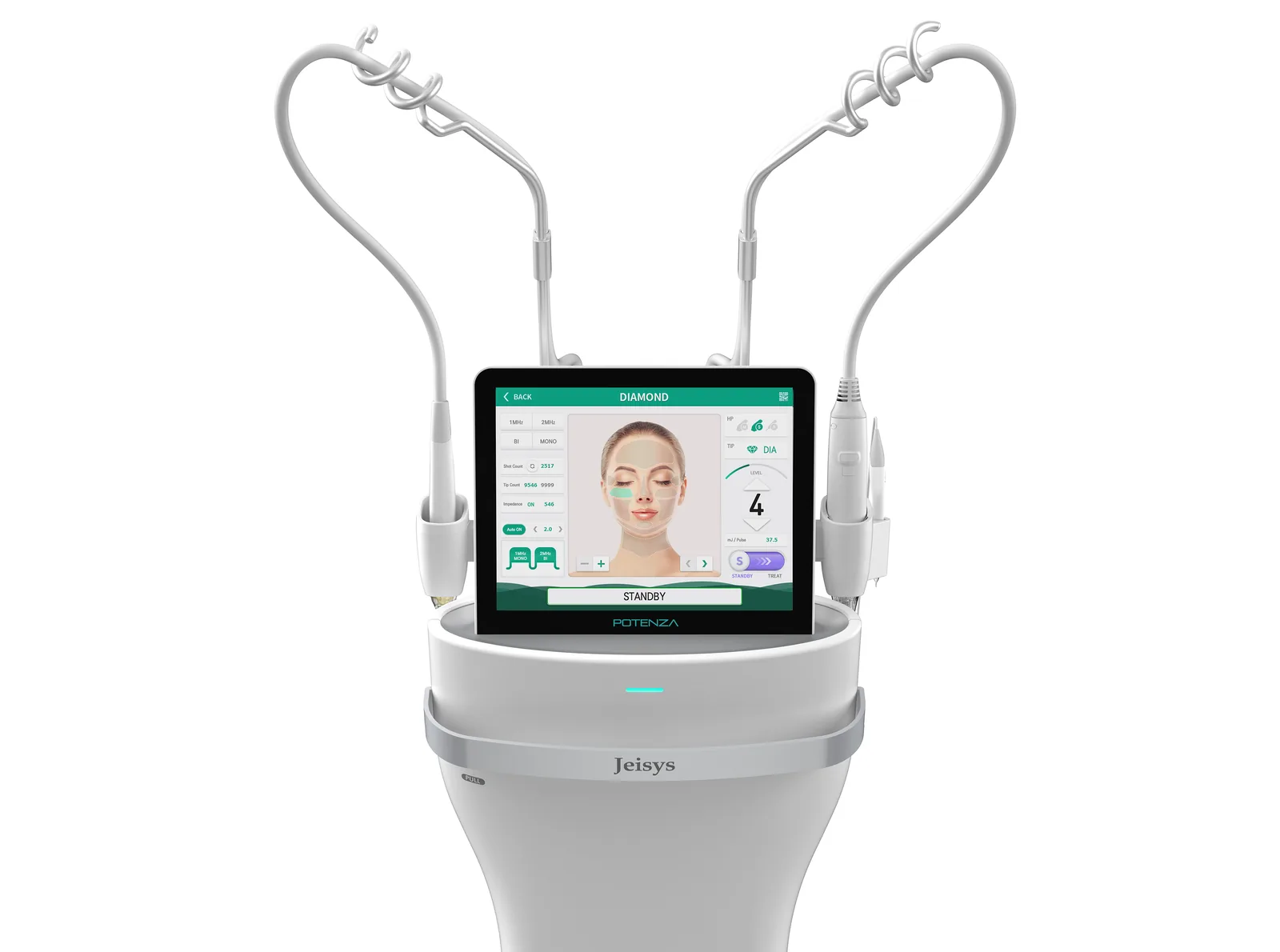
Radiofrequency is delivered through microneedles into inflamed skin, which helps it recover and reorganises the texture around a scar. Intensity is set area by area: a thin temple takes less than a thick cheek, and a jaw carrying active lesions takes less again. Potenza is the component that appears in almost every D-ARC plan, and it is one of the three inside the published core price.
A PDLLA and HA collagen booster used to support thinned tissue around a scar, considering volume, elasticity and regeneration together. In D-ARC it plays a supporting role, adjusted by layer across scars of different depth.
A vascular and pigment laser for lingering red marks. Exosome or peeling-type care for barrier and oil-water balance. Insulated microneedle RF where over-active sebaceous glands drive the cycle.
Two people with boxcar scars can leave with two different D-ARC plans, because the scan reads depth and fibrosis separately for every scar group on the face.

Scar treatment is measured in months. Knowing the shape of the programme in advance is part of consenting to it.
The EVE Muse scan, a director consultation and a written stage order with intervals. You leave knowing which components are in your plan, which were left out, and why.
Work on the deep and mid layers — releasing tethered scar floors, calming what is still inflamed and supporting the tissue that has thinned. This is where the shape of a depressed scar begins to change.
Texture and tone are addressed once the base has responded, spaced to your regeneration cycle. Photographs and a repeat scan are compared against the first ones rather than against memory.
At review the remaining plan is revised: stages that have done their work are dropped, a zone that lagged gets one more pass, and a maintenance rhythm is agreed if you want to hold the result.
Visiting Seoul on a fixed schedule changes the sequence without lowering the standard. Tell us your dates at enquiry and the stage order is arranged so the work that needs recovery time lands where you can afford it — with the remainder planned for a later trip or, where suitable, carried out in a tighter block under closer review. What we will not do is compress a programme past the point where your skin can keep up, because compressed stages usually have to be repeated.
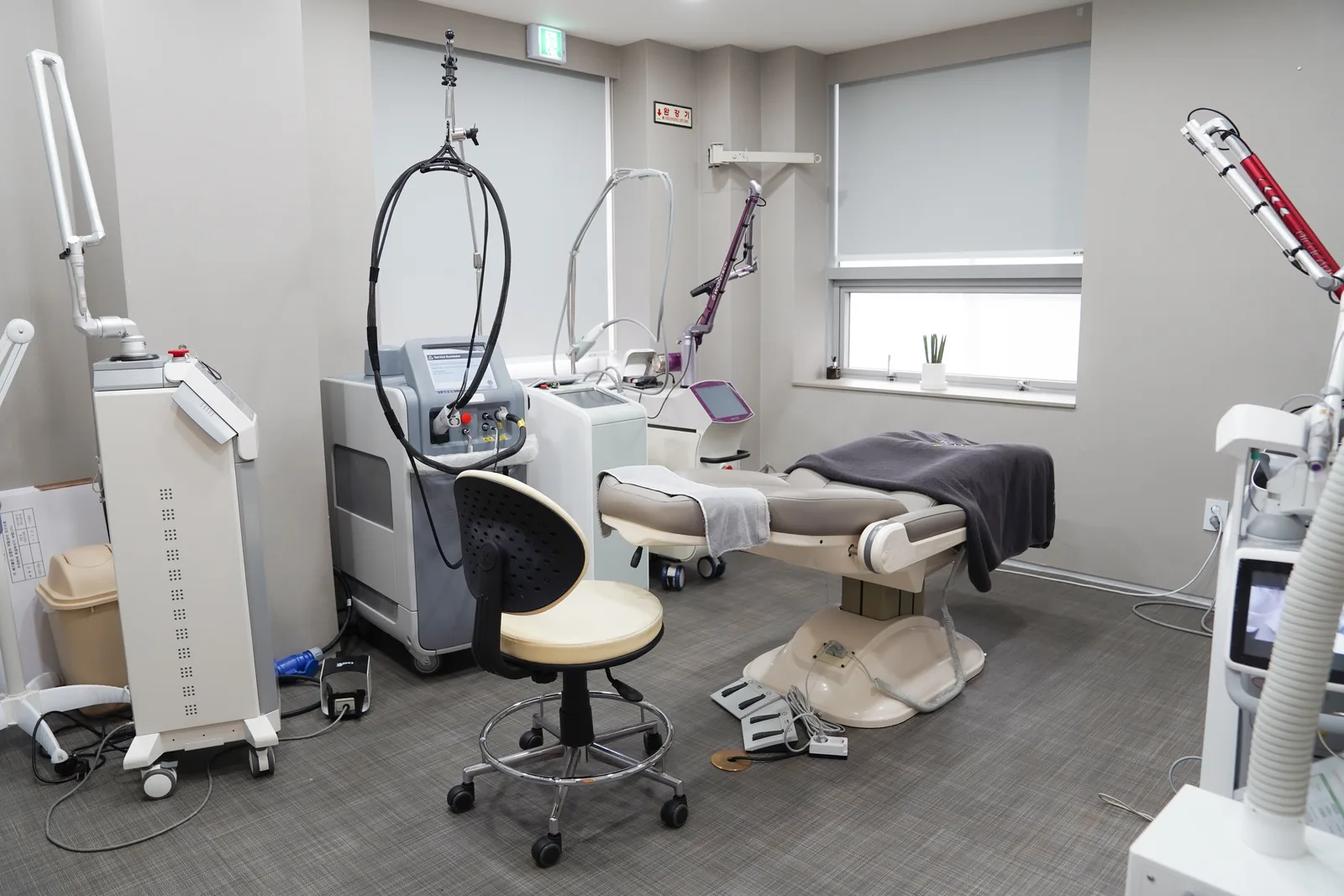
All five sit in the same building. A scar map that calls for three of them is booked as three, and the two left out are named at diagnosis.
Scar depth, distribution, tone and texture are read on the EVE Muse 3D scan with five-light-source AI analysis before anything is scheduled. That reading sets the order of the stages. It is repeated at review, so the comparison at the end of a programme is made against the first images and the first measurements, in the same light, at the same angles.
How much resistance the needle meets, how the tissue releases, when to stop — on a narrow fibrotic scar these are read by hand as much as set on a screen. Your programme is director-performed from the first session, and the intensity is adjusted on the day to what the skin is doing that week.

| Component | Role in the programme | Published rate |
|---|---|---|
| D-ARC core programme | Potenza RF microneedling + Juvelook 5 cc + CureJet, as one programme | ₩800,000 (≈ $570) |
| CureJet — full face | Needle-free jet delivery, micro-subcision effect | ₩500,000 (≈ $355) |
| Potenza RF microneedling | Standard tip, intensity adjusted by area | ₩250,000 (≈ $180) |
| Subcision — acne scars | Release of tethered, depressed scars | ₩500,000 (≈ $355) |
| Juvelook — per 1 cc | Collagen booster support around thinned scars | ₩100,000 (≈ $70) |
| Laser stages | Pico and fractional sessions, spaced to your cycle | quoted separately after diagnosis |
| Every plan | EVE 3D + AI diagnosis · director consultation · aftercare guidance | included |
What the core price covers. The core figure buys three components: Potenza RF microneedling, a 5 cc Juvelook dose and CureJet delivery. Intervals between the stages are set at diagnosis and belong to the treatment, and the remaining plan is revised at review if a stage has done its work early. Published rates as of September 2026; KRW is what you pay and USD is shown for reference. You approve every component and the total before the first stage, and nothing is added on the day.
If your skin is still in an active inflammatory phase, the scar stages wait: we treat the acne first, because scar work on a face that keeps producing lesions is paid for twice. D-ARC is also not the right tool for raised keloid or hypertrophic scarring, and where the scan shows that we say so at the diagnosis visit and route you to the treatment that does suit it. Redness, warmth, fine crusting, temporary swelling and, on darker skin, a risk of post-inflammatory pigment change are all named before you agree to a plan.
Unretouched cases treated at Dear Clinic, shown with consent.
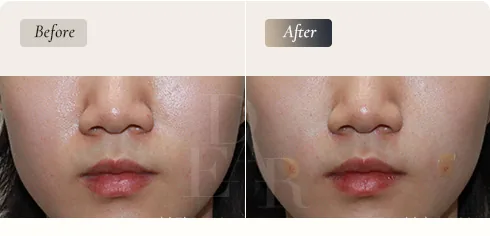
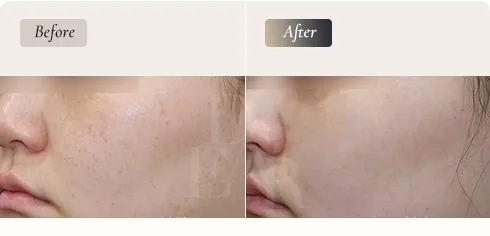
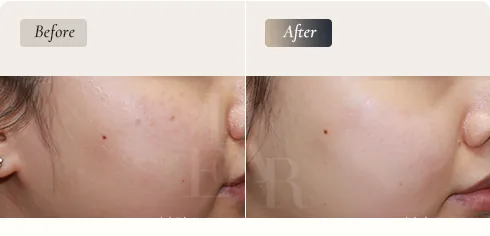
All photos are unretouched cases of the same person under the same conditions, treated at Dear Clinic. Each photo shows only the treatment it is labelled with. Individual results may vary.
Director-performed treatment is a Dear promise — your procedure is planned and performed by the doctors below.





Real verified reviews from our Google Business Profile.
4.9★★★★★ 293 Google ReviewsThe clinic was very professional from start to finish. Doctor Jung was excellent and gentle with the treatment. I felt well looked after and everyone was outstanding. Happy with my service!
I've visited clinic for LDM procedure. I don't speak Korean, so there was an interpreter who assisted me while consulting. The staff was very attentive, they asked me every time before applying products/covering my face during the procedure and it went smoothly. Planning to visit the clini…
Had a great experience here as a foreigner! The doctors and staff were knowledgeable, friendly, and not pushy. They made recommendations in my consultation and were happy to work within my budget.
I did a hydrofacial, white/black head removal, and 1 day lasers. Really kind staff and reasonable prices. The only thing I would advise is that your first consultation is with a salesperson and you don’t see the doctor until after you decide what you want and after you pay.
Wonderful experience — friendly, professional staff, clear consultation with a thorough skin analysis, and visible results after my treatment; the clinic is clean and communicates aftercare clearly, highly recommended
Your questions, answered in English within one business day.
The components inside D-ARC are individually documented in the peer-reviewed literature — in particular fractional radiofrequency microneedling for atrophic acne scars and pores, and needle-free jet delivery as an injection route. The references below inform the depth selection, intensity ranges and session intervals your director applies after the EVE 3D and AI diagnosis.
All references carry verifiable DOIs from indexed journals, including split-face comparative trials and a meta-analysis in acne scarring — directly relevant to planning a staged programme instead of a single session.
References are provided for information — outcomes vary by individual and are assessed at your diagnosis.