★★★★★
The clinic was very professional from start to finish. Doctor Jung was excellent and gentle with the treatment. I felt well looked after and everyone was outstanding. Happy with my service!
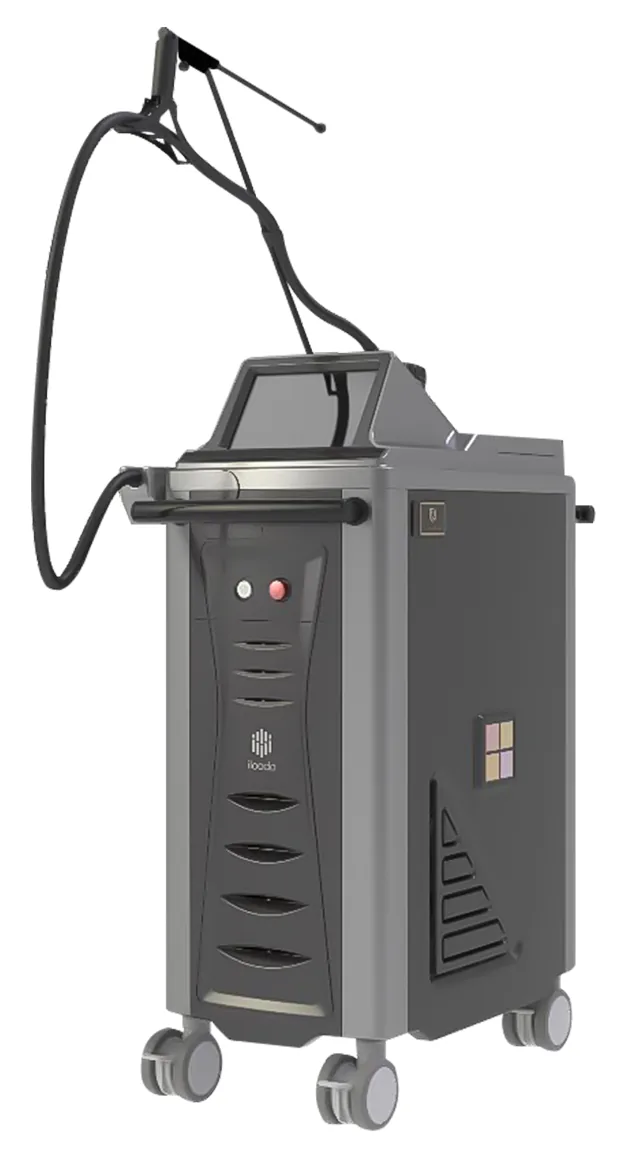
A course of gentle, low-fluence toning sessions paired with in-clinic skincare, planned against your pigment map and spaced so the skin is never pushed harder than the pigment can take.
The logic is deliberately unglamorous. High-energy pigment work can clear a discrete spot quickly, but diffuse and hormone-linked pigment often sits deeper, reacts to heat, and returns worse when it is over-treated. Low-fluence toning trades speed for restraint: small amounts of energy, spread across the treated field, repeated at intervals your director sets after reading your skin.
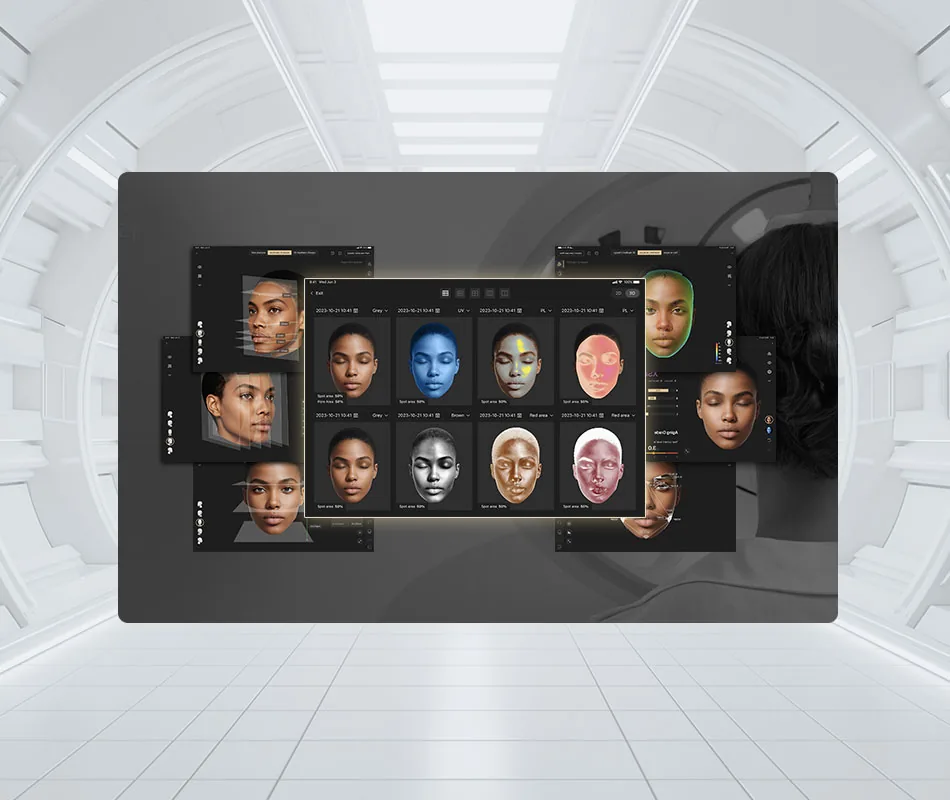
Pigment also has more than one address. Some sits shallow in the epidermis, some deeper, and some of what looks like pigment is old inflammation still fading. A good many faces carry two or three of those at once, in different zones, at different depths. A scan separates them; a glance across a consultation desk does not.
The skincare half of the session matters as much as the laser half. Every toning visit at Dear includes in-clinic skincare in the same appointment — cleansing, calming and barrier support — because a skin barrier that is dry, stripped or inflamed will hold on to pigment no matter how carefully the laser is set.
Pigment is not one problem. Your session plan is drawn zone by zone from the 3D scan, because each zone answers differently.
The classic patch zone across the cheekbones, where heat sensitivity is highest and energy is kept most conservative.
Broad, flat surfaces that tolerate an even pass — often where uneven tone reads first in photographs.
Narrow bands that need slower, smaller-field work; a spot the width of a fingertip is treated on its own terms.
Where dullness, congestion and pigment overlap, and where the skincare half of the session does much of the work.
Two tiers, both session-based, both including in-clinic skincare. Which one you are offered depends on your diagnosis — not on which is priced higher.
A dual-wavelength session: the low-fluence 1064 nm toning pass together with a second laser step matched to your pigment pattern. Available as a single visit or as a ten-session course.
The same session with one further laser step layered in for skin that reads more complex on the scan. Which steps, in which order, and at what settings is decided at diagnosis.
Every dual and triple session is priced with the skincare inside it; there is nothing to add at the counter afterwards. Barrier care belongs to the pigment plan itself.
Toning is a management tool for gradual, cumulative change. It does not erase pigment in one visit, and no course is offered here as a cure for anything. Your director will say plainly at diagnosis whether your pattern is likely to respond, to respond partially, or to answer better on a different route — and where the answer is the last of those, we say no to the course and prescribe the route instead.
Roughly an hour in the building. Most of that hour goes on preparation and recovery; the laser passes take the smallest share of it.
Even on a repeat visit the skin is looked at again. Barrier condition, residual warmth from the previous session and any new sun exposure all change what today's settings should be — or whether today should be a session at all.
Makeup and sunscreen come off completely, the skin is cooled and calmed, and the treatment field is marked out zone by zone against the plan drawn at your diagnosis.
The low-fluence passes are worked evenly across each planned zone. This is the shortest part of the appointment and, by design, the least dramatic: gentle energy, repeated many times over.
The skincare half of the session follows immediately: calming, hydration and barrier support, finishing with sun protection before you leave. Your next interval is booked before you walk out.
Pigment work goes wrong when it is rushed — when energy is raised so a single visit feels productive, or when appointments are stacked to fit the length of a holiday. The interval between your sessions is prescribed with the same care as the energy setting, and moving it forward to suit a flight is a clinical decision your director has to agree to.
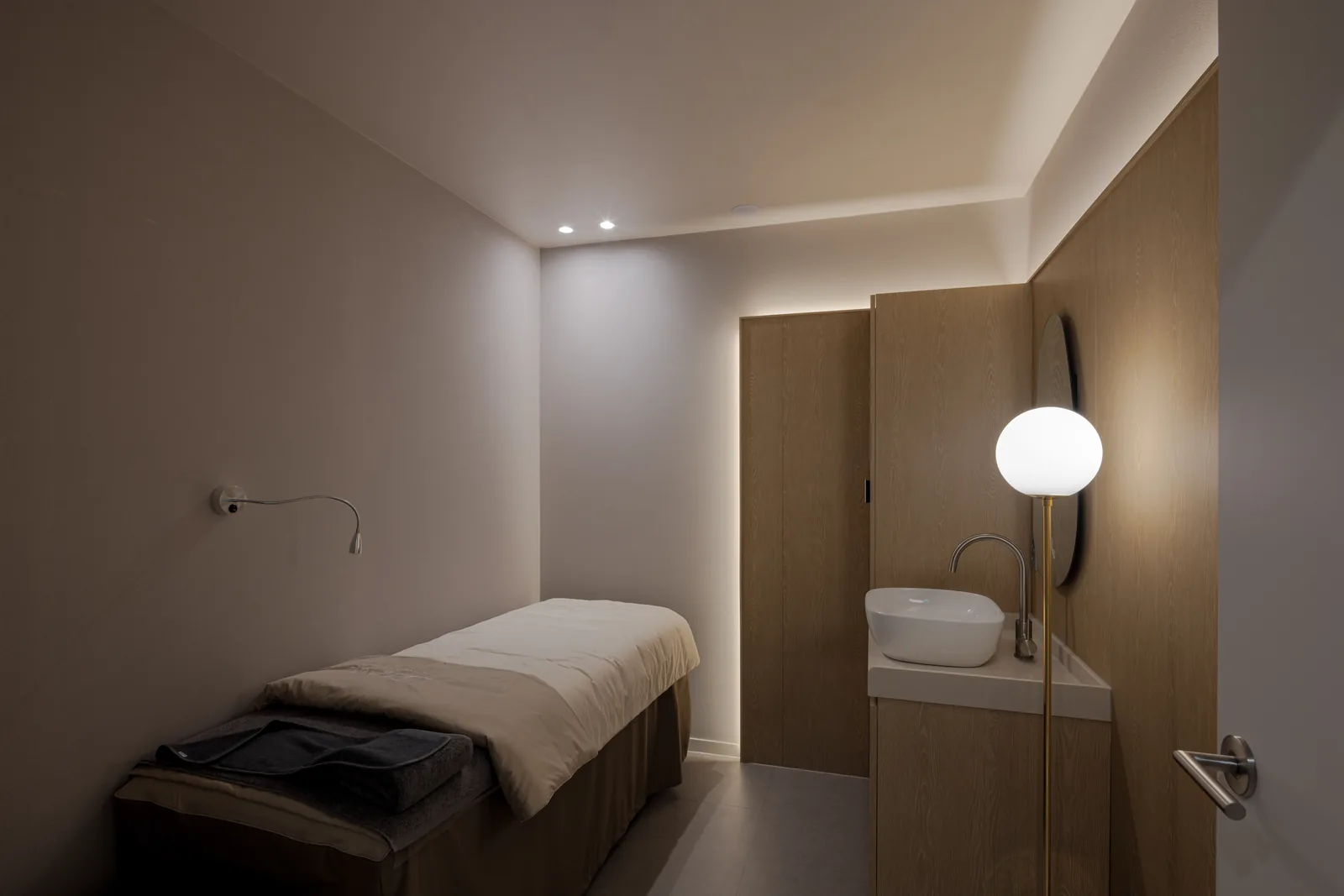
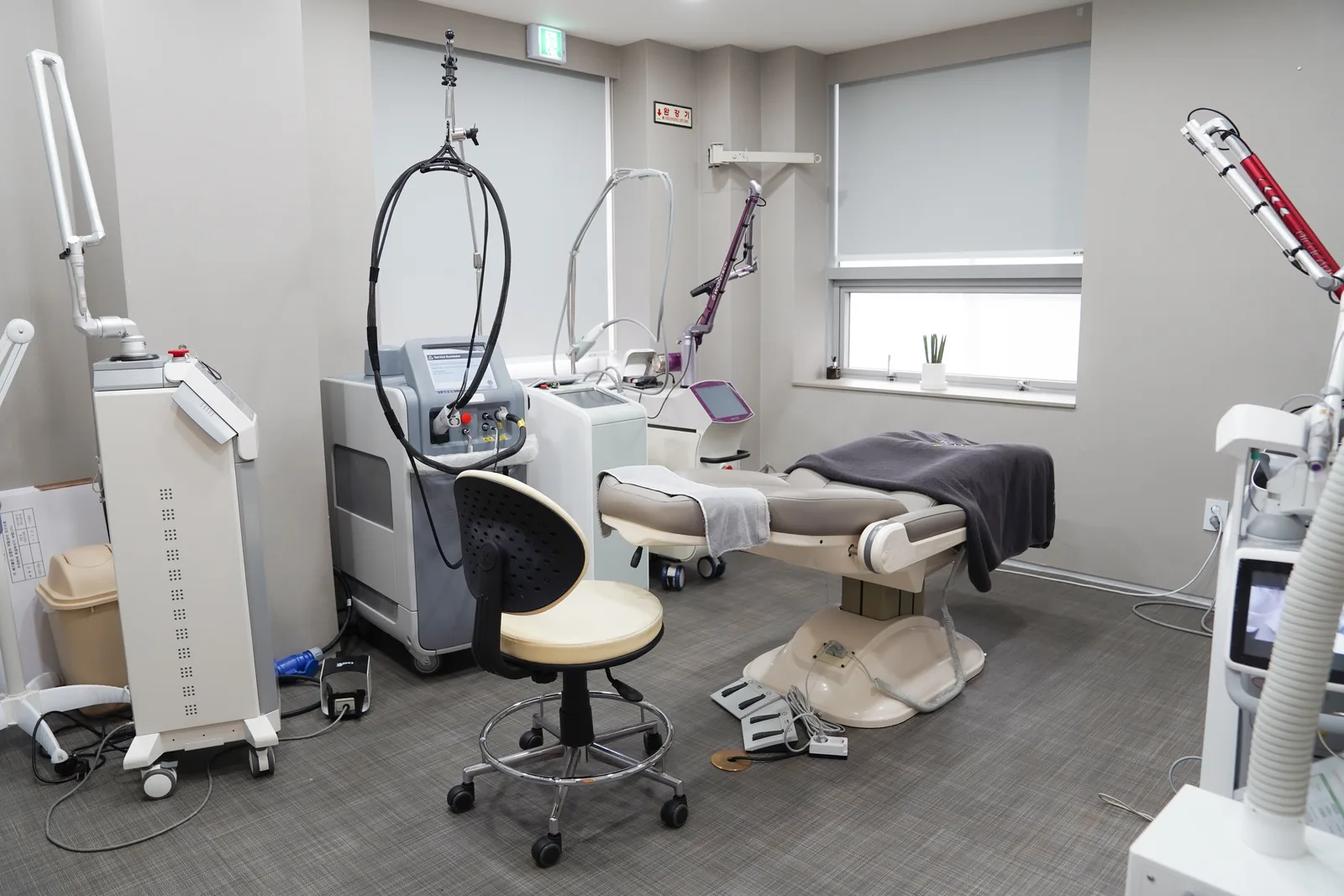
Toning shares the corridor with vascular lasers, resurfacing and RF microneedling. Redness that turns out to be vessels goes to Excel V. Texture and scarring go to Potenza. A ten-session block is prescribed only when the map asks for one.
Pigment depth, the redness sitting underneath it and the state of your barrier are read from the EVE Muse 3D scan with five-light-source analysis before any pass is planned, which is how the subclinical pigment that a mirror cannot show you ends up in the plan at all.
Sessions are director-performed, and the discipline is knowing when to stop. Intervals are stretched, energy is dialled down, or a session is skipped outright when the skin says so.
A course is bought in advance, which is exactly what makes it easy to run on autopilot. So the remaining sessions are counted out loud at every visit. If your skin has stopped responding at session six, the course stops at six; the sessions left in a prepaid block and what happens to their cost are put to you in writing at that review. A course can also be paused, stretched, or switched to another route half-way through.
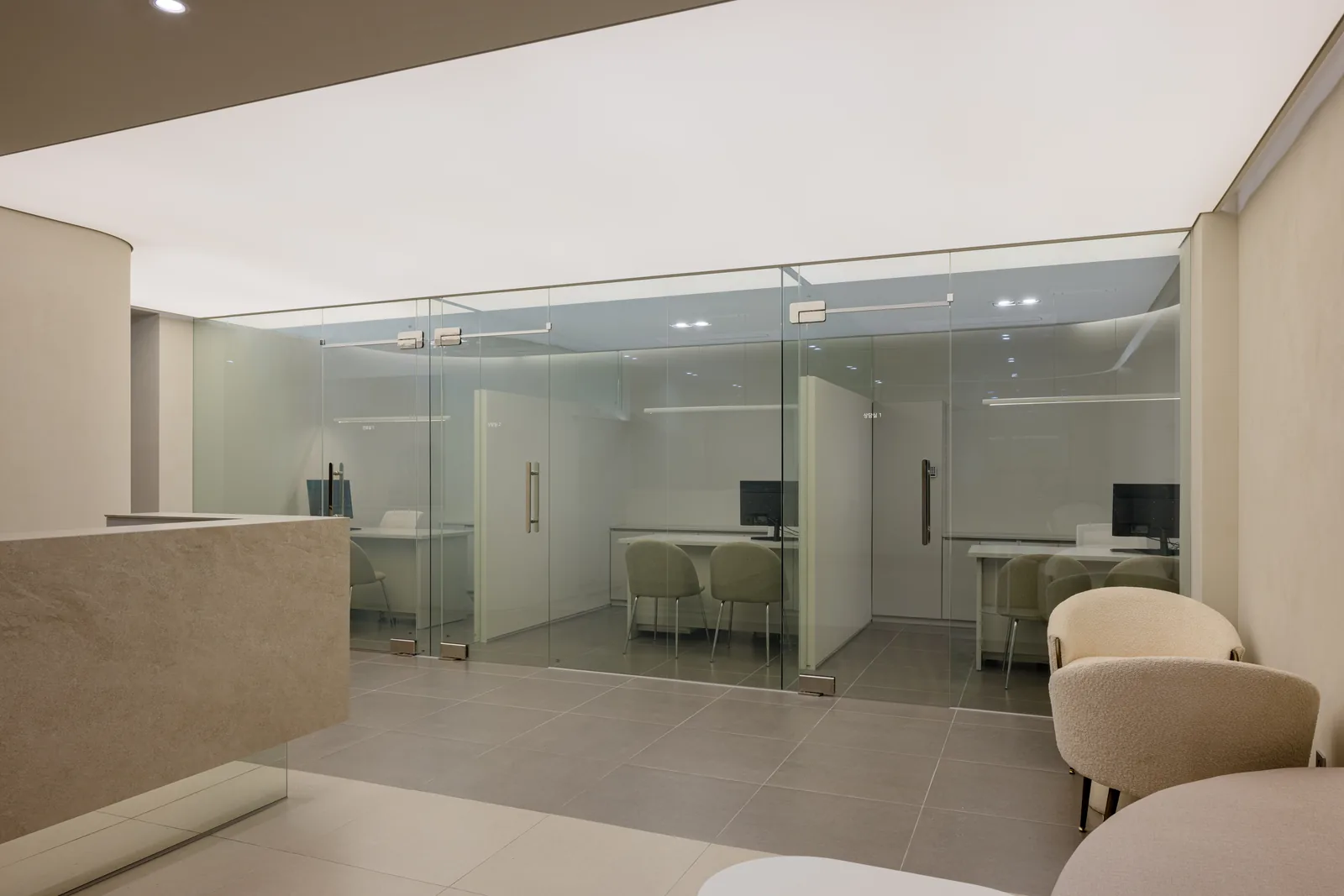
| Programme | Includes | Price |
|---|---|---|
| Dual toning · 1 session | Dual-wavelength toning session with in-clinic skincare | ₩200,000 (≈ $145) |
| Dual toning · 10 sessions | Ten-session course, scheduled at intervals set by your director | ₩1,500,000 (≈ $1,070) |
| Triple toning · 1 session | Triple programme session with in-clinic skincare | ₩300,000 (≈ $215) |
| Triple toning · 10 sessions | Ten-session triple course, paced to your response | ₩2,500,000 (≈ $1,785) |
| Every plan | EVE Muse 3D + AI diagnosis · doctor consultation · aftercare guidance | included |
Published rates as of September 2026, shown in KRW with a USD reference figure. A ten-session block is sold because the diagnosis supports one; if two or three sessions show the pigment is not answering, we say so and stop, instead of running down something you have already paid for. The routes toning is weighed against have their own pages: Excel V for vessels and defined spots, Potenza for texture and scarring, and the price list for every published figure.
Some skins we send away from toning altogether. If the scan reads your unevenness as vascular redness, as a handful of raised lesions, or as surface texture, a ten-session block is the wrong purchase and we say no to it and prescribe the matching route. Pregnancy, a fresh tan, an inflamed barrier and photosensitising medication each postpone a session at the door, because low fluence is gentle and skin in those states still burns, blisters or darkens.
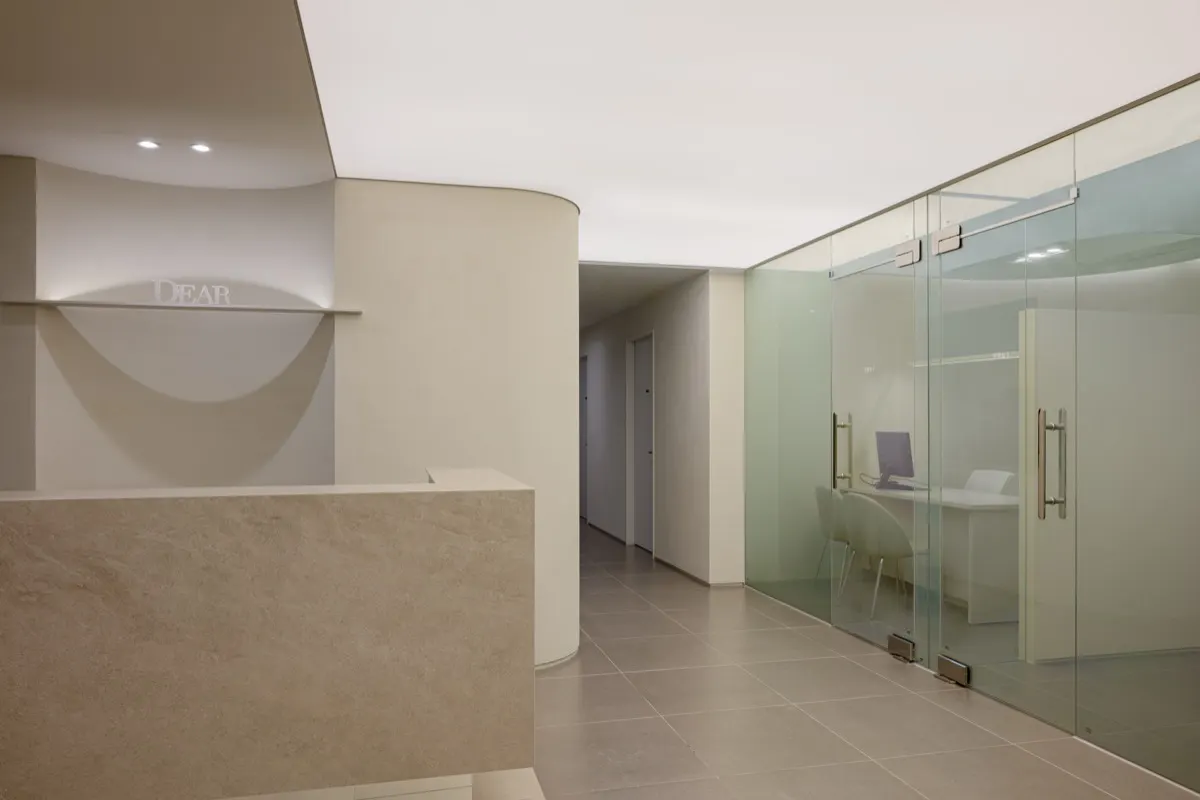
Outcomes vary by individual, by pigment type and by sun behaviour between sessions. Nothing on this page is offered as a promised or uniform result.
Toning is a low-drama treatment with real limits. Those limits are easier to accept before the first session than after the sixth, so they are set out here.
Director-performed treatment is a Dear promise — your procedure is planned and performed by the doctors below.





Real verified reviews from our Google Business Profile.
4.9★★★★★ 293 Google ReviewsThe clinic was very professional from start to finish. Doctor Jung was excellent and gentle with the treatment. I felt well looked after and everyone was outstanding. Happy with my service!
I've visited clinic for LDM procedure. I don't speak Korean, so there was an interpreter who assisted me while consulting. The staff was very attentive, they asked me every time before applying products/covering my face during the procedure and it went smoothly. Planning to visit the clini…
Had a great experience here as a foreigner! The doctors and staff were knowledgeable, friendly, and not pushy. They made recommendations in my consultation and were happy to work within my budget.
I did a hydrofacial, white/black head removal, and 1 day lasers. Really kind staff and reasonable prices. The only thing I would advise is that your first consultation is with a salesperson and you don’t see the doctor until after you decide what you want and after you pay.
Wonderful experience — friendly, professional staff, clear consultation with a thorough skin analysis, and visible results after my treatment; the clinic is clean and communicates aftercare clearly, highly recommended
Your questions, answered in English within one business day.
Low-fluence 1064 nm Nd:YAG toning has been studied for well over a decade, and the literature is not uniformly flattering. We list it as published rather than curated: efficacy studies sit here beside case reports of adverse pigment change, because both inform how your director sets energy and, above all, intervals.
The safety report below describes mottled hypopigmentation following low-fluence toning, and the long-term study asks openly whether the approach holds up over time — together, the specific reason a course here is paced and never compressed to fit a trip. All references carry verifiable DOIs from indexed journals.
References are provided for information — outcomes vary by individual and are assessed at your diagnosis.