★★★★★
The clinic was very professional from start to finish. Doctor Jung was excellent and gentle with the treatment. I felt well looked after and everyone was outstanding. Happy with my service!

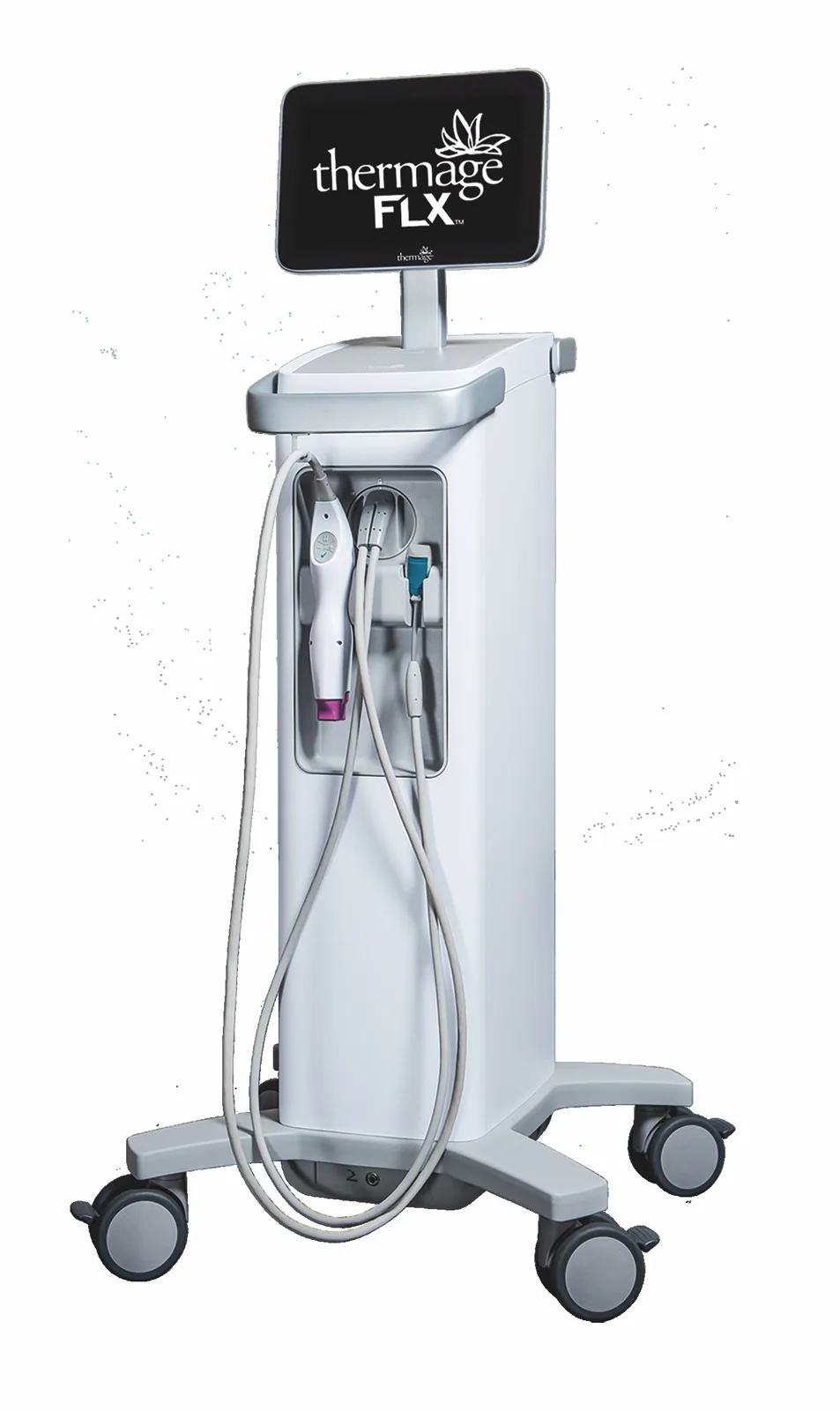
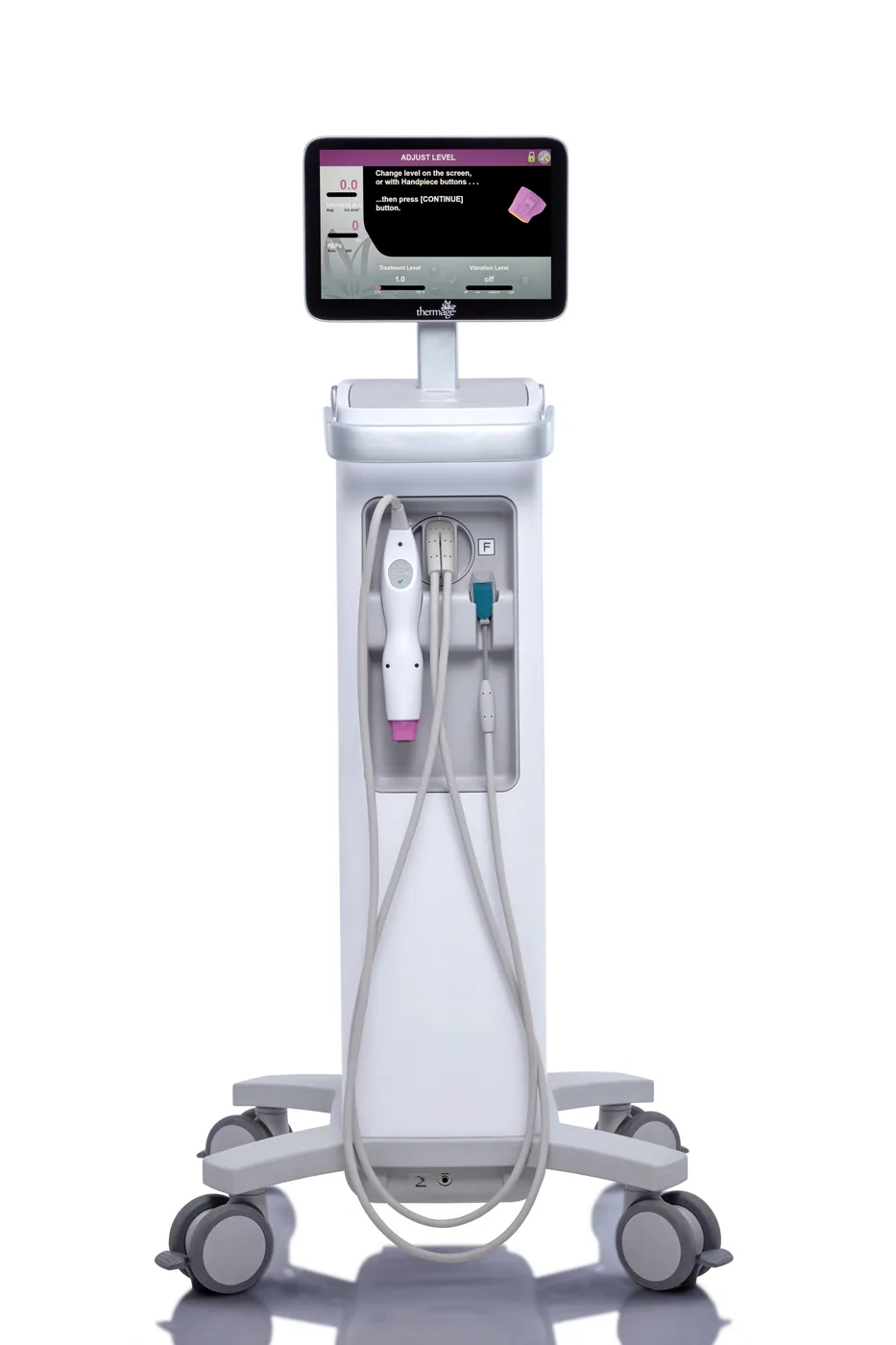
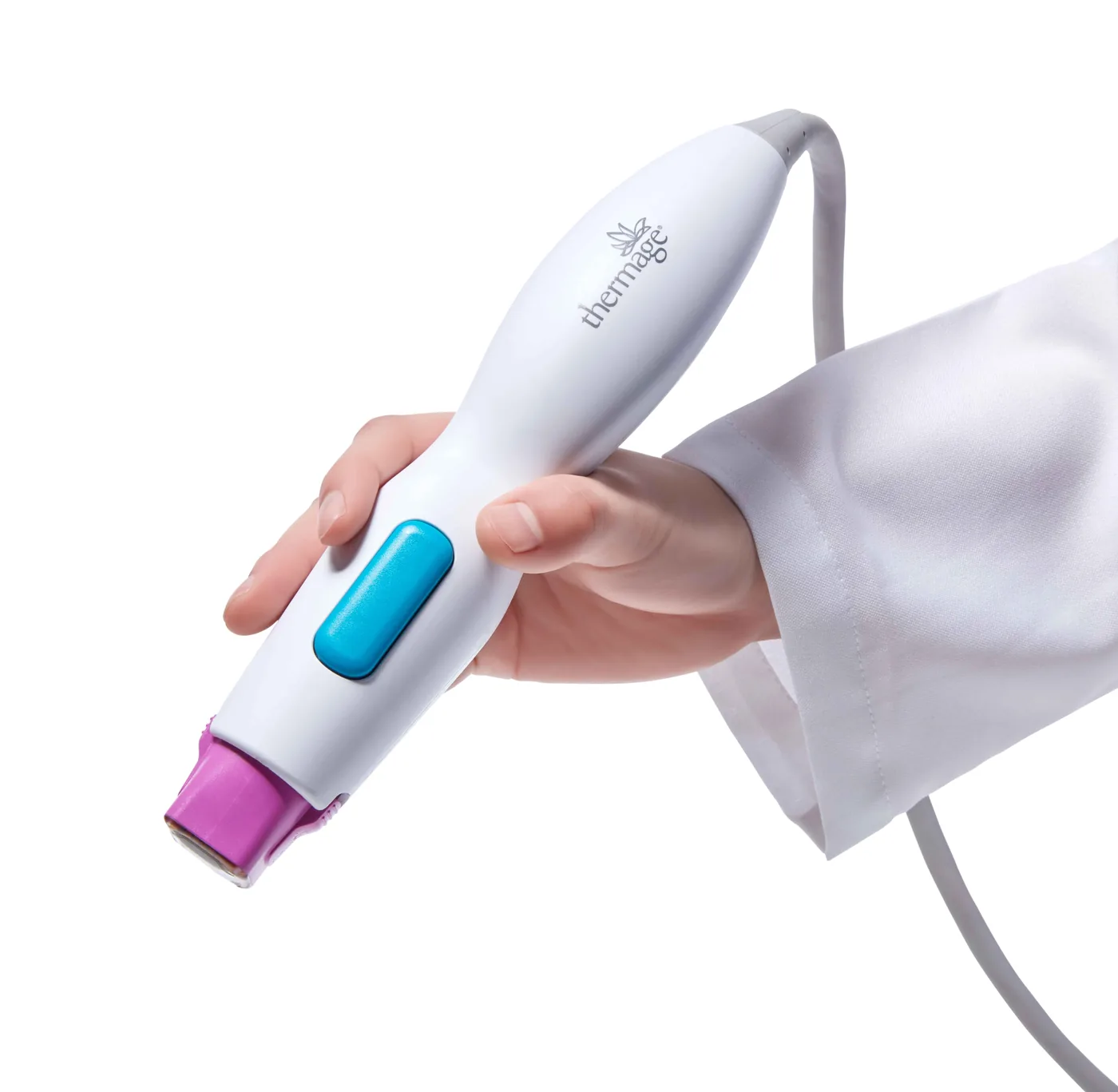
Monopolar radiofrequency that heats the deep dermis to tighten and refine the surface. The tip is sealed and shot-counted, and it is opened once the diagnosis puts your looseness in the dermis.
Focused-ultrasound lifting reaches the deeper SMAS layer; radiofrequency spreads its heat broadly through the dermis. So Thermage is chosen when the goal is overall firmness, texture and a tighter skin envelope, and a focused-ultrasound device is chosen when the scan finds one deep vector of descent instead. Every pass comes off a treatment tip counted in 600-shot units, planned to your face after diagnosis.
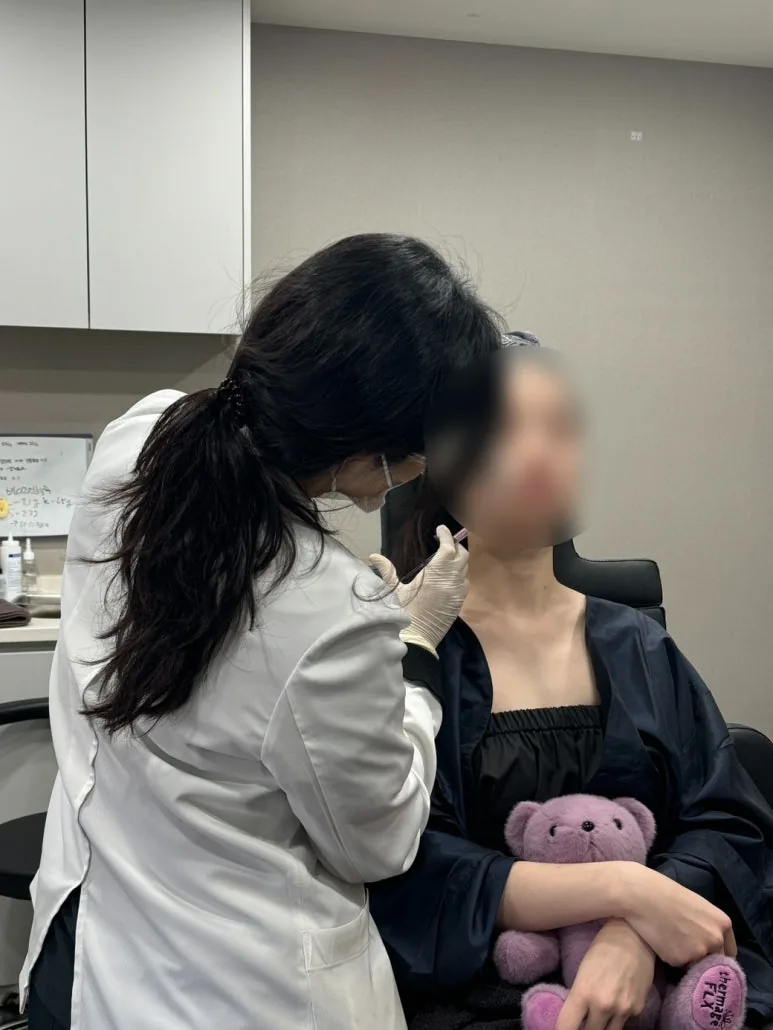
Tip placement and energy level are planned zone by zone from your 3D diagnosis. Thin under-eye skin and a thick jaw never run at the same setting.
Overall laxity, blurred contours and lost firmness across the cheeks and mid-face. This zone takes the largest share of a 600-shot tip.
A jaw edge that has begun to soften, and early jowl heaviness, tightened by broad dermal heating and immediate collagen contraction.
Crepey upper-lid and under-eye skin, worked on the dedicated 450-shot Eye tip. Separate protocol, separate price.
Neck laxity and surface texture, delivered at depths matched to skin that is thinner than the face above it.
Three things the FLX generation changed from earlier monopolar radiofrequency, and what each one does while you are in the chair.
AccuREP measures the skin’s impedance and re-sets the energy between deliveries, all the way through the session. Tissue thickness changes as the tip travels from a thin temple to a thick jaw, and the setting follows it instead of holding one number for a whole face.
A wider tip covers more skin per stamp. A full face is finished in fewer placements and less chair time, which is its own kind of comfort.
Vibration runs during each delivery and lifts the comfort threshold, so the energy level that actually does the work can be used without dialling it back.
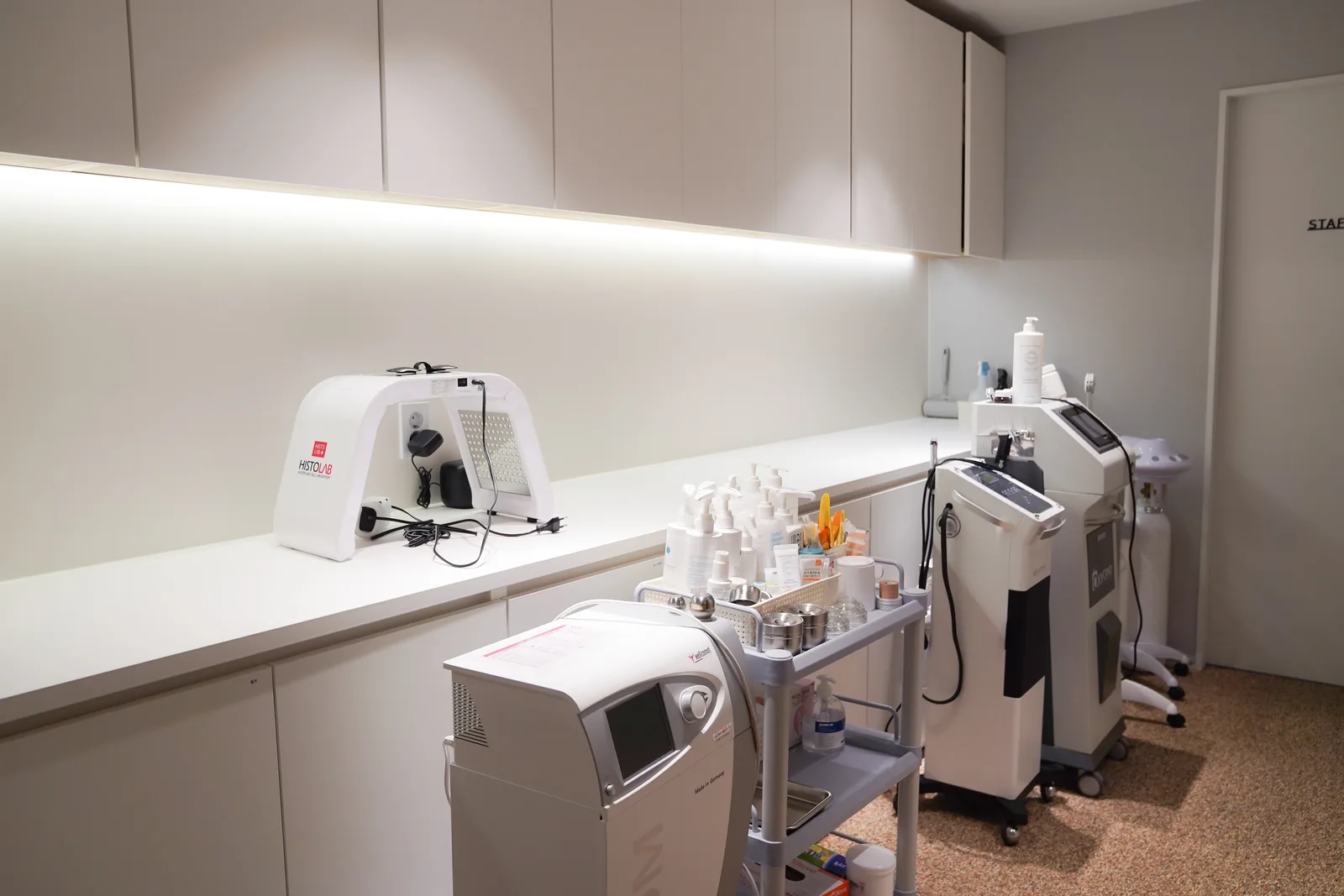
A Thermage tip arrives sealed, holds a fixed count of shots and cannot be half-used. It is unsealed after the reading, never before it. Ultherapy Prime, Density, XERF, Onda, Titanium and Shurink are all in the building for the days when the scan points at a different layer.
AccuREP works between deliveries, trimming the next pulse to the impedance it has just measured; it holds no opinion about where on your face that pulse should land. That decision comes out of the EVE Muse 3D capture and the five-light-source reading, which show your director which zones have lost hold and which skin is thin enough to deserve a lower setting. The 600 shots are then allocated against that picture — heavier along a jaw edge that has started to blur, lighter over a cheek that is still holding, and none at all in a zone that is not asking for them yet.
A full-face tip is hundreds of individual placements, and the outcome depends on none of them being rushed, skipped or doubled. Marking the grid, stamping it out, and running the periorbital protocol on its own 450-shot Eye tip are all done by the director who read your scan.

| Protocol | Includes | Price |
|---|---|---|
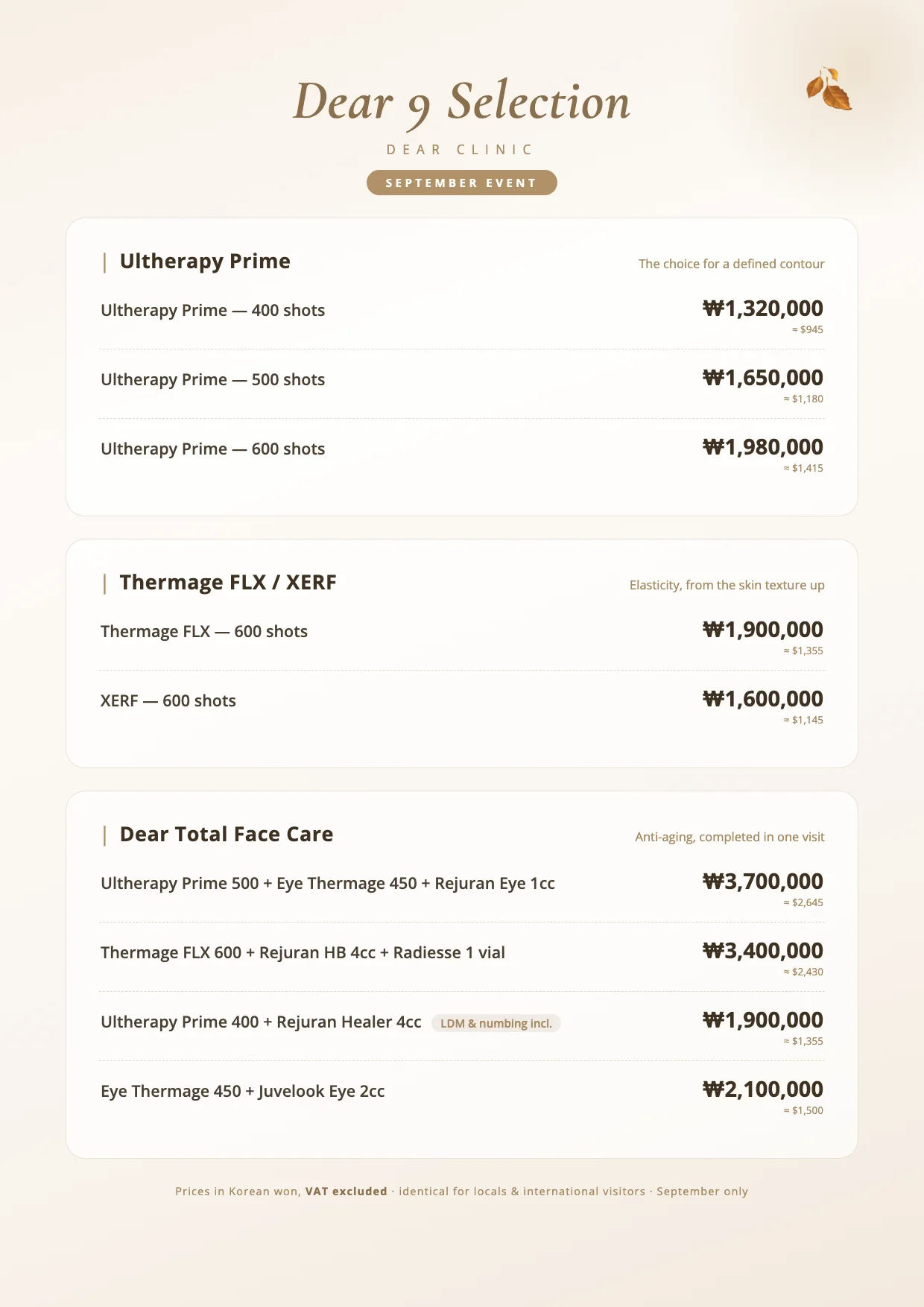
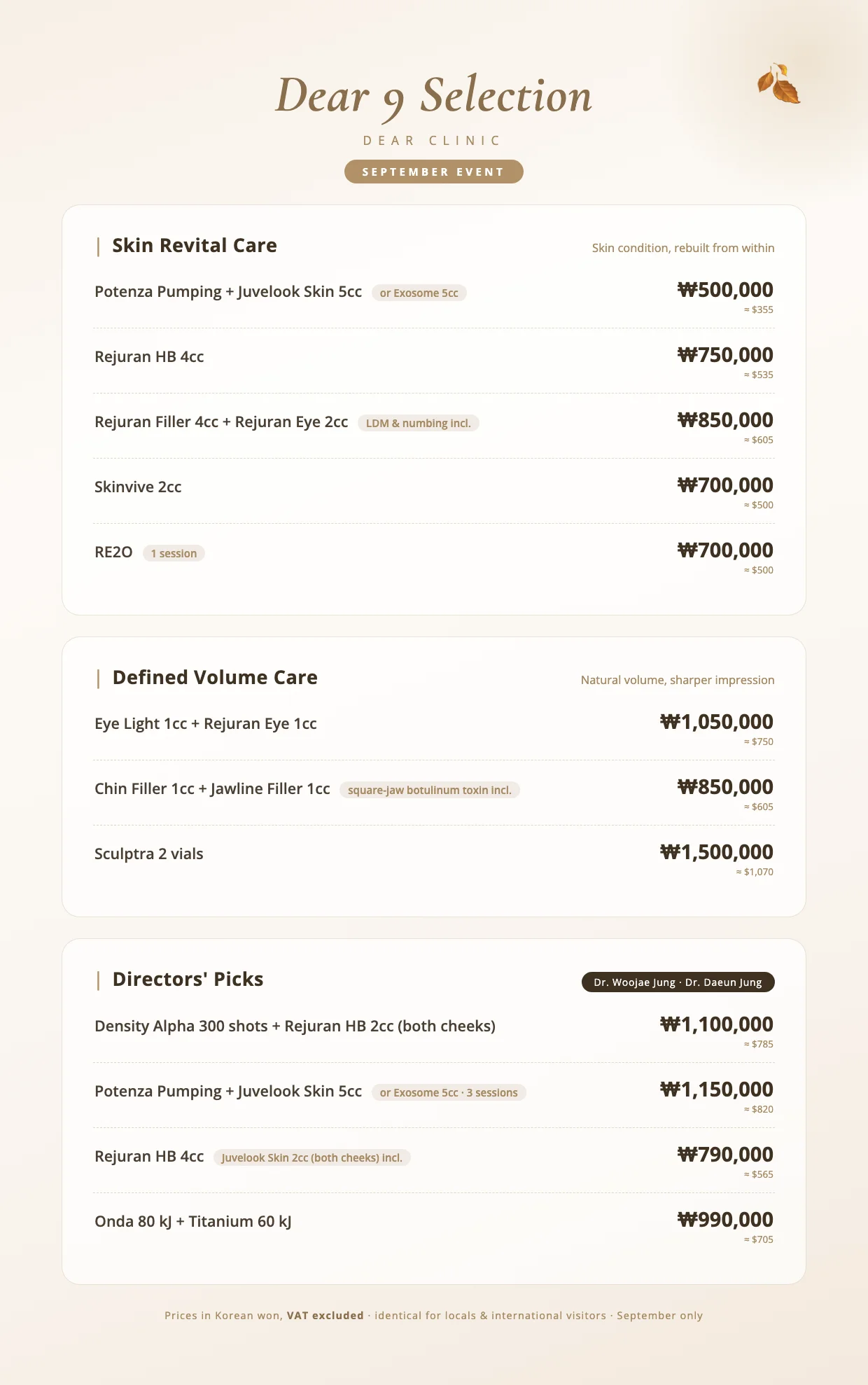
| Full-face · 600 shots | Standard face tip — planned to your diagnosis | ₩2,200,000 (≈ $1,570) |
| Eye Thermage · 450 shots | Dedicated Eye tip for the periorbital area | ₩2,200,000 (≈ $1,570) |
| Every plan | EVE 3D + AI diagnosis · doctor consultation · aftercare guidance | included |
Rates current as of September 2026. A tip cannot be half-used, so what you sign off is exactly what gets delivered: no mid-treatment upgrade, no add-on line at the desk. If the reading points to a course-based radiofrequency platform or to a focused-ultrasound lift, the consultation says so and no tip is unsealed that day.
Radiofrequency does not reach the SMAS. Where the scan puts your descent at that depth, we do not recommend opening a tip that day and book focused-ultrasound lifting instead — some faces are planned for both, months apart. A pacemaker or another implanted electronic device rules monopolar radiofrequency out altogether, and active inflammation or a broken surface inside the treatment zone postpones the session until it has healed.
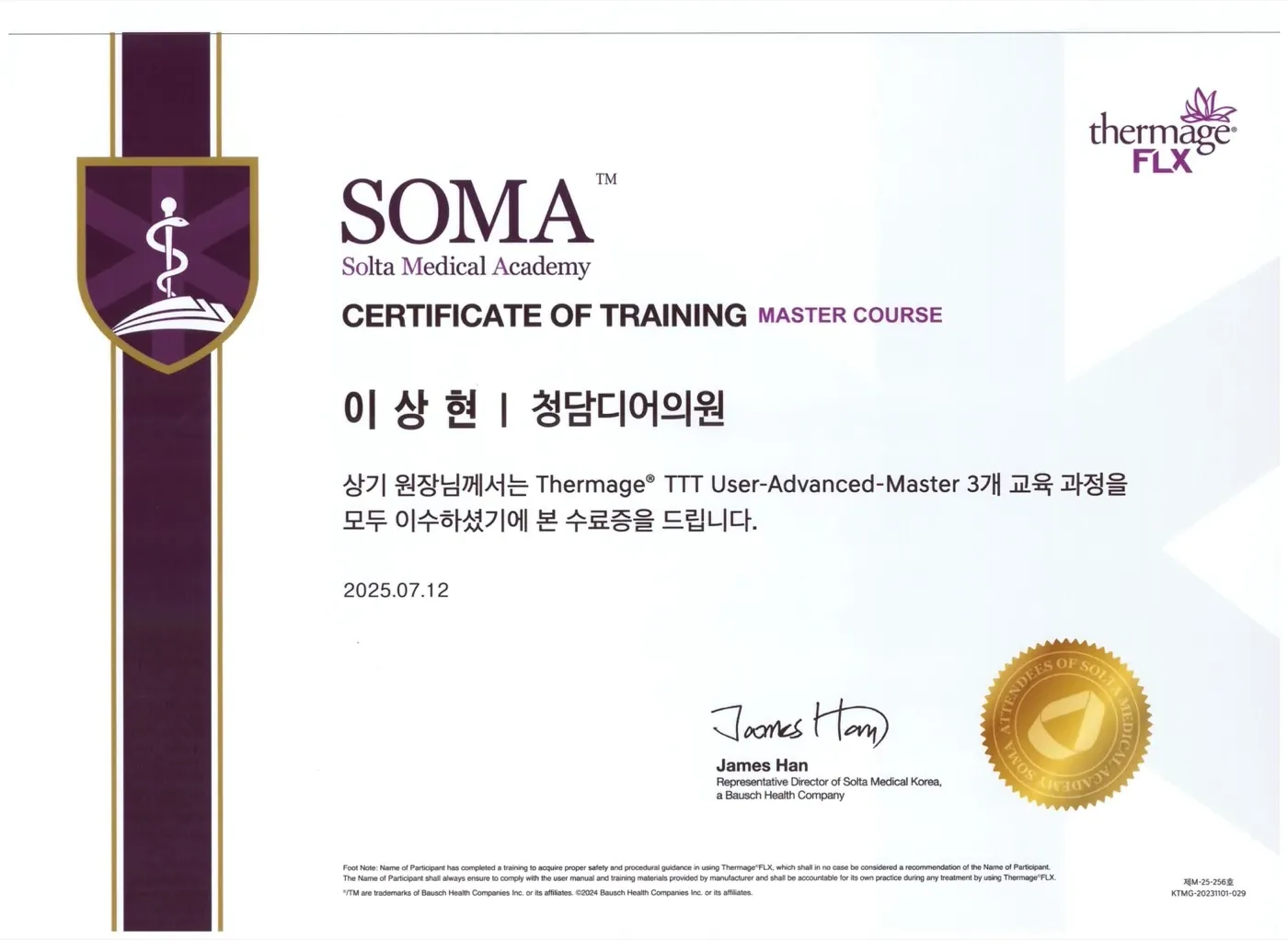
Director-performed treatment is a Dear promise — your procedure is planned and performed by the doctors below.





Real verified reviews from our Google Business Profile.
4.9★★★★★ 293 Google ReviewsThe clinic was very professional from start to finish. Doctor Jung was excellent and gentle with the treatment. I felt well looked after and everyone was outstanding. Happy with my service!
I've visited clinic for LDM procedure. I don't speak Korean, so there was an interpreter who assisted me while consulting. The staff was very attentive, they asked me every time before applying products/covering my face during the procedure and it went smoothly. Planning to visit the clini…
Had a great experience here as a foreigner! The doctors and staff were knowledgeable, friendly, and not pushy. They made recommendations in my consultation and were happy to work within my budget.
I did a hydrofacial, white/black head removal, and 1 day lasers. Really kind staff and reasonable prices. The only thing I would advise is that your first consultation is with a salesperson and you don’t see the doctor until after you decide what you want and after you pay.
Wonderful experience — friendly, professional staff, clear consultation with a thorough skin analysis, and visible results after my treatment; the clinic is clean and communicates aftercare clearly, highly recommended
Your questions, answered in English within one business day.
Monopolar radiofrequency is among the longest-studied non-surgical tightening technologies, and this is the device most of that literature was written around. The trials below are the reason our directors treat an energy setting as something that has to be argued for from the impedance and thickness of your own skin, and never carried over from the previous patient.
Each entry resolves to a DOI in an indexed journal — including a periorbital study that speaks straight to the Eye protocol, and a head-to-head against microfocused ultrasound. That last comparison is the one that determines whether a tip is opened for you at all once the EVE 3D + AI reading is in.
References are provided for information — outcomes vary by individual and are assessed at your diagnosis.