★★★★★
The clinic was very professional from start to finish. Doctor Jung was excellent and gentle with the treatment. I felt well looked after and everyone was outstanding. Happy with my service!
Ink fades across a series of sessions, spaced six to eight weeks apart, at a pace your skin sets — with a straight answer at consultation about how much fading your particular tattoo is likely to give up.
Two things follow from that mechanism. First, the work your body does between appointments is the work that actually shows — which is why the six-to-eight-week interval is part of the treatment and not padding in a schedule. Coming back sooner speeds nothing up; it asks skin that is still recovering to absorb more energy, and that is how blisters and lasting colour change get made.
Second, nobody can tell you in advance exactly where your tattoo will end up. Ink is not standardised: what a studio injected, how deeply the needle sat, how densely the pigment was packed and how long it has been in your skin all change what happens under laser light. Clinicians use published estimation scales to put a sensible range around a session count, and your director will give you that range at consultation. Complete clearance cannot be promised, and we do not promise it.
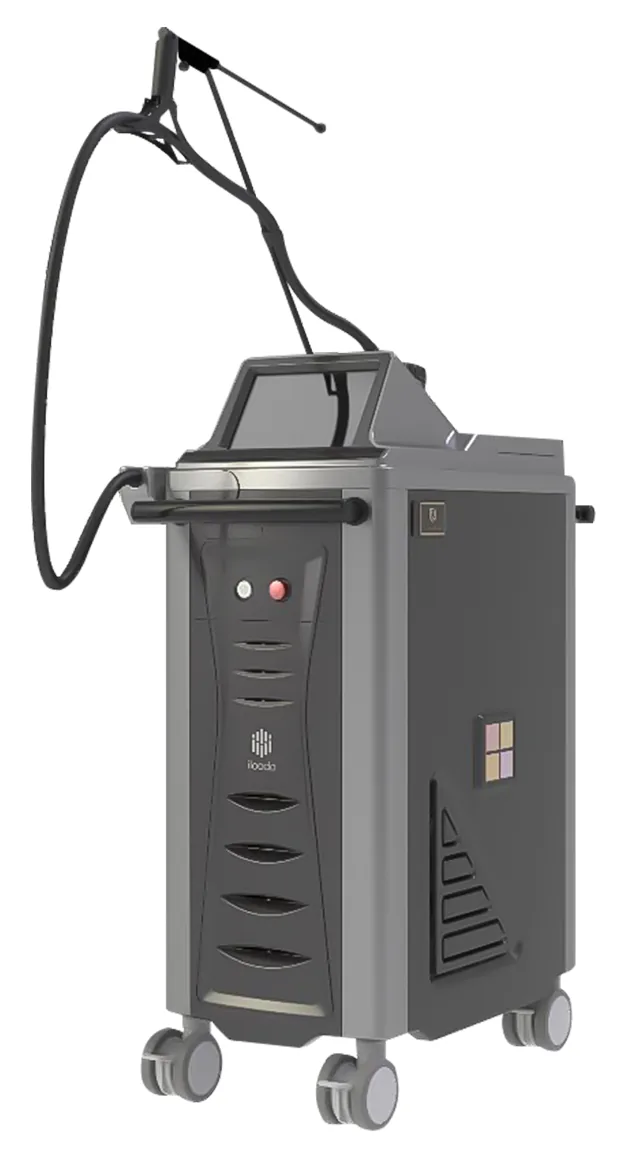
Body work is priced by area, cosmetic tattoo by region — two different jobs that share the same underlying approach.
Arms, shoulders, back, legs and ankles. Priced per 5 cm of tattoo, so a small piece and a large one are quoted on the same transparent basis.
Faded, discoloured or badly shaped brow tattooing, including work that has shifted colour over the years. Priced as a cosmetic-tattoo region, since a brow is not measured in centimetres.
Lash-line tattooing, treated with eye protection in place throughout. The most delicate site we work on, and the one where pacing matters most.
Tattoos left half-faded by an earlier course, plus older hand-poked work. Both are assessed on what is still sitting in the skin today, which is rarely what the original design suggests.
Cover-up work sits in its own category. If the plan is to be re-tattooed over the same area later, say so at consultation: the target becomes lightening instead of clearing, which usually shortens the course and lowers what you spend.
Three variables do most of the work here, and all three were fixed before you walked in: what the ink is, where it sits, and whose skin is holding it.
Dense black and dark blue-black ink generally give way more readily than coloured pigment. Greens, bright blues, yellows and some reds are notoriously stubborn, and white or flesh-toned ink used to correct earlier work can behave unpredictably. A multicoloured piece rarely fades evenly, so patches lift at different rates and the design goes through an uneven-looking phase before it settles.
Professional tattooing places pigment deeply and packs it tightly; amateur or hand-poked work is often shallower and more scattered, and frequently fades faster as a result. Heavily layered pieces, cover-ups and areas retouched several times hold more ink per square centimetre than they look like they do, and that raw quantity is what a series has to work through.
Clearing depends on your own immune traffic, so tattoos on the trunk and upper limbs typically respond better than those on the ankles, feet and hands, where circulation is less generous. Skin tone matters too: darker skin needs more conservative settings and closer attention to pigment changes, which sensibly slows the pace of a course.
Complete clearance cannot be promised. It happens for some tattoos and not for others, and a residual shadow, a faint ghost of the outline or a slight change in skin texture can remain after a long course. Stubborn colours may reach a point where further sessions stop adding much, and when that point arrives we say so. Blistering, scabbing, temporary lightening or darkening of the treated skin and, less often, scarring are the named risks of the method itself. All of it is on the table before the first appointment.
A realistic range for the session count. An explanation of which parts of your design are likely to lag behind the rest. A plain statement of whether a lightening plan or a full clearing plan suits what you want to do next. Progress is photographed and read against the previous set at intervals, and if fading stalls we say so and put the question of continuing back to you before the next booking is made.
Body ink is billed per 5 cm of tattoo, per session; cosmetic tattoo is billed by region. Stop after the third visit and nothing further is owed, because no package balance was ever taken.
Your skin is read with EVE Muse 3D imaging under five light sources and AI analysis before a plan is written, and for ink work the useful output is narrow and specific: your skin type, how your own pigment behaves under energy, and the condition of the skin immediately around the tattoo. Those three readings decide how conservatively the course is paced and whether the first pass should be a small test patch before a full sweep.
Sessions are director-performed. Before settings are chosen, the director compares the area against the photographs from your previous visit, so the plan follows how your skin behaved last time instead of how a first-visit plan expected it to.
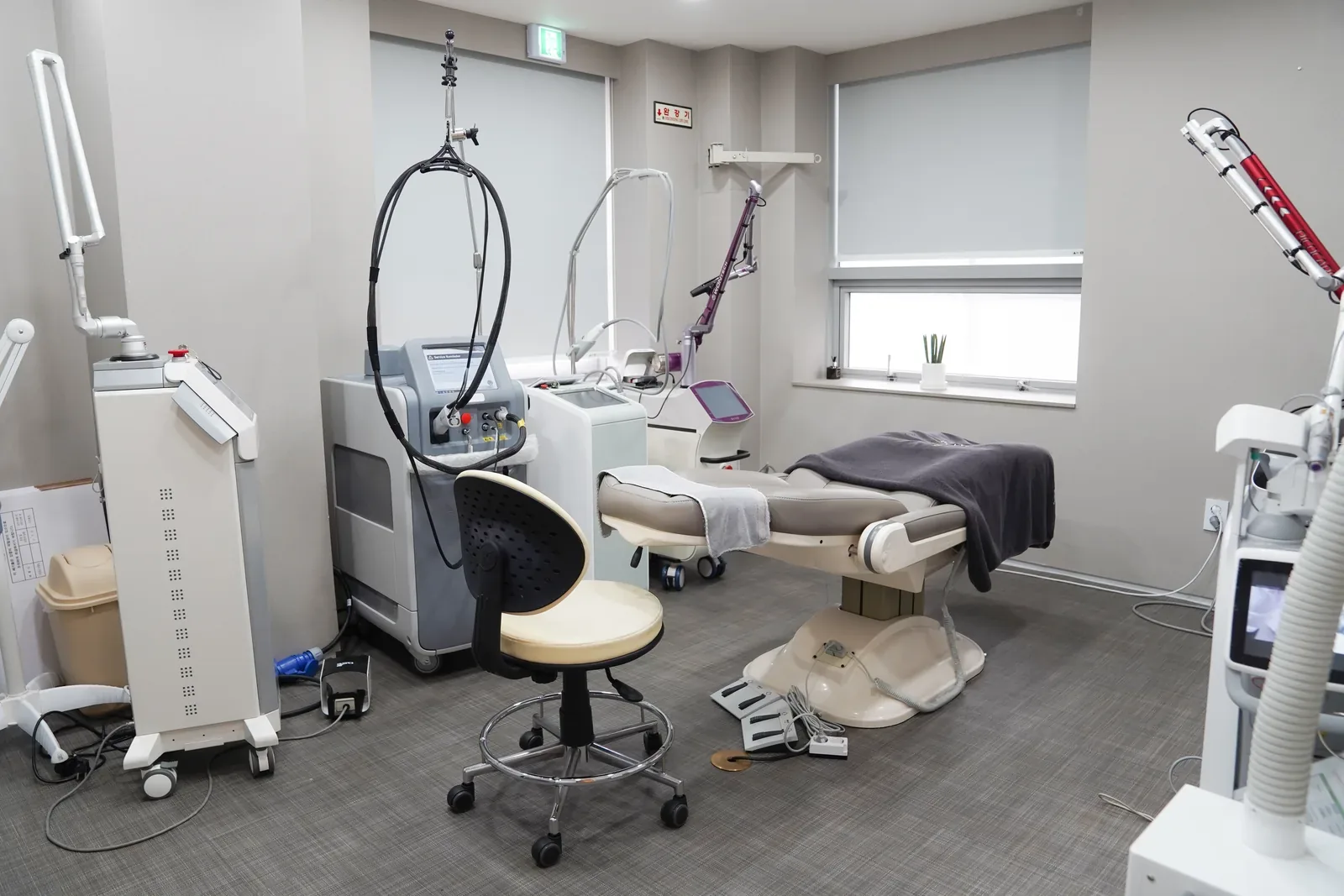
The temptation in ink work is to push settings hard and compress the calendar, especially when a patient is in Korea briefly and wants visible progress before flying home. Pushed too far, that trade buys a little fading speed at the cost of blistering, textural change and pigment disturbance in the skin around the design — problems that outlast the tattoo by years. So the interval stays at six to eight weeks, settings stay conservative where your skin type calls for it, and a visitor gets a straight number for what one trip can actually achieve.
| Session | Basis | Price |
|---|---|---|
| Body tattoo | Per 5 cm of tattoo, charged per session | ₩90,000 (≈ $65) |
| Eyebrow or eyeliner | Cosmetic tattoo region, charged per session | ₩150,000 (≈ $105) |
| Every plan | EVE Muse 3D + AI assessment · doctor consultation · aftercare guidance | included |
Published rates as of September 2026. Nothing is pre-sold as a package here: you pay per session, so if fading stalls or you decide to stop, you stop without an unused balance sitting with us. Sessions are booked six to eight weeks apart, and your total depends on how many your tattoo actually needs rather than on a number agreed on day one. Both rates sit on the full price list beside every other treatment here, and because the clinic runs Sundays and public holidays too, a session at the far end of a six-week interval can usually be placed on a weekend.
Two situations get a no from us. If you need the tattoo gone before an event next month, that is not possible: the interval cannot be compressed, and we decline the booking instead of selling you the first session of a course that cannot finish in time. If the skin over the tattoo is sunburnt, actively tanned or still healing from anything, the session is postponed. A short trip to Seoul buys you one or two sessions, which is a start on a course and not a finish to it.
Director-performed treatment is a Dear promise — your procedure is planned and performed by the doctors below.





Real verified reviews from our Google Business Profile.
4.9★★★★★ 293 Google ReviewsThe clinic was very professional from start to finish. Doctor Jung was excellent and gentle with the treatment. I felt well looked after and everyone was outstanding. Happy with my service!
I've visited clinic for LDM procedure. I don't speak Korean, so there was an interpreter who assisted me while consulting. The staff was very attentive, they asked me every time before applying products/covering my face during the procedure and it went smoothly. Planning to visit the clini…
Had a great experience here as a foreigner! The doctors and staff were knowledgeable, friendly, and not pushy. They made recommendations in my consultation and were happy to work within my budget.
I did a hydrofacial, white/black head removal, and 1 day lasers. Really kind staff and reasonable prices. The only thing I would advise is that your first consultation is with a salesperson and you don’t see the doctor until after you decide what you want and after you pay.
Wonderful experience — friendly, professional staff, clear consultation with a thorough skin analysis, and visible results after my treatment; the clinic is clean and communicates aftercare clearly, highly recommended
Your questions, answered in English within one business day.
Laser tattoo removal has a substantial published literature covering its fundamental principles, comparative trials between laser types, safety and efficacy series, and the scoring scales clinicians use to estimate how many sessions a given tattoo is likely to need. The references below are listed as background to the field and describe the specific systems used in each study; they are not a description of the equipment configuration used for your session, which is explained to you at consultation.
All references carry verifiable DOIs from indexed journals. They report variable outcomes across ink colours, depths and patient factors, and that variability is the reason a session count is quoted here as a range and never as a fixed prediction.
References are provided for information — outcomes vary by individual and are assessed at your consultation.