Home
Doctors Pricing Compare FAQ Book a Consultation
ENES
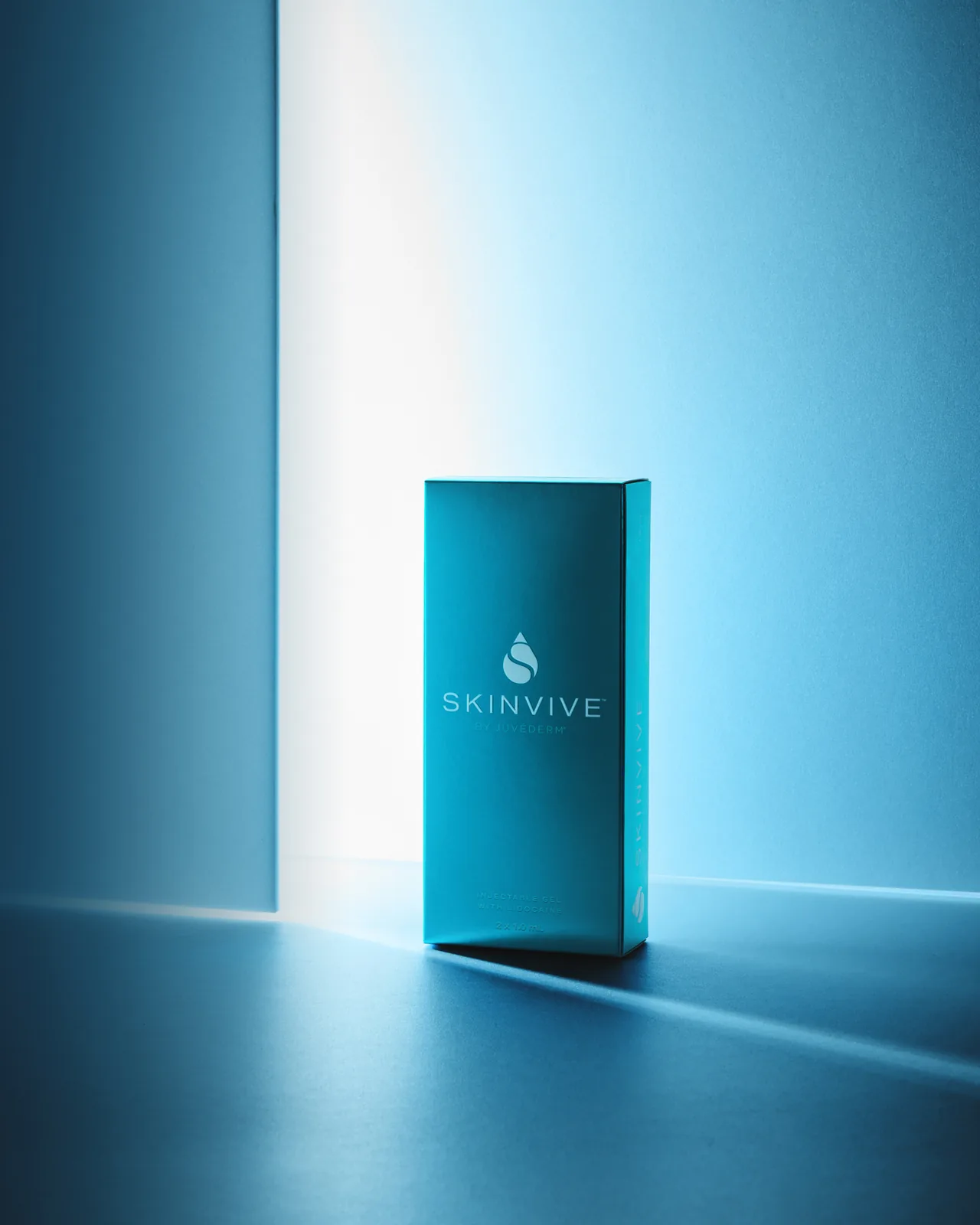
Skinvive by Juvederm carton lit by a shaft of light against a deep blue backdrop
Dear Clinic · Procedure Comparison · Skin Boosters
PDRN vs Hyaluronic Acid

Rejuran vs Skinvive

The two boosters visitors ask us to compare most often. One is built on polydeoxyribonucleotide and works on repair; the other is hyaluronic acid and works on hydration. Read axis by axis, they answer two separate questions.

Both stocked in-house Diagnosis-led recommendation Open 365 days
See the Comparison Ask a Doctor
Short Answer

The one-paragraph version of this page

Rejuran Healer repairs damaged skin. Its active material is PDRN, the polydeoxyribonucleotide derived from salmon DNA, aimed at skin quality, texture and resilience, and it is planned as a course. Skinvive hydrates healthy skin, as a hyaluronic-acid booster placed in a mapped field of small droplets to improve moisture and surface smoothness. Most consultations turn on which of those two conditions your skin is actually in, and the scan settles it in the first half of the appointment.

The confusion is understandable. Both are injected into the skin, both are sold as boosters, and neither is trying to change your face shape. The chemistry differs, though, and so does what the appointment asks of you: a polynucleotide booster wants patience and a series, while a hyaluronic-acid field wants even coverage and a realistic idea of what water alone can do to a complexion.

One more reason the answer moves person to person. Skin that is genuinely damaged — rough, reactive, dehydrated after months of over-treatment — wants repair before it wants anything else. Skin that is fundamentally healthy but dry and dull in photographs wants water. Getting that order backwards is not dangerous. It is simply a session spent on the wrong problem, and it is the most common reason a booster course disappoints.

Neither product changes the shape of a face. If what you dislike in the mirror is a flattened cheek, a heavier jaw or a fold that has deepened, this comparison is the wrong one to be reading, and no number of sessions of either booster will settle it.

Axis by Axis

Six axes where PDRN and hyaluronic acid part company

Beauty coverage uses the two names interchangeably. Taken one axis at a time, they separate cleanly.

AXIS 01 — MATERIAL

A DNA fraction against a sugar chain

Polydeoxyribonucleotide is a DNA-derived material, sourced in Rejuran's case from salmon, and the published interest in it sits in tissue repair. Hyaluronic acid is a water-binding molecule your skin already makes, engineered by Allergan into a booster preparation for Skinvive. Two chemistries, two literatures, both cited at the foot of this page.

AXIS 02 — TARGET

Repairing a barrier against filling it with water

PDRN is prescribed when the skin's own condition is the limiting factor. A hyaluronic-acid booster is prescribed when the barrier is sound and simply dry. The scan measures those separately.

AXIS 03 — SESSION SHAPE

A spaced course against a single mapped field

Rejuran is planned as a short series with weeks between visits, because repair accumulates. Skinvive is treated as one field in one visit and reviewed before it is repeated. That difference decides more travel plans than the price does.
Axis 04 — depth and spread. A repair product is placed across the treatment area at the depth each zone was mapped for; a hydration booster is laid down as evenly spaced microdroplets, and its whole quality rests on how uniform that field is. Uneven spacing shows up as patchy skin, which is the most common technical failure with either.
Axis 05 — unit and price. Rejuran Healer is quoted per 2 cc at ₩300,000 (≈ $215) and Skinvive per 1 cc at ₩450,000 (≈ $320). The units differ, so the headline figures are not comparable.
Axis 06 — what neither of them does. No lift, no contour, no pigment correction. Where the complaint is descent or volume loss, both are the wrong prescription and we quote lifting or filler work instead.
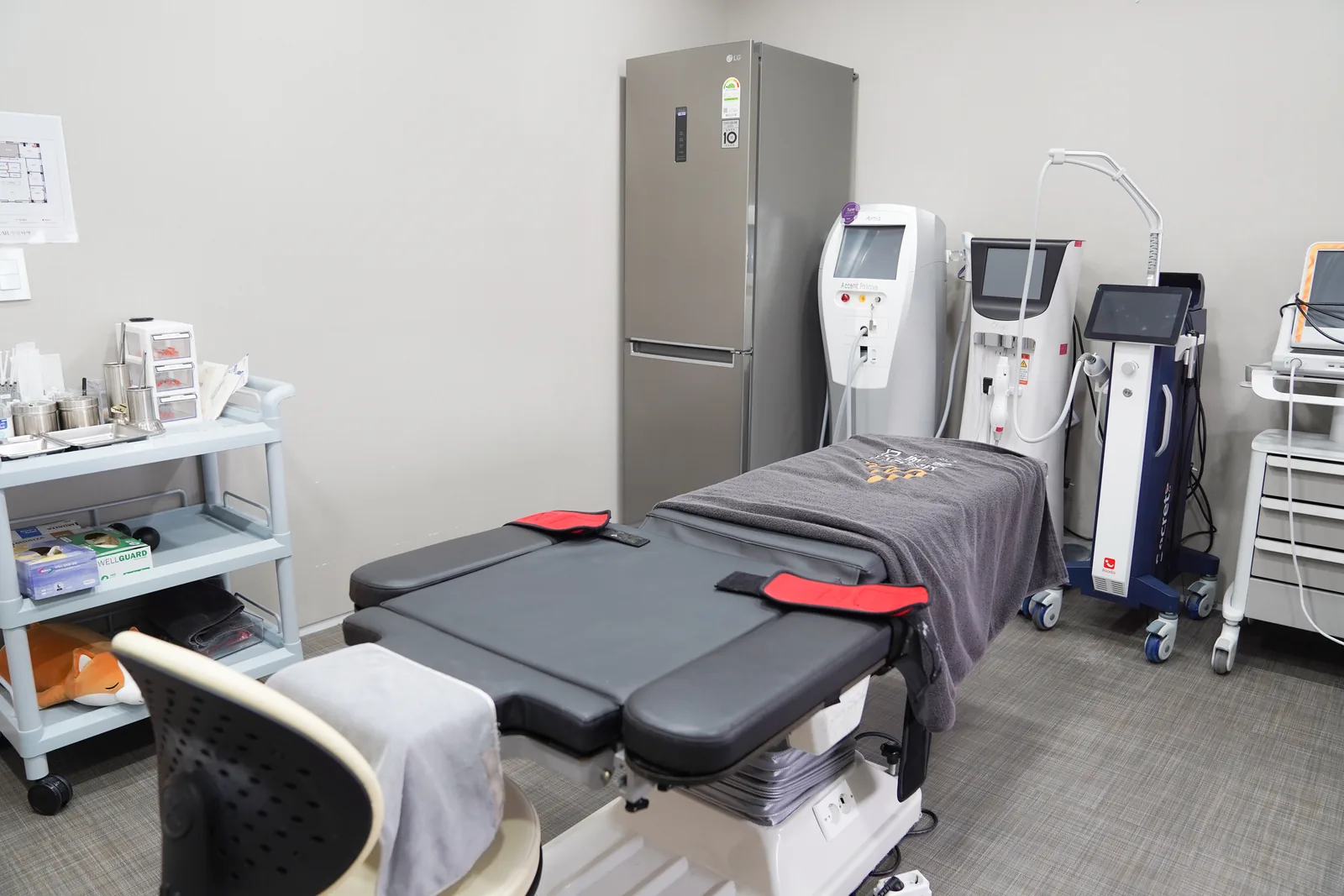
Procedure room at Dear Clinic with radiofrequency and ultrasound body-contouring systems
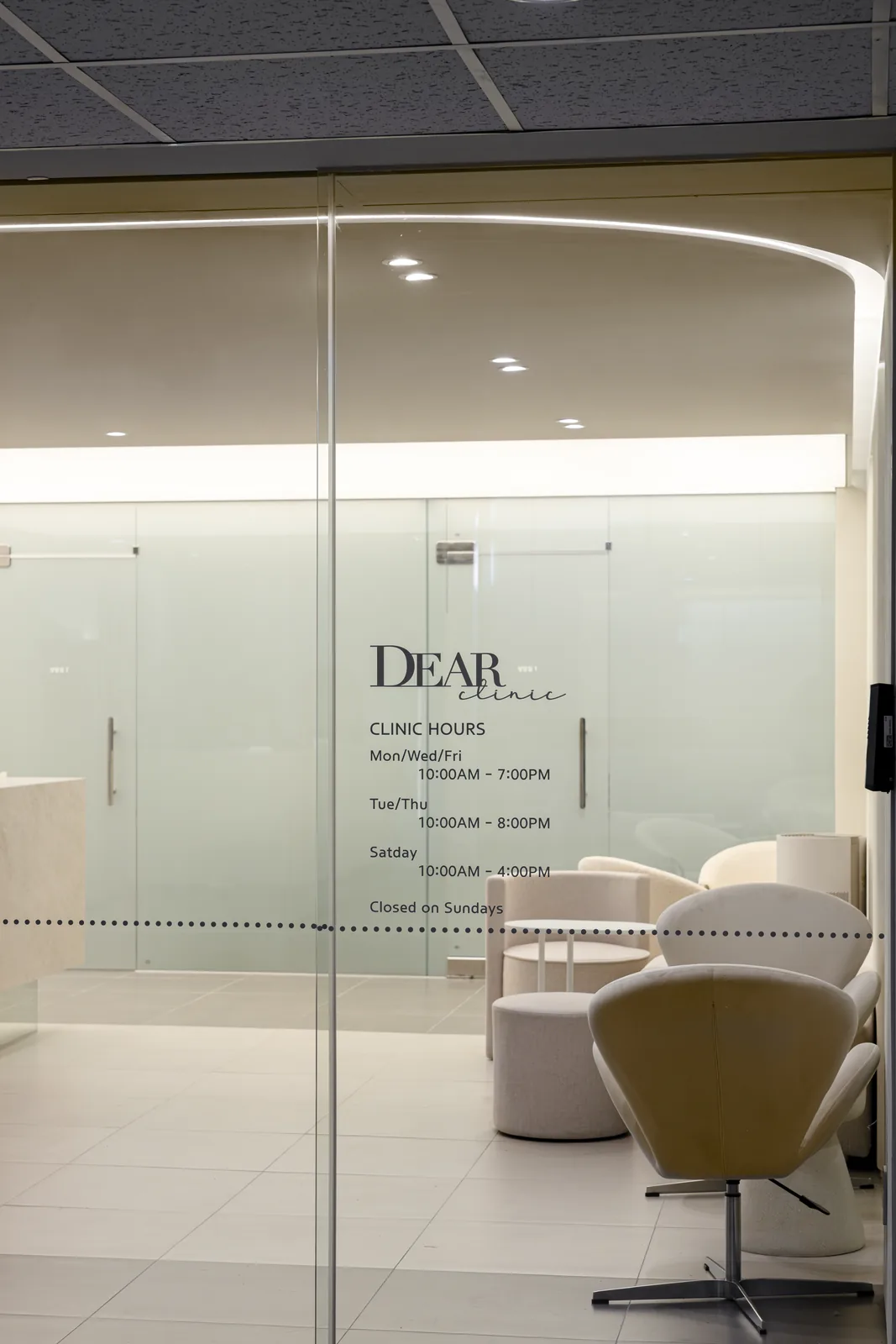
Entrance of Dear Clinic in Cheongdam, Gangnam, Seoul, with the clinic hours shown in English on the glass door
Side by Side

Rejuran vs Skinvive, compared

Chemistry, target, session pattern and published price — set out plainly so you can argue with us at the consultation.

  Rejuran Healer Skinvive
Active material PDRN — polydeoxyribonucleotide, sourced from salmon DNA Hyaluronic acid, in a booster preparation from Allergan
What it is aimed at Skin repair, texture and resilience Hydration and surface smoothness
Best suited to Skin that reads damaged, rough or over-treated Skin that reads healthy but dry, tight and dull
How it is delivered Injected across the treatment area; a needle-free jet device is one alternative studied in the literature A mapped field of evenly spaced microdroplets within the skin
Session pattern Planned as a short course, spaced by your director Field treated in a single visit, reviewed before repeating
Changes facial shape? No — it is not a volumising product No — it is not a volumising product
Also available at Dear Rejuran HB and Rejuran Eye lines Priced and mapped per cc of product
At Dear, from ₩300,000 (≈ $215) / 2cc ₩450,000 (≈ $320) / 1cc

Note the units differ: Rejuran Healer is quoted per 2cc and Skinvive per 1cc. Compare the plan your director writes, and treat the two headline numbers as incomparable. Both are published rates charged identically to Korean residents and international visitors, and your full course and total are agreed before treatment.

By Your Case

Four consultations that arrive most weeks

Written as they present in the room, in the order of how often we see them.

CASE 01 — REJURAN

Skin that has been through something

Reactive and rough, thinned by an aggressive year of treatment or simply worn down by one. When the barrier itself is the limiting factor, repair comes first and everything after it works better. Expect a course of spaced visits; we say that at the outset so the travel plan can absorb it.

CASE 02 — SKINVIVE

Healthy skin that reads dry

No real damage and no meaningful volume loss. A surface that feels tight by mid-afternoon, photographs flat and makes make-up cling. That is a hydration brief, and a mapped hyaluronic-acid field answers it more directly than a repair product would.

CASE 03 — SEQUENCED

Repair first, water second

Some skin wants both, in that order, with real spacing between them. Both products sit in the same building, so the pair can be staged across separate visits instead of compressed into one appointment to suit a calendar.

The fourth pattern is worth naming because it walks in most weeks: someone who has already had four or five booster sessions in a year and cannot tell whether a single one of them helped. The useful prescription there is a pause and a scan. A sixth syringe of anything is the one thing that will not answer the question. We will book you a diagnosis appointment and treat nothing on the day.

EVE Muse AI analysis screen showing multi-angle facial capture
Before & After

A Rejuran case from our own archive

One unretouched case treated at Dear Clinic and shown with consent. We publish only what we have audited. No Skinvive case is shown on this page, because the space is better left empty than filled with something unrelated.
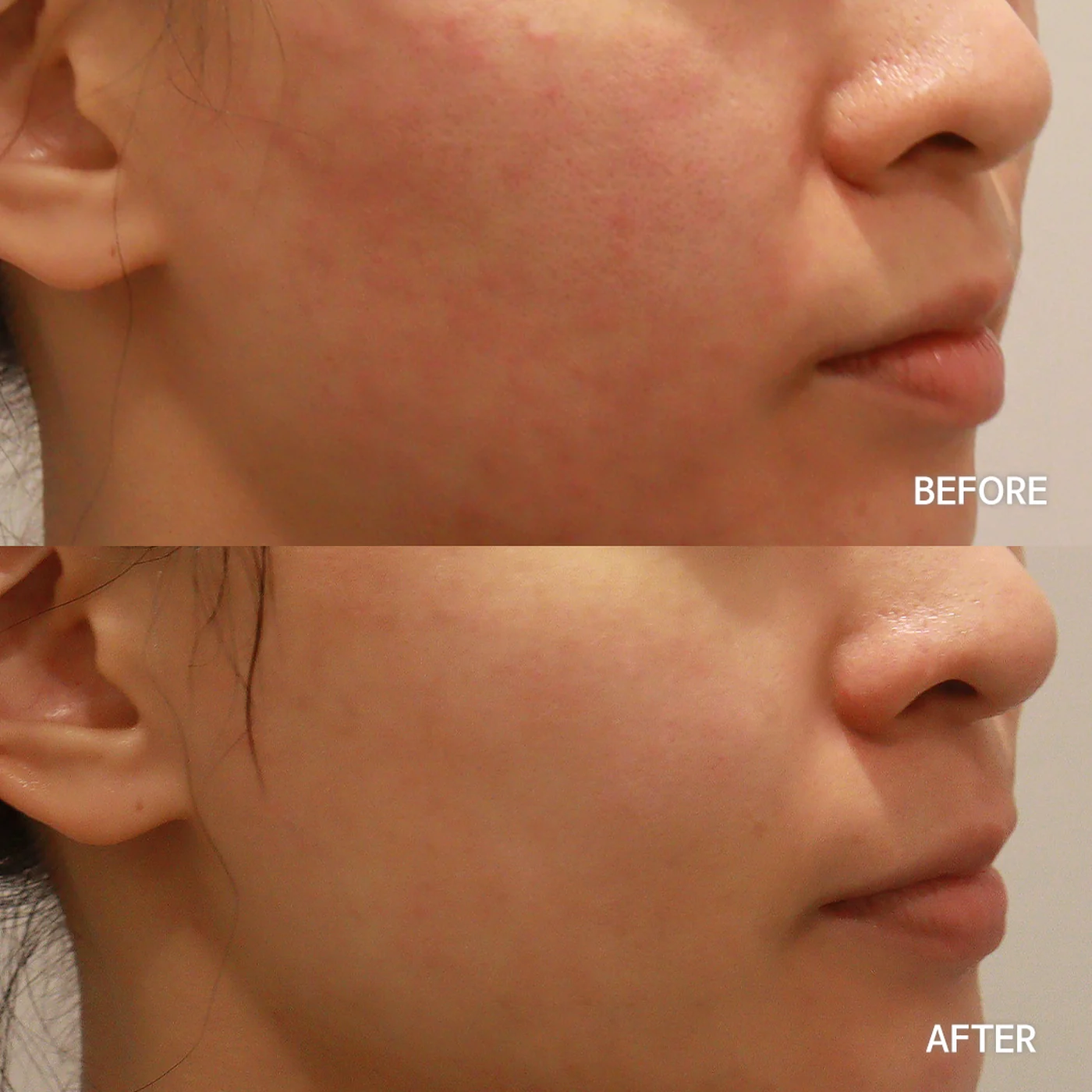
Rejuran PDRN booster before and after at Dear Clinic — same patient, same conditions, improved skin texture
Rejuran Healer · before / after — same person, same lighting and conditions, treated at Dear Clinic

Unretouched before/after photography of the same person under the same conditions, treated at Dear Clinic and published with consent. The photograph shows only the treatment it is labelled with. Individual results may vary; no specific outcome is implied or promised.

The Combination

Sequencing PDRN and a hydration field

Patients frequently arrive having decided they want both, which is often reasonable. What decides whether that works is sequencing:

Repair-focused work suits skin whose quality is the limiting factor, and it is planned as a course of spaced visits.
Hydration-focused work suits a surface that is fundamentally sound, and is judged on how evenly the field was covered.
Intervals are set so the skin is not asked to recover from two things at once, which is where most over-treatment happens.
Anything already in your calendar — lasers, peels, filler work, a long flight — is factored in before we add to it.

Both boosters, the full hyaluronic-acid filler range and every lifting platform are already in the building, so the possible prescriptions are one, the other, both in sequence, or nothing at all. The fourth of those is written more often than the marketing for either product would suggest.

EVE Muse 3D and AI skin analysis used to choose between a PDRN booster and a hyaluronic acid booster
The EVE Muse scan is what separates a repair case from a hydration case — before either product is quoted.
Dear, Knowhow

Where the PDRN-or-HA call gets made

01 — THE FULL ARSENAL

Neither product pays our rent

Both boosters are stocked, alongside the rest of the booster shelf, the filler range and the complete lifting line. When one is recommended, the scan pointed at it.

02 — DIAGNOSIS FIRST

Hydration, texture and elasticity, measured apart

The EVE Muse 3D capture with five-light-source analysis reads those three properties as separate values. A repair case and a hydration case look much the same in a bathroom mirror and quite different on that read-out. That gap is the entire reason we scan before quoting anything.

03 — DIRECTOR-PERFORMED

The same doctor reads the scan and holds the needle

Injection discipline decides the outcome of both products, which is why your session is director-performed by the doctor who read your scan, working to the depth and spacing the plan specifies and to intervals chosen for your skin. Bruising at the entry points, small bumps and a day or two of redness are ordinary with either product; a patchy field and a palpable lump are what unhurried placement is there to prevent.
In the clinic

The devices and hands behind this treatment

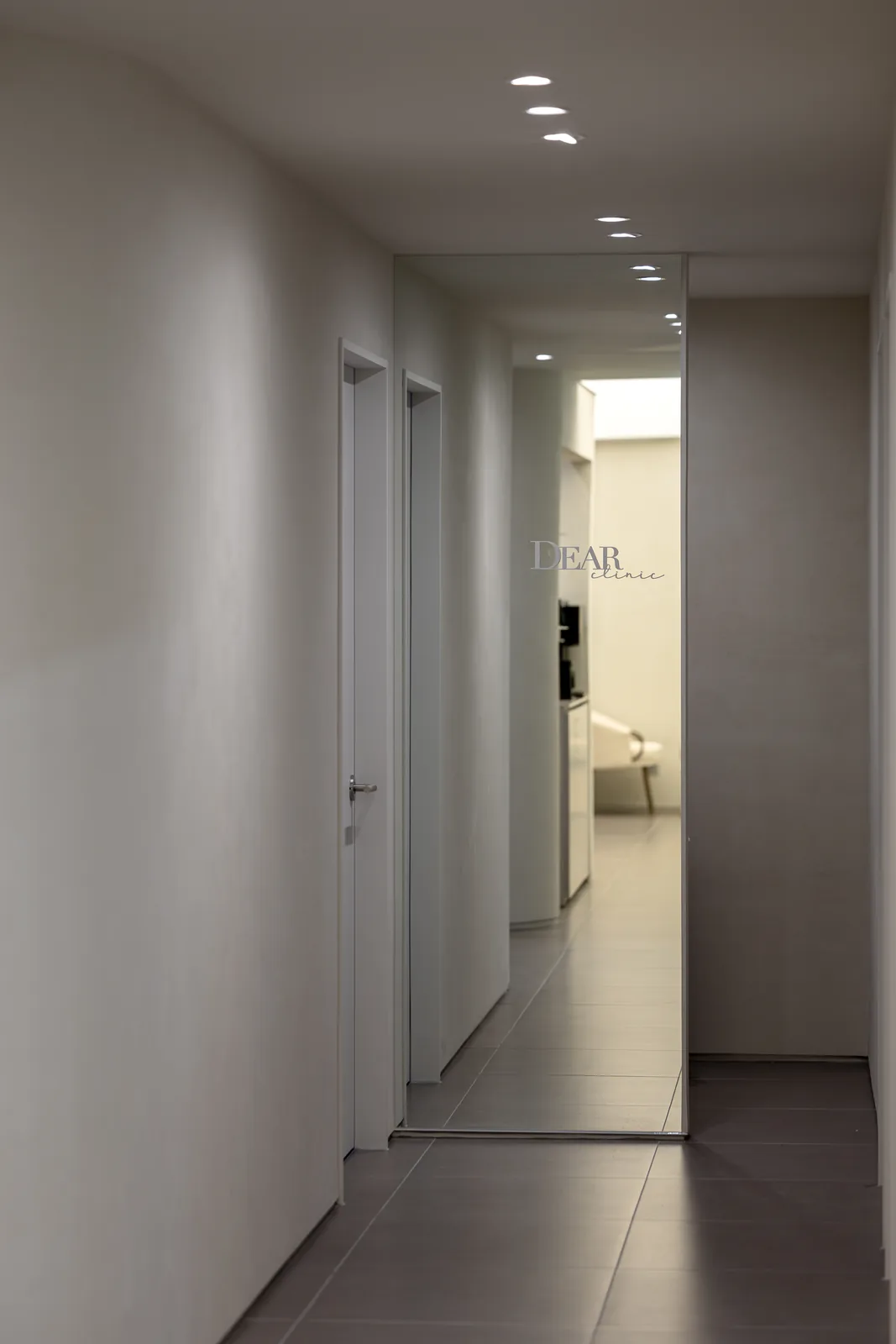
Treatment corridor at Dear Clinic Cheongdam, with the clinic logo reflected in a full-height mirror
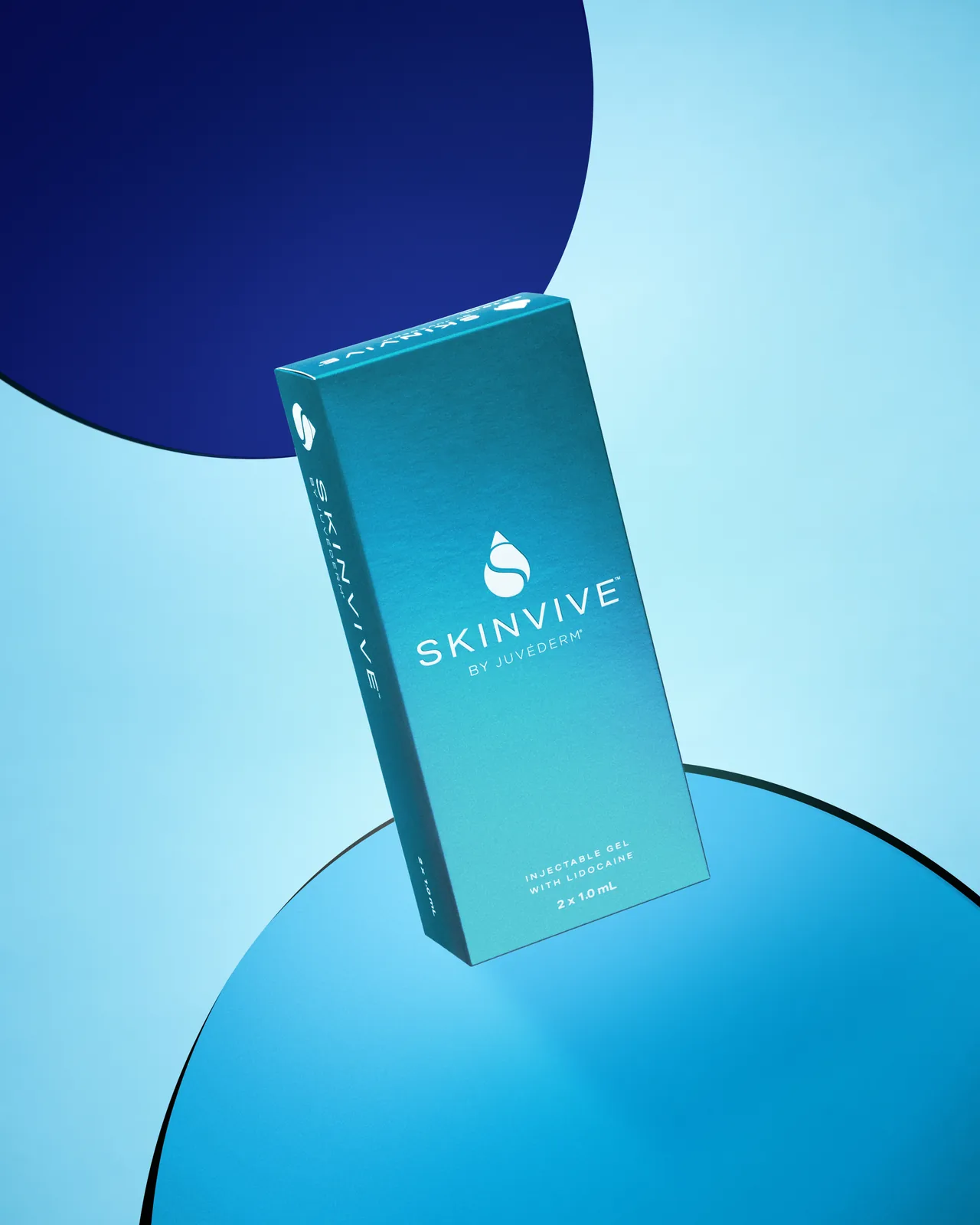
Skinvive by Juvederm carton floating between two blue discs
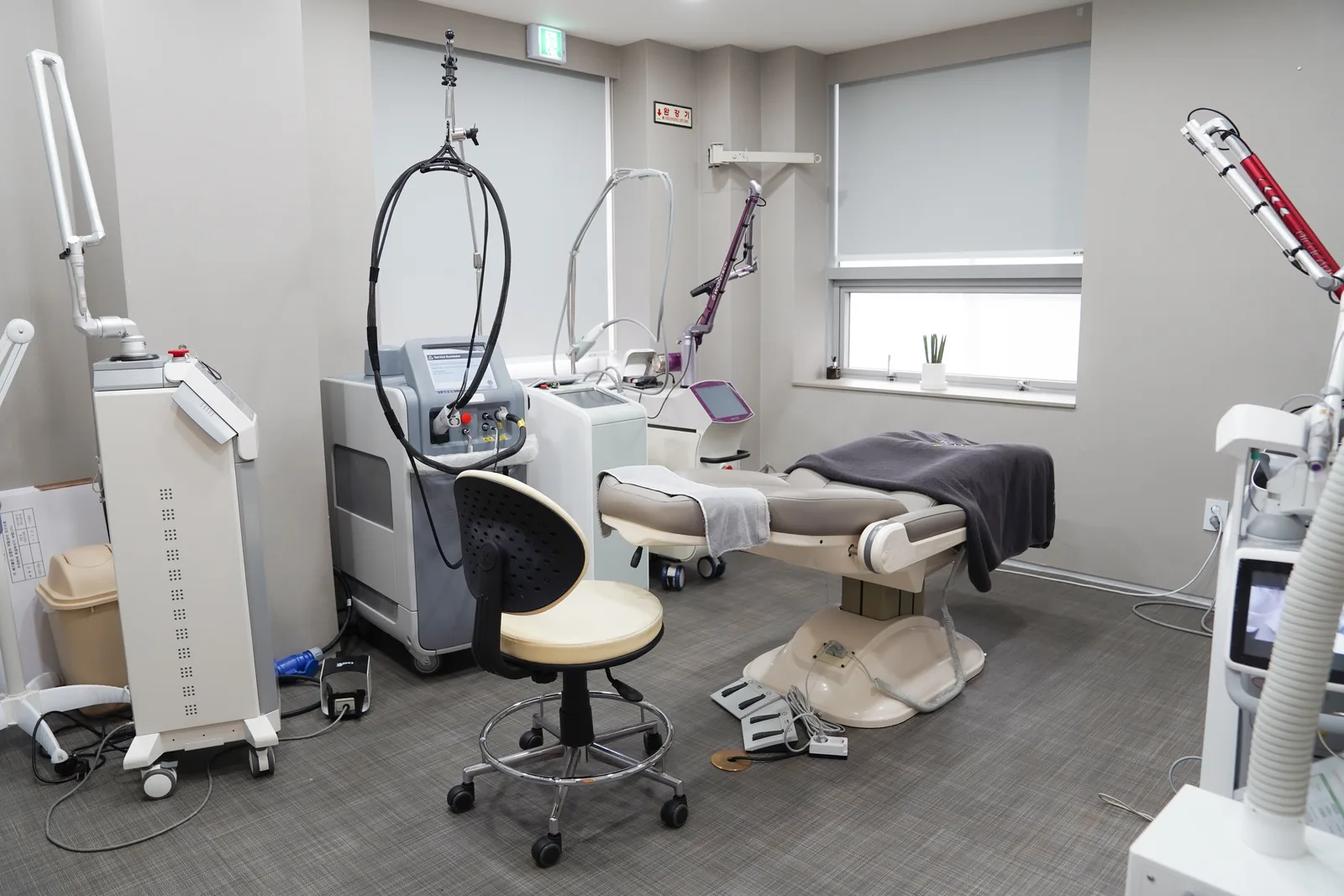
Laser treatment room at Dear Clinic Cheongdam with several laser platforms and a powered treatment chair
When We Decline

The consultations that end without a syringe

A booster cannot lift a face, refill a hollow cheek or correct pigment, and no number of sessions changes that. So: if your diagnosis reads descent, neither of these is the right treatment and we quote a lifting protocol instead. If it reads volume loss, we quote a filler. If the barrier is inflamed, or there is an active infection at the entry points, or you are pregnant or breastfeeding, we decline to inject and ask you back when that has passed. A salmon-derived product also comes off the table where there is a seafood allergy to consider. Hearing any of that on day one costs you a consultation; hearing it after a course costs you the course.
01
Repair vs hydration, separated
02
One published price list
03
Sequenced, not stacked
04
Consultations that end in no treatment

Suitability and outcome vary by individual and are assessed at your in-person diagnosis.
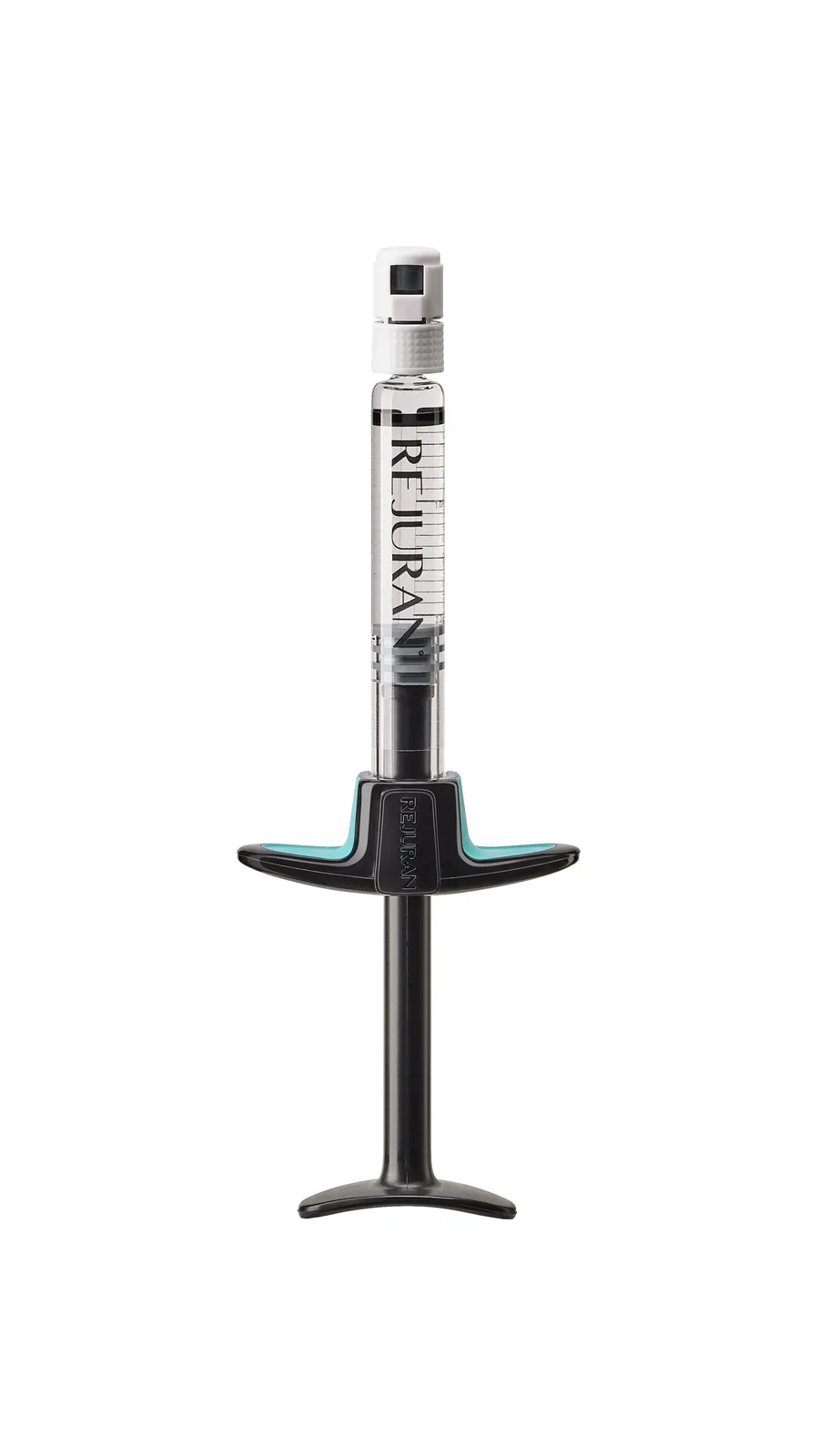
Rejuran pre-filled syringe with a dark grey plunger, on a transparent background
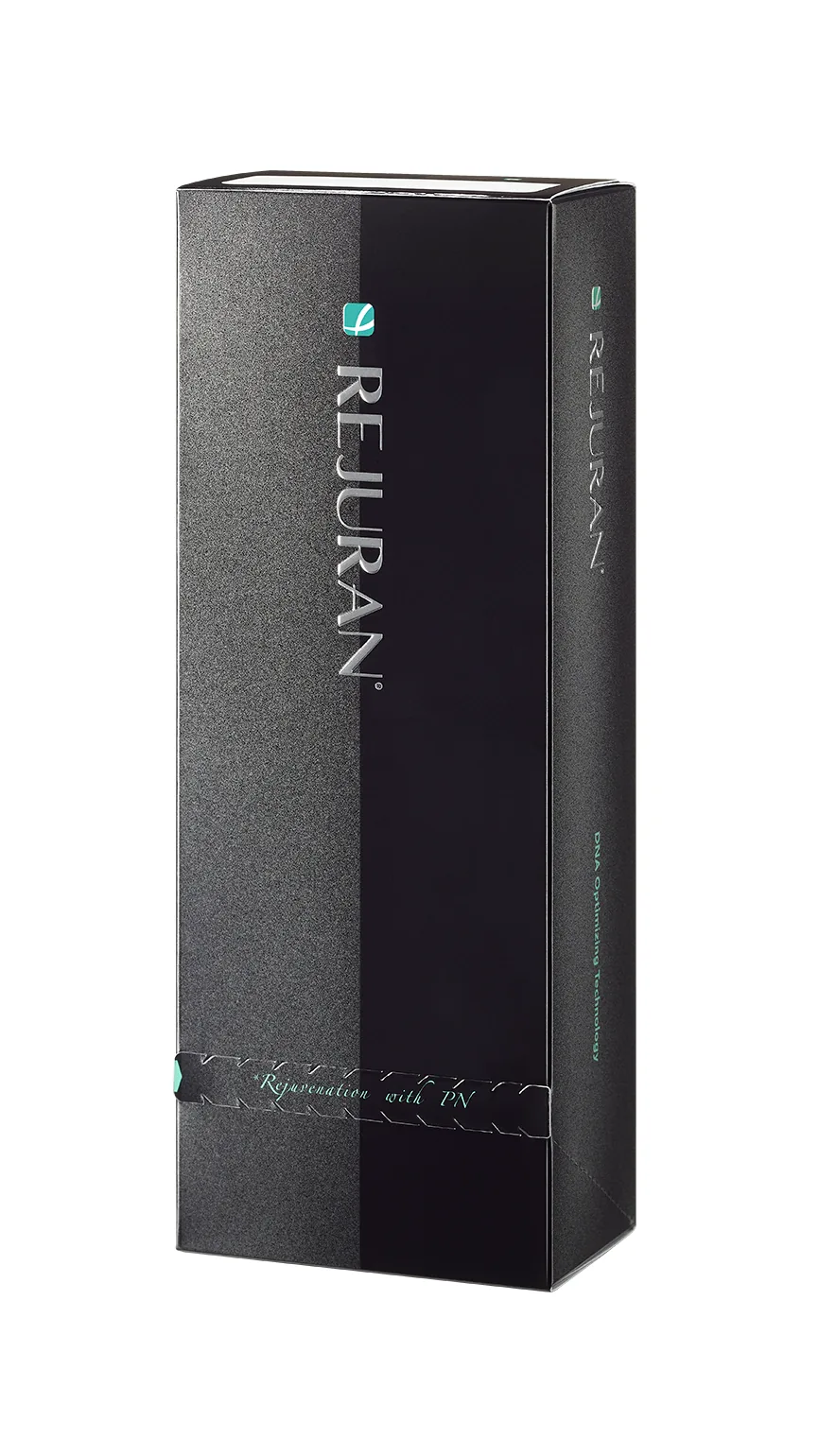
Rejuran carton standing upright, three-quarter view
Caution

After either treatment

Injection points, small bumps and mild redness are ordinary on the day and usually settle within a day or two.
Keep cleansing and make-up gentle for the first day or two, and avoid pressing or massaging the treated area unless told otherwise.
Leave scrubs, exfoliating acids and peels alone for about a week.
Avoid alcohol, smoking and saunas for several days — each raises the risk of inflammation while the skin settles.
If anything persists or worsens, contact us straight away. Follow-up care is part of the treatment and carries no separate charge.

Tell your director what else is on your calendar — a laser appointment, dental work, a wedding, a long flight. With a course-based booster, timing is part of the prescription.
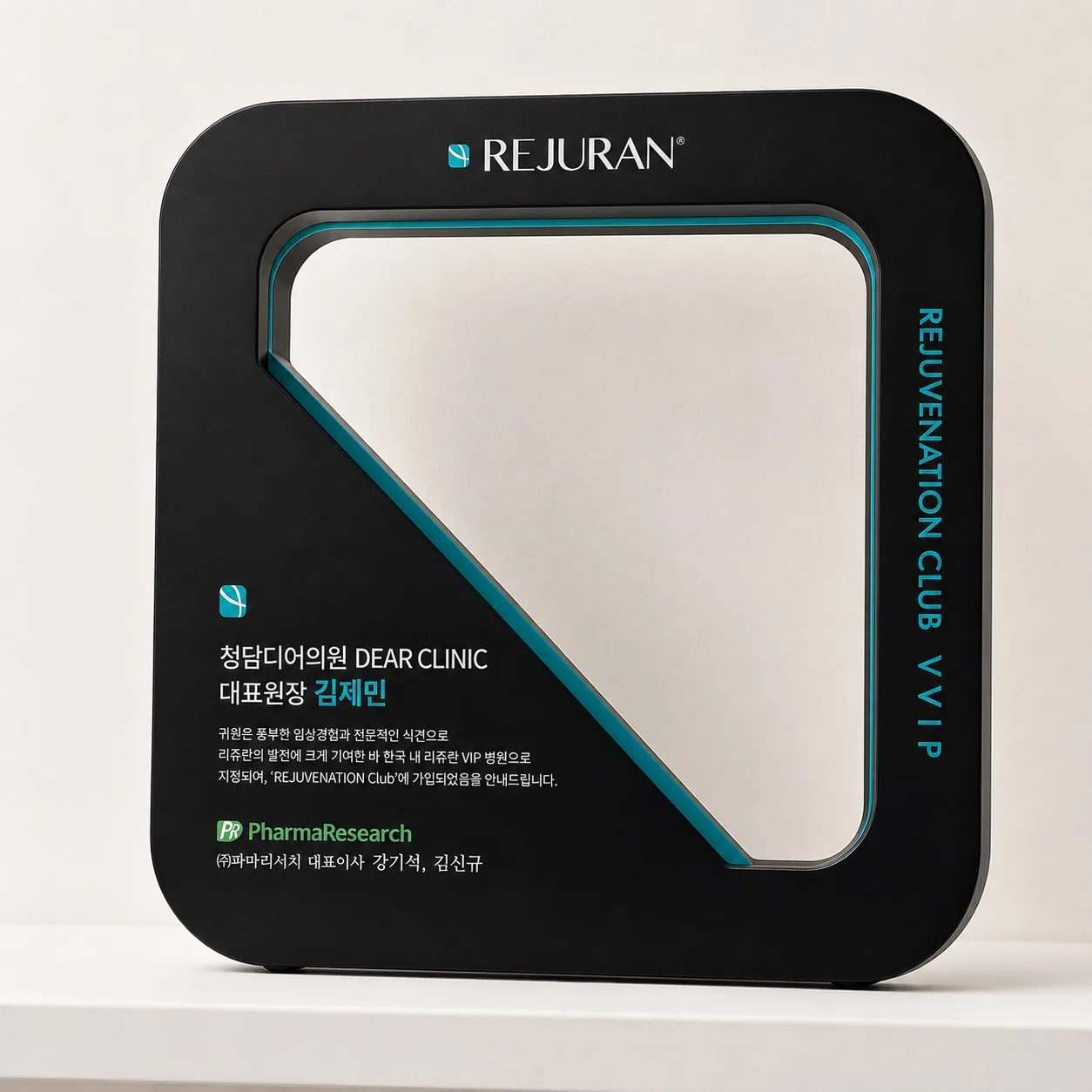
Rejuran Rejuvenation Club VVIP membership plaque issued to Dear Clinic
Medical Team

Five doctors, one standard

Director-performed treatment is a Dear promise — your procedure is planned and performed by the doctors below.


Dr. Jemin Kim — Medical Director and Founder, Dear Clinic
Dr. Jemin Kim
Yonsei University College of Medicine
Medical Director · Founder
Dr. Sanghyun Lee — Director, Dear Clinic
Dr. Sanghyun Lee
Seoul National University College of Medicine
Director
Board-certified · Family Medicine
Dr. Seonhaeng Lee — Director of Aesthetic Medicine, Dear Clinic
Dr. Seonhaeng Lee
Chosun University College of Medicine · Residency, Samsung Medical Center
Director, Aesthetic Medicine
Dr. Daeun Jung — Director, Dear Clinic
Dr. Daeun Jung
Ajou University College of Medicine
Director
Board-certified · Family Medicine
Dr. Woojae Jung — Director of Aesthetic Medicine, Dear Clinic
Dr. Woojae Jung
Seoul National University — B.S. in Medicine
Director, Aesthetic Medicine
Patient Reviews

What our patients say

Real verified reviews from our Google Business Profile.

4.9★★★★★ 293 Google Reviews
FAQ

Rejuran vs Skinvive, answered

What is the difference between Rejuran and Skinvive?
Chemistry and intent. Rejuran Healer is a PDRN product — polydeoxyribonucleotide, sourced from salmon DNA — prescribed when skin quality itself needs repairing. Skinvive is a hyaluronic-acid booster from Allergan, placed as a field of small droplets to improve hydration and surface smoothness. Neither adds volume and neither lifts, so the choice comes down to repairing the skin or hydrating it. The units differ too: Rejuran is quoted per 2 cc here, Skinvive per 1 cc.
Which one is better for glow?
Depends what is dulling your skin. If the surface is simply dry and tight, hydration usually reads as glow quickly and a hyaluronic-acid booster is the more direct route. If the dullness comes from rough, damaged texture, hydrating it only masks the problem and a repair-focused course serves you better. The EVE 3D scan tells those two apart at the consultation, and the answer is often less flattering than the question hoped: some complexions read dull because of pigment or because of sleep, and neither injection fixes that.
Which is better for acne scarring or rough texture?
Neither is a scar treatment. For genuinely rough or damaged skin quality, a repair-focused PDRN course is the more logical of the two. True textured scarring is a different conversation involving other modalities, and it is the conversation we will have with you; a booster that cannot reach the problem is not the right treatment for it.
How much do Rejuran and Skinvive cost in Seoul?
At Dear Clinic, Rejuran Healer is ₩300,000 (≈ $215) for 2cc and Skinvive is ₩450,000 (≈ $320) per 1cc, with the Rejuran HB and Eye lines quoted at ₩400,000 (≈ $285) for 2cc. Because the units differ, ask for the total of your plan and ignore the two headline figures. Every rate is published and identical for residents and international visitors.
Can I have both, and in what order?
Yes, with spacing. Where skin needs both, the usual reasoning is to repair quality first and address hydration afterwards, so each treatment lands on skin that can respond to it. Your director sets the intervals from your scan and your travel dates. What we avoid is compressing both into one appointment because a schedule is tight.
How many sessions will I need?
A PDRN booster is planned as a short course of spaced visits, while a hydration field is treated in one appointment and reviewed before repeating. Exact numbers depend on your skin, so we quote your course at consultation instead of printing an average here. Nothing is added to the plan afterwards without asking you. If you are in Seoul for a fixed number of days, say so at the start: a course can be begun here and continued on your next trip, which is a better plan than compressing sessions into a week because a calendar demands it.
Are these fillers?
Not in the volumising sense. Both are boosters that work on skin quality instead of structure, and neither is placed to support a contour. Hyaluronic acid appears in booster preparations and in structural fillers alike, but the formulations and the injection depths are different. Where a diagnosis shows genuine volume loss, a filler is what we recommend and quote.
Which one hurts more?
Both involve multiple small injections, so both feel like a series of quick pinpricks under topical numbing applied beforehand. Sensitivity varies more between people than between the two products. Tell your director if a particular area is uncomfortable and the sequence can be adjusted.
Is there downtime with either?
Minimal for both, but plan a quiet evening. Injection points, small bumps and mild redness are common immediately afterwards and generally settle within a day or two, with occasional bruising possible. Most patients are comfortable with make-up the following day. Keep saunas, alcohol and hard exercise out of the first few days.
Which lasts longer?
Duration is not comparable in a useful way, because a course-based repair product and a single-visit hydration field are not measured on the same clock, and both vary with age, skin type, climate and lifestyle. We give you an expected range for your own skin in person, and review the result before proposing anything further.
Is either treatment safe?
Every injectable carries risk, which is why protocol matters more than the product name. Hyaluronic-acid injectables have a substantial safety literature covering facial vascular anatomy and the role of hyaluronidase, and polynucleotide boosters have their own published work; both bodies of literature are referenced at the foot of this page. Your medical history is reviewed before treatment and aftercare is included. Tell your director about autoimmune conditions, current medication, recent illness or any previous reaction to an injectable, and about allergies — a salmon-derived product is a reasonable thing to raise if you have a seafood allergy, and your director will discuss it with you directly.
Can I be scanned and treated on my first day in Seoul, and is the price the same for visitors?
Usually yes to the first, and always yes to the second. The scan and consultation happen in the first part of the appointment, and where your director confirms suitability, a Skinvive field or the opening Rejuran session can follow immediately. One published price list applies to everyone, with KRW as the payable amount and USD shown as a reference conversion. Send the consultation form below with your arrival and departure dates: we reply in English within one business day and hold the slot without a deposit. Dear Clinic is open 365 days a year including Sundays and public holidays, so a course can be started on day one and continued on a later visit.
Consultation

Ask which booster your skin needs

Your questions, answered in English within one business day.

Scientific Evidence

Science behind PDRN and hyaluronic acid — peer-reviewed references

Comparing these two boosters means reading two separate bodies of literature: published work on polydeoxyribonucleotide, including its delivery methods and its established and emerging research directions, and the wider evidence base on injectable hyaluronic acid covering how products differ physically, where the facial danger zones lie and how hyaluronidase is used. The references below are listed as titles, journals and publication years with verifiable DOIs.

They are cited to show the basis of our planning and safety protocol, and not as evidence of any particular result. Suitability and outcome vary between individuals and are assessed at your own in-person diagnosis.

  1. Hong J, et al. Therapeutic Performance of Needle Injection Versus Needle-Free Jet Injector System for Polynucleotide Filler in Skin Rejuvenation. Journal of Cosmetic Dermatology. 2024. doi:10.1111/jocd.16595
  2. Kim J. Polydeoxyribonucleotide (PDRN) - Established Efficacy and Emerging Directions in Research and Development. Journal of Biotechnology and Bioindustry. 2025. doi:10.37503/jbb.2025.13.14
  3. Guizzardi S, et al. Polydeoxyribonucleotide (PDRN) promotes human osteoblast proliferation: A new proposal for bone tissue repair. Life Sciences. 2003. doi:10.1016/s0024-3205(03)00547-2
  4. Fagien S, et al. Rheologic and Physicochemical Properties Used to Differentiate Injectable Hyaluronic Acid Filler Products. Plastic & Reconstructive Surgery. 2019. doi:10.1097/prs.0000000000005429
  5. Scheuer J, et al. Anatomy of the Facial Danger Zones: Maximizing Safety during Soft-Tissue Filler Injections. Plastic & Reconstructive Surgery. 2017. doi:10.1097/prs.0000000000002913
  6. Baker A. The use of hyaluronidase in aesthetic medicine: a literature review. Journal of Aesthetic Nursing. 2016. doi:10.12968/joan.2016.5.3.129

References are provided for information — outcomes vary by individual and are assessed at your diagnosis.

Book WhatsApp Call