Home
Doctors Registration What to Ask FAQ Book a Consultation
ENES
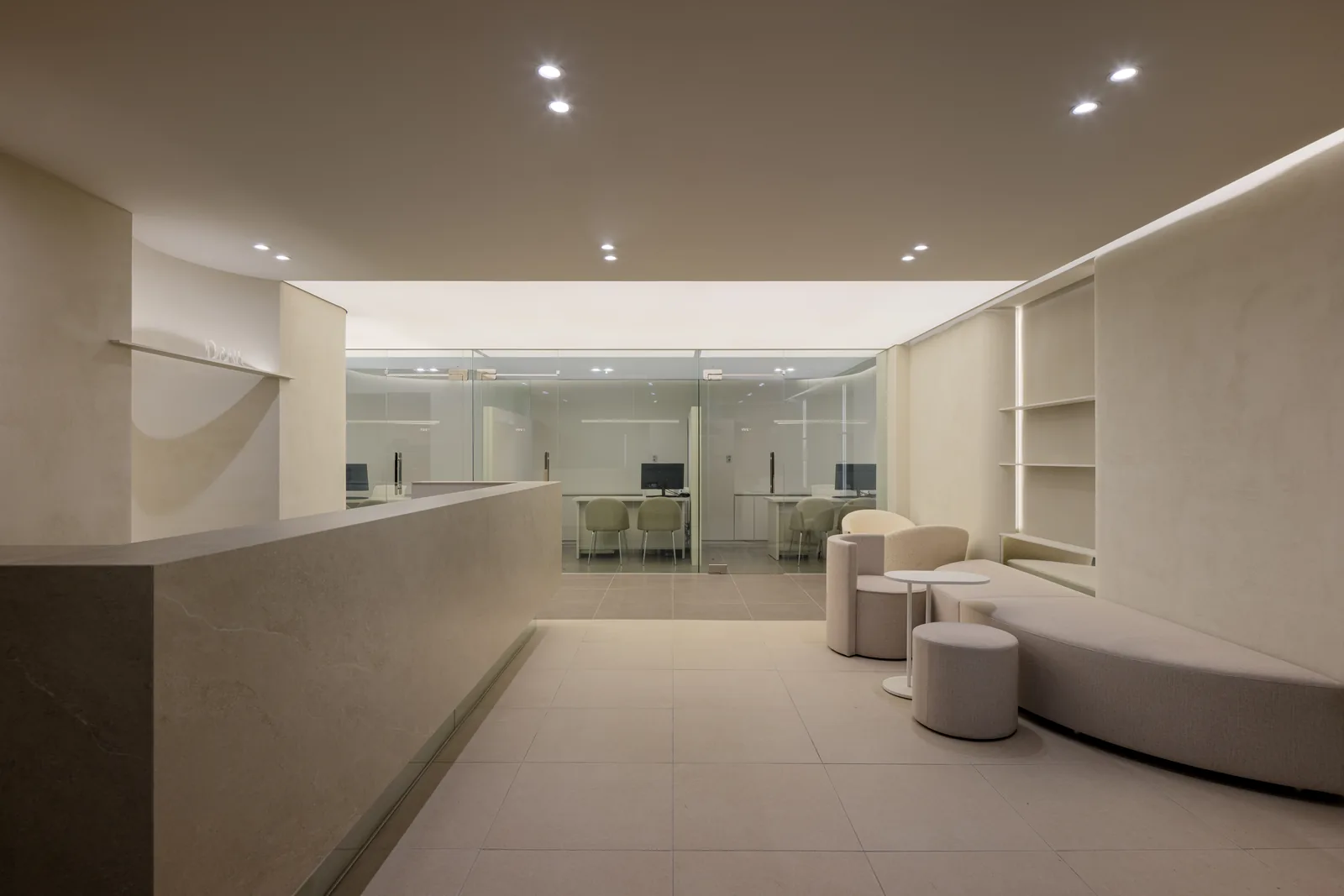
Main reception with stone counter and bouclé armchairs at Dear Clinic Cheongdam
Dear Clinic · About Dear · Registration and Records
Checking a Korean Clinic Before You Sit Down

How to Verify a Clinic's Licence in Cheongdam, Gangnam, Seoul

What Dear Clinic publishes about its own standing, what a foreign patient care registration number actually means, and the questions worth putting to any Korean clinic before a first appointment.

Foreign patient registration M-2024-01-08-8131 Business registration 296-06-02300 Open 365 days
Book a Consultation Read the Registration
The Short Answer

What a Korean clinic should be able to show you before a first appointment

Four things are checkable from a phone: the registered name of the medical institution and who represents it, its business registration number, whether it is entered on Korea's register for treating foreign patients, and the names and roles of the doctors who work there. Dear Clinic publishes all four on this site, and the first three sit in the footer of every page.

The registered name is dear clinic, and the representative is Dr. Jemin Kim. The business registration number is 296-06-02300 and the foreign patient care registration number is M-2024-01-08-8131. The premises are the fifth and seventh floors of the Namhangang Building at 85-3 Cheongdam-dong, Gangnam-gu, Seoul.

None of this describes how good a result will be. It describes whether there is an identifiable institution, with an identifiable person responsible for it, operating at an identifiable address. That is the floor a patient should stand on before any conversation about treatment starts, and it costs nothing to check.
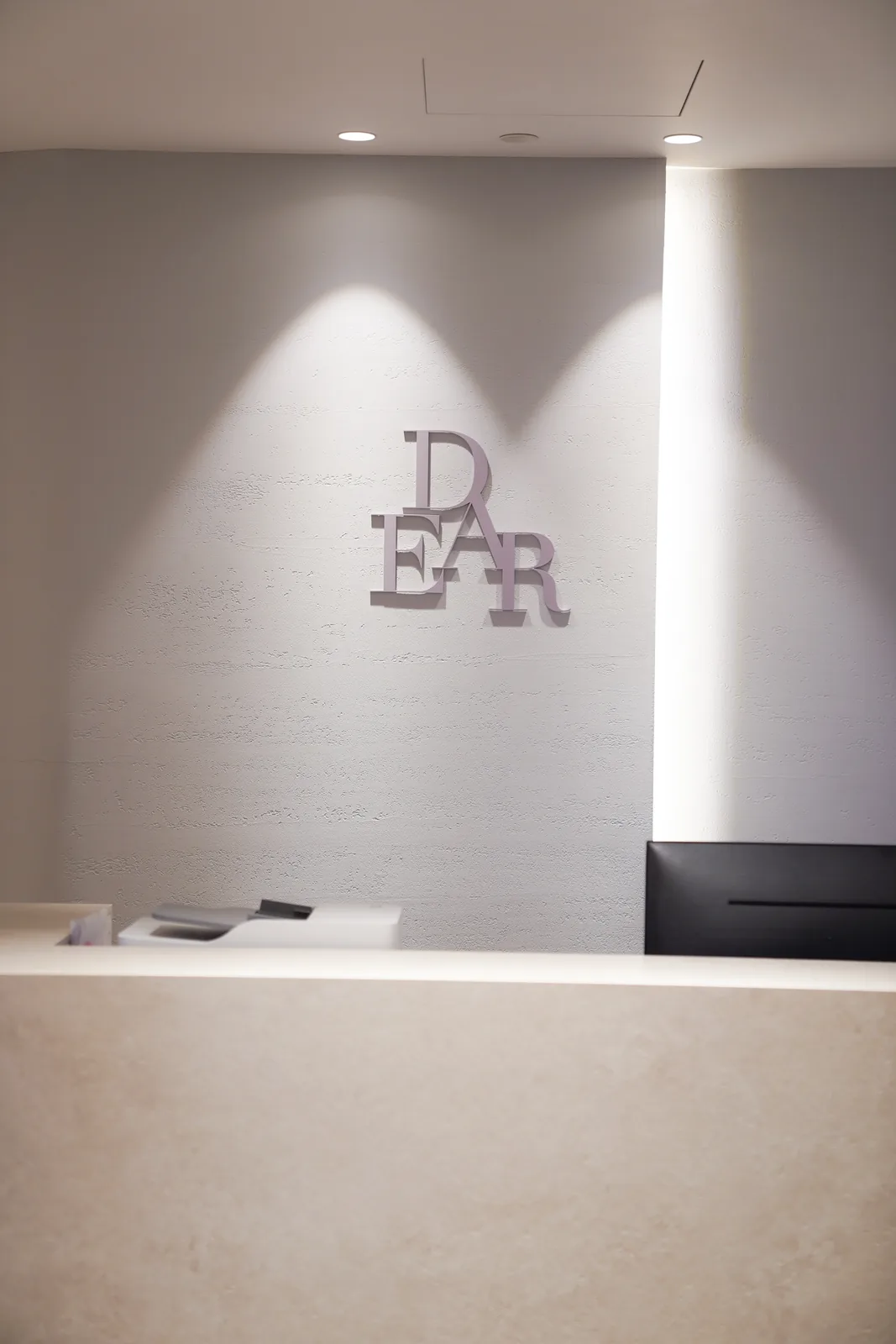
Mauve DEAR lettering above the Floor A reception counter at Dear Clinic Cheongdam
The reception counter where the registration documents are held and can be asked for.
The Registration

What foreign patient care registration M-2024-01-08-8131 means in plain words

A short explanation of one number, without any attempt to give you legal advice about it.

It means the clinic is registered in Korea to treat patients from abroad. Korean medical institutions that take international patients are entered on a register maintained for that purpose, and the number issued on entry is the one printed here. Dear Clinic's is M-2024-01-08-8131.
It is an administrative record, and not a verdict on outcomes. Registration says an institution is recognised for this activity. It does not rank results, predict how your own skin will respond, or substitute for the consultation where those things are actually discussed.
It is printed where you can find it without asking. The number sits in the legal line at the foot of every page on this site, in English and alongside the business registration number. A number that has to be extracted from someone is worth less than a number that is simply published.
We are not the right source for what it obliges us to do. This page does not set out Korean medical regulation and gives no legal opinion. If you need the statutory position, take it from the relevant Korean authority and not from a clinic's own website, including ours.

The practical value of the registration for a visiting patient is administrative continuity: an institution set up to see international patients has the records, the consent process and the follow-up channel already built for people who will not be in the country next week. Our English consultation page covers how that works in the room.

On the Record

Four records this clinic publishes that you can read before you arrive

Each of these is either on this site already or available at the counter on request.

RECORD 01

The institution and the person responsible for it

Registered name, representative director and business registration number, printed in the footer legal line. One named doctor carries responsibility for the institution, which is the person a regulator would deal with and the person a patient can name.

RECORD 02

The five doctors, with their roles stated accurately

All five are named on the doctors section with their medical schools. Two of them are board-certified in Family Medicine and are described that way; the remaining three are licensed physicians practising aesthetic medicine, and are not described as anything else.

RECORD 03

The full rate card, published in advance and not quoted on the day

Every line the clinic sells has a figure on the published price list, in Korean won with an approximate dollar conversion. One card covers Korean and international patients, so a rate can be compared before a consultation instead of after it.

RECORD 04

The equipment, named by manufacturer and model

Devices are identified by maker and model across the treatment pages, and manufacturer-issued clinic plaques are held on site. Ask to see the box, vial or tip for anything injected or fitted to a handpiece; that request is normal and is met without fuss.

Our clinic overview page sets out what sits on the two floors and how the six treatment categories are organised, which is the other half of knowing what you are walking into.

What to Ask

Five questions worth putting to any Korean clinic at the consultation itself

These are the questions we would want a member of our own family to ask, and they are answerable on the spot.

Who performs the procedure, and is it the person advising me now. At Dear Clinic the answer is that treatment is director-performed: the doctor who reads your capture is the one holding the device. Ask it plainly wherever you are, because the handover between adviser and operator is where a plan most often changes.
What exactly is being put into me or used on me. Manufacturer, product line and quantity for anything injected; maker, model and settings terminology for anything energy-based. A clinic that treats this as a reasonable question is telling you something useful by the way it answers.
What is the total, and what happens if the plan changes in the room. An itemised figure against published rates, agreed in writing beforehand. If a line is added or removed mid-session, it should be re-agreed and re-priced before it happens, never explained at the counter afterwards.
What are the named risks for this specific route, and what is the plan if one occurs. Bruising, swelling, redness, burns, nodules, infection, asymmetry, numbness, vascular events on injectable routes, pigment changes after laser work. Ask which ones apply to you and who you contact, at what hour, if one appears.
In which language will consent actually be taken. Agreement given through a language you cannot argue in is not informed agreement. Here the clinical conversation is held in English, with coordination alongside for forms and aftercare notes.

Where the answer to your question is that a route does not suit you, we decline it and write down what would suit instead. A refusal delivered before payment is worth more than any reassurance delivered after it.

Published Rates

Three lines from the card, shown with what each published unit counts

A rate is only checkable if the unit behind it is stated, so here are three with theirs spelled out.

LineWhat the published unit actually countsWhere to read it in fullListed rate
Ultherapy Prime, 100 shotsA block of 100 shots of micro-focused ultrasound, delivered with visualisation to 8 mm at focal depths of 1.5, 3.0 and 4.5 mm. Plans are quoted in blocks, so the count is the unitLifting category₩400,000 (≈ $285)
Rejuran Healer, 2ccTwo cubic centimetres of polynucleotide injected into the skin in one visit. Volume is the unit, and a course is several of these visits and not one larger oneSkin booster category₩300,000 (≈ $215)
Dual laser toning, 1 sessionOne low-fluence toning session with skincare. The session is the unit, which is why the published research on repetition and its limits belongs beside the figureLaser category₩200,000 (≈ $145)

The complete card is on the published price list. One card applies to Korean and international patients alike, settlement is in Korean won, and the dollar figure beside a rate moves with the exchange rate. Where a featured programme banner states that a figure excludes VAT, the final number is confirmed to you in writing at the consultation.

Dear, Knowhow

What sits behind the paperwork once you are in the building

01 — THE FULL ARSENAL

Six categories stocked across two floors, all of them named on the site

Lifting platforms, injectables, boosters, pigment lasers, acne routes and body work occupy the fifth and seventh floors. Publishing the inventory is itself a checkable claim: you can compare what is written here against what stands in the rooms you are shown.

02 — DIAGNOSIS FIRST

EVE Muse imaging produces a record you can see for yourself

Three-dimensional capture under five light sources with AI analysis reads pigment, texture, elasticity and vascular tone. The reading is shown to you on screen, which makes the basis of the recommendation inspectable instead of assertable.

03 — DIRECTOR-PERFORMED

One named doctor owns the plan and carries it out

Treatment is director-performed, so responsibility does not diffuse between a consultant and an operator. If you want to know who to hold accountable for a decision, the answer is the person whose name is on your chart.
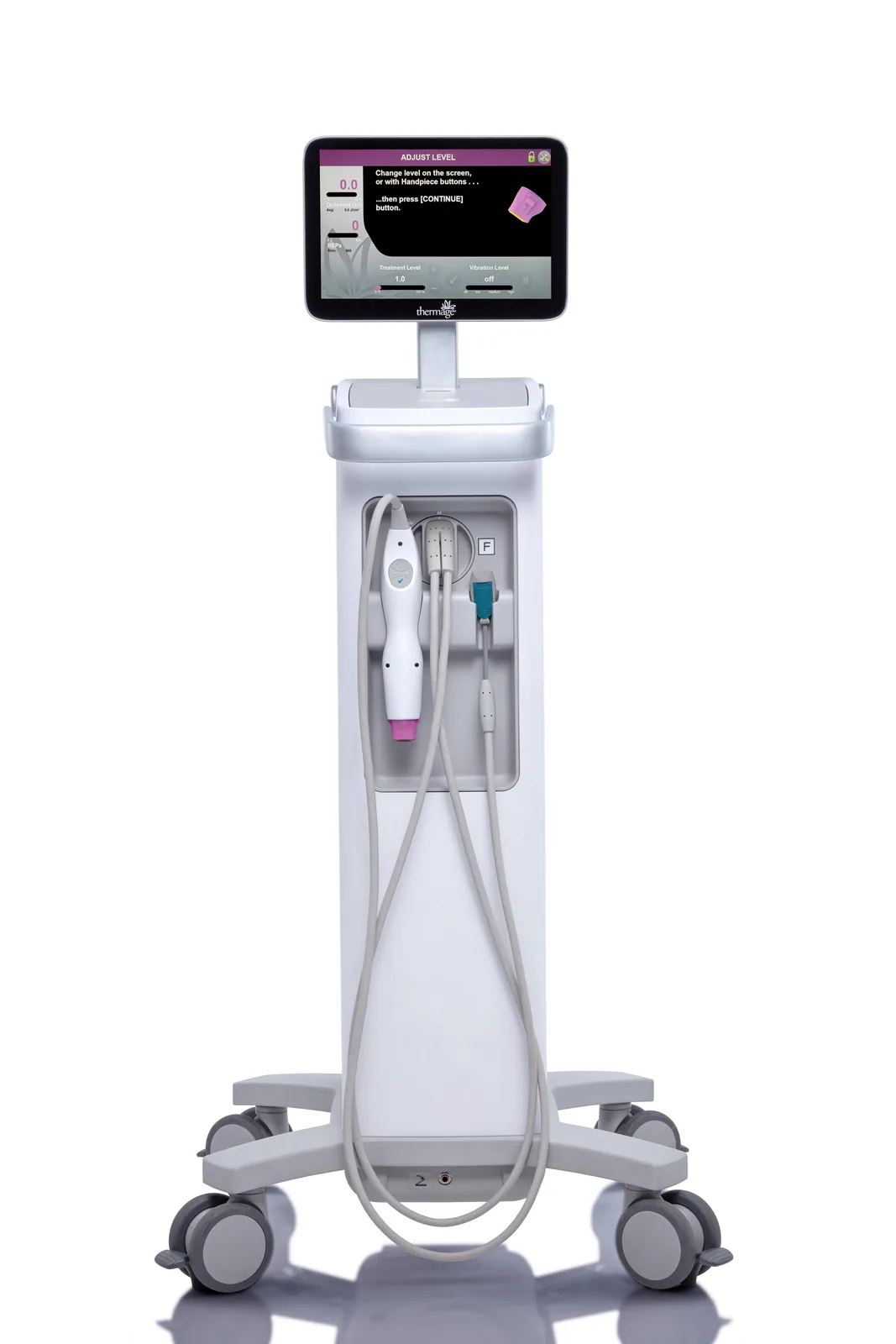
Thermage system viewed head-on with its handpiece and treatment tip in the cradle
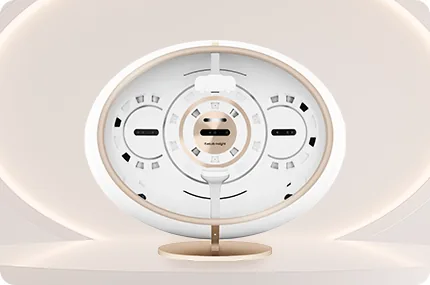
EVE Muse 3D skin analysis unit at Dear Clinic, used at the start of every consultation
The capture that every plan is built from, shown to you on screen before anything is recommended.
In the clinic

The devices and hands behind this treatment

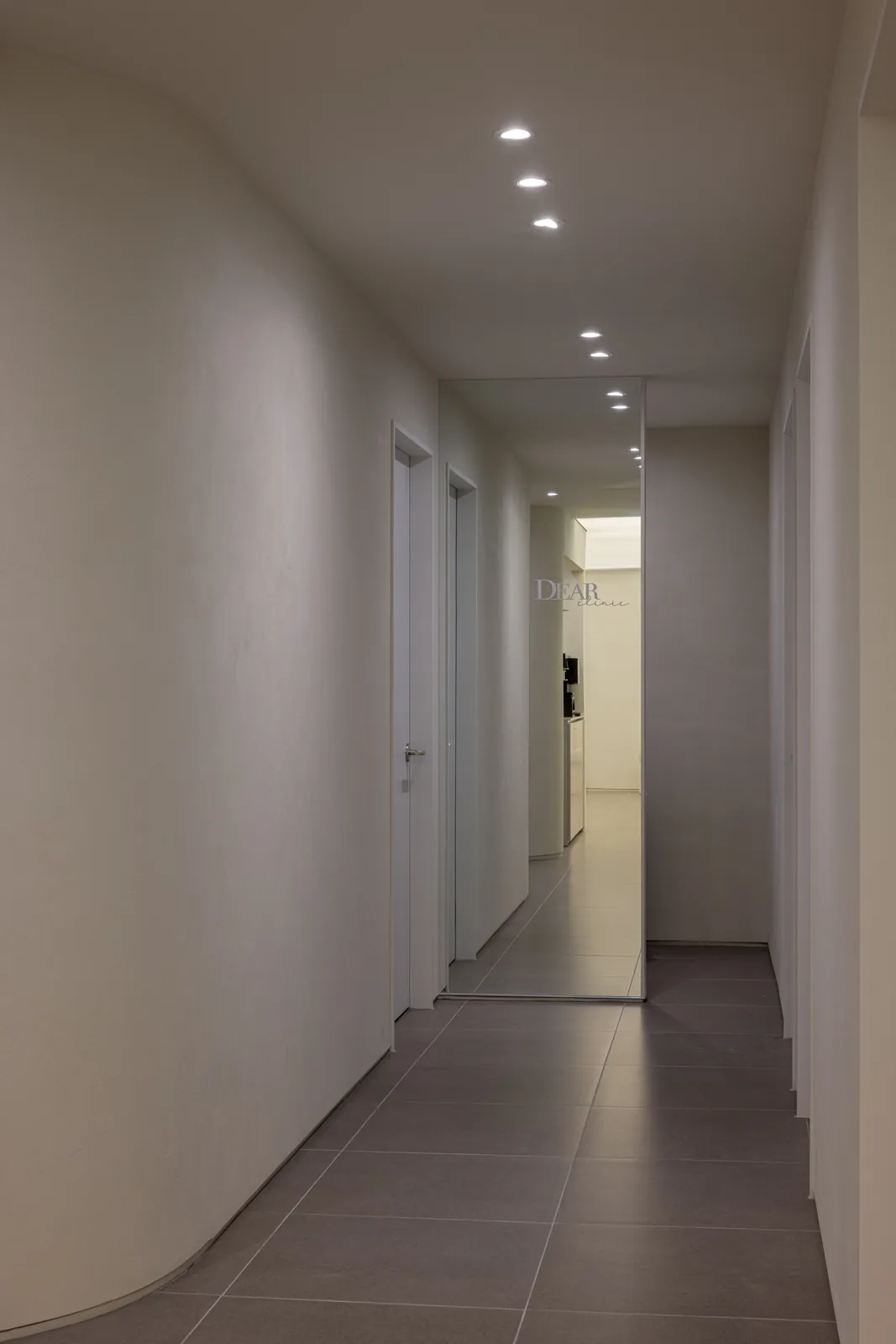
Treatment corridor with a mirrored end wall reflecting the DEAR clinic logo
The corridor connecting consultation to the treatment rooms
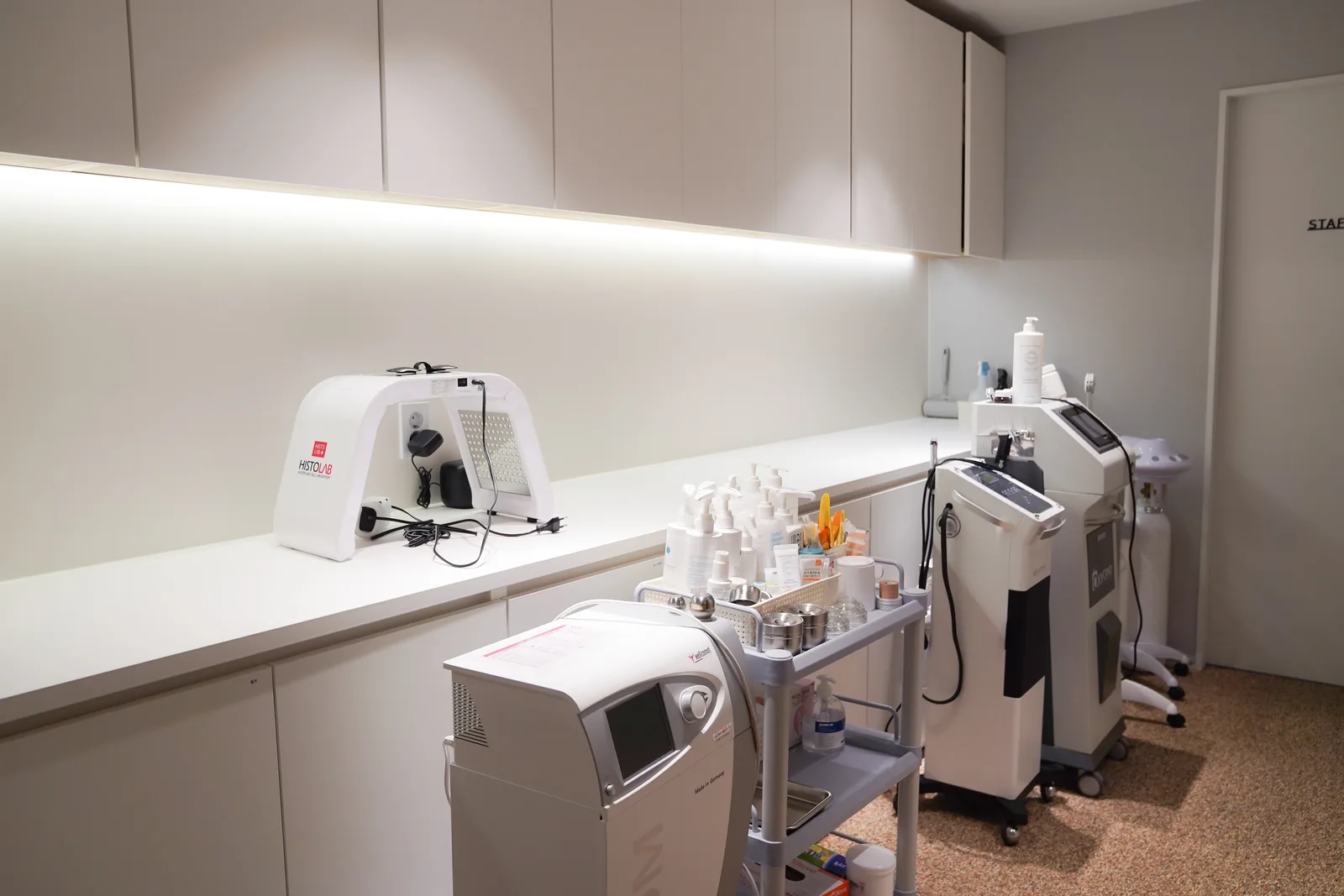
Aesthetic care room with an LED panel and hydro-peel unit at Dear Clinic Cheongdam
A care room, with its equipment standing where it can be seen
Caution

What a registration number does not cover, and what still has to be discussed

Paperwork does not remove risk from a procedure. Bruising, swelling, redness and tenderness follow the route taken, and less commonly a burn, a nodule, infection, asymmetry, temporary numbness, a vascular event on an injectable route or a pigment change after laser work. Every one of these is named to you before consent.
Suitability is decided by examination and nothing else. Active infection or inflammation in the treatment field, pregnancy and breastfeeding, certain implanted devices, anticoagulants and recent isotretinoin can postpone or rule out a session. Disclose them at booking, since they change what is possible before anything else does.
No duration is promised for any result on this page. Age, skin type, sun history and the route taken all move it. Your director gives a conservative expectation and a review point, which is more use to you than a number of months printed on a website.
Comfort measures are confirmed at your consultation. What is appropriate depends on the route and the area being treated, so it is agreed with you in the room and never implied beforehand.
Aftercare has a channel, and it stays open. Spreading redness, escalating pain, blistering, a colour change that persists or numbness that does not resolve means contacting the clinic immediately, including after you have left Korea. Open 365 days a year means a review is usually available quickly.

Results vary between individuals, and nothing on this page should be read as a prediction of your own. It is a description of what is documented and what you are entitled to ask about.

Medical Team

Five doctors, one standard

Director-performed treatment is a Dear promise — your procedure is planned and performed by the doctors below.


Dr. Jemin Kim — Medical Director and Founder, Dear Clinic
Dr. Jemin Kim
Yonsei University College of Medicine
Medical Director · Founder
Dr. Sanghyun Lee — Director, Dear Clinic
Dr. Sanghyun Lee
Seoul National University College of Medicine
Director
Board-certified · Family Medicine
Dr. Seonhaeng Lee — Director of Aesthetic Medicine, Dear Clinic
Dr. Seonhaeng Lee
Chosun University College of Medicine · Residency, Samsung Medical Center
Director, Aesthetic Medicine
Dr. Daeun Jung — Director, Dear Clinic
Dr. Daeun Jung
Ajou University College of Medicine
Director
Board-certified · Family Medicine
Dr. Woojae Jung — Director of Aesthetic Medicine, Dear Clinic
Dr. Woojae Jung
Seoul National University — B.S. in Medicine
Director, Aesthetic Medicine
Patient Reviews

What our patients say

Real verified reviews from our Google Business Profile.

4.9★★★★★ 310 Google Reviews
FAQ

Checking a clinic's standing, question by question

How do I check that a clinic in Korea is properly registered?
Start with what the clinic itself publishes: the registered institution name, the representative doctor, the business registration number and, for international patients, the foreign patient care registration number. All four should be findable without asking anyone. Dear Clinic prints the last three in the legal line at the foot of every page on this site.
What is Dear Clinic's foreign patient care registration number?
M-2024-01-08-8131. It records that the clinic is registered in Korea to treat patients coming from abroad. It is an administrative entry, not a judgement about results, and it does not replace the in-person consultation where suitability and risk are actually discussed with you.
What is the clinic's business registration number and who is responsible for it?
The business registration number is 296-06-02300 and the representative is Dr. Jemin Kim, who is the Medical Director and founder. Having one named doctor carrying institutional responsibility is part of what makes an institution checkable at all, and the name is published here instead of being held back.
Are the doctors' qualifications stated accurately on the site?
Five doctors work here and all five are named with their medical schools. Two of them are board-certified in Family Medicine and are described in exactly those words. The other three are licensed physicians practising aesthetic medicine, and no specialty is claimed for them that they do not hold.
Can I ask to see the product packaging before it is injected?
Yes, and it is a reasonable request to make. Ask for the box or vial for an injectable, or the maker and model for an energy device. Manufacturer-issued clinic plaques are also held on site and can be looked at while you are waiting.
Does registration mean my results are protected in some way?
No. Registration concerns the institution and not the outcome, and no clinic can promise how your own skin will respond. What it does support is continuity of records, consent and follow-up for someone who will be in another country next week, which is a genuine practical difference.
Where can I see the prices before I commit to anything?
On the published price list, in full, before any appointment. Three examples with their units: ₩400,000 (≈ $285) for a 100-shot block of micro-focused ultrasound, ₩300,000 (≈ $215) for 2cc of a polynucleotide booster, and ₩200,000 (≈ $145) for one dual laser toning session with skincare.
Do international patients pay a different rate here?
No. One published card applies to Korean and international patients alike, with no visitor rate, no weekend loading and no holiday loading. Settlement is in Korean won, and the approximate dollar figure shown beside a rate on this site moves with the exchange rate and exists to make the card readable from abroad.
Who actually performs the treatment once I have agreed to it?
The director who examined you and read your EVE Muse capture. Treatment here is director-performed, so there is no handover between the person who advised you and the person operating the device. Ask the same question wherever you are being seen, because the answer shapes everything downstream.
What if the treatment I want is not suitable for me?
Then we decline it and set out what would suit instead, priced from the same published card. That conversation happens before payment and before anything is done. You are free to take the written plan away, think about it, and come back another day or not at all.
What are the clinic's actual address and opening hours?
The fifth and seventh floors of the Namhangang Building, 85-3 Cheongdam-dong, Gangnam-gu, Seoul. The clinic is open 365 days a year: weekdays 10:00 to 19:00, weekends and public holidays 10:00 to 16:00, with no lunchtime closure. The address and hours are repeated in the footer of every page here.
Who do I contact if something goes wrong after I fly home?
The clinic, directly and immediately, through the consultation channel you used to book. Describe what you are seeing and when it started. You will be told whether it is expected for the route you had, what to do about it, and the point at which you should be seen by a doctor where you live.
Consultation

Ask us anything you would ask before trusting a clinic

Written answers in English, from the desk that books the room.

Scientific Evidence

Indexed work behind the three published lines shown above

The three entries below are peer-reviewed sources for the technologies named in the rate table: non-invasive tightening with newer ultrasound techniques, the biological work on polynucleotide, and long-term assessment of low-fluence pigment laser treatment.

Each carries its title, journal, year and a resolvable DOI, so the citation itself is checkable in the same spirit as the rest of this page. None of them predicts an outcome for your own skin.

  1. Guillen Fabi S. Noninvasive skin tightening: focus on new ultrasound techniques. Clinical, Cosmetic and Investigational Dermatology. 2015. doi:10.2147/ccid.s69118
  2. Guizzardi S, et al. Polydeoxyribonucleotide (PDRN) promotes human osteoblast proliferation: A new proposal for bone tissue repair. Life Sciences. 2003. doi:10.1016/s0024-3205(03)00547-2
  3. Gokalp H, et al. Long‐term results in low‐fluence 1064‐nm Q‐Switched Nd:YAG laser for melasma: Is it effective? Journal of Cosmetic Dermatology. 2016. doi:10.1111/jocd.12253

References are provided for information — outcomes vary by individual and are assessed at your diagnosis.

Book WhatsApp Call