Home
Doctors Pricing Cost FAQ Book a Consultation
ENES
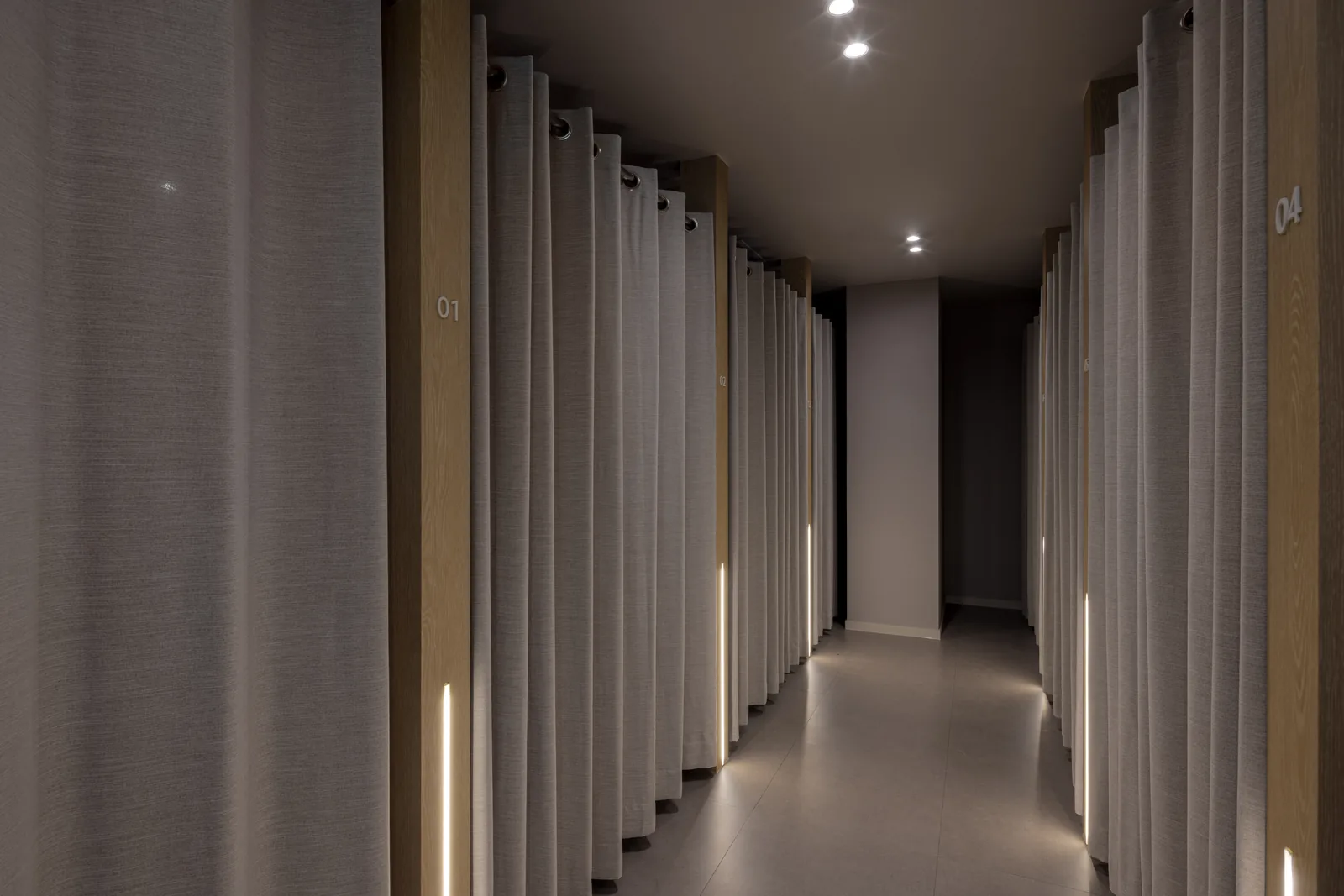
Private curtained treatment bays at Dear Clinic Cheongdam where energy lifting and collagen stimulator sessions are run
Dear Clinic · Skin Concerns · Laxity
Two families, one finding · Cheongdam, Gangnam

Skin Laxity Treatment in Cheongdam, Gangnam, Seoul

Loss of firmness is a measurement before it is a word. The depth at which your skin has gone slack decides whether heat is the instrument or an injected collagen stimulator is, and the two families do very different jobs on very different clocks.

Energy from ₩150,000 (≈ $105) Stimulators from ₩100,000 (≈ $70) Open 365 days
Have Your Laxity Depth Read See Both Families Side by Side
Direct answer

What loss of firmness actually names on a skin reading

Skin laxity is tissue that no longer returns to where it was. It is produced at four different depths — a thinning dermis, a slackened deep fibrous layer, weakened elastic recoil at the surface, and skin sitting over support that has shrunk — and the depth that dominates your reading is what selects the treatment family.

This page is written around the whole-face version of that finding, because that is how the complaint usually arrives: the outline is softer everywhere and the skin feels loose under a fingertip without one area being the problem. The lifting and tightening category is arranged by machine instead, with depth and unit for each platform, and this page does not repeat that layout.

The practical split is between heat and material. Energy platforms contract and rebuild collagen that already exists in your skin; injected stimulators ask the dermis to lay down new collagen around a suspended material over months. A slack face can need one, the other, or one after the other.

Four depths

Which layer went slack is the only question that changes the plan

Four presentations, described the way they are scored in the consultation room.

DEPTH 01

Surface recoil that has slowed

Pinch the cheek and it takes a beat too long to flatten, and fine crepe-like lines appear on the upper cheek in raking light. The dermis is intact but its elastic component is tired — the mildest of the four.

DEPTH 02

A dermis that has thinned across a wide field

The envelope reads thin, dry and slightly transparent, with pores drawn into ovals on the outer cheek. Ultraviolet history has taken collagen density out of a broad area, so the useful instrument works across a field.

DEPTH 03

Deep fibrous support that has loosened

The face looks fine lying down and drops when you stand. Tissue has slid along a slackened deep layer, so the mid-cheek flattens and everything gathers lower. The target sits several millimetres down.

DEPTH 04

Skin draped over support that has shrunk

Nothing is stretched. The frame underneath has lost bulk, so the same skin now covers less, which reads as looseness. Heating an envelope will not enlarge a shrunken foundation; this presentation answers to material.

Most faces past thirty-five carry two at once, usually a thinned dermis with either deep slackening or lost support underneath. The proportions are what get scored, and the plan is written against them.

Diagnosis

How the EVE Muse reading assigns your laxity to a depth

EVE Muse captures the face in 3D under five light sources with AI analysis over the result. For a firmness consultation the values that decide the route are skin thickness, elasticity and the direction in which the mid-face has travelled, because those three separate a surface problem from a deep one from a volume one.

Your director then does two things the machine cannot: watch your face move, since laxity that appears only when you lean forward behaves differently from laxity visible at rest, and weigh your own older photographs against the capture.

The capture is stored and put back on screen at review. Collagen built by heat and collagen laid down around a stimulator both arrive slowly enough that a stored image is a more reliable witness than a bathroom mirror.

A client leans into the EVE 3D skin analysis unit while the scan is reviewed on a tablet
Thickness, elasticity and direction of travel are scored before either family is named.
What is offered

The firmness routes Dear Clinic runs, sorted into two families

Five energy platforms and two injected collagen stimulators, all on the published list and all in the building.

FAMILY A

Energy, working on the collagen you already have

Focused ultrasound, monopolar radiofrequency and microwaves raise tissue above a threshold temperature so existing collagen contracts and the wound-healing response rebuilds it. One session, a slow build, read at the collagen interval.

FAMILY B

Stimulators, asking the dermis to make new collagen

Poly-L-lactic acid and a PDLLA-with-hyaluronic-acid hybrid are placed into the skin, where the suspended particles are gradually replaced by your own collagen. These are courses, spaced out, judged across months.

HOW THEY PAIR

Sequenced when two depths score together

Where the reading shows both a loosened deep layer and a thin dermis, an energy session and a stimulator course go into one plan with an interval between them, the second half confirmed after the first is reviewed.

RouteFamily and mechanismDepth it answersUnitListed rate
Ultherapy PrimeEnergy — MFU-V focused ultrasound at 1.5, 3.0 and 4.5 mm, with DeepSEE™ imaging showing tissue to 8 mm before a line is placedDeep fibrous support that has loosened100 shots₩400,000 (≈ $285)
Shurink UniverseEnergy — focused ultrasound from Classys at the accessible tier, used for entry plans and for upkeepEarly deep slackening, or maintenance between courses300 shots₩150,000 (≈ $105)
Thermage FLXEnergy — monopolar radiofrequency through the dermis with AccuREP™ adjusting output pulse by pulseA dermis thinned across a wide field600-shot tip₩1,900,000 (≈ $1,355)
Density, Classic tipEnergy — high-density monopolar radiofrequency from Jeisys Medical, supplied in three tip gradesMild to moderate dermal laxity treated as a graded course300 shots₩700,000 (≈ $500)
OndaEnergy — DEKA Coolwaves™ microwaves, taken up selectively by tissue that holds waterSoft, water-heavy tissue sitting under slack skin60 kJ₩500,000 (≈ $355)
SculptraStimulator — injectable poly-L-lactic acid from Galderma, reconstituted and placed in a courseSkin draped over support that has shrunk1 vial₩1,000,000 (≈ $715)
JuvelookStimulator — PDLLA and hyaluronic acid hybrid from VAIM, placed in the skin for gradual collagen stimulationThin dermis with slowed surface recoil1 cc₩100,000 (≈ $70)

Listed rates as of September 2026 in KRW with an approximate USD figure beside them. Residents of Korea and visitors from abroad are quoted the identical line. Your own combination, its session sizes and its total are written down at the consultation, where any fee for products or follow-up visits is also explained.

Each route keeps its own page with the full protocol and aftercare: Ultherapy Prime, Shurink Universe, Thermage FLX, Density, Onda lifting, Sculptra and Juvelook. Every published figure at the clinic sits on the price list.

Route selection

How the slack layer decides between heat and a stimulator

The scan settles it, and the reasoning is short enough to carry into the room with you.

Deep layer slack, skin thickness still good. Focused ultrasound is the proportionate tool: it deposits energy in discrete coagulation points at a chosen depth and leaves the surface alone. Shot count follows how much of the face is involved.
Dermis thin over a wide area, tissue roughly where it belongs. Monopolar radiofrequency across a broad field is the answer, as one substantial tip or a graded course on the high-density platform. Doing this once and properly beats three cheap passes.
Slack skin with soft, water-heavy tissue beneath it. Microwave energy is absorbed preferentially by tissue holding water, which is why kilojoules appear on a facial firmness plan at all.
Reading dominated by lost support underneath. This is the case for a stimulator. No shot count will restore a foundation that has shrunk, and a plan that pretends otherwise is an expensive way to stay the same.
Slowed recoil with a thin dermis and nothing structural. The hybrid stimulator placed in the skin is the smaller and cheaper buy, and it is what gets quoted even though the energy platforms carry higher figures.
Two depths scoring alike. The plan is sequenced across separate appointments with the interval written into it, since running both families in one week makes a result impossible to attribute.

Where the capture shows firmness within range for your age and the complaint comes from one unflattering photograph, we do not recommend a course at all and will show you what the reading says instead.

Limits and risks

What firmness work returns, and where it stops

The realistic target is skin that holds its outline better and recovers its shape faster when you move, measured against your own starting capture. Where a large volume of tissue has descended and the skin envelope is genuinely in excess, energy and stimulators soften the picture; the operation that removes surplus skin is surgical and is not performed here. Nothing here is lasting in an absolute sense: collagen built by heat is remodelled again by time, and injected poly-L-lactic acid is resorbed. Results vary between individuals.

The named risks differ by family. Ultrasound and radiofrequency both carry swelling, prolonged redness, and in uncommon cases a burn, blistering or a small area of fat loss where energy lands at the wrong depth; transient numbness along a nerve path has been reported. Injected stimulators carry bruising, swelling and tenderness at the injection sites, a risk of palpable lumps or nodules appearing weeks later, and a small risk of infection. Settings and injection plane are therefore decided by the doctor who read your scan.

Skin that is acutely inflamed, sunburnt or broken at the surface is rescheduled instead of treated at a lower setting
A face in the middle of significant weight change is planned after the weight settles, because a contour result will not hold its shape through it
Where the reading says surgery and not energy, we decline the booking and say why at the consultation
If a review against the stored capture shows no movement, the plan is stopped and rethought instead of run to the end of its sessions
4
Depths scored before a family is named
5
Energy platforms on the published list
2
Injected collagen stimulators
365
Days a year the clinic is open
Dear, Knowhow

How a firmness plan is settled at Dear Clinic

01 — THE FULL ARSENAL

A one-cc stimulator competes with a 600-shot tip

Both families sit on the same published list at 5F and 7F, and the cheapest line on this page costs a fraction of the dearest. When your reading says the small injected course is the answer, quoting it costs us the difference — which is why the reading comes first.

02 — DIAGNOSIS FIRST

Thickness, elasticity and travel scored apart

Three values from the EVE Muse capture, weighed against your own older photographs. It is also the step that catches the plans worth refusing.

03 — DIRECTOR-PERFORMED

Depth reset as the handpiece crosses the face

Temple skin, mid-cheek and the skin under the jaw do not take the same transducer depth, radiofrequency output or injection plane. Sessions are director-performed by the doctor who read the capture, so settings change as the work crosses zones, and that doctor sees you at review.
In the clinic

The devices and hands behind this treatment

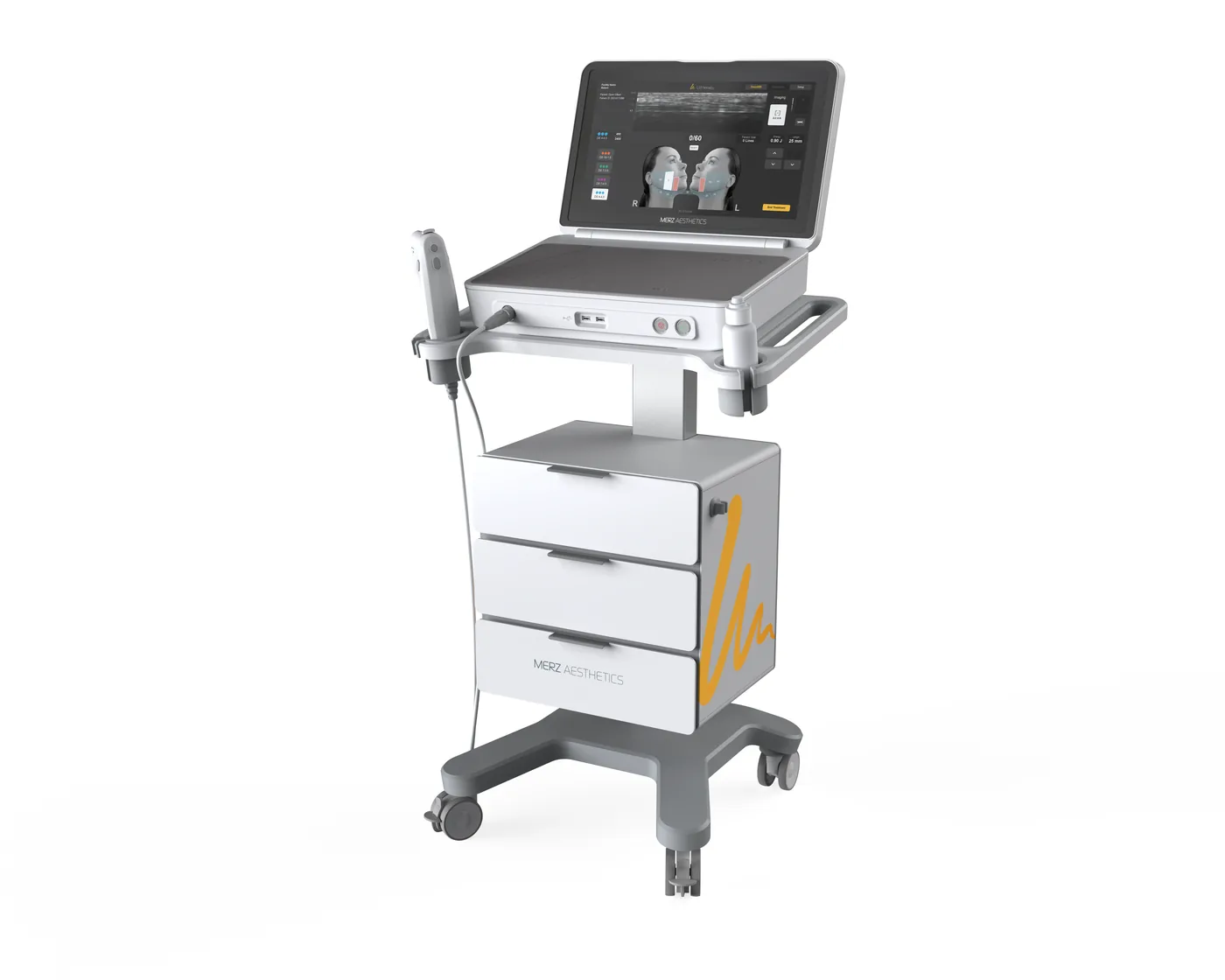
Ultherapy Prime system at Dear Clinic Cheongdam, seen from the front with its treatment screen
Shot blocks and depths are fixed on the planning screen before the transducer touches the face
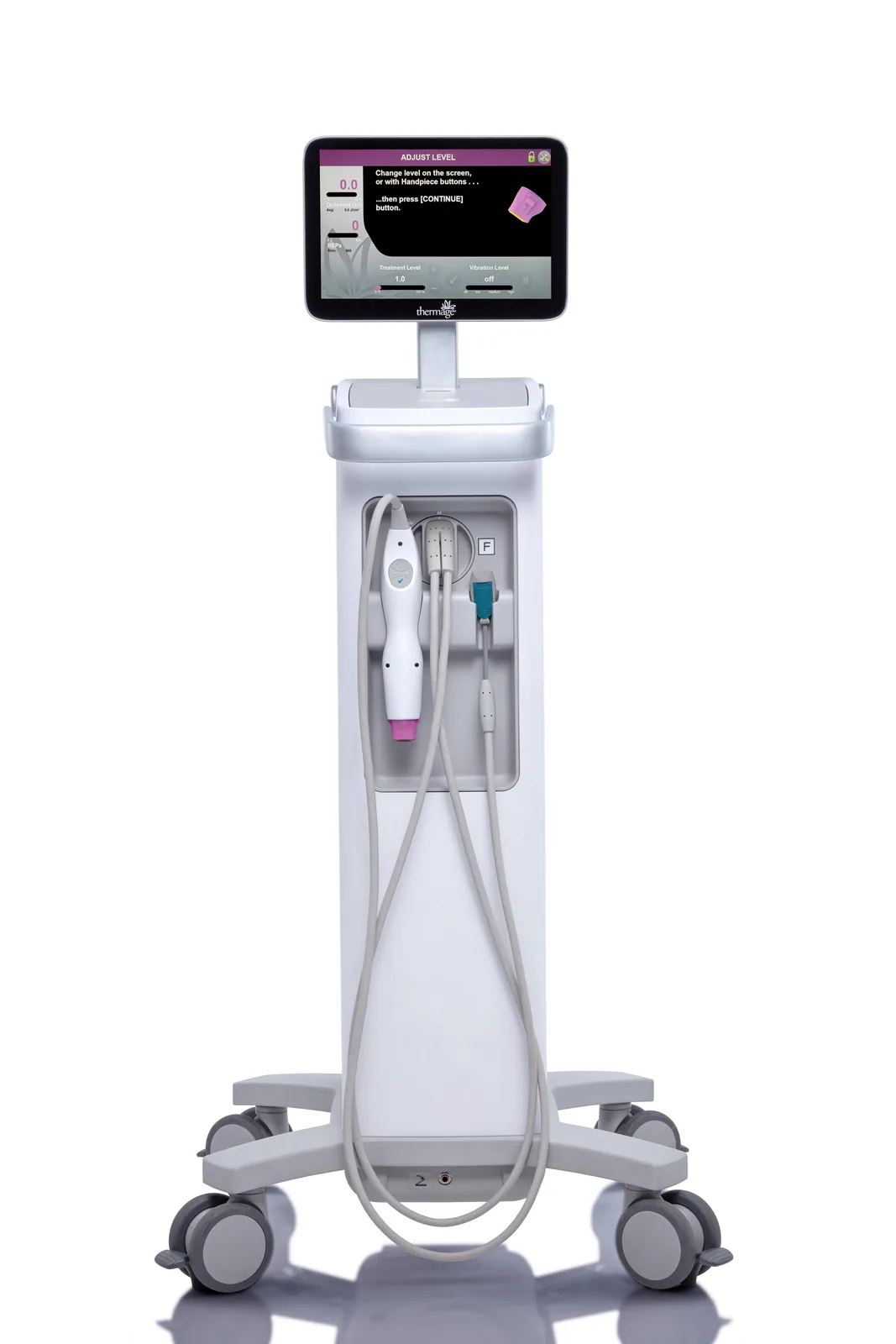
Thermage system viewed head-on with its handpiece and treatment tip in the cradle, used for wide-field dermal tightening
The wide-field radiofrequency platform, used where the finding is a thinned dermis
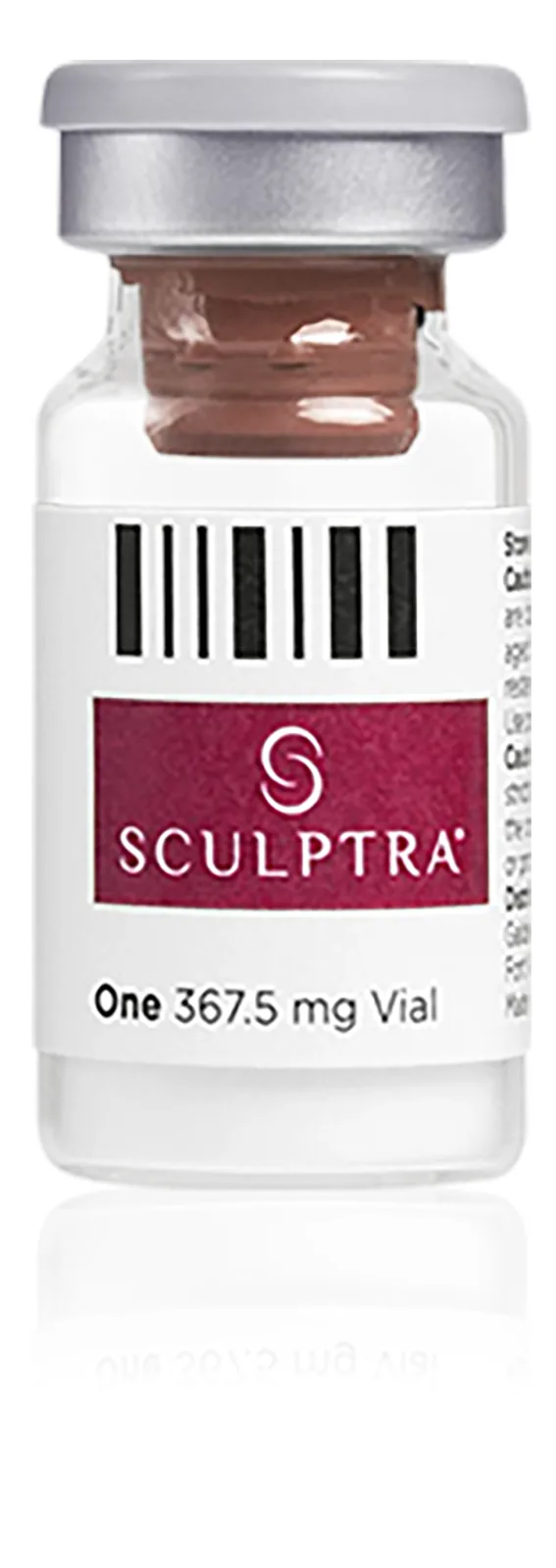
Sculptra 367.5 mg single vial with its reflection, the poly-L-lactic acid stimulator used where support has been lost
The poly-L-lactic acid vial, quoted where the reading says support and not surface
Caution

Living with a firmness result, from the session to the review

Expect a warm, tender, slightly swollen face after an energy session. Redness settles over hours to a day or two on most skins, and tenderness along treated lines can outlast it.
After an injected stimulator, massage exactly as instructed and not more. Your director gives you the pattern and the number of days for the product you received. Improvising here is the commonest reason a lump appears where none needed to.
Skip saunas, jjimjilbang, hot yoga and heavy training for the window you are given. Heat and hard exercise add swelling in the days when tissue is already reacting, and swelling is what makes an early result unreadable.
Sunscreen every morning, indoors included. Ultraviolet exposure is one of the inputs that took the collagen out, and treated skin pigments more readily for some weeks.
Judge nothing at two weeks. Both families build slowly and the useful comparison is the stored capture at the review date in your plan, in the same light and at the same angle.

Comfort measures during the session are confirmed with your director at the consultation. The clinic opens 365 days a year with consultation conducted in English, so spacing an energy session and a stimulator course around a work calendar or a trip is usually straightforward.

Medical Team

Five doctors, one standard

Director-performed treatment is a Dear promise — your procedure is planned and performed by the doctors below.


Dr. Jemin Kim — Medical Director and Founder, Dear Clinic
Dr. Jemin Kim
Yonsei University College of Medicine
Medical Director · Founder
Dr. Sanghyun Lee — Director, Dear Clinic
Dr. Sanghyun Lee
Seoul National University College of Medicine
Director
Board-certified · Family Medicine
Dr. Seonhaeng Lee — Director of Aesthetic Medicine, Dear Clinic
Dr. Seonhaeng Lee
Chosun University College of Medicine · Residency, Samsung Medical Center
Director, Aesthetic Medicine
Dr. Daeun Jung — Director, Dear Clinic
Dr. Daeun Jung
Ajou University College of Medicine
Director
Board-certified · Family Medicine
Dr. Woojae Jung — Director of Aesthetic Medicine, Dear Clinic
Dr. Woojae Jung
Seoul National University — B.S. in Medicine
Director, Aesthetic Medicine
Patient Reviews

What our patients say

Real verified reviews from our Google Business Profile.

4.9★★★★★ 310 Google Reviews
FAQ

Skin laxity treatment in Cheongdam, your questions answered

What is the best non-surgical treatment for skin laxity?
There is no single answer that survives contact with a scan, because the four depths listed above respond to different instruments. Deep slackening answers to focused ultrasound, a thinned dermis to monopolar radiofrequency across a field, water-heavy tissue to microwaves, and lost support to an injected collagen stimulator. The useful question is which of those your capture shows.
How does RF lifting compare to HIFU for skin laxity?
They deposit heat differently. Focused ultrasound places discrete coagulation points at a chosen depth of 1.5, 3.0 or 4.5 mm and is aimed at the deep fibrous layer; monopolar radiofrequency heats a broader volume of dermis in a bulk field. A randomised split-face trial comparing the two for lifting and tightening is listed in the references below, and your own reading decides which suits the depth that has gone slack.
How much does skin laxity treatment cost in Seoul?
On the published list, focused ultrasound is ₩400,000 (≈ $285) per 100 shots and ₩150,000 (≈ $105) for 300 shots at the accessible tier. Radiofrequency is ₩1,900,000 (≈ $1,355) for a 600-shot tip or ₩700,000 (≈ $500) for 300 shots on the Classic tip, and microwaves are ₩500,000 (≈ $355) for 60 kJ. Stimulators are ₩1,000,000 (≈ $715) a vial and ₩100,000 (≈ $70) per cc.
Should I choose an energy device or a collagen stimulator?
It depends on whether your skin has lost tension or lost its foundation. Energy tightens and rebuilds collagen that is already in the tissue, so it suits skin that is slack over an intact frame. A stimulator adds material that the dermis then builds collagen around, which is what a shrunken substrate needs. Both are quoted at Dear, so the recommendation follows the capture.
How long before firmness treatment shows anything?
Both families are slow, and how slow depends on which route, how much of the face was treated and your own healing. Energy sessions produce an immediate contraction that fades, with the collagen response arriving over the following weeks and months. Stimulator courses are built session by session. No fixed timetable is published here; your director gives you the expected window for your own plan and a review date to test it against.
How long does a skin tightening result last?
Long enough to be worth planning and short enough that anyone promising permanence is selling something. The variables are your age, your ultraviolet exposure, your starting collagen density, how much weight moves and whether you maintain. A clinical histology study on the longevity of injectable poly-L-lactic acid is cited below for the stimulator side. Your own expected range is discussed by your director at the consultation.
Can I have an energy session and a stimulator in the same visit?
Usually they are sequenced instead. Both provoke swelling and both build slowly, so running them together makes it impossible to tell which one produced the change or which one caused a problem. Where your reading needs both, the plan states the interval and the second appointment is confirmed after the first has been reviewed.
Is skin laxity treatment painful, and how much downtime is there?
Energy sessions are felt as heat with brief sharper moments at the deeper settings, and injections are felt as pressure and stinging. Most people go back to work the same day with warmth and mild swelling; bruising at injection points can last several days and is easy to cover. Comfort measures during the session are confirmed with your director at the consultation, before you book anything.
Does skin laxity treatment work on the neck and body too?
The platforms on this page are used beyond the face, with different session sizes and different unit counts. This page is written around a whole-face firmness finding, so the neck and body versions are quoted separately and read on their own pages. Which areas your plan includes is written down with the total before anything is booked.
I am in my early thirties. Is it too early to treat laxity?
Sometimes, and that is a real answer. Where the capture shows elasticity and thickness within range and the complaint came from one photograph in bad light, we do not recommend a course. Where slowed recoil is genuinely measurable, the proportionate start is the smallest thing that addresses it, which at this clinic is usually the injected hybrid at ₩100,000 (≈ $70) per cc.
Who should not have skin laxity treatment here?
Anyone with acutely inflamed, sunburnt or broken skin over the treatment area, anyone in the middle of significant weight change, and anyone whose reading points to surgical removal of excess skin, which is not performed at this clinic. Pregnancy, breastfeeding and active infection are also reasons to postpone. These are discussed openly at the consultation and cost you nothing to hear.
How should I read before-and-after photographs of firmness work?
Check three things before the faces: the interval since treatment, the camera angle, and the lighting direction. Firmness changes are small, gradual and extremely easy to fake with a chin tilt or a softer lamp. At this clinic the comparison that matters is your own stored capture at the review date, taken in the same room under the same five light sources.
Consultation

Ask which depth your own capture shows

Your questions, answered in English as soon as possible.

Scientific Evidence

What the literature reports on energy and stimulators for laxity

The six references below are split the way this page is. Two concern microfocused ultrasound for tightening, including a systematic review and a histometric comparison of ultrasound against radiofrequency. One is a review of radiofrequency for skin laxity specifically, and one is a randomised split-face trial that put monopolar radiofrequency directly against microfocused ultrasound with visualisation.

The last two concern injectable poly-L-lactic acid, the material behind the stimulator family: one on facial volume restoration and one a clinical histology study of how long its biostimulatory activity persists. Each reference resolves through its DOI to an indexed journal, and none of them describes this clinic or predicts your result.

  1. Khan U et al. A Systematic Review of the Clinical Efficacy of Micro-Focused Ultrasound Treatment for Skin Rejuvenation and Tightening. Cureus. 2021. doi:10.7759/cureus.20163
  2. Suh D et al. Comparative histometric analysis of the effects of high-intensity focused ultrasound and radiofrequency on skin. Journal of Cosmetic and Laser Therapy. 2015. doi:10.3109/14764172.2015.1022189
  3. Araújo A et al. Radiofrequency for the treatment of skin laxity: mith or truth. Anais Brasileiros de Dermatologia. 2015. doi:10.1590/abd1806-4841.20153605
  4. Alhaddad M et al. A Randomized, Split-Face, Evaluator-Blind Clinical Trial Comparing Monopolar Radiofrequency Versus Microfocused Ultrasound With Visualization for Lifting and Tightening of the Face and Upper Neck. Dermatologic Surgery. 2019. doi:10.1097/dss.0000000000001653
  5. Fitzgerald R et al. Facial volume restoration of the aging face with poly-l-lactic acid. Dermatologic Therapy. 2011. doi:10.1111/j.1529-8019.2010.01375.x
  6. Arruda S et al. A Clinical Histology Study Evaluating the Biostimulatory Activity Longevity of Injectable Poly-L-Lactic Acid for Facial Rejuvenation. Journal of Drugs in Dermatology. 2024. doi:10.36849/jdd.8057

References are provided for information — outcomes vary by individual and are assessed at your diagnosis.

Book WhatsApp Call