Home
Doctors Pricing Warning Signs FAQ Book a Consultation
ENES
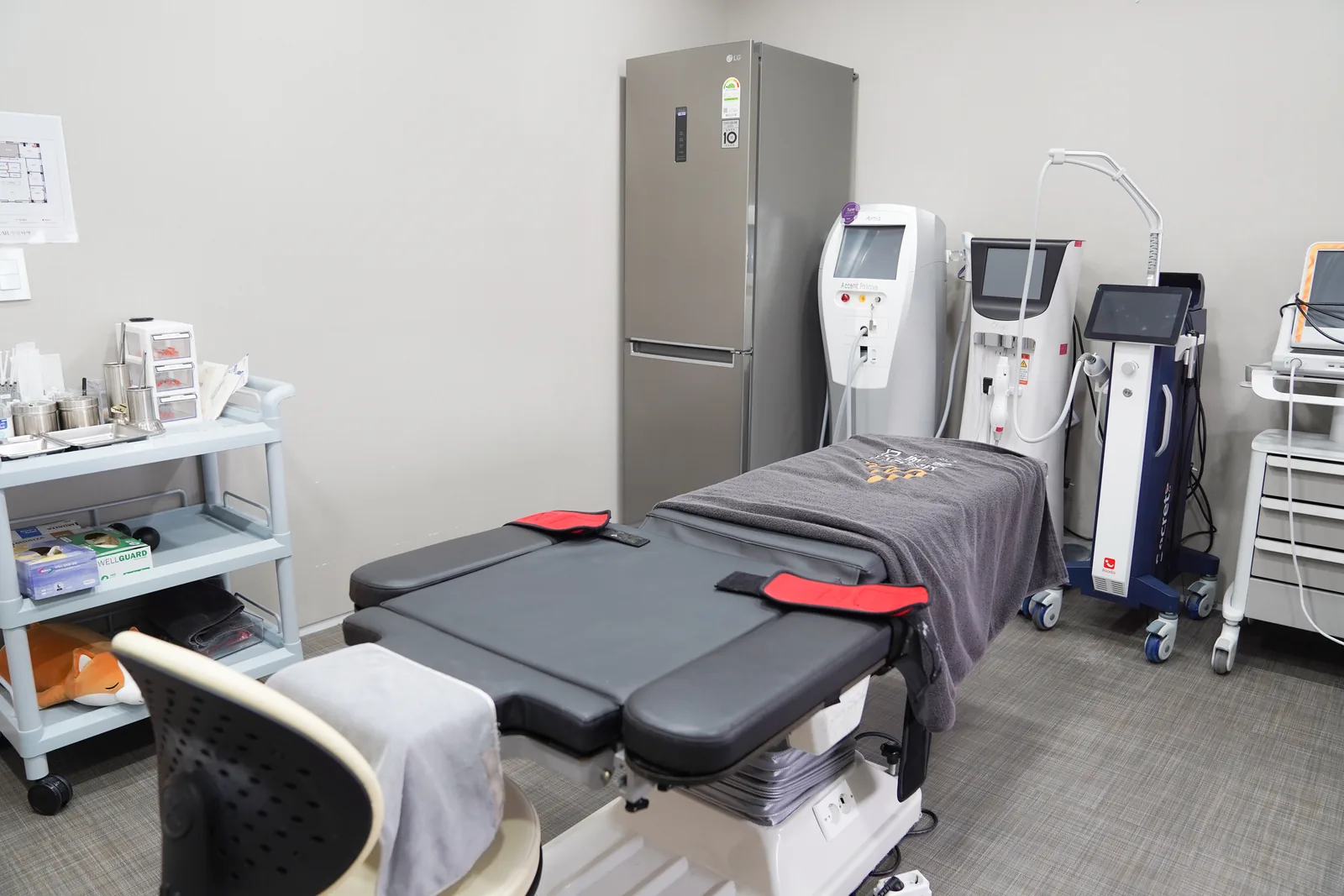
Procedure room at Dear Clinic Cheongdam where hyaluronic acid filler injections are carried out by the director
Dear Clinic · Fillers · Safety
Vascular anatomy, warning signs and reversal · Cheongdam, Gangnam

Filler Safety in Cheongdam, Gangnam, Seoul

A hyaluronic acid gel is placed into a face that carries arteries the injector cannot see. Most of what follows an injection is bruising and swelling. The complication that matters is rare, it is vascular, and everything on this page is organised around recognising it early.

Four HA lines, published rates Director-performed injection Open 365 days
Ask Before You Book Read the Warning Signs
The short answer

What can go wrong with a hyaluronic acid filler injection

Two categories, and they are not comparable. Ordinary reactions are common and self-limiting: bruising, swelling, tenderness, small lumps while the gel settles. Vascular events are rare and urgent: gel entering or compressing a vessel, cutting off blood supply to skin or, at the extreme, to the eye.

The distinction decides how you should behave afterwards. A bruise wants patience. Skin that turns pale at the moment of injection, pain out of proportion to the procedure, or any change in vision wants a telephone call in the same hour. The rest of this page explains why those particular signs are the ones on the list.

What a filler is, which gel goes where and how an area is planned is set out on the dermal filler category page, and what each line is quoted at is on the filler price page. This page stays with risk, recognition and reversal.
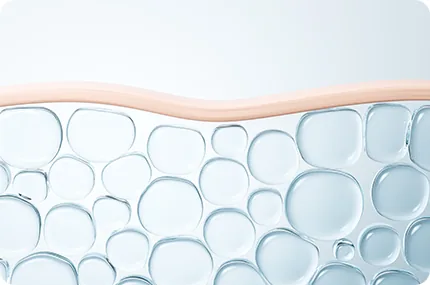
Illustration of the tissue layers used for layered hyaluronic acid filler placement at Dear Clinic, showing deep, mid and superficial planes
Deep, mid and superficial are three different planes with three different vascular neighbourhoods. A gel is safe in one and wrong in another.
Danger Zones

The facial regions a filler needle has to be routed around

Named in the peer-reviewed injection-safety literature listed at the foot of this page. Each one is an area where a branch of the arterial supply runs close to a plane fillers are placed in.

ZONE 01

The glabella and central forehead

The vessels running up between the brows connect backwards towards the ocular circulation. This region is the one most often named in the published reports of visual loss after facial injection, which is why an experienced injector treats it with a different level of caution from a cheek.

ZONE 02

The nose and the nasal base

The nasal dorsum and the tissue beside the nostril have a limited blood supply with few alternative routes. Occlusion here shows itself on the skin quickly. A non-surgical nose treatment is a small volume injection in a demanding neighbourhood, never a casual one.

ZONE 03

The nasolabial fold and upper lip

The artery that climbs from the corner of the mouth towards the nose sits directly under a crease patients most want softened. Depth and direction of travel matter more in this fold than the amount of gel used.

ZONE 04

The temple and the under-eye

Both are thin-tissue regions layered over vessels and, in the temple, over veins as well. Both also show a poorly placed gel as a visible ridge or a grey shadow.

None of this makes those areas untreatable, and all of them are treated here. It makes them areas where the answer to a request for a little more is sometimes no. Where the anatomy does not give a safe plane for the correction you asked for, we say so and offer what the face will take.

Depth and Gel

Why the plane a filler sits in governs its risk more than the volume does

Hyaluronic acid gels are not interchangeable. They differ measurably in stiffness, in behaviour under pressure and in how well they hold their form, and the published rheology work on filler products exists because those properties decide which plane a gel belongs in. A firm gel engineered for deep structural support behaves badly near the surface. A soft gel meant for fine lines disappears when it is buried.

So the planning question at Dear is never simply how many cubic centimetres. It is which plane the correction belongs in, which gel family suits that plane, and whether the vascular neighbourhood there allows it. Placement is worked in increments as small as 0.1 cc, the unit that lets a correction stop one step before it becomes too much.

Deep. Structural support, placed against bone or in the deep fat compartments. This is where volume belongs, and it is a plane with its own named vessels to keep away from.
Mid. Contour and transition, where most shaping in the mid-face happens. Gel choice here is a compromise between projection and softness under moving muscle.
Superficial. Fine lines and surface correction, and the plane least forgiving of a gel that is too firm or placed too generously. Lumps, ridges and a bluish-grey cast all belong to this level.
The Four Steps

What Dear Clinic does to lower the risk of a filler injection

Four named steps, run in the same order every time, before any gel is placed.

STEP 01

Dear Shape

The face is read in three dimensions before a syringe is chosen, so the correction is defined against your own proportions and not against a reference photograph. A plan drawn on the wrong problem cannot be made safe by careful injecting.

STEP 02

Dear LayerFill

Placement is assigned by plane — deep, mid, superficial — before it is assigned by volume, and the gel family is matched to the plane it is going into. This is the step that keeps a structural gel out of the layer where it would show.

STEP 03

Dear BalanceControl

Left against right, and the treated region against the ones beside it, checked as the work proceeds in small increments. Asymmetry is easier to prevent at 0.1 cc than to correct afterwards.

STEP 04

Dear LineFit

The finishing pass, where the boundary between the corrected area and untouched tissue is smoothed so the result reads as one continuous surface under movement instead of as a patch.

Above those four steps sit two conditions that do not vary. The EVE Muse 3D capture under five light sources with AI analysis is taken before the plan is written, and the injection itself is director-performed, so the doctor holding the syringe is the one who read the anatomy and who will answer for the result at the review.

Warning Signs

What to watch for after a filler injection, and the hour it matters in

The first five are reasons to contact the clinic immediately, whatever the time and whatever your travel plans. The last group is ordinary.

Blanching at the moment of injection. Skin that goes white or mottled as the gel goes in, and does not recover within seconds, is the earliest visible sign of compromised blood supply. Your injector should stop and reassess before continuing.
Pain out of proportion. A filler injection is uncomfortable and then it stops being uncomfortable. Pain that is severe, or that climbs over the hours instead of easing, is not the needle wearing off.
A dusky, grey or violet patch with a net-like pattern. Usually appearing over the following hours in the region treated or downstream of it. This is skin telling you it is not being perfused, and it is time-critical.
Any change in vision. Blurring, a dark area in the field of sight, double vision or eye pain after a facial injection is an emergency. The published ophthalmology review listed below exists because this outcome, rare as it is, is documented after aesthetic facial injection.
Spreading redness with heat, or fever. Increasing warmth and redness over days, with or without a temperature, points at infection instead of at bruising and needs to be seen.
And the ordinary ones. Bruising that can last several days, swelling that peaks and settles, tenderness, small palpable lumps while the gel distributes, and a short period of asymmetry while both sides settle at their own pace. These are expected, and they are what the review appointment is for.

Dear Clinic is open 365 days a year, which is the reason the instruction above is simply to call, on whichever day it happens. Comfort measures during an injected session are confirmed at your consultation and are set to the area and to you.

Reversal

Why a hyaluronic acid filler can be dissolved, and what dissolving does not fix

Every gel quoted on this page is hyaluronic acid, and hyaluronic acid has an enzyme that breaks it down. Hyaluronidase is used in aesthetic medicine for exactly that purpose, and the literature review listed at the foot of this page covers its use. The practical consequence is that an HA result is adjustable: an over-corrected area can be reduced, a lump that has not settled can be treated, and in a suspected vascular event the enzyme is central to the urgent management the published guidance describes.

Three things it does not do. It does not restore time, because dissolving and re-treating is a sequence of appointments spread across days. It does not distinguish neatly between the gel you want removed and gel you were happy with in the same region. And it does not apply to materials that are not hyaluronic acid.

Hyaluronidase is held at the clinic for use at the director's judgement. Whether it is appropriate in your situation, and what it would involve, is decided and explained at the appointment. No rate for it appears on the published card, and any charge that would apply is set out to you before anything is done.

The Four Lines

Every hyaluronic acid filler published at Dear, and what its properties mean for placement

Quoted by the cubic centimetre in KRW with an approximate dollar figure beside it. The same figures apply whichever passport is on the file.

GelMakerWhat its properties mean when a plane is chosenListed rate
The ChaeumHugel, KoreaThe Korean-made family stocked here across several firmness grades, which is what allows one product line to cover more than one plane in a single session₩130,000 (≈ $95)
BeloteroMerz, GermanyKnown for integrating smoothly into tissue, which is the property that matters most in the superficial plane where a firmer gel would read as a ridge₩300,000 (≈ $215)
RestylaneGaldermaA range built around different gel textures for different jobs, so the choice within it is made at the plan stage and not at the counter₩350,000 (≈ $250)
JuvedermAbbVie / AllerganA family with firmer members intended for deep structural support and softer ones for surface work, matched to the plane during Dear LayerFill₩400,000 (≈ $285)

Specialty areas are quoted separately on the card, and the full list of areas and rates is on the published price list. What an area needs is agreed before a syringe is opened, and nothing is added during the session without being quoted first.

Declined

Who we turn away from a filler appointment

Four of these are medical. The fifth is the one clinics find hardest to say.

Active infection or inflamed skin over the intended area. Injecting through it risks seeding the infection deeper. The appointment is postponed until the skin is clear.
Pregnancy and breastfeeding. Elective injectable treatment waits.
Bleeding disorders and blood-thinning medication. Not an automatic refusal, but it changes the bruising you should expect and sometimes the plan itself, so it has to be disclosed at the consultation along with autoimmune conditions and any previous injectable treatment in the same region.
Unresolved material from a previous treatment. Where there is a lump, a nodule or a gel of unknown type already in the area, that is assessed first. Adding volume on top of an unknown is how small problems become complicated ones.
A request the anatomy will not support. Where the volume asked for cannot be placed in a plane the vessels allow, or where the finding is laxity instead of lost volume, we do not recommend filler and say what would actually answer the complaint — often something on the lifting and tightening page instead.
Dear, Knowhow

How filler risk is managed at Dear Clinic in Cheongdam

01 — DIAGNOSIS FIRST

The face is measured before a gel is named

EVE Muse captures in 3D under five light sources with AI analysis, and the reading decides whether the complaint is volume, support or skin quality. An injection planned against the wrong finding is a risk taken for nothing.

02 — THE FULL ARSENAL

Four HA families and four planes on one trolley

Because all four gels are stocked, the plane decides the product instead of the product deciding the plane. Where no gel is right for what you have asked for, that answer is available too.

03 — DIRECTOR-PERFORMED

The hand that read the anatomy holds the syringe

Every injection here is director-performed, in increments as small as 0.1 cc, and the same doctor sees you at the review. Continuity is not a courtesy in injectable work — recognising a change in an area you placed yourself is faster than reading someone else's notes.

In the clinic

The devices and hands behind this treatment

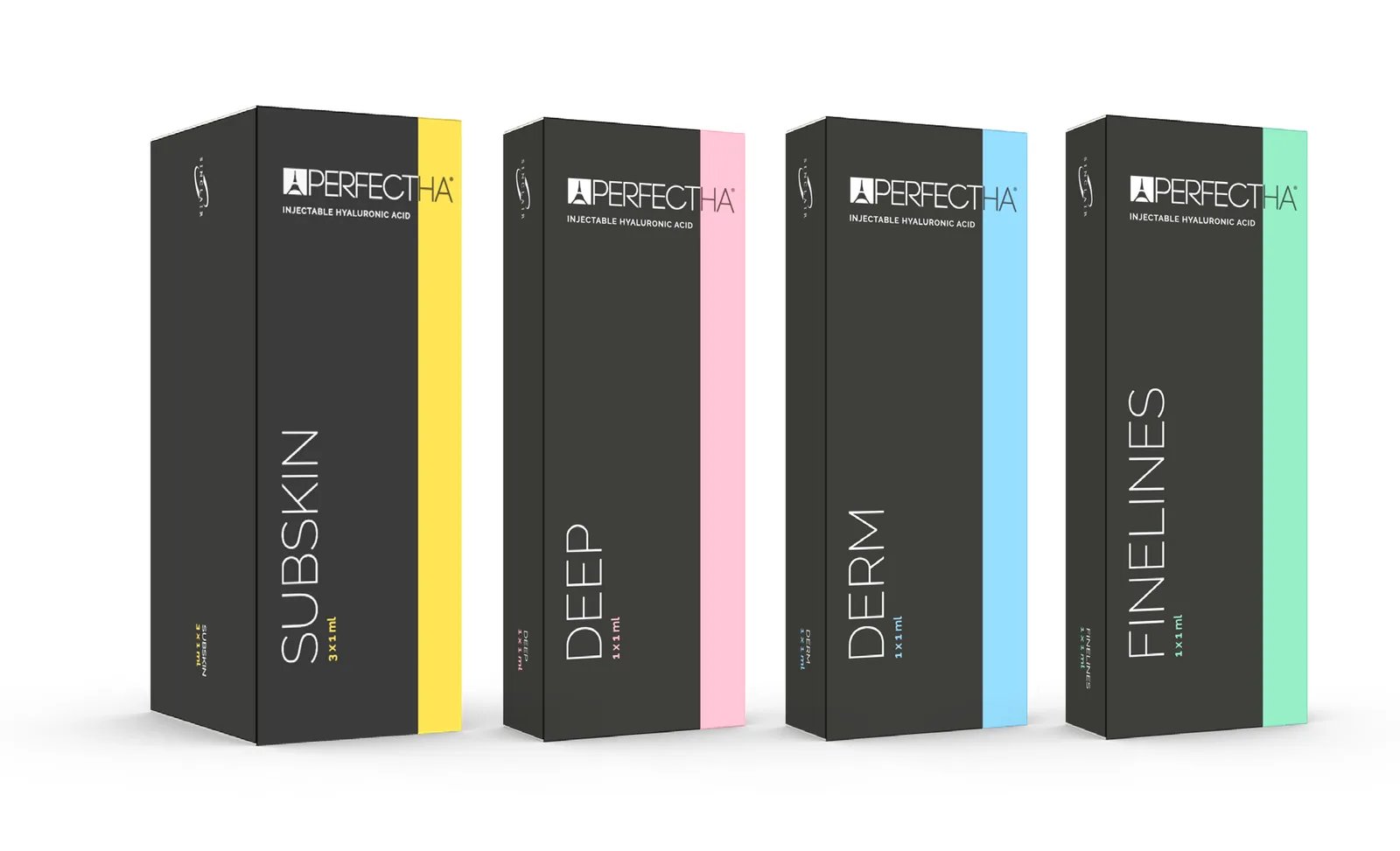
Hyaluronic acid filler cartons in several firmness grades on a clinic shelf, the kind of range that lets a gel be matched to a plane at Dear Clinic
Several firmness grades held at once, so the plane can decide the gel
Director explaining an injection plan on a tablet during a consultation at Dear Clinic Cheongdam before any filler is placed
The plan, the plane and the rate are agreed before a syringe is opened
Medical Team

Five doctors, one standard

Director-performed treatment is a Dear promise — your procedure is planned and performed by the doctors below.


Dr. Jemin Kim — Medical Director and Founder, Dear Clinic
Dr. Jemin Kim
Yonsei University College of Medicine
Medical Director · Founder
Dr. Sanghyun Lee — Director, Dear Clinic
Dr. Sanghyun Lee
Seoul National University College of Medicine
Director
Board-certified · Family Medicine
Dr. Seonhaeng Lee — Director of Aesthetic Medicine, Dear Clinic
Dr. Seonhaeng Lee
Chosun University College of Medicine · Residency, Samsung Medical Center
Director, Aesthetic Medicine
Dr. Daeun Jung — Director, Dear Clinic
Dr. Daeun Jung
Ajou University College of Medicine
Director
Board-certified · Family Medicine
Dr. Woojae Jung — Director of Aesthetic Medicine, Dear Clinic
Dr. Woojae Jung
Seoul National University — B.S. in Medicine
Director, Aesthetic Medicine
Patient Reviews

What our patients say

Real verified reviews from our Google Business Profile.

4.9★★★★★ 310 Google Reviews
FAQ

Filler safety in Seoul, question by question

How risky is a hyaluronic acid filler injection?
Ordinary reactions are common and temporary: bruising, swelling, tenderness and small lumps while the gel settles. Vascular complications are rare and serious, and the published safety literature exists to map where they happen and how they are managed. No treatment is risk-free and nobody should tell you otherwise.
What is vascular occlusion after filler?
Gel entering a vessel or pressing on one from outside, so blood stops reaching the tissue that vessel supplies. The signs are blanching at injection, pain out of proportion, and a dusky or mottled patch appearing over the following hours. It is time-critical, which is why the instruction is to call immediately instead of watching it.
Which parts of the face carry the most risk?
The glabella and central forehead, the nose and the tissue beside the nostril, the nasolabial fold and upper lip, and the temple and under-eye. All four are named in the injection-safety literature because a branch of the arterial supply runs close to a plane that fillers are placed in.
Can filler cause blindness?
Visual loss after aesthetic facial injection is documented in the ophthalmology literature and a review of it is cited at the foot of this page. It is rare and it is the reason any change in vision after a facial injection is treated as an emergency, and never as something to watch overnight.
What should I do if something looks wrong after my injection?
Contact the clinic immediately, on the same day, before contacting anyone else. Spreading dusky discolouration, pain that is climbing, or any visual change are the three that should not wait until morning. We are open 365 days a year, so there is no weekend gap to plan around.
Can hyaluronic acid filler be dissolved if I change my mind?
Yes. Hyaluronidase breaks hyaluronic acid down and is used in aesthetic medicine for exactly that, so an over-corrected area can be reduced or cleared. Whether it suits your situation is a decision made by the director at an appointment, and what would apply is explained to you first.
Does dissolving a filler put everything back as it was?
Not tidily. The enzyme does not separate the part of a result you disliked from the part you were happy with in the same region, and the sequence takes more than one visit. It is a genuine safety net and it is not an undo button, which is an argument for a conservative first session.
Is filler under the eyes safe?
It is an area we treat and an area that demands restraint. The tissue is thin, the vascular neighbourhood is unforgiving, and a gel placed too shallow there can leave a visible ridge or a bluish-grey cast. Where the finding does not suit a gel, we say so at the consultation.
Does the brand of gel change the risk?
Less than the plane does. Gels differ measurably in stiffness and behaviour under pressure, and that decides which layer a given product belongs in. Risk follows from putting the wrong gel in the wrong plane in the wrong region, which is what the LayerFill step exists to prevent.
Who should not have filler at Dear Clinic?
Anyone with active infection or inflamed skin over the area, and anyone pregnant or breastfeeding. Bleeding disorders, blood thinners, autoimmune conditions and unresolved material from a previous treatment all change the plan and have to be disclosed. Where the finding is laxity, we do not recommend filler for it.
How much bruising and swelling is normal?
Bruising can last several days and varies by area and by person, with the lip and under-eye regions bruising more readily than a cheek. Swelling peaks early and settles. Small palpable lumps while the gel distributes are ordinary. A lump that is still there at the review is looked at, not waited out.
Are the published rates the same for me as an international patient, and can I be seen at a weekend?
The figures on the card are the figures on the file regardless of nationality, and specialty areas are quoted separately for everyone. The clinic runs 365 days a year including weekends and public holidays, and English enquiries are answered as soon as possible.
Consultation

Ask the awkward questions before the syringe

Tell us the area you are considering and anything in your medical history that touches bleeding or immunity. Answered in English as soon as possible.

Scientific Evidence

Indexed work behind the safety statements on this page

Five indexed entries are listed below: two 2017 papers on facial danger-zone anatomy and on assessment and injection guidance, a 2019 paper on the physical properties used to differentiate hyaluronic acid products, a 2022 ophthalmology review of visual loss after aesthetic facial injection, and a 2016 review of hyaluronidase in aesthetic medicine.

Each is given as title, journal and year with a verifiable DOI. No incidence figure or outcome statistic from any of them is reproduced here, and none of them is a prediction about your own treatment.

  1. Scheuer J, et al. Anatomy of the Facial Danger Zones: Maximizing Safety during Soft-Tissue Filler Injections. Plastic & Reconstructive Surgery. 2017. doi:10.1097/prs.0000000000002913
  2. de Maio M, et al. Facial Assessment and Injection Guide for Botulinum Toxin and Injectable Hyaluronic Acid Fillers: Focus on the Upper Face. Plastic & Reconstructive Surgery. 2017. doi:10.1097/prs.0000000000003544
  3. Fagien S, et al. Rheologic and Physicochemical Properties Used to Differentiate Injectable Hyaluronic Acid Filler Products. Plastic & Reconstructive Surgery. 2019. doi:10.1097/prs.0000000000005429
  4. Kato J, et al. Visual loss after aesthetic facial filler injection: a literature review on an ophthalmologic issue. Arquivos Brasileiros de Oftalmologia. 2022. doi:10.5935/0004-2749.20220048
  5. Baker A. The use of hyaluronidase in aesthetic medicine: a literature review. Journal of Aesthetic Nursing. 2016. doi:10.12968/joan.2016.5.3.129

References are provided for information — outcomes vary by individual and are assessed at your diagnosis.

Book WhatsApp Call