Home
Doctors Pricing Rates FAQ Book a Consultation
ENES
Treatment corridor at Dear Clinic Cheongdam with the clinic logo reflected in a full-height mirror, on the way to a filler review appointment
Dear Clinic · Filler · Smile Line Longevity
Smile Line Longevity

How Long Do Smile Line Fillers Last? Why we publish no month figure

Dear Clinic prints no number of months against a nasolabial correction. Hyaluronic acid is resorbable, a smile line is worked by the mouth all day, and half of your plan may sit in the cheek above the groove behaving on a different timeline to the crease itself. The range for your product is given by the director who wrote the plan.

Resorbable hyaluronic acid Billed by the cubic centimetre Open 365 days
Book a Consultation What Sets Your Range
The Direct Answer

What we can and cannot tell you about a smile line timeline

No fixed figure is published here for a nasolabial correction. The gel is hyaluronic acid, which your own tissue clears over time, and the pace of that depends on the family used, the volume placed, the layer it sits in and how much of the plan went into the cheek instead of the crease. Your director gives you the range for the product in your plan at the diagnosis.

Two statements can be made safely before anyone has looked at your face. A smile line correction softens gradually, because the gel is resorbable and there is no date on which it stops. And it can be undone: hyaluronic acid responds to a hyaluronidase enzyme injection, so nothing about this decision is locked in while you wait to see how it settles.

Everything past that depends on measurement. The EVE Muse 3D capture under five light sources grades the groove as a true skin crease, a fold driven by a mid-face that has descended, or a mixture, and that grading is what a realistic expectation is built on. A single number quoted before the grading exists is arithmetic dressed as clinical advice.

The Variable Nobody Mentions

Where your volume went decides what relaxes first

A nasolabial plan at Dear Clinic is frequently split. Where the reading finds the groove is a shadow cast by a descending mid-face, the larger share of the gel is placed in the cheek above it and only a small share in the crease you came in about. Those two deposits do not travel the same path over time.
Gel in the cheek is carrying structure. Placed deep against the bony foundation, it sits in tissue that moves comparatively little and works as support. It is generally the part of a fold plan that holds its shape longest, and while it holds, the groove below stays lifted.
Gel in the crease is in a working zone. The line beside the mouth flexes with every word, every meal and every smile. A superficial refinement placed directly into the groove sits in the busiest soft tissue on the lower face, and movement is the reason mouth-adjacent placements are usually reviewed on a shorter cycle than static ones.
The visible result usually fades from the crease upward. When the fold appears to be coming back, the support above it is frequently still doing its job. That is why a second appointment is often small, and why the review looks at the cheek height before it looks at the line.

This is also where honesty costs us a sale from time to time. A fold that would barely move under gel is declined outright, and where the cause is descent we may quote a lifting session and leave the groove alone. Treating the shadow when the cause sits above it produces a short-lived result and a heavy-looking face, and we say so in the room.

Five Drivers

What moves the range on a nasolabial correction

Each of these is settled at your diagnosis, and each of them shifts the answer.

DriverHow it plays out on a smile line
The gel familyCross-linked hyaluronic acid products are measurably different from one another in firmness, cohesivity and behaviour under load. Four families are stocked here, and a firm gel asked to hold support in the cheek is doing different work to a softer one refining a crease.
The volume placedA plan written in tenths of a cubic centimetre places what the shortfall needs. More material is not a longevity strategy on a mobile zone; it is how a fold starts to read as packed.
The planeDeep, Mid and Superficial each carry their own written allowance. A deposit resting against bone is under different mechanical load to one feathered near the skin, and the two do not soften in step.
Mouth mechanicsSpeech, chewing and expression run this region continuously. How animated your face is, and how strong the muscle pull around your mouth corner, both feed into how quickly a correction relaxes.
Your own clearance rateTurnover differs between people, so the same syringe in two faces will not follow the same curve. Age, tissue quality and activity level all form part of the reading.

None of the papers listed at the foot of this page states a duration for an individual patient, and this page does not extrapolate one from them. What the published work establishes is that filler products differ physically from one another, and that facial assessment is what determines where a gel is placed.

The Dear Signature Technique

Four steps that change how a fold correction ages

Durability is largely decided during the session, by where the material is put and how evenly it is spread.

01
Dear Shape

Establish what is actually causing the groove

A crease treated as a crease when the cause was descent will relax quickly, whatever gel is used. The capture grades the fold against the cheek above it, including how much further the shadow sinks when you smile, and the plan follows that grading.

02
Dear LayerFill

Put the load-bearing share where the tissue is quiet

Support is built at depth, where movement is least, and the surface work is kept as light as the design allows. A correction carried from underneath asks less of the material sitting in the mobile crease.

03
Dear BalanceControl

Spread the gel so one point is not doing all the work

Volume concentrated at a single deposit takes the whole mechanical load of a moving face and gives way first, often unevenly. Distributing by layer along the groove is what keeps the correction ageing as one piece, and both sides are compared with you upright before the session closes.

04
Dear LineFit

Set the finish against the cheek and the mouth corner

The corrected line is fitted to the flow of the cheek above and the corner below, and checked while your face is moving. A fold that is only balanced at rest will announce its age the moment you speak.

All of it is director-performed. The facial artery and its angular branch run close to this groove, so depth, pace and pressure are decided by the person who drew the map, and hyaluronidase stays within reach through the session.

Reviews And Top-ups

When a smile line is topped up, and when gel is taken out instead

Because the softening is gradual, a top-up is an appointment you choose on the evidence of your own face, at a review. It is quoted on the volume actually placed, so a small correction is a small bill; nothing here runs on a subscription or a calendar reminder.
The first assessment belongs at the review appointment. Swelling binds water to fresh gel and can make a fold look over-corrected for days, so the design is read once the area has calmed. That appointment is arranged with you at the consultation.
A second visit is usually smaller than the first. When part of the original plan is still supporting the mid-face, what is needed is a fraction of a cubic centimetre where the line has relaxed. The cheek is measured again before anything is added to the crease.
Adding volume to buy time is where faces go wrong. Stacking material into a mobile groove is the mechanism behind the packed look, and we do not recommend it. Where that is the request, the conversation goes back to proportion and to the cause of the fold.
Removal is available at any point. Every gel on our filler card is hyaluronic acid, so a hyaluronidase enzyme injection can reduce a correction or clear it. Where a long period has passed and the material has fibrosed into firmer tissue, one session may not remove it completely, and the area is examined in person first.
Before & After

A nasolabial case, read at the transition and not only the line

Unretouched, shown with consent. Individual results vary.
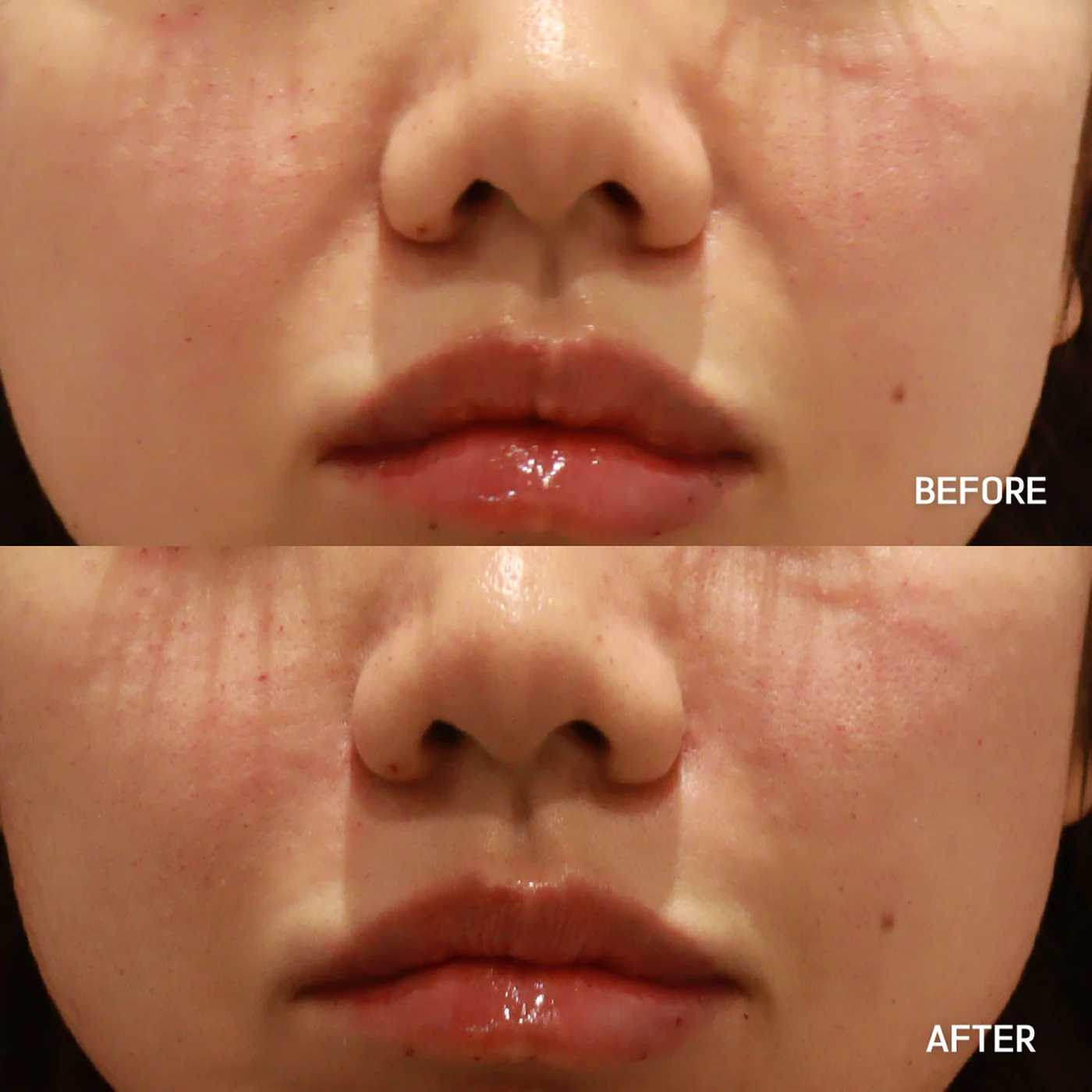
Nasolabial fold filler before and after at Dear Clinic — a smoother transition from cheek to mouth corner after the correction settled
Nasolabial filler · before / after — a smoother run from cheek into mouth corner

All photos are unretouched before/after cases of the same person under the same conditions, treated at Dear Clinic and shown with consent. Individual results may vary; no specific outcome is implied or promised.

Judging longevity from a photograph is unreliable, which is why the review is done in person and in the same light as the capture. The nasolabial fold filler page carries the grading, the three-plane protocol and further cases.

Published Rates

What a correction and a later top-up are charged at

Everything is billed by the cubic centimetre and by family, so a top-up costs in proportion to what goes in. The split between cheek and crease is set with you on screen after the capture, and both the family and the total are approved before a syringe is opened.
Hyaluronic acid, per 1 ccWhere it tends to be used on a fold planListed rate
The ChaeumKorean house family on the standard per-cc line₩130,000 (≈ $95)
Belotero (Germany)Chosen where a transition has to integrate softly₩300,000 (≈ $215)
RestylaneThe long-established imported family₩350,000 (≈ $250)
JuvedermFirm and cohesive, often used where support must hold₩400,000 (≈ $285)

Published rates as of September 2026; KRW is what you pay and USD is shown for reference only. The same card applies to residents of Seoul and to international patients, with no visitor surcharge, and consultation is conducted in English. For the whole filler card by area and family, see the dermal filler hub; the transparent price list carries every other published rate in the clinic.
In the clinic

Where a fold is re-measured at the review

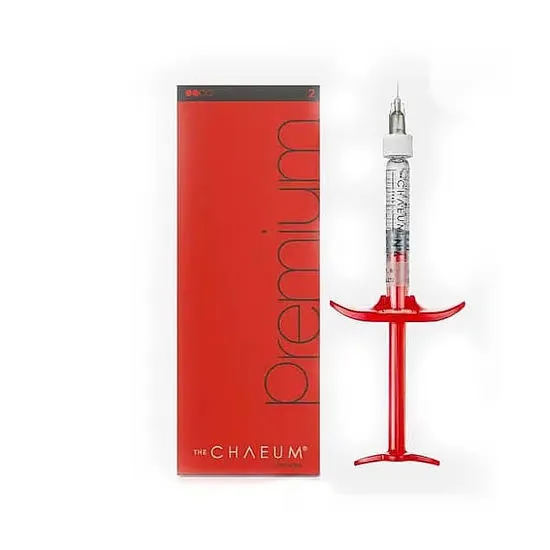
The Chaeum Premium filler carton beside its pre-filled syringe, the Korean hyaluronic acid family stocked at Dear Clinic
The Korean family on the standard per-cc line, billed by volume placed.
Reception with the arc floor lamp at Dear Clinic Cheongdam, where review appointments are scheduled
Reception, where the review after a fold correction is booked.
Medical Team

Five doctors, one standard

Director-performed treatment is a Dear promise — your procedure is planned and performed by the doctors below.


Dr. Jemin Kim — Medical Director and Founder, Dear Clinic
Dr. Jemin Kim
Yonsei University College of Medicine
Medical Director · Founder
Dr. Sanghyun Lee — Director, Dear Clinic
Dr. Sanghyun Lee
Seoul National University College of Medicine
Director
Board-certified · Family Medicine
Dr. Seonhaeng Lee — Director of Aesthetic Medicine, Dear Clinic
Dr. Seonhaeng Lee
Chosun University College of Medicine · Residency, Samsung Medical Center
Director, Aesthetic Medicine
Dr. Daeun Jung — Director, Dear Clinic
Dr. Daeun Jung
Ajou University College of Medicine
Director
Board-certified · Family Medicine
Dr. Woojae Jung — Director of Aesthetic Medicine, Dear Clinic
Dr. Woojae Jung
Seoul National University — B.S. in Medicine
Director, Aesthetic Medicine
Patient Reviews

What our patients say

Real verified reviews from our Google Business Profile.

4.9★★★★★ 310 Google Reviews
FAQ

Smile line filler longevity, question by question

How long do smile line fillers last?
Dear Clinic publishes no month figure for a nasolabial correction. The gel is hyaluronic acid and your own tissue clears it over time, at a pace set by the family used, the volume placed, the plane it sits in, how animated your face is and how much of the plan went into the cheek above the groove. The range for the product in your plan is given to you by the director at the diagnosis.
Why will nobody here quote a number of months?
Because the figure would be invented. A fold plan can be mostly cheek support or mostly crease refinement, and those two are not on the same timeline, so a single number covering both would be wrong for almost everybody. What you are given instead is the range for the specific gel in your plan, and a review appointment at which the estimate is checked against your face.
Does the cheek part of the plan last longer than the crease part?
Generally it behaves differently, yes. Support placed deep in the mid-face sits in tissue that moves comparatively little; a fine correction inside the groove sits in the busiest soft tissue on the lower face. That is why people often notice the line reappearing while the height above it is still holding, and why a second appointment is frequently small.
Does the brand of filler change how long it holds?
It is one driver of several. Cross-linked hyaluronic acid products differ physically from one another in firmness, cohesivity and behaviour under load, and those properties are matched to the job each deposit has to do. A gel that integrates softly at a transition and a gel that carries structural support are doing different mechanical work in the same face.
Will more filler make the correction last longer?
Volume stacked into a moving zone to buy time is the most common way a face starts to look treated, and we do not recommend it. Past what your proportion supports, extra material changes the shape you asked for and raises the chance of a firm point or an uneven line. Where that is the request, the discussion returns to what is actually causing the fold.
When should I book a top-up?
At the point where the shadow returns or the transition from cheek to mouth corner loses its smoothness, on the evidence of your own face and not a diary entry. Part of the first plan is usually still present then, so the second visit is often a fraction of a cubic centimetre, priced on the volume placed like any other session.
Can I make the result last longer myself?
Nothing done at home measurably extends a resorbable gel. What genuinely helps is protecting the area while it settles: keeping sustained pressure off the mid-face, avoiding heat and heavy training in the first days, and turning up for the review so the correction is read properly once swelling has cleared.
Does a second treatment behave differently to the first?
Usually, because the starting point has changed. A face still holding part of an earlier plan needs less new material for the same result. We ask what was used previously, roughly when, and whether any of it was ever dissolved, since all three change both the volume and the placement written for the new session.
What if I want it gone before it fades on its own?
Hyaluronic acid responds to a hyaluronidase enzyme injection, so a correction can be partly reduced or fully cleared without waiting for resorption. Where a long period has passed and the material has fibrosed into firmer tissue, one session may not clear it completely. The area is examined in person before either route is agreed.
What are the risks I should weigh against the timeline?
Bruising at the entry points and swelling through the settling days are ordinary and pass. A firm point or a short-lived asymmetry can occur and is usually correctable, including by dissolving. The serious risk in this region is vascular: gel entering a vessel can cause skin necrosis and, very rarely, visual loss, which is why the groove is mapped, injected slowly at low pressure and treated by a director only.
What does a correction cost, and is the rate the same for visitors?
Charging follows the cubic centimetre and the family chosen: ₩130,000 (≈ $95) per cc with our Korean house gel, and the imported families at their own listed per-cc rates. The same published card applies to residents and to international patients, with no visitor surcharge, and your total is fixed and approved before treatment begins.
Consultation

Ask what your own range looks like

Tell us what your smile lines do at rest and in motion — answered in English as soon as possible.

Scientific Evidence

Peer-reviewed references behind the five drivers above

No paper below states how long a filler lasts in an individual face, and this page does not derive a figure from them. They document that hyaluronic acid products are physically distinguishable from one another, how facial assessment is used to decide where a gel goes, and how hyaluronic acid is removed when a correction has to come back down.

Each reference resolves to a DOI in an indexed journal.

  1. Fagien S et al. Rheologic and Physicochemical Properties Used to Differentiate Injectable Hyaluronic Acid Filler Products. Plastic & Reconstructive Surgery. 2019. doi:10.1097/prs.0000000000005429
  2. de Maio M et al. Facial Assessment and Injection Guide for Botulinum Toxin and Injectable Hyaluronic Acid Fillers: Focus on the Upper Face. Plastic & Reconstructive Surgery. 2017. doi:10.1097/prs.0000000000003544
  3. Baker A. The use of hyaluronidase in aesthetic medicine: a literature review. Journal of Aesthetic Nursing. 2016. doi:10.12968/joan.2016.5.3.129

References are provided for information — outcomes vary by individual and are assessed at your diagnosis.

Book WhatsApp Call