

★★★★★
The clinic was very professional from start to finish. Doctor Jung was excellent and gentle with the treatment. I felt well looked after and everyone was outstanding. Happy with my service!
Something is felt, and it changes character as the appointment moves. The entry registers as a brief sharp point; the deposit itself registers as deep pressure and a sense of the face filling out. Of the injectable regions on a face, the mid-face is among the more tolerable, and the reason is anatomical.
A fine needle or a blunt-tipped cannula passes through skin at a small number of planned points. This is the sharpest moment of a cheek appointment and also the shortest. The points are fixed on the design before the session begins, so there are as few of them as the plan allows, and a cannula route can serve several deposits from one opening.
Moving through the mid-face tissue toward the target is felt as something pushed along under the surface, and people usually describe it as odd instead of sore. A blunt cannula slides between structures where a needle would cross them, which changes the sensation and is the point of using one.
Volume placed in the deep plane over the cheekbone produces a heavy, firm, expanding pressure and occasionally a dull ache. The gel is advanced slowly, which is a safety requirement in this region and also keeps the pressure from building faster than the tissue can take it. This is the phase most people remember afterwards.
The placed volume is moulded through the skin and the two sides are compared with you upright. Pressure on a cheek that has just received gel is felt clearly without being painful in the ordinary sense. The session ends here, and knowing when a mid-face is finished keeps it short.
Pain thresholds differ enormously between people, and a small refinement is not the same appointment as a full mid-face rebuild. Nothing here predicts your own session; it describes what the phases are made of.
Three anatomical facts do most of the work here. The first is soft-tissue depth: the mid-face carries substantial fat over the cheekbone, so a needle crossing it travels through a cushion, while the vermilion of a lip is thin, mobile tissue with almost nothing between surface and nerve. The second is what the tissue reports: a deposit placed deep against bone stimulates pressure and stretch, which is duller and more bearable than the sharp signal a superficial pass near the mouth produces.
The third is how the plan is built. Where a mid-face has lost projection, most of the volume belongs in the deep plane against the bone, so the appointment is weighted toward the phase that registers as pressure and away from fine superficial work. The published assessment and injection guides listed at the foot of this page are written around exactly that logic — which plane a region is filled in, and why the anatomy dictates it — and the facial danger-zone literature explains why the depth and the speed in this region are not negotiable.
None of that makes the cheek uniformly quiet. The area closest to the nose and the thin skin near the eyelid junction are more sensitive than the outer cheek, and a plan needing superficial refinement is felt more. Where the reading finds that your concern is laxity instead of lost volume, we do not recommend an injection at all; the conversation moves to lifting, and the full anatomy of a mid-face plan sits on the cheek filler page.
Charging follows the cubic centimetre and the family chosen, so the total for a mid-face plan is set with you on screen before anything is opened.
| Family | Product fact relevant to a cheek appointment | Listed rate per 1 cc |
|---|---|---|
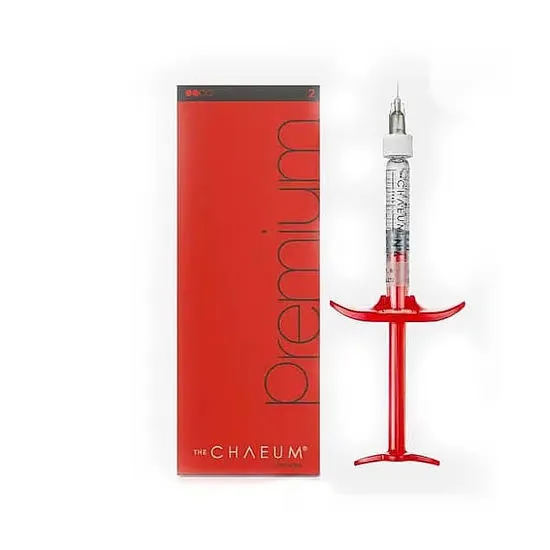
| The Chaeum | The Korean house family used across the standard per-cc line at this clinic. | ₩130,000 (≈ $95) |
| Belotero (Germany) | Made by a patented CPM multi-density particle process, with four lines matched to skin type and region. | ₩300,000 (≈ $215) |
| Restylane | The first hyaluronic acid filler ever manufactured, produced since 1996 and certified by the FDA and CE. | ₩350,000 (≈ $250) |
| Juvederm | Vycross cross-linking, and lidocaine is carried within the syringe, which is one reason this family is often chosen for sensitive placements. | ₩400,000 (≈ $285) |
A family is selected for what your mid-face needs mechanically first, with comfort weighed alongside that. Published rates apply identically to residents of Seoul and to international patients, with no visitor surcharge, and anything beyond the volume actually placed is quoted at the consultation. Every other published figure sits on the price list, and the wider per-cc picture is on the filler cost page.
Comfort here is largely a consequence of planning: fewer openings, the correct plane, the shape judged before swelling arrives.
The EVE Muse three-dimensional capture under five light sources with AI analysis separates a cheek that has lost volume from one that has descended. A plan that begins in the correct place needs fewer corrective passes later, and passes are the part you feel.
Placement is distributed across the Deep, Mid and Superficial planes, each with a written allowance. Support built against bone means the delicate superficial work near the eyelid junction and the nose can stay small, which is where sensitivity is concentrated.
Gel concentrated at one point stretches the tissue around it, which is uncomfortable during the appointment and visible afterwards. Distributing by layer across the mid-face keeps the pressure sensation even, and the two sides are compared with you sitting upright while there is still time to adjust.
The rebuilt projection is checked against the lid margin and the jaw line and read in motion, because a cheek moves when you smile. Recognising the finishing point is what keeps the last minutes of a mid-face session short.
Every deposit is director-performed. The facial artery and its branches run through this region and the ophthalmic circulation is reachable from it, so plane and speed are fixed by anatomy, and the person who graded your mid-face holds the syringe over it. Your comfort measures are settled with that director beforehand.
Expect the treated mid-face to feel tender to touch for a while, most obviously when something presses on it. Hyaluronic acid binds water, so a fresh mid-face commonly looks fuller than the design intends. How much swelling you get, and how long it clears in, differs between people and between plans, so judge nothing while it is present and bring the question to the review appointment arranged with you.
Four everyday habits press on a treated cheek. Sleeping on one side puts a night of weight through the deposit. Holding a telephone against the face does the same for the length of a call. Chewing something genuinely tough works the tissue repeatedly. And a strap, a helmet edge or a mask hooked tightly over the cheekbone applies a steady line of pressure exactly where the gel is knitting in. Bruising, when it happens, starts at the entry points and not across the whole mid-face.
Heat and alcohol widen vessels, so a sauna or a long night out makes swelling and bruising more pronounced while they last. Written aftercare specific to your plan is handed over at the appointment, and questions about what to take for discomfort belong with your director. With the clinic open 365 days, a call or a visit is rarely difficult to arrange.
Ordinary discomfort declines day by day. Tenderness under pressure, mild swelling and a small bruise at an entry point are what an opened tissue plane feels like. A firm point or slight unevenness across the mid-face can occur and is usually correctable, including by dissolving part of the gel; mention it at the review, or sooner if it bothers you.
Pain that escalates instead of easing is a different matter. So is skin over the cheek turning white, mottled or dusky, which is the first sign the published safety literature flags for vascular compromise, and so is any change in vision, which is rare and serious and documented in the ophthalmology literature cited below. Any of those means contacting the clinic immediately on the same day and seeking urgent medical care, and hyaluronidase is kept within reach in the room for that reason. Results vary between individuals and are assessed at your own examination.
We decline some mid-face requests outright. Skin carrying active inflammation or infection over the planned entry points is treated another day. A cheek whose real finding is descent rather than lost volume is sent to a lifting consultation instead, because gel added to it buys weight and not height. Treatment is not offered during pregnancy or breastfeeding, and a history of bleeding disorders, blood-thinning medication or previous filler in the region needs to be on the table before a syringe is opened.
Injectables and energy platforms share the same two floors, so declining to inject a mid-face costs this clinic nothing.
Three-dimensional capture under five light sources with AI analysis grades projection, descent and the volume actually missing. The design that comes out of it decides how many openings the appointment needs and how much of the plan can sit deep against bone, which is the single largest influence on what you feel.
Deposits in this region are director-performed at a fixed plane and a slow advance, with the two sides compared while you are upright. Your comfort measures are agreed with the same director at the consultation and written into the plan for the day.
Director-performed treatment is a Dear promise — your procedure is planned and performed by the doctors below.





Real verified reviews from our Google Business Profile.
4.9★★★★★ 310 Google ReviewsThe clinic was very professional from start to finish. Doctor Jung was excellent and gentle with the treatment. I felt well looked after and everyone was outstanding. Happy with my service!
I've visited clinic for LDM procedure. I don't speak Korean, so there was an interpreter who assisted me while consulting. The staff was very attentive, they asked me every time before applying products/covering my face during the procedure and it went smoothly. Planning to visit the clini…
All the staff are kind, the doctor is professional. They recommended us the treatment that fit us best and last the longest. A very nice experience overall.
I did a hydrofacial, white/black head removal, and 1 day lasers. Really kind staff and reasonable prices. The only thing I would advise is that your first consultation is with a salesperson and you don’t see the doctor until after you decide what you want and after you pay.
Had a great experience here as a foreigner! The doctors and staff were knowledgeable, friendly, and not pushy. They made recommendations in my consultation and were happy to work within my budget.
Tell us how you have handled injections before — answered in English as soon as possible.
Four references support the clinical statements on this page. The danger-zone paper documents the vascular anatomy that fixes the plane and the speed in this region. The assessment and injection guide describes how a face is read before a gel is placed. The rheology paper sets out the physical properties that differentiate hyaluronic acid products from one another. The ophthalmology review documents visual loss following facial filler injection.
None of them describes how your own appointment will feel. They are the basis for the anatomy, the planning logic and the urgent-symptom list, and each entry resolves to an indexed journal through its DOI with title, journal and year reproduced as published.
References are provided for information — outcomes vary by individual and are assessed at your diagnosis.