Home
Doctors Pricing Cost FAQ Book a Consultation
ENES
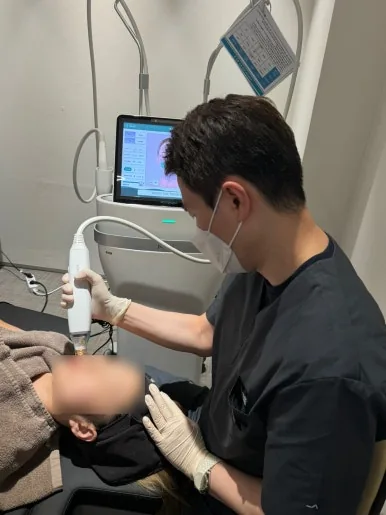
Doctor working a lifting handpiece across the mid-face at Dear Clinic Cheongdam
Dear Clinic · Areas · Mid-face
Area Axis — The Malar Fat Pad

Cheek Lifting in Cheongdam, Gangnam, Seoul

The cheek is the one part of the face that moves downward as a mass. What people notice is rarely the cheek itself but the smile line that deepens underneath it once the mass has travelled.

Energy, stimulator or structure Focused ultrasound from ₩150,000 (≈ $105) / 300 shots Open 365 days
Book a Consultation Compare the Three Routes
Definition

What cheek lifting treats, once the malar fat pad has travelled

Cheek lifting at Dear Clinic is non-surgical work aimed at the mid-face, where a pad of fat over the cheekbone sits lower than it once did. Focused ultrasound and radiofrequency tighten the tissue holding it. A collagen stimulator asks the dermis to rebuild support over months. Where the pad has lost bulk instead of position, volume is the answer and belongs on another page.

The anatomy is worth a paragraph because it changes the decision. The malar fat pad is a discrete compartment over the cheekbone, anchored by ligaments that loosen with age. When it slides forward and down, it stacks against the fixed tissue beside the nose and mouth. The fold deepens because the pad arrived, and treating the fold without asking where the pad went is how a mid-face ends up heavier after treatment.

So the useful question at the first appointment is descent or deflation. The nasolabial fold page deals with the downstream crease on its own terms, and the lifting and tightening category page catalogues the platforms named below.
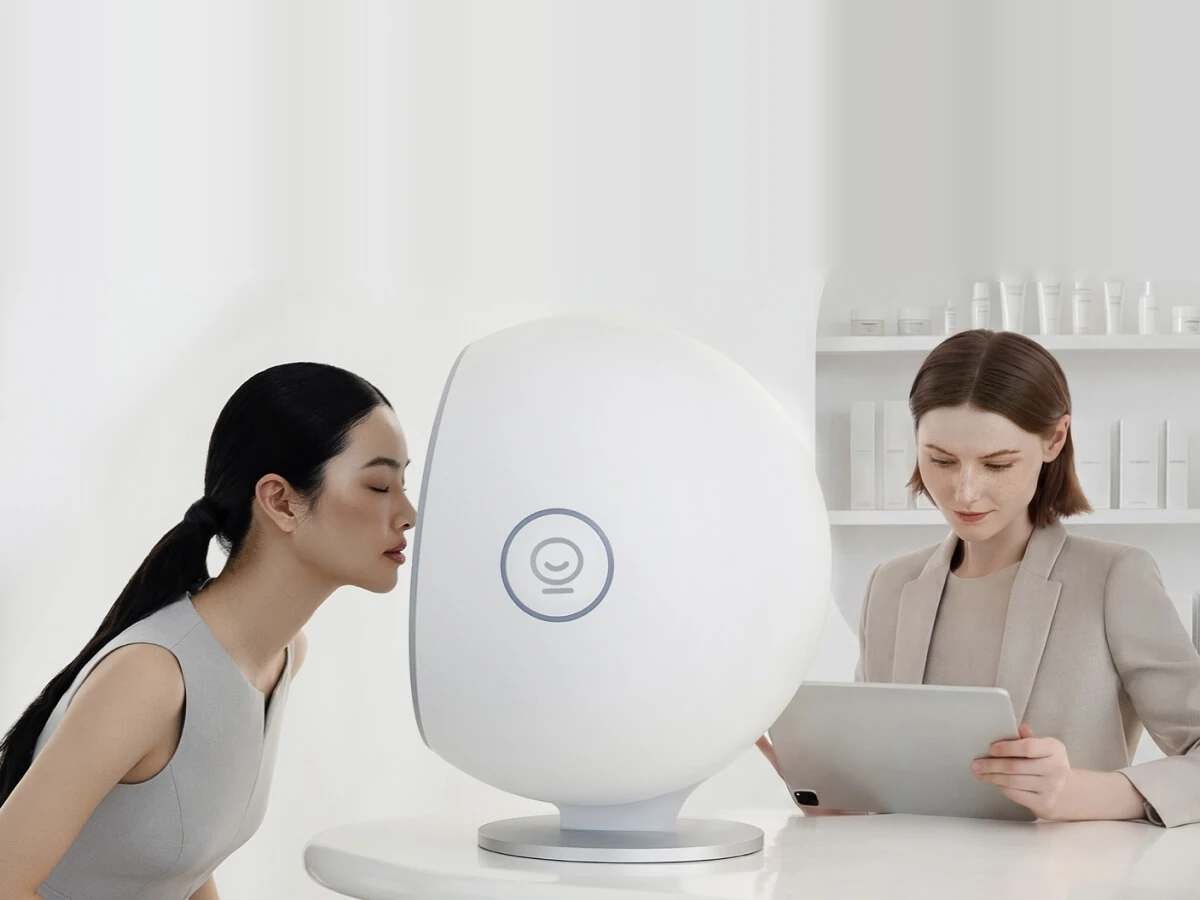
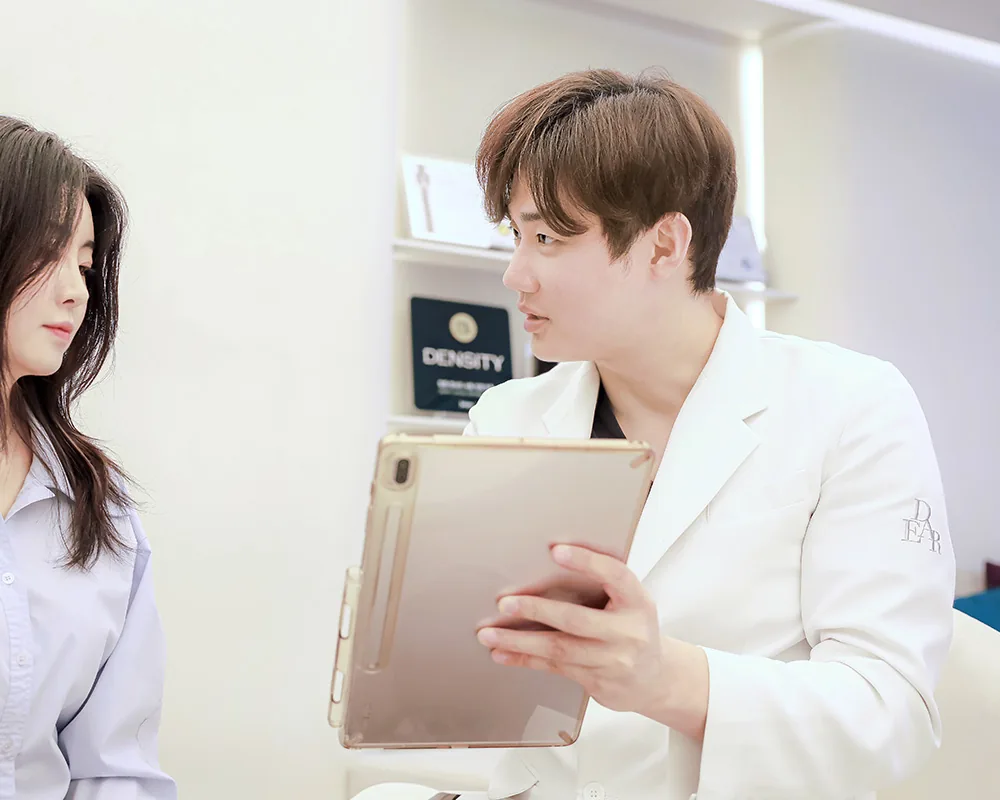
A client leans into the EVE 3D skin analysis unit while the scan is reviewed on a tablet
Descent and deflation photograph almost identically from the front, which is why the capture is taken at angle as well.
Reading The Mid-face

Four signs that a cheek has descended, and one that it has emptied instead

The findings a director looks for before naming any platform for your mid-face.

SIGN 01

The high point of the cheek has dropped

Photograph a face lit from above and the brightest patch sits on the cheek mass. When that patch has moved toward the mouth, the pad has travelled. This separates descent from every other mid-face complaint and is the sign a capture measures most reliably.

SIGN 02

The smile line has deepened from below, not above

A fold cut by descended tissue looks different from one cut by repeated expression: deeper at its lower end, with full tissue lateral to it. This is the downstream sign, and treating it alone leaves the cause untouched.

SIGN 03

The lower eyelid and the cheek no longer meet cleanly

As the pad leaves the upper mid-face, a short step appears between lid and cheek that catches shadow. People describe this as looking tired and reach for an eye treatment when the finding sits a centimetre lower.

SIGN 04

The cheek moves when you lie down

If the mid-face looks better lying flat and returns on standing, the finding is position and gravity, which is what energy acts on. A cheek that looks flat in both positions has lost bulk instead, and that is the deflation reading.

Most mid-faces show a mixture. The grading records which finding dominates, because the dominant one decides whether your plan starts with heat, with a stimulator, or with structure.

Three Routes

Energy, collagen stimulation and structure, compared across a descended cheek

All three are performed at Dear Clinic, as separate answers to separate findings.

RouteWhat it does to the mid-faceWorking depthSold inListed rate
Ultherapy PrimePlaces focused ultrasound as discrete points under the cheek, aimed at the layer that anchors the pad1.5 / 3.0 / 4.5 mm, visualised to 8 mm100 shots₩400,000 (≈ $285)
Shurink UniverseThe accessible focused-ultrasound tier, covering the mid-face broadly in one sessionFocused ultrasound, dosed by shot count300 shots₩150,000 (≈ $105)
Thermage FLXHeats a wide dermal field across the cheek through one sealed tip, aimed at skin quality over the padMonopolar radiofrequency, dermal level600-shot tip₩1,900,000 (≈ $1,355)
Density — Classic tipGraded radiofrequency across the same field, planned as a course across visitsHigh-density monopolar radiofrequency300 shots₩700,000 (≈ $500)
SculptraPoly-L-lactic acid placed in the mid-face so the dermis builds its own collagen over monthsSubdermal, by vial1 vial₩1,000,000 (≈ $715)
Hyaluronic acid to the cheekRestores projection where the pad has lost bulk, giving the tissue above it something to rest onDeep plane over the boneBy syringe, quoted on the filler pageSee the cheek filler page

Five published lines here plus one route quoted on its own page. Every figure on this page appears on the published price list, and nothing is bundled across routes.

Choosing

How a mid-face grading picks between heat, a vial and a syringe

Heat, when the pad has moved and the skin still has quality. Focused ultrasound deposits energy as discrete points at a chosen depth; radiofrequency warms a dermal volume across a pass. Both act on the collagen you already have, so they suit a cheek whose tissue is sound and whose position has slipped. The two ultrasound tiers differ in precision and coverage.
A stimulator, when the dermis itself has thinned. Poly-L-lactic acid does nothing on the day it is placed. It works by provoking the dermis into making collagen over months, so it suits a mid-face that grades thin as well as low. Sold by the vial, planned across appointments, spacing set by the director.
Structure, when the cheek has emptied. Where the pad has lost bulk, heating it or asking it to rebuild collagen changes very little. Hyaluronic acid placed deep over the bone restores the projection that the tissue above rests on. That route is designed and priced on the cheek filler page, and the same director reads both.
When the answer is that we do not treat the cheek at all. A mid-face whose loose skin gathers into a standing fold is past what energy reaches, and we say so. A face where the real complaint is the fold beside the mouth and the pad has not moved is sent to the fold, not to the cheek. We do not recommend a mid-face session that treats a finding you do not have.
Sequencing

How a cheek plan is ordered when two routes are needed

Mixed mid-face findings are common. The order matters more than the combination.

STEP 01

Position is addressed before volume is judged

A descended pad placed back under tension often looks fuller without a syringe. Judging how much volume a mid-face lacks while the pad is still sitting low is how cheeks get overfilled, so the energy line usually goes first and the volume question waits.

STEP 02

A stimulator is given time before anything is added

Collagen built in response to poly-L-lactic acid arrives gradually, so the mid-face is re-read at the interval your director sets. Adding a second route inside that window means paying for a change you were already going to get.

STEP 03

Each route keeps its own published rate

A plan carrying an ultrasound session and a vial is two purchases on one sheet, agreed before anything is opened. There is no mid-face package rate here and no tier for taking both.

No month figure for how long a cheek result holds is published here. How long a mid-face keeps a change depends on the starting grade, skin thickness, weight change and individual collagen response. Your director gives a conservative expectation in person, with the review date.

Before & After

A facial energy case, photographed at Dear

Treated at Dear Clinic and shown with consent, labelled with the treatment it actually received.
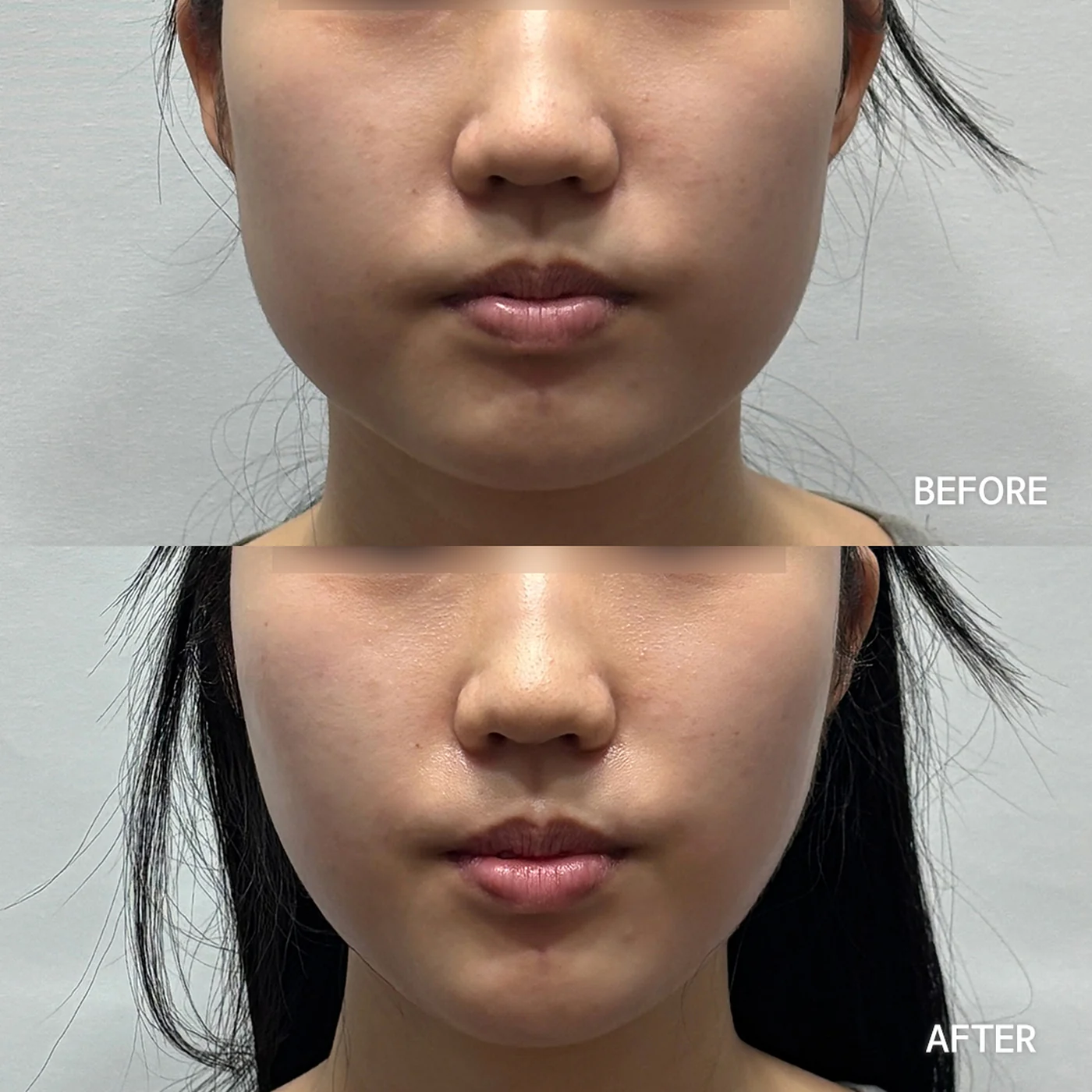
Onda Coolwaves facial case at Dear Clinic photographed front-on before and after a microwave energy plan across the lower cheek
Onda lifting · facial case · front view, before and after a Coolwaves™ microwave plan. Individual results may vary.

All photos are unretouched before/after cases of the same person under the same conditions, treated at Dear Clinic and shown with consent. Individual results may vary; no specific outcome is implied or promised.

One point about that image. It is a microwave energy case, a different platform from the five routes compared above, with its own page at Onda lifting. It appears here because it shows what a change in lower-cheek contour looks like when the lighting and the angle are properly matched. It is not a result from Ultherapy Prime, Shurink Universe, Thermage FLX, Density or Sculptra.

Dear, Knowhow

Why a mid-face is read twice before a cheek route is named

01 — THE FULL ARSENAL

Two ultrasound tiers, two radiofrequency systems, a stimulator and a filler tray

All three cheek routes are stocked on 5F and 7F, which removes any incentive to bend a mid-face finding toward whichever route the building happens to sell. A grading that ends in a single vial, or in being sent to the filler page, costs us nothing to give.

02 — DIAGNOSIS FIRST

Descent and deflation separated before the cheek is touched

EVE Muse captures in 3D under five light sources with AI analysis, and the mid-face is read at angle as well as front-on, seated and reclined. That second reading is what tells descent from deflation.

03 — DIRECTOR-PERFORMED

The hand that graded the mid-face runs the session

The cheek sits over bone with the infraorbital nerve at its upper edge and the facial artery beside the fold below. Transducer pressure and needle depth both matter, so your session is director-performed by the doctor who read the capture, and that doctor takes the review.
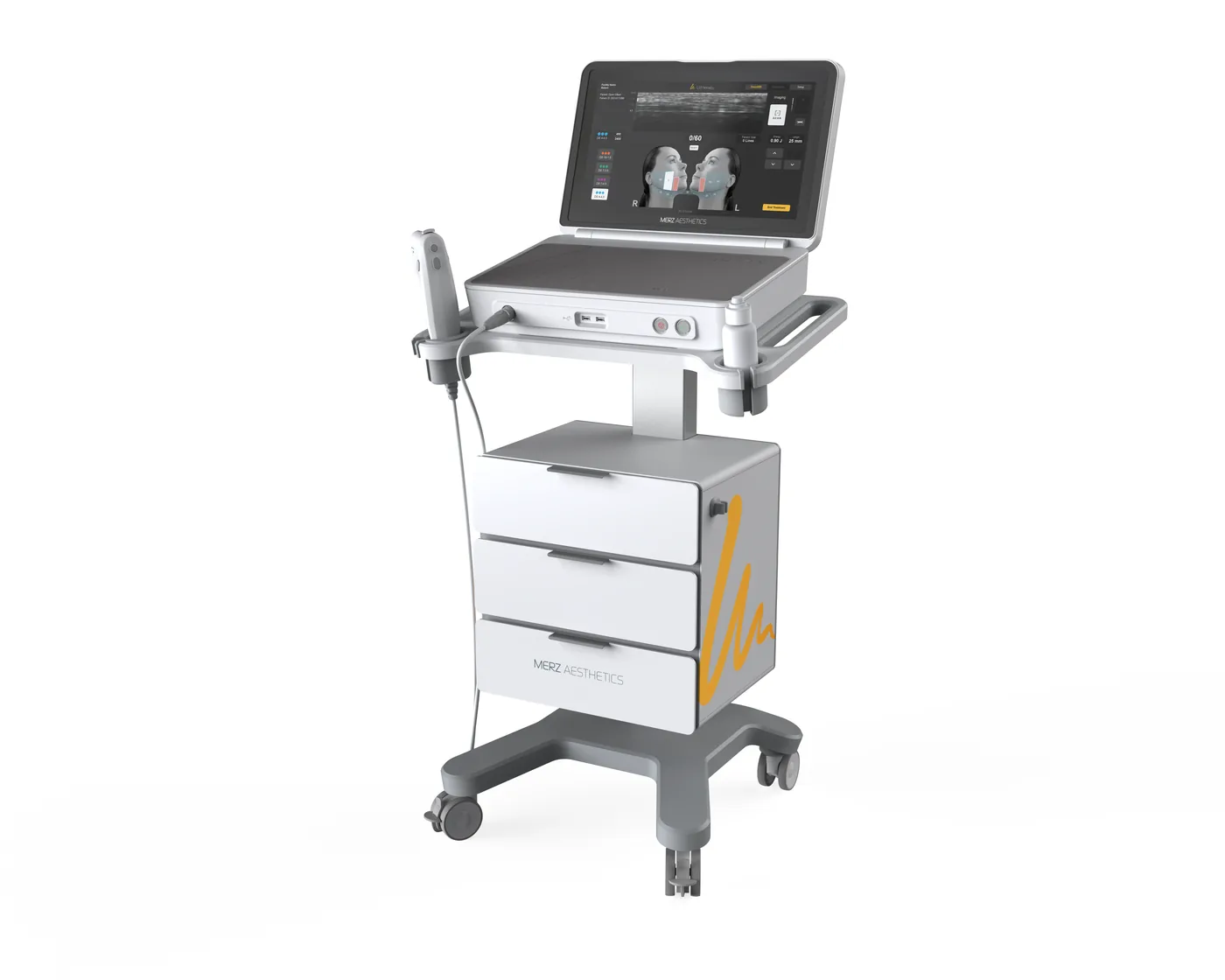
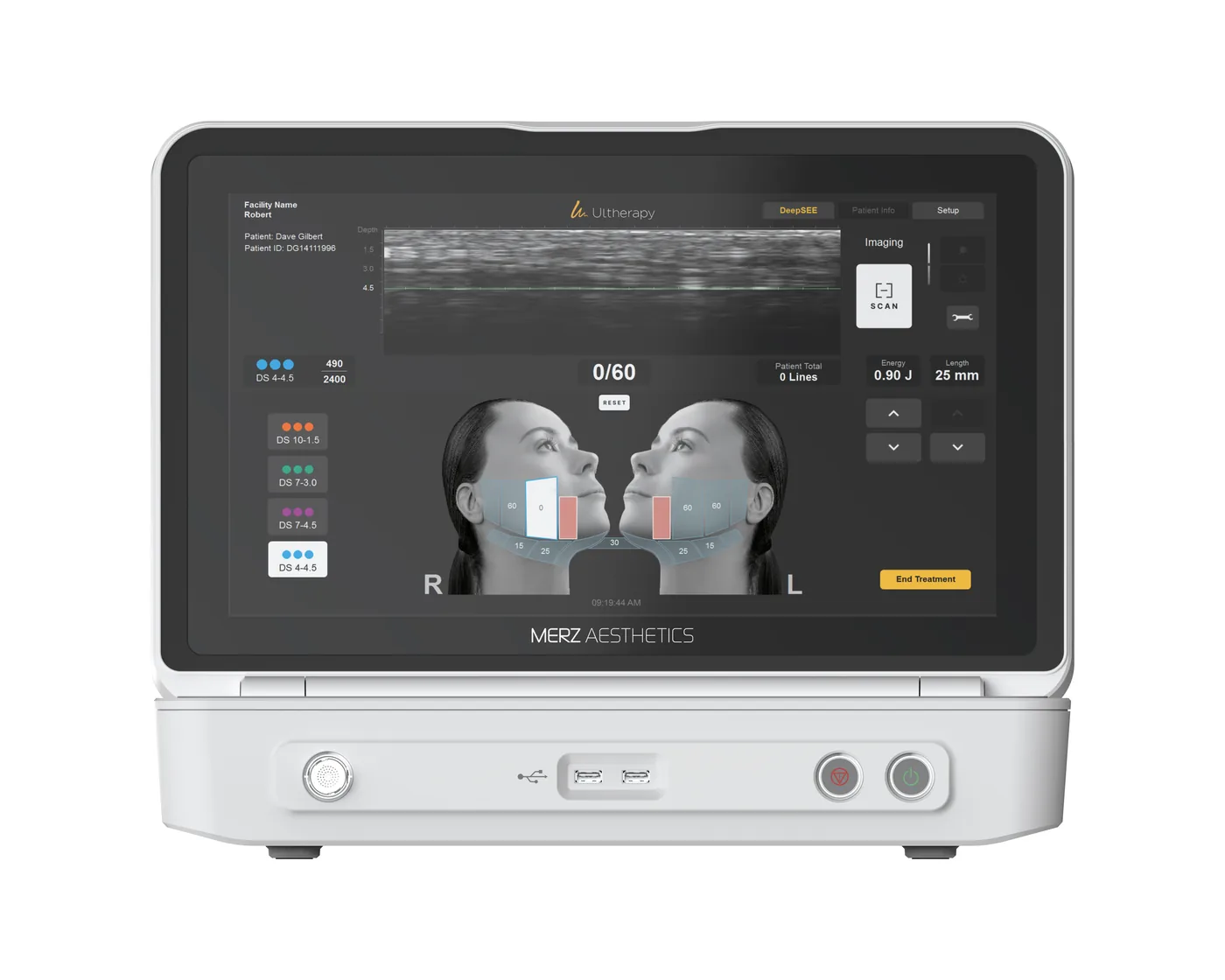
Ultherapy Prime system at Dear Clinic Cheongdam, seen from the front with its treatment screen
The planning screen is filled in before the first shot, so the mid-face shot count is a decision and not a running total.
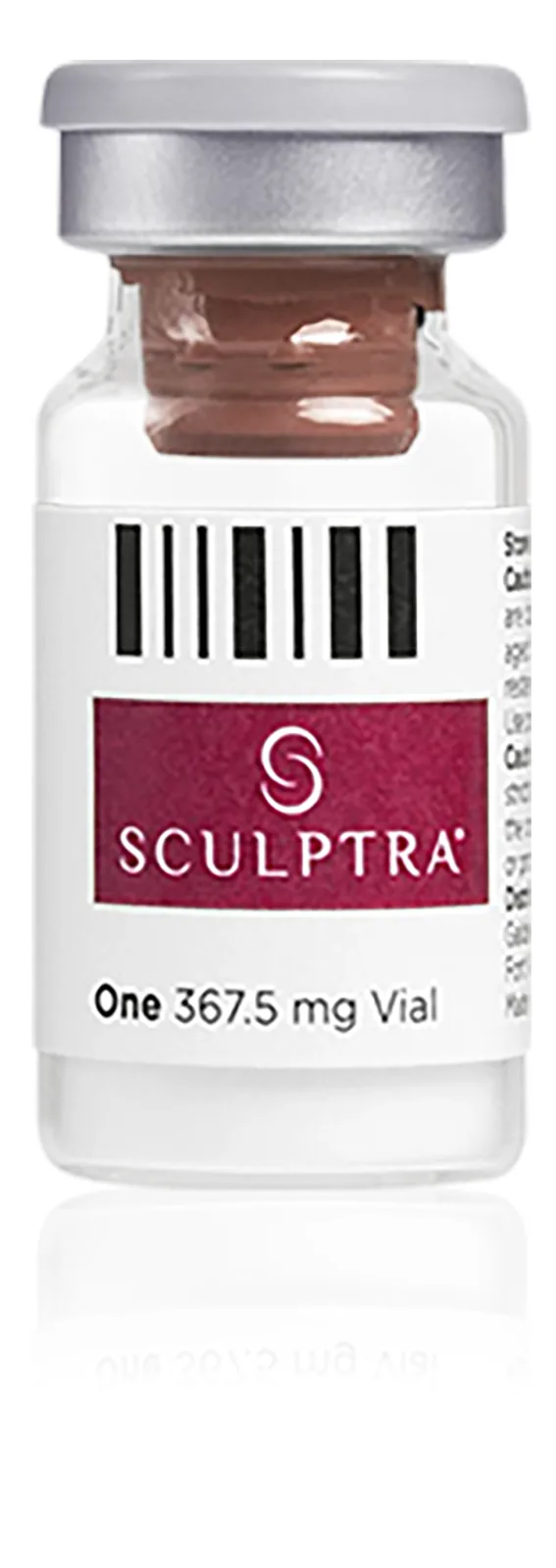
Sculptra 367.5 mg single vial of poly-L-lactic acid as stocked at Dear Clinic for collagen stimulation in the mid-face
Poly-L-lactic acid is sold by the vial, which is why a stimulator plan is quoted in vials and never in sessions.
In the clinic

The devices and hands behind this treatment

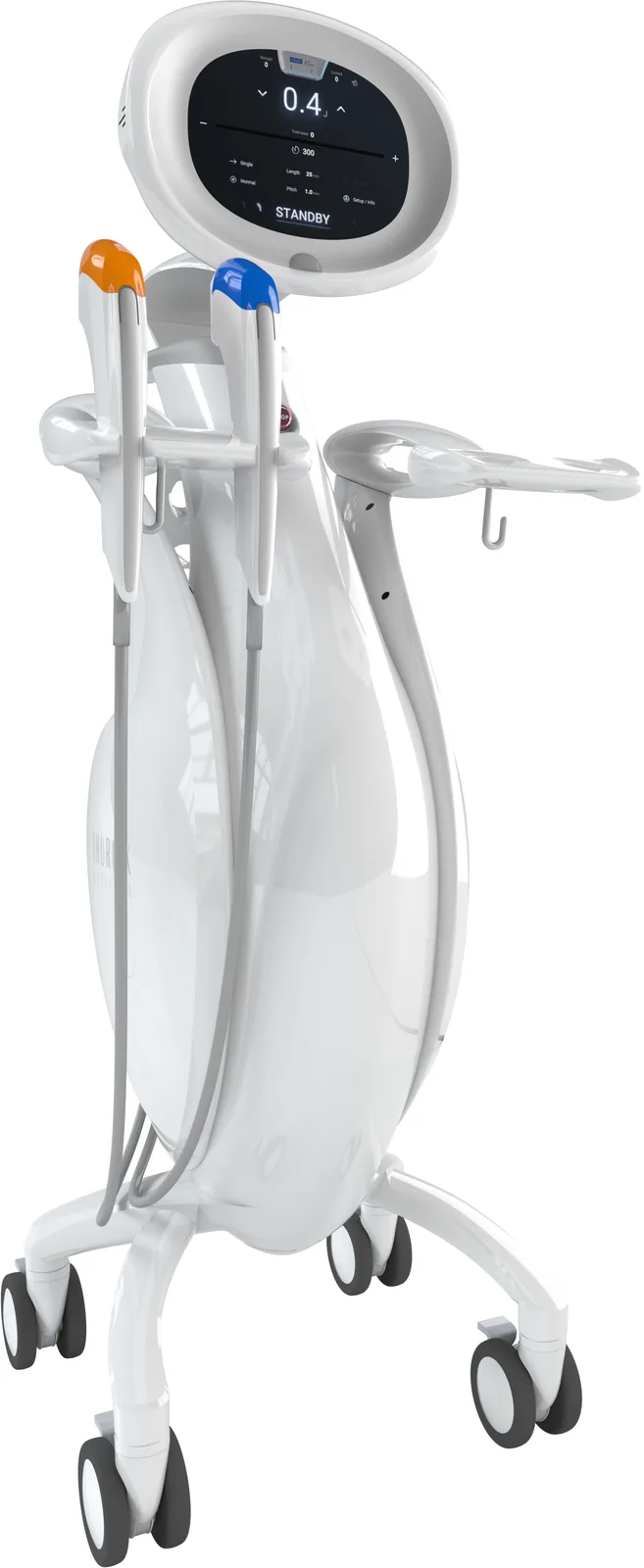
Shurink Universe focused ultrasound console seen at a three-quarter angle at Dear Clinic Cheongdam
The accessible ultrasound tier, dosed in 300-shot sessions across the mid-face
Ultherapy Prime console seen from the front, showing the ultrasound planning screen
Pricing

How much cheek lifting
costs in Cheongdam

The accessible focused-ultrasound tier is ₩150,000 (≈ $105) for 300 shots. Imaging-guided focused ultrasound is ₩400,000 (≈ $285) per 100 shots and is quoted from the mid-face shot map. Radiofrequency runs from ₩700,000 (≈ $500) for 300 shots on the Classic tip to ₩1,900,000 (≈ $1,355) for a full 600-shot tip. Collagen stimulation is ₩1,000,000 (≈ $715) per vial.

Four of those numbers buy energy and one buys a vial of poly-L-lactic acid, so comparing them directly tells you little. A shot block, a sealed tip and a vial are three kinds of purchase. Your total moves with how much of the mid-face the plan covers and whether the grading calls for one route or two.

International visitors pay the same published figures as Korean patients, with no surcharge. Consultation and aftercare arrangements are explained at your appointment. Where the reading sends you to volume instead, the syringe rates sit on the cheek filler page and are quoted from the same card.

If your mid-face grades well and the fold beside your mouth is the whole complaint, we will tell you the cheek needs nothing, and lose the larger booking.

Caution

Recovery in the mid-face, and the risk each cheek route carries

After focused ultrasound across the cheek. Tenderness along the treated lines and occasional small welts that settle within the hour. A burn is the named risk wherever heat is placed, and transient numbness over the cheek can occur and resolves. The transducer is kept off the bony rim under the eye.
After radiofrequency across the cheek. Redness fading within hours and a warm, tight field for some days. Uneven contact, or a pass stacked twice over one spot, is the mechanism behind a burn or a blister, so hand pressure is checked at every sweep.
After a collagen stimulator. Swelling and bruising at the injection points for a few days, and tenderness on pressure. A delayed nodule under the skin is the risk most worth naming with poly-L-lactic acid, because it can appear weeks later; report any lump to the clinic rather than waiting for the review.
Common to all of them. Saunas, hot yoga and alcohol wait a few days, sunscreen across the cheek is daily, and makeup returns once any flush has gone. Comfort measures during the session are confirmed at your consultation.
Call, do not wait. Lasting pain, spreading swelling, blistering, colour change, a new lump, or numbness that does not resolve means contacting the clinic immediately, ahead of the review.

Tell your director about implanted electronic devices, metal in the cheek field, previous filler, threads or stimulators in the mid-face, autoimmune and neuromuscular conditions, keloid history, pregnancy and breastfeeding. Several change which route is offered and one or two rule a session out.

Medical Team

Five doctors, one standard

Director-performed treatment is a Dear promise — your procedure is planned and performed by the doctors below.


Dr. Jemin Kim — Medical Director and Founder, Dear Clinic
Dr. Jemin Kim
Yonsei University College of Medicine
Medical Director · Founder
Dr. Sanghyun Lee — Director, Dear Clinic
Dr. Sanghyun Lee
Seoul National University College of Medicine
Director
Board-certified · Family Medicine
Dr. Seonhaeng Lee — Director of Aesthetic Medicine, Dear Clinic
Dr. Seonhaeng Lee
Chosun University College of Medicine · Residency, Samsung Medical Center
Director, Aesthetic Medicine
Dr. Daeun Jung — Director, Dear Clinic
Dr. Daeun Jung
Ajou University College of Medicine
Director
Board-certified · Family Medicine
Dr. Woojae Jung — Director of Aesthetic Medicine, Dear Clinic
Dr. Woojae Jung
Seoul National University — B.S. in Medicine
Director, Aesthetic Medicine
Patient Reviews

What our patients say

Real verified reviews from our Google Business Profile.

4.9★★★★★ 308 Google Reviews
FAQ

Cheek lifting in Cheongdam, answered

What does cheek lifting actually move in the mid-face?
It acts on the tissue that holds the malar fat pad, the compartment of fat sitting over the cheekbone. Focused ultrasound places energy as points at a chosen depth and radiofrequency heats a dermal field, both working on collagen that already exists. A collagen stimulator takes the other approach and asks the dermis to build new support over months.
Will cheek lifting fix my nasolabial folds?
Partly, and only when the fold deepened because tissue arrived from above. That version of the fold is a downstream sign of descent, so lifting the pad softens it. A fold cut by years of expression, or one sitting beside an empty cheek, needs its own answer; the nasolabial fold page covers that route.
How much does cheek lifting cost in Cheongdam, Gangnam
The published lines are ₩150,000 (≈ $105) for 300 shots of focused ultrasound at the accessible tier, ₩400,000 (≈ $285) per 100 imaging-guided shots, ₩700,000 (≈ $500) for 300 shots of radiofrequency on the Classic tip, ₩1,900,000 (≈ $1,355) for a 600-shot tip, and ₩1,000,000 (≈ $715) per vial of collagen stimulator. Mid-face coverage decides your total.
Should I have energy or filler for a flat-looking cheek?
It depends on whether the cheek moved or emptied. If the bright point of the mid-face has travelled toward the mouth and the cheek improves lying down, energy is the matched route. If it grades flat in every position, volume is what is missing and the answer is on the cheek filler page. The capture settles it in one appointment.
What is the difference between Ultherapy Prime and Shurink Universe for a cheek?
Both are focused ultrasound. Ultherapy Prime places energy at 1.5, 3.0 and 4.5 mm with live visualisation to 8 mm before the shot, which suits a mid-face where depth precision matters. Shurink Universe is dosed in 300-shot sessions and covers the cheek broadly in one sitting. Both are stocked here and the grading chooses between them.
How does a collagen stimulator differ from energy for the cheek?
Energy works on the collagen framework you already have, and the change follows within weeks. Poly-L-lactic acid does nothing on the day and works by provoking the dermis into making new collagen, which is why a stimulator plan is written in vials across appointments and reviewed at an interval your director sets.
Can I have energy and a stimulator on the same cheek?
Sometimes, and the order is the clinical part. A descended pad is usually repositioned first so that how much support the mid-face actually lacks can be judged afterwards. Whether the two share one visit is decided by the director on the day, and where they are separated it is because the second route would be bought blind.
Does a cheek treatment make my face look wider?
That is the fear worth naming, and it comes from volume placed too laterally or too superficially in a mid-face that did not lack bulk. Energy routes do not add material, so width is not the risk there. Where volume is genuinely indicated, the placement and plane are designed to project forward instead of outward, which is described on the filler page.
Is cheek lifting uncomfortable?
Focused ultrasound is felt as brief heat deep under the cheek, and radiofrequency as a warm sweep with a cooling burst. A stimulator is a set of injections, so pressure and a few days of tenderness are usual. Comfort measures during your session are confirmed at the consultation and are not fixed in advance on this page.
How long before a cheek change shows?
Energy routes work through collagen remodelling, so the change builds over weeks instead of appearing on the day, and the review date in your plan is set for when it can reasonably be read. Poly-L-lactic acid is slower still by design. No month figure is published here, because the starting grade, skin thickness and individual response all move it.
Who should not have a cheek lifting session here?
Anyone whose mid-face skin gathers into a standing fold, because that is past what energy reaches. Anyone whose cheek grades flat in every position, since the finding is lost bulk and not position. Sessions are also postponed for active infection, inflammation or sunburn across the cheek, and for pregnancy and breastfeeding, and some platforms are ruled out by implanted electronic devices or metal in the field.
I am visiting Seoul briefly. Can a mid-face plan fit?
The capture, the consultation and one energy route usually fit into a single appointment once suitability is confirmed, and the review can be done remotely at the interval your director sets. A stimulator course is a poorer fit for a short trip because it is written across appointments. We open 10:00 to 19:00 on weekdays and 10:00 to 16:00 at weekends and public holidays, 365 days, and reply in English as soon as possible.
Consultation

Ask whether your cheek moved or emptied

Your questions, answered in English as soon as possible.

Scientific Evidence

Science behind the three mid-face routes — peer-reviewed references

Six indexed studies, two for each family named on this page. The first pair concerns microfocused ultrasound with visualisation, the second compares monopolar radiofrequency with that ultrasound in a split-face trial and reviews radiofrequency for laxity, and the third reports on injectable poly-L-lactic acid.

Each entry gives title, journal and year with a verifiable DOI. None is evidence of an outcome for your own mid-face.

  1. Fabi S. Microfocused Ultrasound With Visualization for Skin Tightening and Lifting. Dermatologic Surgery. 2014. doi:10.1097/dss.0000000000000233
  2. Friedman O, et al. Intense focused ultrasound for neck and lower face skin tightening a prospective study. Journal of Cosmetic Dermatology. 2020. doi:10.1111/jocd.13313
  3. Alhaddad M, et al. A Randomized, Split-Face, Evaluator-Blind Clinical Trial Comparing Monopolar Radiofrequency Versus Microfocused Ultrasound With Visualization for Lifting and Tightening of the Face and Upper Neck. Dermatologic Surgery. 2019. doi:10.1097/dss.0000000000001653
  4. Araújo A, et al. Radiofrequency for the treatment of skin laxity: mith or truth. Anais Brasileiros de Dermatologia. 2015. doi:10.1590/abd1806-4841.20153605
  5. Fitzgerald R, et al. Facial volume restoration of the aging face with poly-l-lactic acid. Dermatologic Therapy. 2011. doi:10.1111/j.1529-8019.2010.01375.x
  6. Angelo-Khattar M. Poly-L-Lactic Acid in Facial Rejuvenation: Volumetric Data Supporting Regenerative Outcomes. Clinical, Cosmetic and Investigational Dermatology. 2025. doi:10.2147/ccid.s566829

References are provided for information — outcomes vary by individual and are assessed at your diagnosis.

Book WhatsApp Call