Home
Doctors Pricing Cost FAQ Book a Consultation
ENES
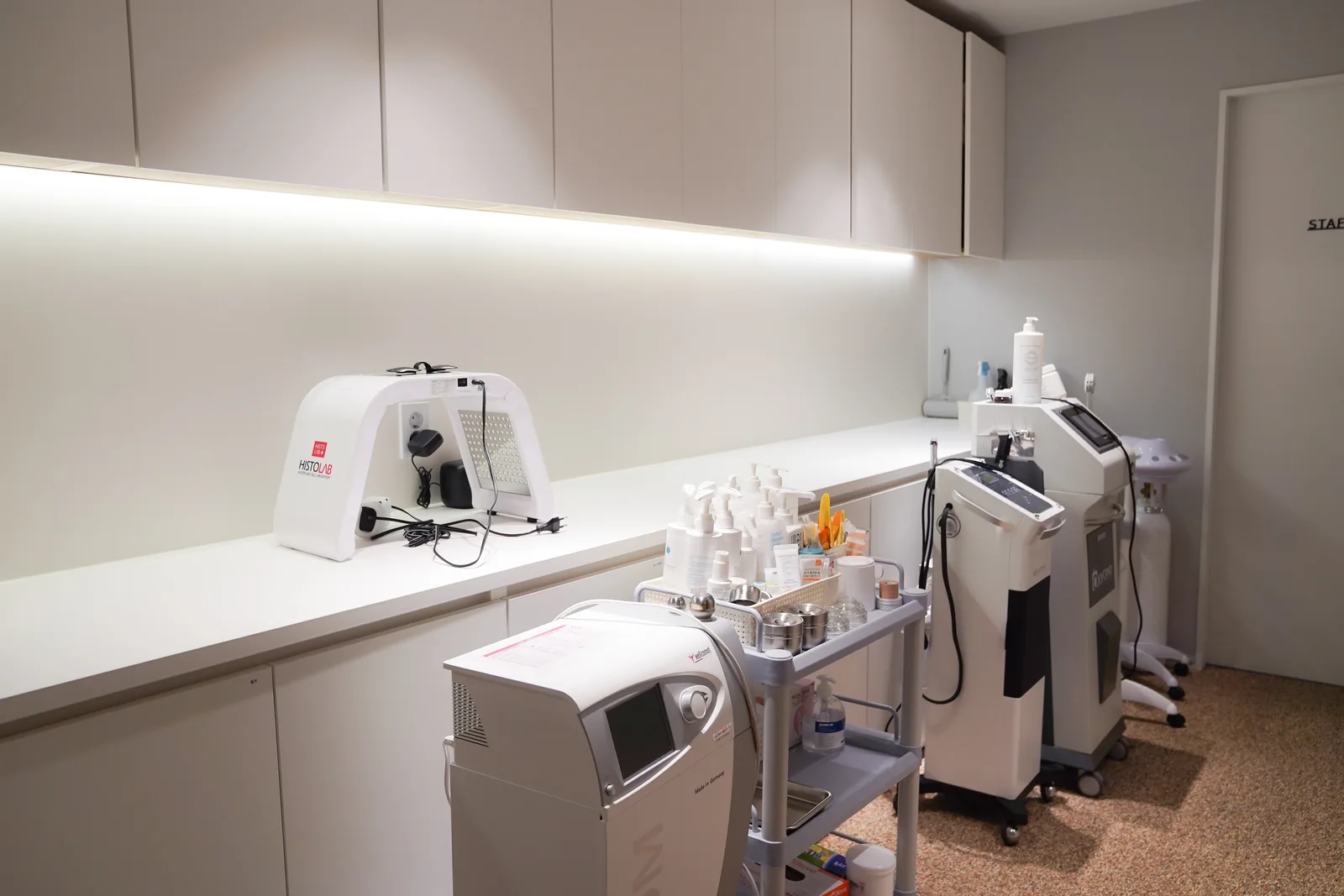
Aesthetic care room with an LED panel and hydro-peel unit at Dear Clinic Cheongdam, used in skin texture sessions
Dear Clinic · Skin Concerns · Texture
Roughness has four separate causes · Cheongdam, Gangnam

Skin Texture Improvement in Cheongdam, Gangnam, Seoul

Uneven skin texture is what you see when light stops reflecting evenly off a face. Whether that is coming from oil and pore shadow, shallow old scarring, a dehydrated surface or gathered pigment decides which of four routes is worth paying for.

Toning session ₩200,000 (≈ $145) EVE Muse surface mapping Open 365 days
Have Your Surface Mapped Compare the Five Routes
Direct answer

What uneven skin texture is, measured instead of described

Texture is a light problem before it is a skin problem. A smooth face returns light in one direction; a rough one scatters it, and every small dip, raised edge and dry flake adds to the scatter. Four separate things produce that scatter, and each one has its own instrument and its own price.

This matters because the four feel identical under your own fingertips. Congested, oily skin with visible pore shadow, a surface stippled with shallow old acne marks, a dehydrated barrier that flakes under foundation and a dull, pigment-gathered complexion all read as roughness in a mirror at arm’s length. Under a multi-spectrum capture they separate immediately.

Two of those four are treated by remodelling the dermis underneath, which is slow work measured in months. The other two respond to work on and just below the surface, which is faster, cheaper, and the usual place to start. Which half your face belongs to is the whole content of the consultation.

Four causes

Four reasons a face reads rough, and how to tell yours apart

Look at where it sits, when it is worst, and whether the surface is raised or dipped.

CAUSE 01

Oil and pore shadow down the centre

Worst by mid-afternoon, concentrated on the nose, inner cheek and forehead, with a shine that returns hours after cleansing. The openings themselves are casting the shadow that reads as coarse grain, and the useful lever is oil output.

CAUSE 02

Shallow scarring left by old breakouts

Fixed, irregular dips in the outer cheek and temple, visible under an overhead light and invisible in flat light. Collagen was lost while the skin healed, so the correction has to be built back in the dermis.

CAUSE 03

A dehydrated, flaking barrier

Rough to the touch, tight after washing, foundation clinging in patches within an hour. The skin is holding too little water and shedding unevenly. This one changes fastest and is the cheapest to address.

CAUSE 04

Dullness from gathered pigment

The surface may be almost smooth while the face still looks uneven, because patchy tone breaks up the reflection just as physical roughness does. Sun history, post-inflammatory marks and blotchy background pigment all contribute.

Most people arrive with two or three of these mixed across different zones of one face, which is why a texture plan is usually written per zone instead of as a single treatment for the whole surface.

Diagnosis

Separating roughness from dullness on the EVE Muse capture

EVE Muse photographs the face in 3D under five light sources with AI analysis over the result. Raking light exposes physical relief, ultraviolet and polarised channels expose pigment, and sebum-heavy zones register separately, so a single complaint about rough skin resolves into which of the four causes is producing it and where.

The distinction that changes the bill is relief against tone. A dip in the surface needs dermal remodelling over months; uneven tone over a smooth surface answers to sessions that cost a fraction of that. Confusing the two is the standard way to spend a lot of money and photograph identically afterwards.

Your capture is stored and brought back at review, in the same room and the same five light sources. Texture is the concern most easily flattered by a soft lamp, so the comparison has to be controlled for the change to mean anything.

A client leans into the EVE 3D skin analysis unit while the scan is reviewed on a tablet
Relief, sebum and pigment are read on separate channels before a route is chosen.
What is offered

The five texture routes Dear Clinic actually runs

Two rebuild the dermis, two work on the surface and its water content, one works on oil.

RouteMechanismCause it answersListed rate
Potenza RF microneedling, standard tipFractional radiofrequency carried into the dermis through fine needles, so heat is deposited below the surface while the epidermis is crossed and left largely intact.Shallow scarring and dips; coarse grain with enlarged openings₩250,000 (≈ $180)
Rejuran Healer, 2 ccPolydeoxyribonucleotide from PharmaResearch, placed in the skin in a grid across the treated field.Thin, dehydrated skin with poor surface quality₩300,000 (≈ $215)
Juvelook, 1 ccA PDLLA and hyaluronic acid hybrid from VAIM, injected for gradual collagen stimulation in the treated layer.Fine surface irregularity on thin skin, built over a course₩100,000 (≈ $70)
Dual laser toning with skincare, 1 sessionLow-fluence 1064 nm Nd:YAG toning delivered as a dual-wavelength session with aesthetic skincare in the same appointment.Dullness and gathered pigment breaking up the reflection₩200,000 (≈ $145)
Full-face skin botox, Korean tierBotulinum toxin heavily diluted and placed as shallow micro-droplets across the face, spread in the skin layer instead of concentrated in a muscle.Oil output and shine driving the coarse-grain look₩150,000 (≈ $105)

Listed rates as of September 2026 in KRW with an approximate USD figure beside them, identical for residents and for visitors from abroad. Session counts, the zones included and the total are written down at the consultation, where any fee for products or follow-up visits is also explained.

Each route keeps a full page of its own: Potenza, Rejuran Healer, Juvelook, laser toning and skin botox. Where the dips turn out to be true atrophic scars, the sequence on the acne scar page applies, and the device category as a whole sits on the laser, pigment and acne hub.

Route selection

Matching a texture route to the cause on your capture

Five routes, and a short rule for each that you can check against your own face.

Fixed dips that survive good lighting. Needle-delivered radiofrequency into the dermis is the only route here that changes relief, and it is judged over months. Nothing applied to the surface will fill a depression that lost its collagen years ago.
Rough, tight, dehydrated skin with no relief change. A polynucleotide course placed across the field addresses skin quality directly and is the usual starting point for a face that is thin and dry more than it is scarred.
Fine irregularity on thin skin, with time to spend. The hybrid stimulator builds collagen gradually in the treated layer across a course, so it suits people whose preference is a slow improvement over a series of small appointments.
Smooth to the touch, uneven to the eye. This is a tone problem wearing a texture costume, and toning sessions are both the correct answer and far cheaper than the dermal routes. Expect a graded course, and expect us to say that pigment work is patient work.
Shine and oil driving the whole complaint. Micro-dosed toxin across the face addresses oil output and surface coarseness together. Where the capture instead shows dips, this route will not touch them and we will say so.
A combination, which is most people. Routes are staged by zone and by month with the order written down, because running three of them at once makes it impossible to know which one earned its fee.

Where the capture shows a surface within normal range and the complaint comes from a ring light or a magnifying mirror, we do not recommend a course and will show you the capture instead of selling one.

Limits and risks

What a texture course returns, and the risks attached to each route

The realistic target is a surface that scatters less light: shallower dips, a barrier that holds water, tone that breaks up the reflection less. Deep, sharply walled scarring is a different and harder problem than the roughness this page describes, and skin type, age and scarring history all change how far a course gets. Results vary between individuals, and nothing here is permanent, because oil production, sun exposure and time continue after a plan ends.

The named risks differ by route. Needle-delivered radiofrequency leaves redness, swelling and pinpoint crusting for some days, with bruising possible on thin skin and a risk of post-inflammatory pigment in deeper skin tones if the area is exposed too early. Injected routes carry bruising, swelling, tenderness and papules at the injection points, plus a small risk of infection wherever the surface is crossed. Toning is low-energy and repeated, and its documented downside is the opposite of pigment gain: mottled hypopigmentation has been reported after repeated low-fluence sessions, which is why the interval and the number of passes are controlled. Micro-dosed toxin can produce local weakness or asymmetry if it migrates from the skin layer into a muscle.

An actively inflamed, breaking-out face is treated for the breakout first, since remodelling under live inflammation is slower to settle and harder to judge
Skin that has been recently peeled, lasered or aggressively exfoliated at home is rescheduled instead of treated at a reduced setting
Where the dips are deep, tethered scars, we say so at the consultation and point the plan at scar treatment instead of a texture course
If two or three sessions show no change against the stored capture, the plan is stopped and rewritten instead of being run to its end
4
Causes separated at diagnosis
5
Published texture routes
2
Routes that change surface relief
365
Days a year the clinic is open
Dear, Knowhow

How a texture plan is settled at Dear Clinic

01 — THE FULL ARSENAL

A toning session competes with a dermal course

The cheapest route on this page and the ones that cost several times as much sit on one published list at 5F and 7F. When the capture says your problem is tone and not relief, quoting the cheap one costs us the difference, and it is quoted anyway.

02 — DIAGNOSIS FIRST

Relief, sebum and pigment read on separate channels

Three channels of the same capture, scored before a needle depth or a laser pass is chosen. It is also the step that catches the courses worth refusing.

03 — DIRECTOR-PERFORMED

Needle depth reset at each zone boundary

Nose skin, cheek skin and the skin over the jaw take neither the same needle depth nor the same energy, and a texture plan usually crosses all three in one appointment. Sessions are director-performed by the doctor who read the capture, so the settings change as the handpiece moves.
In the clinic

The devices and hands behind this treatment

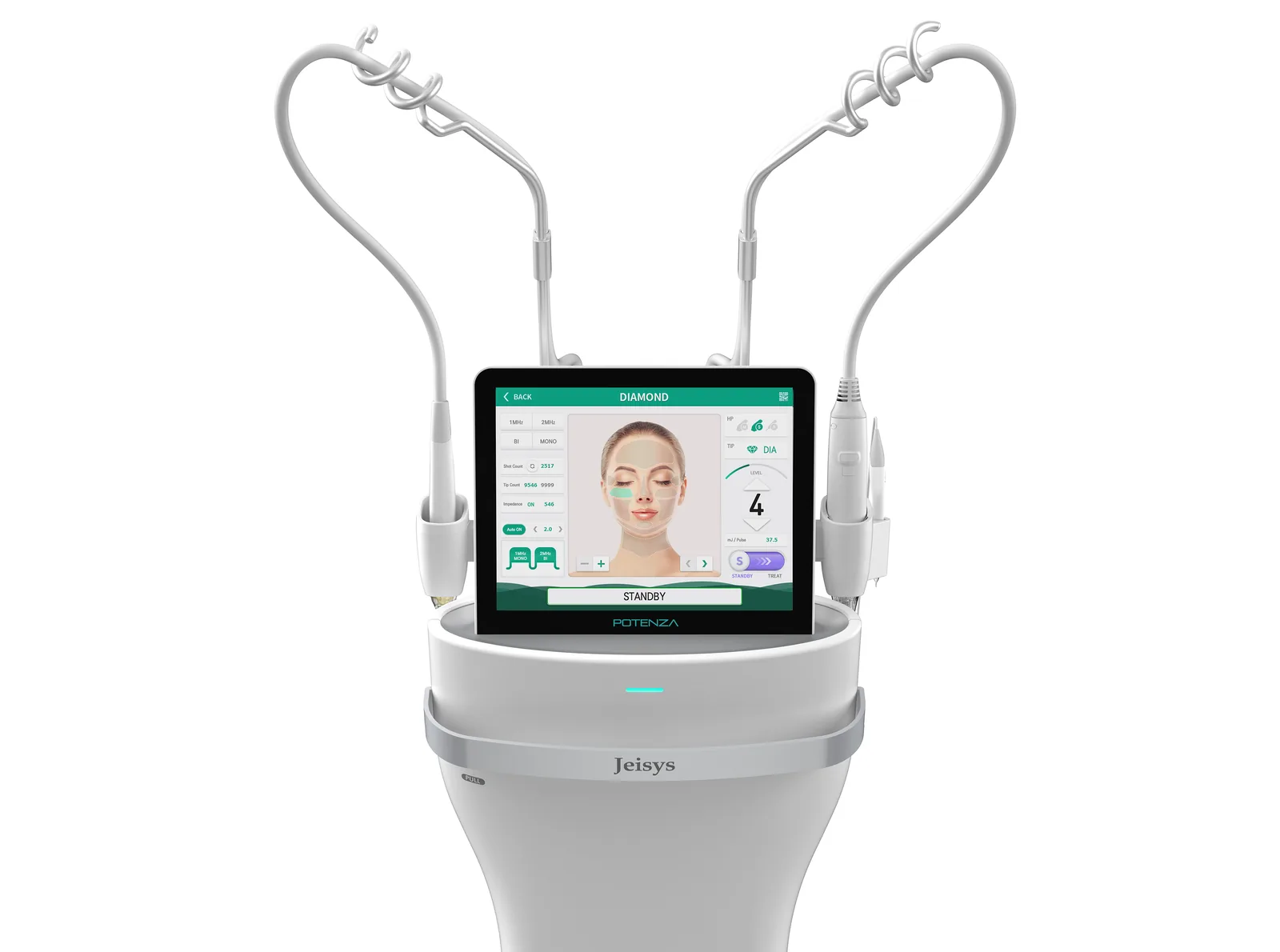
Jeisys Potenza RF microneedling system with both handpieces and its touchscreen showing the treatment interface
The needle-delivered radiofrequency platform, used where the capture shows fixed dips
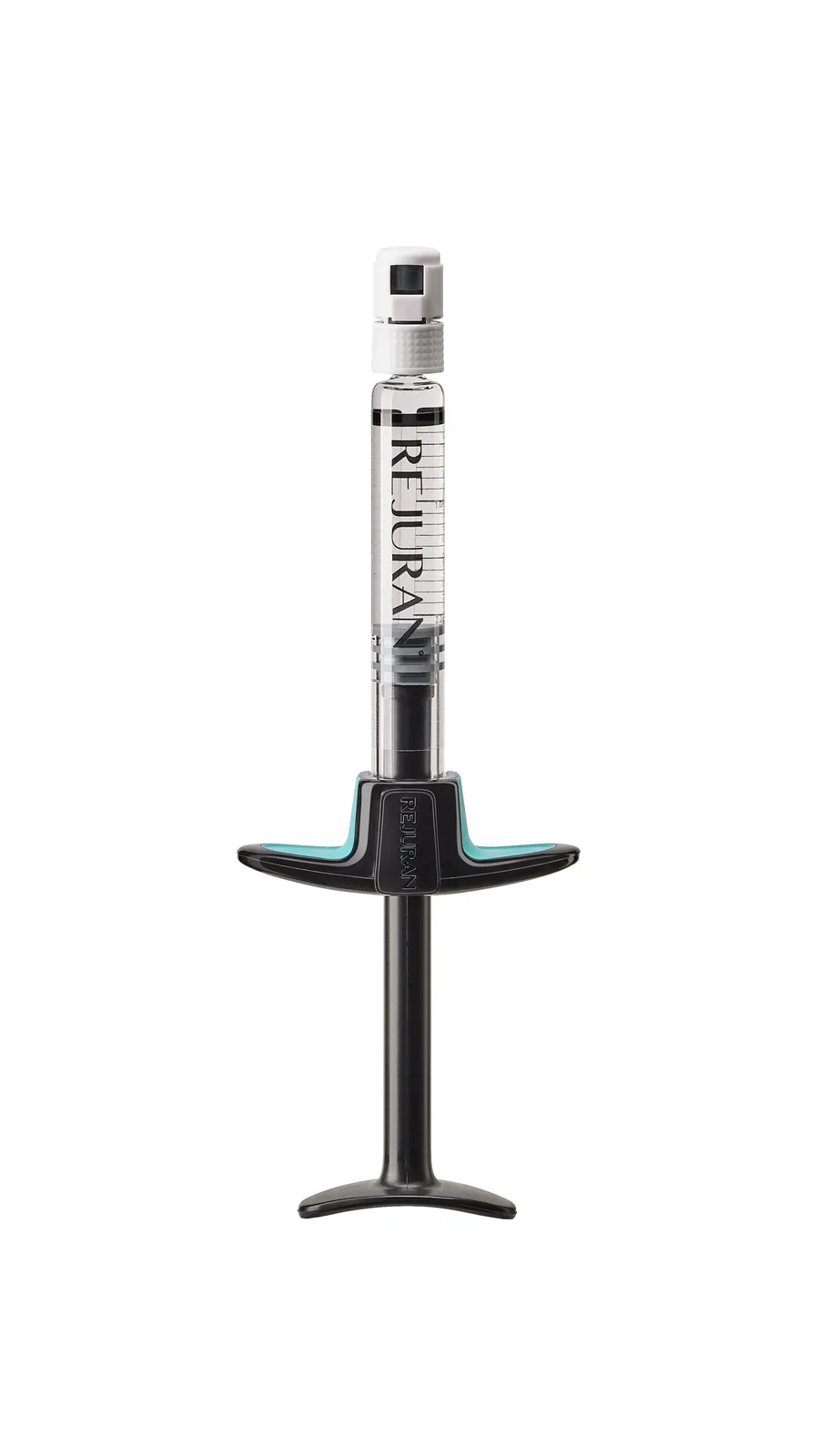
Rejuran pre-filled syringe with a dark grey plunger, the polynucleotide injectable used for skin quality
The polynucleotide syringe, placed in a grid where skin quality is the finding
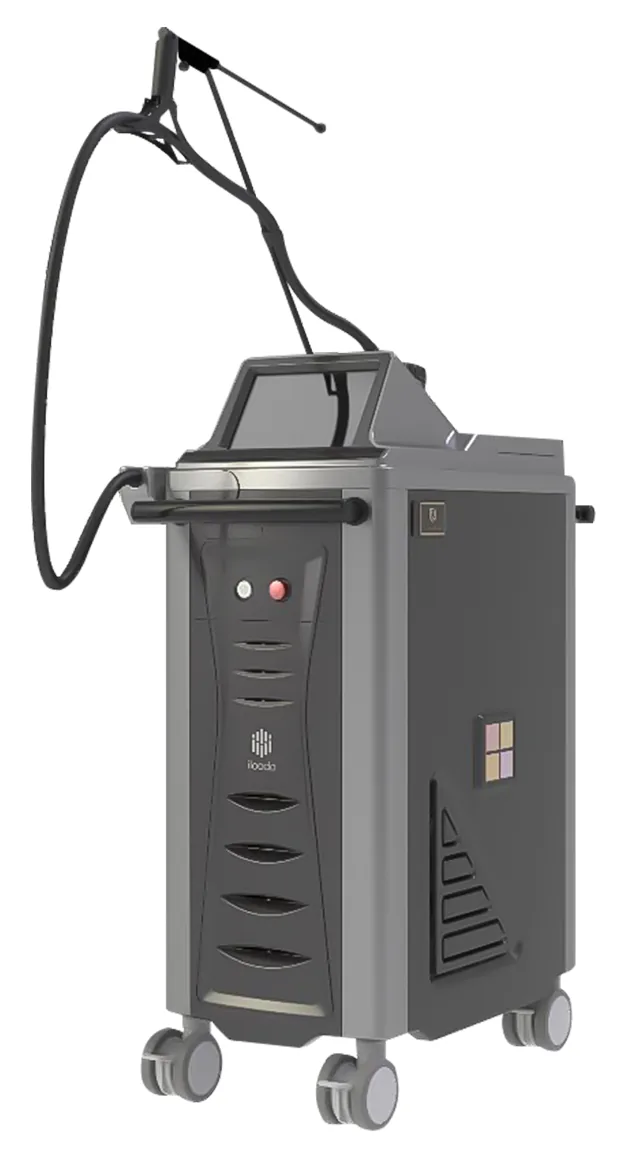
New Titanium (Portra Quattro) lifting laser platform on castors with its articulated delivery arm and handpiece at Dear Clinic
A laser platform in the laser room at Dear Clinic
Caution

Protecting a smoother surface in the weeks after a session

Let pinpoint crusts lift by themselves. After needle work the surface is gritty for a few days. Picking is the quickest way to trade a shallow dip for a mark that lasts longer than the one you treated.
Rebuild water before you rebuild your routine. A bland moisturiser and a gentle cleanser for the first days do more for how the skin reads than any active you own, especially when the finding was a dehydrated barrier.
Sunscreen every morning, indoors included. Fresh treated skin pigments easily, and pigment is one of the four things this page is trying to remove from your reflection.
Pause retinoids, acids and scrubbing tools for the window you are given. You are told when to restart each one; restarting early is the usual reason a following session has to be postponed.
Photograph nothing under a ring light. Judge the result against your stored capture at the review date, in the same room and the same five light sources, because texture is the concern most distorted by lighting.

Comfort measures during the session are confirmed with your director at the consultation. The clinic opens 365 days a year with consultation conducted in English, so spacing a course of sessions around work or a trip is usually straightforward.

Medical Team

Five doctors, one standard

Director-performed treatment is a Dear promise — your procedure is planned and performed by the doctors below.


Dr. Jemin Kim — Medical Director and Founder, Dear Clinic
Dr. Jemin Kim
Yonsei University College of Medicine
Medical Director · Founder
Dr. Sanghyun Lee — Director, Dear Clinic
Dr. Sanghyun Lee
Seoul National University College of Medicine
Director
Board-certified · Family Medicine
Dr. Seonhaeng Lee — Director of Aesthetic Medicine, Dear Clinic
Dr. Seonhaeng Lee
Chosun University College of Medicine · Residency, Samsung Medical Center
Director, Aesthetic Medicine
Dr. Daeun Jung — Director, Dear Clinic
Dr. Daeun Jung
Ajou University College of Medicine
Director
Board-certified · Family Medicine
Dr. Woojae Jung — Director of Aesthetic Medicine, Dear Clinic
Dr. Woojae Jung
Seoul National University — B.S. in Medicine
Director, Aesthetic Medicine
Patient Reviews

What our patients say

Real verified reviews from our Google Business Profile.

4.9★★★★★ 310 Google Reviews
FAQ

Skin texture treatment in Cheongdam, your questions answered

What is the best treatment for improving skin texture in Cheongdam?
The one aimed at your cause. Fixed dips answer to needle-delivered radiofrequency in the dermis, dehydrated rough skin to a polynucleotide course, fine irregularity on thin skin to the hybrid stimulator, dullness to toning sessions and oily coarse grain to micro-dosed toxin. A capture separates them in minutes, and buying the wrong one is the commonest way a texture budget disappears.
How many laser sessions are needed to smooth rough skin texture?
No fixed number is published here, because it depends on the cause, the area and your own healing. Toning is by design a graded course of low-energy sessions spaced apart; dermal remodelling is judged across months, not visits. What is fixed is the review: your stored capture returns to the screen and the plan continues, changes or stops on that evidence.
How much does skin texture treatment cost in Seoul?
On the published list, needle-delivered radiofrequency with the standard tip is ₩250,000 (≈ $180), a 2 cc polynucleotide session is ₩300,000 (≈ $215), the hybrid stimulator is ₩100,000 (≈ $70) per cc, a dual toning session with skincare is ₩200,000 (≈ $145) and full-face skin botox on the Korean tier is ₩150,000 (≈ $105). Your own combination is totalled before anything begins.
Can uneven skin texture be fixed permanently?
No. Oil production, sun exposure and ageing continue after a course ends, so a surface is maintained instead of fixed. Collagen rebuilt in the dermis holds better than surface work, and tone gained through toning drifts back without protection. Anyone promising that texture stays fixed for good is describing something skin does not do.
Is rough skin texture the same problem as large pores?
They overlap and are not identical. An enlarged opening casts a shadow that contributes to a rough reading, but roughness also comes from dehydration, shallow scarring and uneven tone, none of which is a pore. Where the openings are the main finding, the pore-specific routes and their small-area rates are the better buy, and that is said at the consultation.
Will a skin booster alone smooth my texture?
It can, when the cause is skin quality. A polynucleotide or hybrid course improves hydration, suppleness and fine surface irregularity over a series of sessions. What it will not do is lift a fixed depression that lost its collagen years ago, and a capture showing those dips is put on the screen and named for what it is.
Does skin botox actually change texture, or only oil?
It works on both at once, because much of the coarse grain on an oily face is produced by the oil. Placed as shallow micro-droplets across the face, it addresses shine and surface coarseness together at ₩150,000 (≈ $105) on the Korean tier. On a dry, scarred face it is the wrong instrument and will be described as such.
Is laser toning safe to repeat for dull, uneven skin?
It is low-energy and designed to be repeated, and the interval is the safeguard. Published work on repeated low-fluence 1064 nm sessions includes reports of mottled hypopigmentation, which is exactly why passes and spacing are controlled here and why an unlimited toning package is not something we sell. Two of the references below cover that literature.
Can I have two texture routes in the same visit?
Sometimes, though staged is usually better. Combining a dermal route with an injected one in a single appointment increases swelling and makes it impossible to attribute either the improvement or a side effect. Where a plan does pair two, the order and the interval are written down before the first session.
Does texture treatment hurt, and what is the downtime?
Needle work is felt as heat and pressure and leaves the skin red and gritty for a few days with pinpoint crusts. Injected routes sting briefly and can bruise at the points. Toning sessions are the mildest of the five. Comfort measures during the session are confirmed with your director at the consultation, and you are told what to expect for your own skin before booking.
Who should not have a texture course here?
Anyone with an actively inflamed or broken-out face, anyone whose skin was recently peeled, lasered or over-exfoliated, and anyone with an active skin infection over the area. Pregnancy and breastfeeding change what is offered. Where the capture reads within normal range, we do not recommend a course at all and say why.
I am in Seoul for a few days. Is a single texture session worth it?
A toning session with skincare or a single polynucleotide session is self-contained work that commits you to nothing further. Dermal remodelling is the start of a plan you would continue at home, and you are told which of the two you are booking. The clinic runs 365 days a year, so the date is rarely the limiting factor.
Consultation

Ask which cause your own capture shows

Your questions, answered in English as soon as possible.

Scientific Evidence

What the literature reports on the routes behind a texture plan

The six references below follow the three mechanisms used on this page. Two concern fractional microneedle radiofrequency, including a randomised split-face trial against fractional carbon-dioxide laser and a meta-analysis of fractional radiofrequency for acne and acne scars, both of which describe the class of device behind the dermal route here.

Two concern polydeoxyribonucleotide, the material in the polynucleotide route, and two concern low-fluence 1064 nm toning, including the long-term and safety literature that governs how often a toning course may be repeated. Each reference resolves through its DOI to an indexed journal, and none of them was written about this clinic.

  1. Hendel K et al. Fractional CO2‐laser versus microneedle radiofrequency for acne scars: A randomized, single treatment, split‐face trial. Lasers in Surgery and Medicine. 2023. doi:10.1002/lsm.23655
  2. Li J et al. Meta‐analysis of fractional radiofrequency treatment for acne and/or acne scars. Journal of Cosmetic Dermatology. 2022. doi:10.1111/jocd.15348
  3. Hong J et al. Therapeutic Performance of Needle Injection Versus Needle‐Free Jet Injector System for Polynucleotide Filler in Skin Rejuvenation. Journal of Cosmetic Dermatology. 2024. doi:10.1111/jocd.16595
  4. Kim J. Polydeoxyribonucleotide (PDRN) - Established Efficacy and Emerging Directions in Research and Development -. Journal of Biotechnology and Bioindustry. 2025. doi:10.37503/jbb.2025.13.14
  5. Gokalp H et al. Long‐term results in low‐fluence 1064‐nm Q‐Switched Nd:YAG laser for melasma: Is it effective? Journal of Cosmetic Dermatology. 2016. doi:10.1111/jocd.12253
  6. Jang YH et al. Changes in Melanin and Melanocytes in Mottled Hypopigmentation after Low-Fluence 1,064-nm Q-Switched Nd:YAG Laser Treatment for Melasma. Annals of Dermatology. 2015. doi:10.5021/ad.2015.27.3.340

References are provided for information — outcomes vary by individual and are assessed at your diagnosis.

Book WhatsApp Call