Home
Doctors Pricing Rates FAQ Book a Consultation
ENES
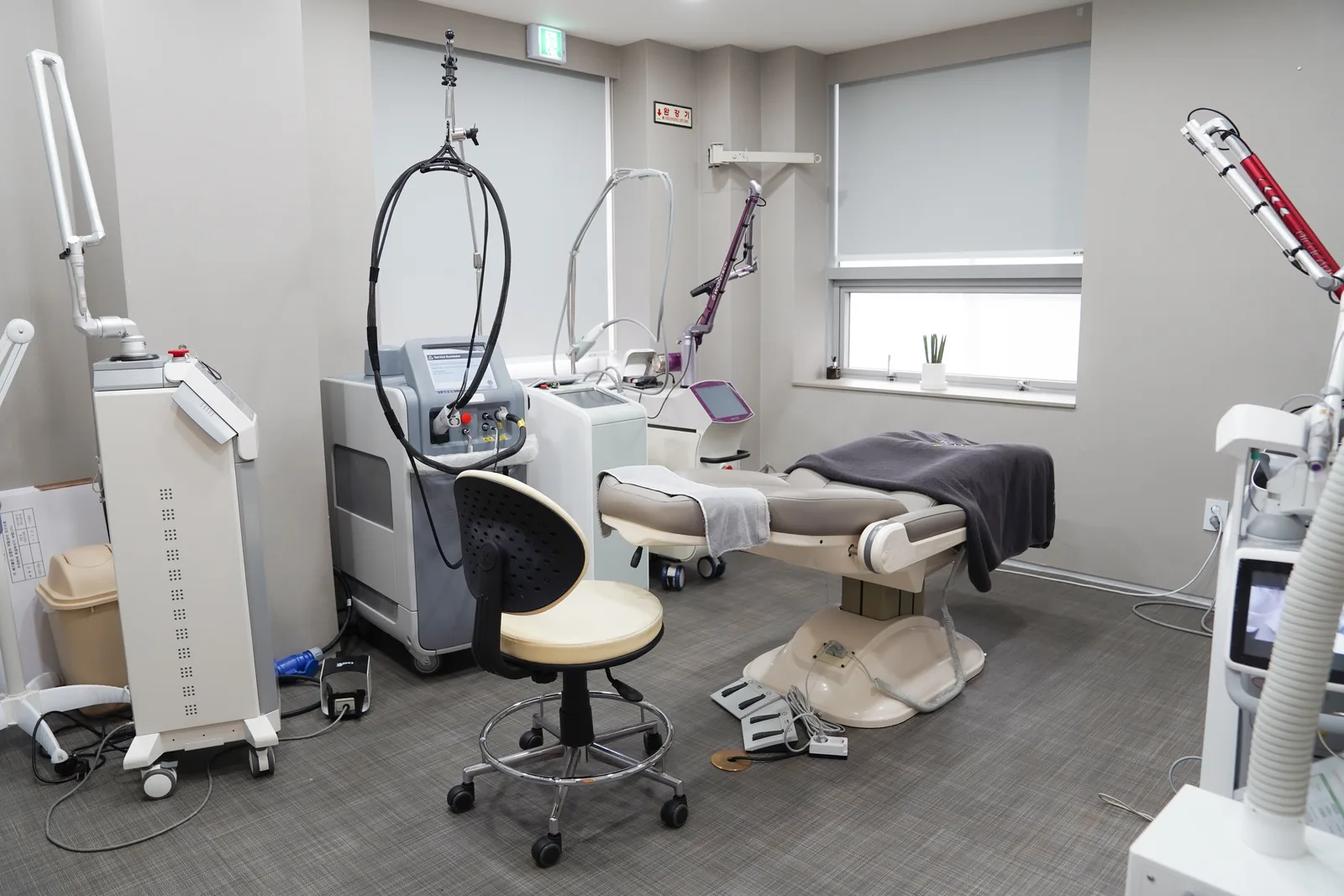
Laser treatment room at Dear Clinic Cheongdam with several laser platforms and a powered treatment chair
Dear Clinic · Laser & Pigment · Richly Pigmented Skin
Fitzpatrick IV To VI

Treatments for Darker Skin Tones in Cheongdam, Gangnam, Seoul

Melanin absorbs light, so a setting written for pale skin can heat the epidermis in skin that carries more of it. The question worth asking a Seoul clinic is therefore not whether it owns lasers, but which of its platforms do not chase pigment at all, and how the exam decides between them.

Pigment depth read under five light sources Non-pigment-selective routes held in the building Every setting decided by the treating director
Send A Photograph And Your Skin History Compare The Routes
Direct Answer

Which Dear treatments suit Fitzpatrick IV to VI skin

Two families carry most of the work. Radiofrequency microneedling reaches the dermis through insulated or fine needles and does not select for melanin, and low-fluence 1064 nm toning is the pigment route worked at low energy across repeated visits. For unwanted hair the 1064 nm Nd:YAG arm is the wavelength with the published record in deeply pigmented skin.

The anxiety that brings most people to this page is specific and reasonable: that a clinic in Seoul will treat every face with the same settings, and that the face in question will burn or turn darker afterwards. Post-inflammatory hyperpigmentation is the mechanism behind that fear, and it is a real one. Heat an epidermis loaded with melanin and the pigment response can outlast whatever was being treated.

Nothing about that makes richly pigmented skin untreatable. It changes the order of the decisions. The first question is whether the target is pigment at all; where it is texture, scarring, pores or oil, a device that ignores melanin entirely can do the work. Where the target genuinely is pigment, the levers are wavelength, fluence and the number of visits, and every one of those is set after a reading instead of before it.

What this page will not do is publish a number for your skin. No Fitzpatrick-stratified dataset from this clinic exists, and a setting copied from an article is a setting chosen without seeing you.

A client leans into the EVE 3D skin analysis unit while the scan is reviewed on a tablet
Five light sources separate surface pigment from the deeper component before a platform is named.
Before Any Energy

What the EVE Muse reading settles for melanin-rich skin

Four findings from the scan and the examination change the plan, and all four are taken before a rate is quoted.

01
Depth

Where the pigment actually sits in your skin

Three-dimensional capture under five light sources with AI analysis separates what lies near the surface from what sits deeper, and the two do not respond to the same approach. A surface pattern and a deep one can look identical in a bathroom mirror and lead to opposite plans.

02
Vessels

How much of the discolouration is red beneath the brown

Vascular colour hides under pigment and is easy to treat as though it were melanin. The scan separates them, which matters here because the vascular route and the pigment route are different wavelengths on different platforms.

03
History

Whether your skin has already darkened after an injury

A history of marks left behind by acne, a burn, a wax or a previous laser is the most useful single fact you can bring. It tells your director how your own skin responds to inflammation, which no device setting can predict on its own.

04
Medication and sun

What you are taking, and how recently you have been in strong sun

Photosensitising medication, oral acne treatment, recent tanning or a holiday finishing this week all change what can be done at this visit. Some of them move the appointment instead of changing the setting.

The Platforms Here

What each device does when the skin carries more melanin

Every row is a treatment Dear Clinic performs and prices. The column that matters most is the middle one: whether the energy is aimed at pigment at all.

RouteWhat the energy targetsWhere it sits in a melanin-rich plan
Potenza RF microneedlingRadiofrequency delivered through needles into the dermis. Melanin is not the target and the wavelength question does not arise.First choice where the complaint is texture, atrophic scarring or pores. Published work on fractional radiofrequency microneedling for atrophic acne scars includes Asian cohorts.
Agnes insulated microneedle RFInsulated needles carry heat to a specific gland while the shaft protects the epidermis above it.For recurrent acne and pores, where the reason to avoid a pigment-seeking device is obvious.
Dual and triple laser toningLow-fluence 1064 nm Nd:YAG passes, deliberately under-powered and repeated across a course with a skincare step.The pigment route, used low and slow. The number of sessions is a medical decision and the literature attaches a documented downside to overdoing it.
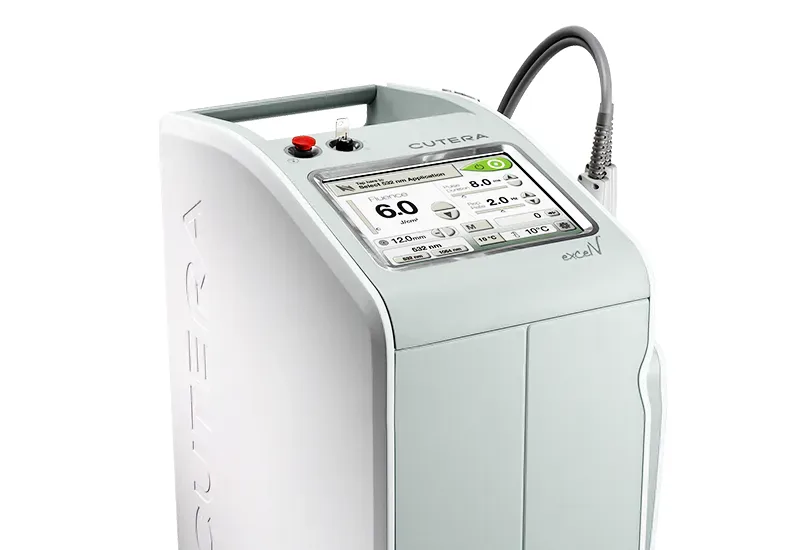
Excel V, 532 and 1064 nmTwo wavelengths on one platform: 532 nm is absorbed strongly at the surface, 1064 nm penetrates deeper and is absorbed less avidly by melanin.The choice between the two arms is the whole point of having it. In richly pigmented skin the 1064 nm arm is the one that comes into the conversation.
GentleMax Pro, 755 and 1064 nmAlexandrite at 755 nm and Nd:YAG at 1064 nm with dynamic cooling, aimed at the follicle.Hair reduction. The 1064 nm arm is the one with a published record in dark phototypes, and randomised comparisons in that population exist.

Because all five sit on the same two floors, the examination can name a route instead of defending the only machine in the room. Each has its own page: Potenza, Agnes, laser toning, Excel V and hair reduction.

Named Risks

What needs extra caution when melanin is abundant

These are the limits the published literature actually describes, and the points at which a session here gets stopped or turned down.

Repeated low-fluence toning has a documented downside. Mottled hypopigmentation — patchy loss of colour rather than gain — has been reported after courses of low-fluence 1064 nm treatment for melasma, with changes described at the level of melanin and melanocytes. That is why a course is counted, reviewed and sometimes stopped short of the number originally planned.
Pigment conditions relapse. Published work on low-fluence 1064 nm laser for melasma asks openly whether long-term results hold, and the practical reading is that maintenance and sun behaviour carry as much weight as the sessions do. Nobody here will describe a course as a cure.
Post-inflammatory darkening is the complication to plan around. Any heat-based treatment can provoke it in skin that pigments readily, and the practical defences are conservative energy, wider intervals between visits and rigorous sun protection between them. If it appears, the pigment work stops and the plan changes before anything is repeated.
A tan is a reason to postpone. Recent sun exposure raises the melanin available to absorb energy at the surface. Where the scan shows a fresh tan, the appointment moves rather than the setting dropping.
Some visits end without treatment. Active inflammation in the area, photosensitising medication, pregnancy or breastfeeding, a keloid history, or a reading that points to a different treatment altogether will all produce a written plan and no procedure. That outcome is not a failed appointment.

We do not describe any device as safe for every skin type, and there is no setting on any of these platforms that removes risk entirely. What exists is a reading, a conservative starting point and a director who sees the result before the next session is booked. Individual results vary.

Hair Reduction

The wavelength question for hair removal on deeply pigmented skin

Hair removal is where the published evidence in dark phototypes is densest, because the problem is geometric. The follicle and the surrounding skin both contain melanin, and the treatment depends on heating one more than the other. Longer wavelengths are absorbed less avidly by epidermal melanin and reach deeper, which is the reason the 1064 nm Nd:YAG arm keeps appearing in this literature.

A randomised controlled trial has compared long-pulsed Nd:YAG against intense pulsed light for hair removal in dark skin, and an intra-individual randomised comparison has set multipass low-fluence 755 nm alexandrite against high-fluence low-frequency 1064 nm Nd:YAG for axillary hair in dark phototypes. Earlier work describes long-pulsed 1064 nm hair removal across all skin types. The GentleMax Pro here carries both wavelengths with dynamic cooling, so the arm is chosen at the appointment.

Two things are worth saying plainly. Hair reduction is long-term reduction and not removal for good, and grey, blond or very fine hair responds poorly regardless of skin tone because there is little pigment in the follicle to absorb anything. Both facts come up before you buy a course.
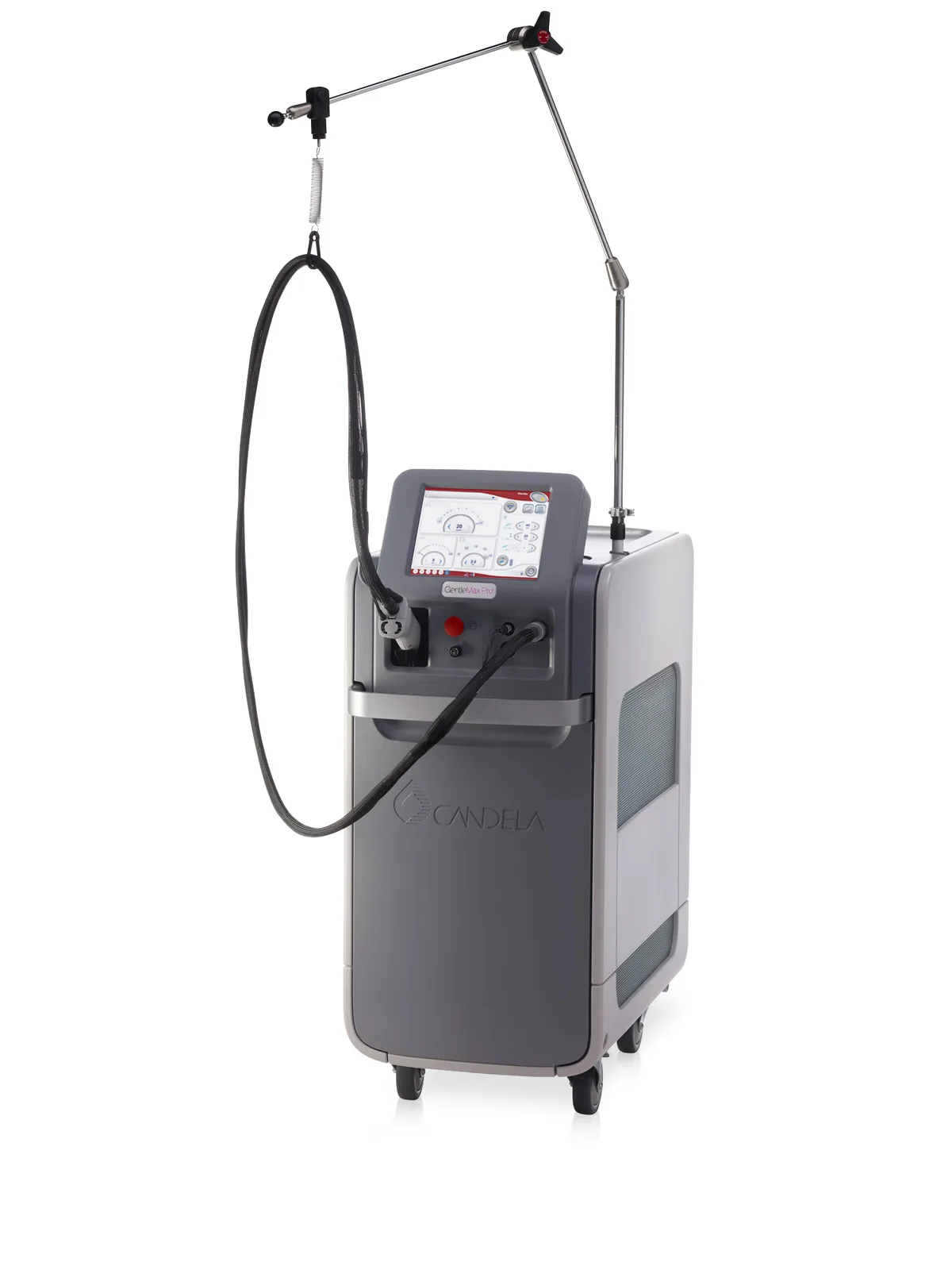
Candela GentleMax Pro laser system on castors with the delivery arm and handpiece extended
Both arms on one platform: the 755 nm and 1064 nm choice is made after the skin is read.
Listed Rates

What these routes are charged at on the published card

One rate list covers residents and international patients, with no foreign-patient surcharge. The lines below are the treatments named on this page. Korean won is what you pay and the USD figure is an approximate reference; your itemised total is confirmed after the reading and before the first pass.
RouteWhat the line coversUnitListed rate
Dual laser toningLow-fluence 1064 nm passes with the in-clinic skincare step1 session₩200,000 (≈ $145)
Triple laser toningThe three-pass version of the same session format1 session₩300,000 (≈ $215)
Excel V532 and 1064 nm vascular and pigment laser, laser only1 session₩150,000 (≈ $105)
PotenzaRF microneedling with the standard tip1 session₩250,000 (≈ $180)
AgnesInsulated microneedle radiofrequency across the full faceFull face₩250,000 (≈ $180)
Hair reduction, underarmFollicle treatment with the wavelength chosen at the appointment1 session, women₩30,000 (≈ $20)

Toning is sold by the session because the session count belongs to the examination. Hair reduction is published area by area for women and for men, and the underarm line above is one of seventeen female areas on the card. Where a plan combines a pigment route with a texture route, each is quoted on its own line before you agree to any of it. Published rates as of September 2026, and every figure the clinic holds is on the transparent price list.

Dear, Knowhow

Why a melanin-rich plan is built differently in this building

01 — THE FULL ARSENAL

Two radiofrequency routes stand beside the pigment lasers

Potenza and Agnes are held here alongside toning and Excel V, which means the examination can move a plan off the pigment route entirely when texture or oil turns out to be the real complaint. A single-laser floor has to answer every question with the same beam.

02 — DIAGNOSIS FIRST

Five light sources separate surface pigment from depth before a rate

The EVE Muse scan and its AI analysis run before the price conversation, and for this page that order does real work. Depth decides wavelength, the vascular component decides which platform, and a history of marks left behind by past inflammation decides how conservatively the first visit is set.

03 — DIRECTOR-PERFORMED

The director who reads your skin sets the fluence and holds the handpiece

Settings are a medical judgement, your director performs the session, and the same person sees what your skin did with it at review.
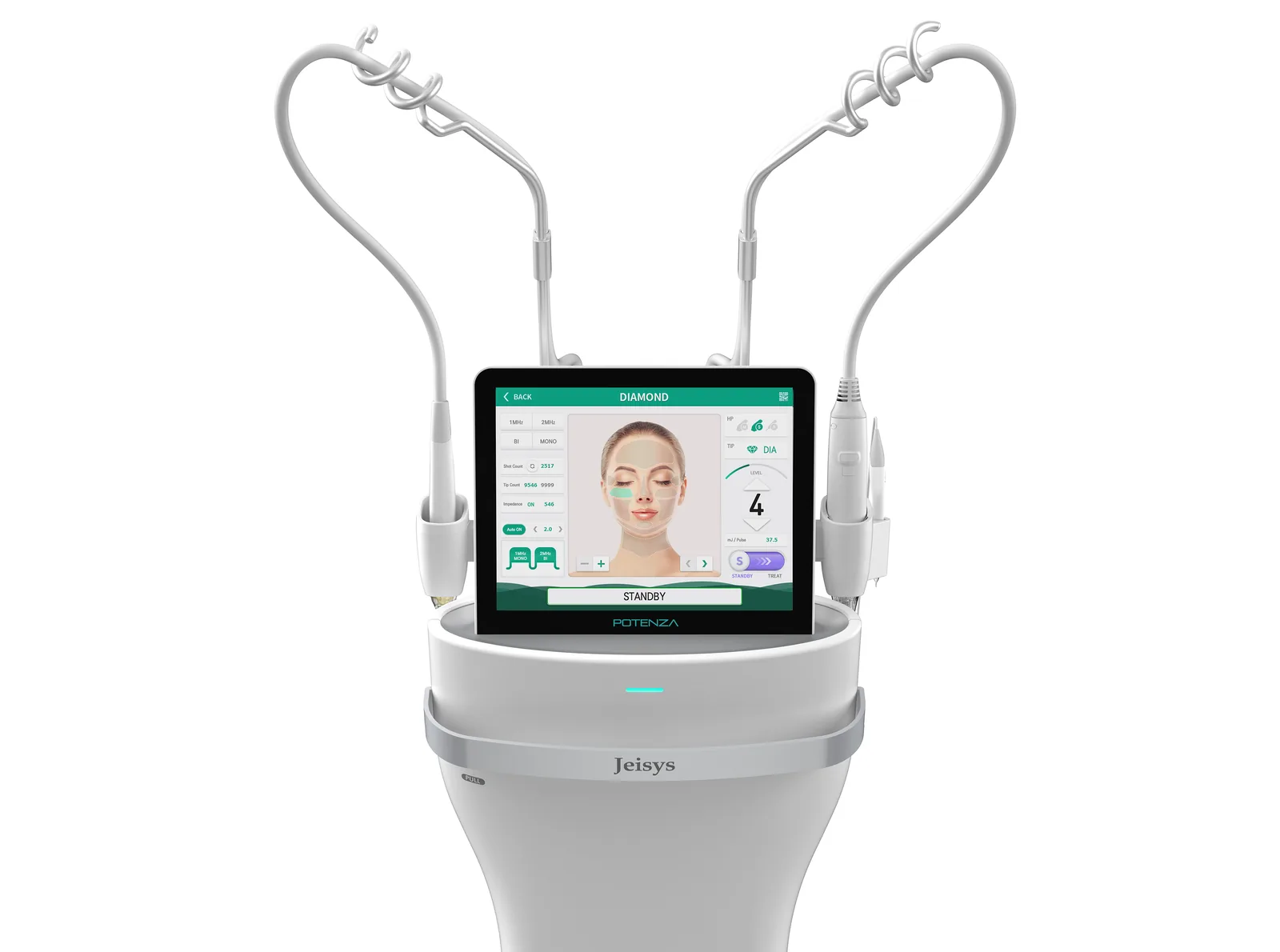
In the clinic

The platforms a melanin-rich plan chooses between

Jeisys Potenza RF microneedling system with both handpieces and its touchscreen showing the treatment interface
Potenza: radiofrequency through needles, with no wavelength decision to make
Cutera excel V vascular laser console with its touchscreen and delivery fibre
Excel V: two wavelengths, and the reason the choice between them is an examination
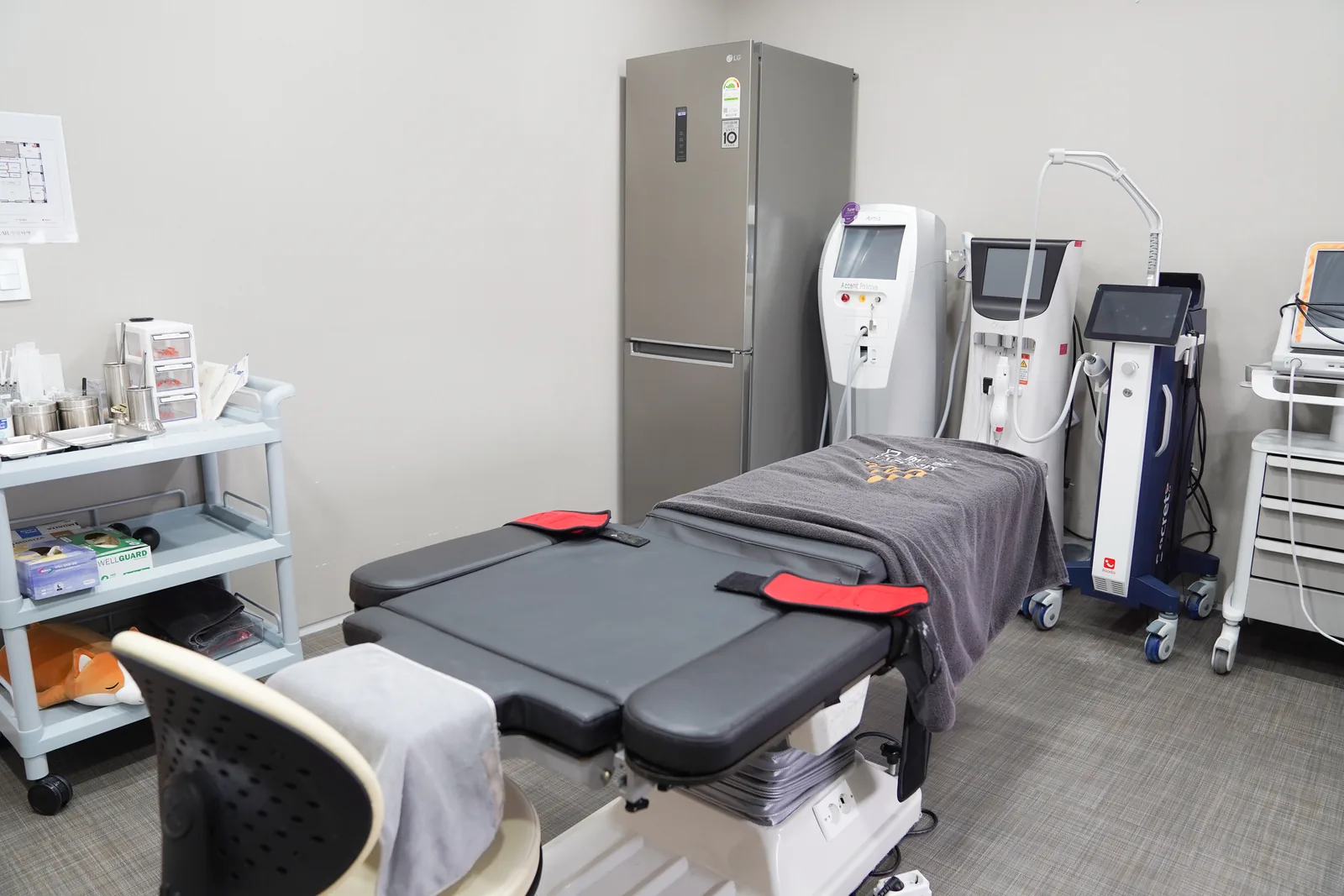
Procedure room at Dear Clinic with radiofrequency and ultrasound body-contouring systems
Energy platforms share the floor, so a plan can move between them mid-course
Medical Team

Five doctors, one standard

Director-performed treatment is a Dear promise — your procedure is planned and performed by the doctors below.


Dr. Jemin Kim — Medical Director and Founder, Dear Clinic
Dr. Jemin Kim
Yonsei University College of Medicine
Medical Director · Founder
Dr. Sanghyun Lee — Director, Dear Clinic
Dr. Sanghyun Lee
Seoul National University College of Medicine
Director
Board-certified · Family Medicine
Dr. Seonhaeng Lee — Director of Aesthetic Medicine, Dear Clinic
Dr. Seonhaeng Lee
Chosun University College of Medicine · Residency, Samsung Medical Center
Director, Aesthetic Medicine
Dr. Daeun Jung — Director, Dear Clinic
Dr. Daeun Jung
Ajou University College of Medicine
Director
Board-certified · Family Medicine
Dr. Woojae Jung — Director of Aesthetic Medicine, Dear Clinic
Dr. Woojae Jung
Seoul National University — B.S. in Medicine
Director, Aesthetic Medicine
Patient Reviews

What our patients say

Real verified reviews from our Google Business Profile.

4.9★★★★★ 310 Google Reviews
FAQ

Melanin-rich skin in Seoul, question by question

Can I have laser treatment in Korea if I have dark skin?
Yes, and the useful version of that question is which treatment. Where the complaint is texture, scarring, pores or oil, the routes here deliver radiofrequency through needles and never engage melanin. Where it genuinely is pigment, the levers become wavelength, low energy and a longer interval between visits, all set after the scan.
Which treatments at Dear Clinic do not target melanin at all?
Potenza radiofrequency microneedling and Agnes insulated microneedle radiofrequency. Both heat tissue through needles instead of through absorbed light, so the colour of the surrounding skin does not decide how the energy behaves. They are the routes an examination reaches for first when the complaint can be answered without a pigment-seeking beam.
Is low-fluence toning suitable for Fitzpatrick V or VI skin?
It is considered, never assumed. Toning is deliberately under-powered and repeated, which is what makes it usable in more pigmented skin, but the published literature also reports mottled hypopigmentation after courses of low-fluence 1064 nm treatment. Suitability, starting energy and session count are decided by your director at the examination and reviewed as the course runs.
What is post-inflammatory hyperpigmentation, and how do you plan around it?
It is the darkening that follows inflammation in skin that pigments readily, whether the inflammation came from acne, a wax, a burn or a treatment. The defences are conservative energy, wider gaps between visits and disciplined sun protection in between. If it appears, the pigment work pauses and the plan is rewritten before anything is repeated.
Why does 1064 nm keep coming up for richly pigmented skin?
Longer wavelengths are absorbed less avidly by melanin in the epidermis and travel deeper before they deposit energy. That is the physical reason the 1064 nm arm appears in the dark-phototype literature for both toning and hair reduction, and why Excel V and GentleMax Pro here each carry a shorter and a longer wavelength instead of one.
Can I have laser hair removal on dark skin at this clinic?
GentleMax Pro carries 755 nm alexandrite and 1064 nm Nd:YAG with dynamic cooling, and the arm is selected at the appointment. Randomised comparisons in dark phototypes exist for the 1064 nm approach, including an axillary study. What is offered is long-term reduction across a course; very fine, grey or blond hair responds poorly whatever the skin tone.
How much do these treatments cost in Cheongdam, Seoul?
Every line on this page is in the rate table above, from a single toning session to a full-face Agnes visit. The same published list applies to residents and to international patients, with no foreign-patient surcharge. Your own total is itemised after the reading, and a combined plan is quoted line by line.
I came back from a sunny holiday last week. Can I still be treated?
Usually the appointment moves. Fresh sun raises the melanin sitting in the epidermis, which changes how any light-based treatment behaves at the surface. A radiofrequency route may still be workable in the same visit; a pigment route generally waits. Tell us about recent sun and tanning at the booking stage so the date can be set properly.
How many toning sessions will I need?
No fixed number is published, because it is a medical decision made against your reading and reviewed as the course proceeds. Toning is priced by the session for that reason. Published long-term work on low-fluence 1064 nm laser for melasma questions how durable the result is, so maintenance and sun behaviour are part of the same conversation.
Will these treatments make my complexion lighter overall?
That is not what they are for, and it is not what is offered here. These routes address specific pigment patterns, vascular colour, texture or hair, each identified on the scan. Nobody at this clinic will describe a course as skin whitening, and a request framed that way is a conversation we will have honestly before anything is booked.
Are there reasons you would decline to treat me?
Several. Active inflammation or infection in the area, photosensitising medication, isotretinoin within the recent past, pregnancy or breastfeeding, a keloid history, a fresh tan, or a reading that points to a different treatment entirely. In those cases you leave with a written plan and no procedure, which is a legitimate outcome of a consultation.
Can the consultation be held in English, and do international patients pay more?
Consultations run in English and Spanish-language support is available. The rate is identical for everyone on one published list. Message before you fly with photographs in daylight, a note on how your skin has behaved after past inflammation, and your medication list; you will get a direct read on which route fits.
Consultation

Tell us how your skin has behaved before

Daylight photographs, your medication list and what happened the last time your skin was inflamed — that is enough for a direct answer before you travel.

Scientific Evidence

Published work on lasers and radiofrequency in richly pigmented skin

The references below are the ones this page reasons from. Two concern what repeated low-fluence 1064 nm treatment does and how durable it proves to be. Two concern fractional radiofrequency microneedling, including cohorts in Asian skin, where melanin is not the target. Three concern hair reduction in dark phototypes, which is the area with the densest randomised evidence.

Each entry resolves to a DOI in an indexed journal, and none of them is a statement about your skin. The settings used on you are a clinical judgement made in person at your consultation.

  1. Jang YH et al. Changes in Melanin and Melanocytes in Mottled Hypopigmentation after Low-Fluence 1,064-nm Q-Switched Nd:YAG Laser Treatment for Melasma. Annals of Dermatology. 2015. doi:10.5021/ad.2015.27.3.340
  2. Gokalp H et al. Long-term results in low-fluence 1064-nm Q-Switched Nd:YAG laser for melasma: Is it effective? Journal of Cosmetic Dermatology. 2016. doi:10.1111/jocd.12253
  3. Vejjabhinanta V et al. The efficacy in treatment of facial atrophic acne scars in Asians with a fractional radiofrequency microneedle system. Journal of the European Academy of Dermatology and Venereology. 2013. doi:10.1111/jdv.12267
  4. Ismail SA. Long-pulsed Nd:YAG laser vs. intense pulsed light for hair removal in dark skin: a randomized controlled trial. British Journal of Dermatology. 2012. doi:10.1111/j.1365-2133.2011.10695.x
  5. Moftah N et al. Multipass low fluence, high-frequency 755-nm alexandrite laser versus high fluence, low-frequency 1064-nm long-pulsed Nd:YAG laser in axillary hair reduction of dark skin phototypes: an intra-individual randomized comparative study. Journal of Dermatological Treatment. 2022. doi:10.1080/09546634.2021.1914311
  6. Tanzi EL et al. Long-Pulsed 1064-nm Nd:YAG Laser-Assisted Hair Removal in All Skin Types. Dermatologic Surgery. 2004. doi:10.1111/j.1524-4725.2004.30007.x

References are provided for information — outcomes vary by individual and are assessed at your diagnosis.

Book WhatsApp Call