

★★★★★
The clinic was very professional from start to finish. Doctor Jung was excellent and gentle with the treatment. I felt well looked after and everyone was outstanding. Happy with my service!
The narrowest scars on a face are the ones a broad pass reaches least. Here they are counted, quoted and worked individually, with the surrounding skin treated on a separate line and the ceiling stated before anything starts.
Picture the two shapes side by side. A shallow saucer with sloping sides presents most of its area to anything applied from above, so warming the skin around it lifts the floor toward the rim. A shaft presents almost nothing: a tiny circle, with the length of the problem hidden underneath. Energy delivered across a whole cheek passes over that circle and lands on the skin between the scars, which was never the complaint.
Raising the setting is the wrong correction. Pushing a field treatment harder does not send more of it down a shaft; it puts more into undamaged skin, buying a longer recovery and, where melanin is abundant, a tone change that outlasts the scar.
So the plan splits in two. The shafts are addressed individually, and the skin around them is improved on its own line. The wider sequence this belongs to is set out on the acne scar treatment page; this page is about the narrowest member of the family.
EVE Muse 3D imaging captures the face under five light sources with AI analysis. Raking light is what makes a narrow shaft visible, and four readings come out of the capture.
Width at the surface decides whether a scar can be entered and worked at all. The narrowest openings behave as shafts; wider ones with a visible floor belong to the boxcar group and answer differently once the capture is enlarged.
A shaft can stop just under the epidermis or continue well into the dermis. The deeper it goes, the more of it sits out of reach of anything applied above, and the narrower the range given to you at the scan. Depth also decides how many passes one scar is given.
A sloping wall catches less shadow and softens with dermal work around it. A vertical wall keeps its hard edge under a ceiling light however well the surrounding skin is rebuilt. Angle often explains why one cheek improved visibly and the other did not.
Shafts cluster on the temples, the outer cheeks and either side of the nose. The capture produces a count and a map, and the count is what the quote is built from, because this work is billed by the lesion.
Most faces that arrive asking about narrow pits carry two or three scar patterns at once. The capture separates them, and the plan names which scars are worked this season and which are left alone.
Three published lines touch this problem, and only one is aimed down the shaft itself. They are quoted apart, so a plan using one is not billed as though it used three.
| Published line | Where it acts | What it does for a narrow pit | Listed rate |
|---|---|---|---|
| Focused carbon dioxide or erbium, per lesion | Down the individual shaft | The only line aimed at the scar itself; each pit is entered and worked in controlled passes, then left to heal over a small scab | ₩10,000 (≈ $5) |
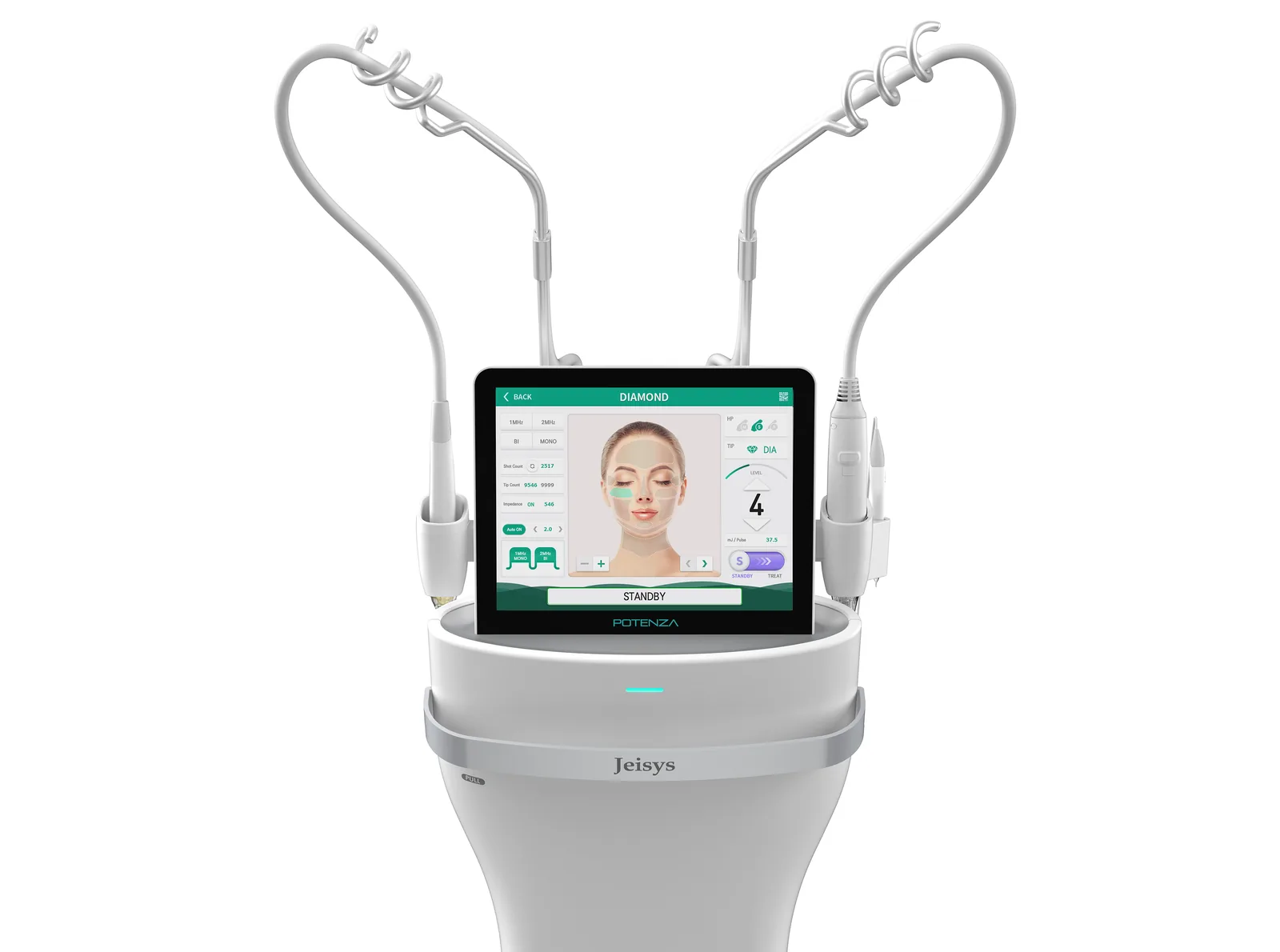
| Potenza RF microneedling, standard tip | The dermis around the shafts | Thickens and remodels the skin between and beside the pits so the field they sit in carries less shadow; it does not close a shaft | ₩250,000 (≈ $180) |
| Subcision | Beneath a tethered floor | Written for rolling and tethered scars; offered here only when that pattern is also present on the same face | ₩500,000 (≈ $355) |
Figures current for September 2026 in KRW, with a USD equivalent shown for orientation only; residents and visitors are given the identical line. The per-lesion figure is multiplied by the count agreed at your scan. What a diagnosis visit and any later review cost is confirmed when you book. Everything published sits on the price list.
Each scar to be worked is identified on the map and counted out with you. Because the charge is ₩10,000 (≈ $5) per lesion, the figure is arithmetic you can check, and a scar you would sooner leave alone comes off the list before it reaches the bill.
Carbon dioxide or erbium energy is applied to one scar at a time, aimed into the opening instead of across the cheek, in passes judged against what the tissue does. A shallow shaft may take one pass; a deep one is worked more conservatively and revisited instead of forced in a single sitting.
A worked scar carries a pinpoint crust for a few days and is left strictly alone while it lifts. Picking one is the commonest way a temporary mark becomes a lasting one. Around those points the untreated skin is left alone, which is the practical advantage of this approach.
No full-face ablative resurfacing pass is offered here as an alternative to that list. The reasoning is put plainly: the recovery and tone risk of resurfacing a whole face are carried by all of your skin, while the benefit is concentrated in a handful of shafts a field pass reaches poorly.
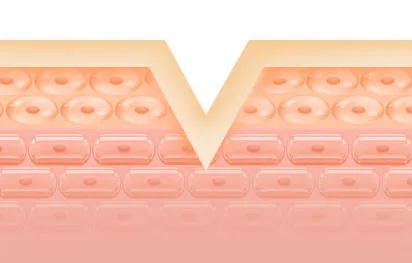
Subcision passes a fine needle under a scar and divides the fibrous strands anchoring its floor to the tissue below. It earns its reputation on rolling and tethered scars, where a broad soft depression is held down from underneath and releasing the anchor lets the floor rise.
A narrow shaft is a different problem. There is no broad floor being pulled down and no anchor of that kind to divide, so the step that transforms a rolling scar has little to release under a pit. Offering it anyway would sell the more expensive line for a pattern it was not written for, and we decline that booking when the capture shows shafts alone.
Where both patterns share a face, subcision is quoted at ₩500,000 (≈ $355) for the rolling component and the shafts stay on the per-lesion list. The two are sequenced, and you are told at each visit which of your scars is being worked.
Two neighbouring routes are named for completeness without being claimed as pit treatments. CureJet delivers material across a field without passing a needle through the skin, and D-ARC Solution runs acne and its aftermath together. Both act on the field; neither reaches down a shaft.
Fine needles carry energy past the surface and release it from their tips within the dermis. Because delivery is needle-based, the epidermis takes far less load than a beam-based pass would give it, and melanin is not the target.
Needle depth is chosen against skin thickness and scar pattern and is reset at each zone boundary, so a thin temple never runs on a cheek setting. The standard-tip visit is published at ₩250,000 (≈ $180) and has its own Potenza page.
Remodelling the dermis around a pit reduces the texture contrast it sits in, which is a real gain in photographs. It is not a mechanism for closing a narrow shaft, and nobody here should tell you it is. The shafts stay on the per-lesion line.
Published work supports that split, and the studies behind it are listed with resolvable identifiers at the foot of this page.
Because both lines are published, a plan can use one, the other or both, and the receipt names which. Nobody is moved onto a field treatment because the per-lesion tool is missing from the building.
The first visit usually takes a subset of the list so the response can be read before the rest is committed, and the map is re-captured and compared before each later visit.
Work this fine rewards a steady hand more than a preset. Your session is director-performed, each scar assessed as it is reached and the pass adjusted or stopped, instead of one fixed setting run across a zone.
We decline more of these bookings than people expect. Where the capture shows only flat marks, we do not recommend per-lesion work and a pigment plan is proposed at a lower figure. Where someone wants the pits gone, the ceiling is stated before any deposit is discussed: narrow shafts are the slowest responders on a face, and a scar that is shallower and less shadowed is what success looks like. The named risks are pinpoint crusting and redness at each treated point, short-lived swelling, bruising and tenderness, which vary from person to person, where subcision is also used, and, less often, a patch that stays lighter or darker for months or a mark where a crust was disturbed. What is done for comfort during a session is confirmed with you at consultation. Outcomes vary between individuals.
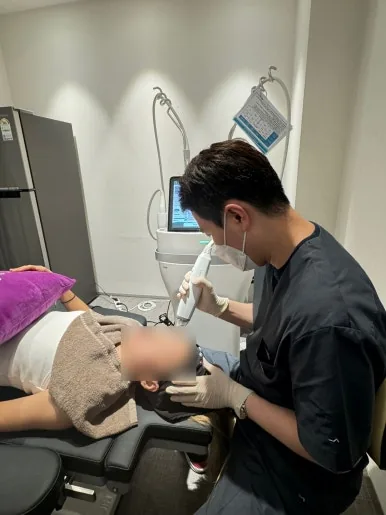
Director-performed treatment is a Dear promise — your procedure is planned and performed by the doctors below.





Real verified reviews from our Google Business Profile.
4.9★★★★★ 310 Google ReviewsThe clinic was very professional from start to finish. Doctor Jung was excellent and gentle with the treatment. I felt well looked after and everyone was outstanding. Happy with my service!
I've visited clinic for LDM procedure. I don't speak Korean, so there was an interpreter who assisted me while consulting. The staff was very attentive, they asked me every time before applying products/covering my face during the procedure and it went smoothly. Planning to visit the clini…
All the staff are kind, the doctor is professional. They recommended us the treatment that fit us best and last the longest. A very nice experience overall.
I did a hydrofacial, white/black head removal, and 1 day lasers. Really kind staff and reasonable prices. The only thing I would advise is that your first consultation is with a salesperson and you don’t see the doctor until after you decide what you want and after you pay.
Had a great experience here as a foreigner! The doctors and staff were knowledgeable, friendly, and not pushy. They made recommendations in my consultation and were happy to work within my budget.
Your questions, answered in English as soon as possible.
The split this page describes — field work around the pits, focused work down them — leans on the studies below. Needle-delivered radiofrequency has been trialled on facial atrophic acne scarring in Asian patients, compared against fractional carbon dioxide in a randomised single-treatment split-face design, set against micro-plasma radiofrequency in a further split-face study, and pooled in a meta-analysis covering acne and acne scarring.
Each reference carries a resolvable identifier and reports degrees of improvement across courses of treatment, which is why a range is discussed at your scan instead of a result promised in advance.
References are provided for information — outcomes vary by individual and are assessed at your diagnosis.