

★★★★★
The clinic was very professional from start to finish. Doctor Jung was excellent and gentle with the treatment. I felt well looked after and everyone was outstanding. Happy with my service!
Nothing on this floor erases an atrophic scar. Depth comes back in degrees, and how many degrees are available to you is decided by the kind of scar sitting in your skin — which is why a plan here begins by naming your scars and only then names a device.
That answer sounds narrow until you look at what "improvement" covers. A dent that no longer catches shadow under a ceiling light has changed in a way you see every day, and getting there does not require the scar to vanish from the skin. The useful question for a consultation is therefore how far your own scars can travel, and the range you are given depends less on which machine is switched on than on what the scar is made of.
There is also a direction of failure worth naming. Running a heavy resurfacing setting over a whole face to chase four or five deep pits asks undamaged skin to recover from something it never needed, and in skin that carries more melanin it invites a patch of altered tone that outlasts the scar you were treating. Both of those are avoidable by mapping the face before the first pass.
So the work at Dear Clinic is built as a sequence across three working depths instead of as a single device booking. The acne scar treatment page sets that sequence out step by step; this page answers the narrower question of what the sequence can realistically reach.
Scar architecture governs the outcome. Four patterns sit on most faces at once, and each one answers to a different step.
Soft, sloping depressions pulled downward by fibrous strands beneath them. Divide the strands and the floor is free to rise, which is a structural change and the most visible one available in scar work. This is the pattern that makes people say a treatment worked.
Box-shaped craters with steep sides and a flat base. Energy delivered inside the dermis thickens the walls and blunts the shadow line, so the edge reads softer in photographs. The outline usually remains findable in raking light after a full course.
Punctures that are deeper than they are wide. Field treatments pass over the opening without reaching the base, which is why these are addressed one at a time with focused carbon dioxide or erbium work at ₩10,000 (≈ $5) per lesion. Partial improvement is the realistic target.
Colour left behind after inflammation, sitting level with the skin around it. These fade on a pigment route and need none of the release or rebuilding steps, so a face whose real complaint is colour gets a shorter, cheaper plan and is told so at the scan.
Most faces carry three of these four. Your plan is written around the mixture, and one cheek can need a release step while the temple beside it needs nothing this season. Thicker skin, which is more common in men, shifts the depth and energy chosen without changing which step comes first.
Subcision passes a fine needle beneath a tethered scar and divides the strands anchoring its floor. Until they are cut, everything delivered above them works against an anchor. A session is ₩500,000 (≈ $355), and bruising, whose duration varies from person to person, is the trade you are quoted before it is booked.
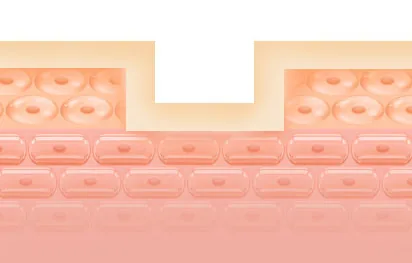
Radiofrequency microneedling drives fine needles past the surface and releases energy from their tips inside the dermis, with depth reset zone by zone so a thin temple never takes a cheek setting. A standard-tip visit is ₩250,000 (≈ $180); the device has its own Potenza page.
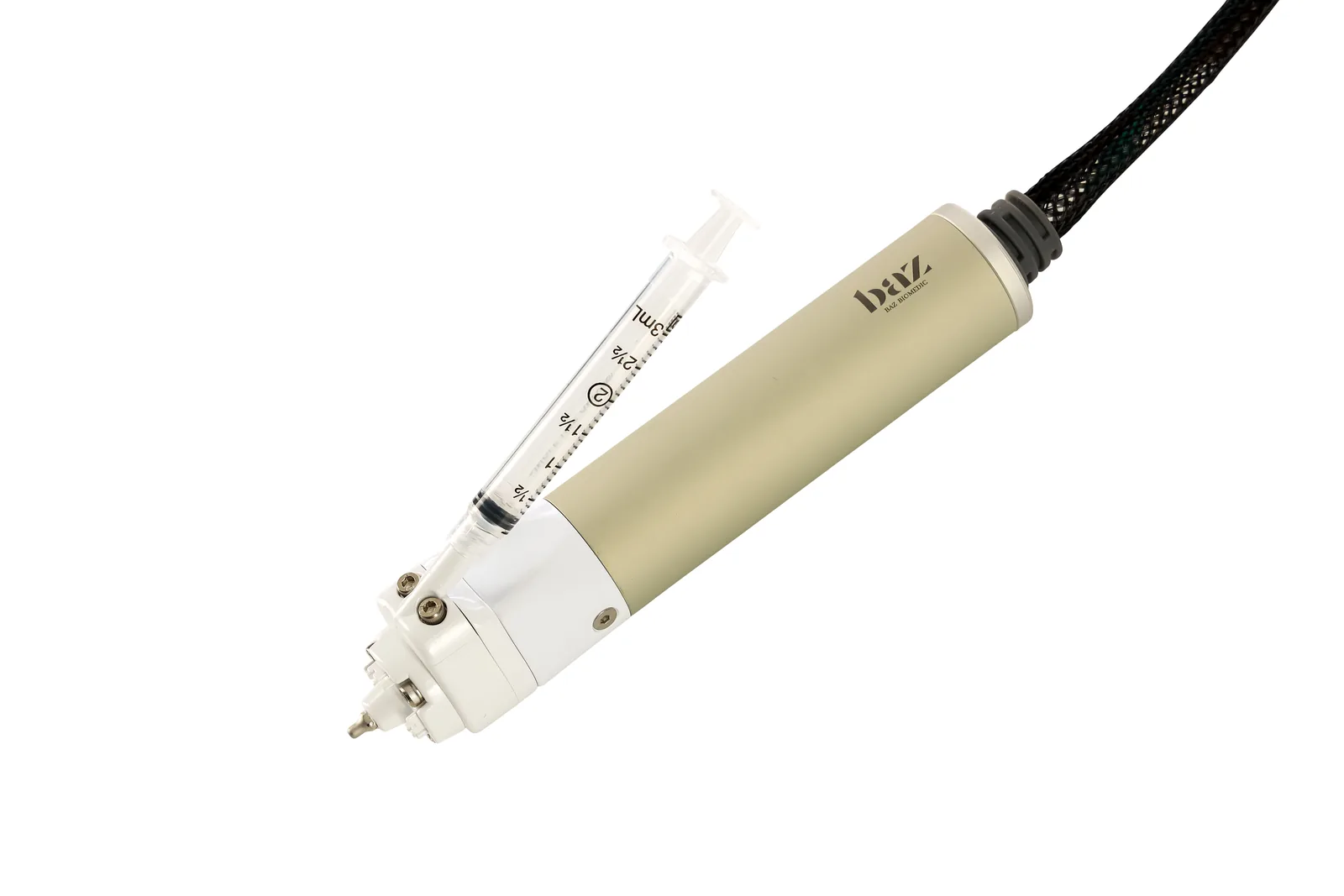
Focused carbon dioxide or erbium work takes individual pits down in controlled passes at ₩10,000 (≈ $5) each. Across a whole face, CureJet delivers material by jet without passing a needle through the skin, at ₩500,000 (≈ $355) for the full face.
Not every face needs all three. A single subcision visit with nothing else booked is a complete plan when the map shows one tethered zone and no pits, and that is quoted as such. Where active breakouts are still running, those are settled first on the Agnes route, because scar work on moving inflammation spends sessions on a target that keeps changing. The layered version of all of this runs as a named programme, D-ARC Solution.
| Scar pattern | What is realistically available | Step that leads | Listed rate |
|---|---|---|---|
| Rolling & tethered | Floor rises toward the surrounding skin; shadow shortens | Subcision, then dermal rebuilding | ₩500,000 (≈ $355) |
| Boxcar | Walls thicken, the edge blunts, the outline stays findable | Radiofrequency microneedling | ₩250,000 (≈ $180) |
| Ice-pick | Partial, slow; treated individually instead of across a field | Focused carbon dioxide or erbium | ₩10,000 (≈ $5) |
| Widespread texture | Surface evens out; depressions need their own step | Full-face jet delivery | ₩500,000 (≈ $355) |
Figures current for September 2026, quoted in KRW with a USD equivalent shown for orientation only. The same published line applies to residents and to visitors. Scar work runs as a sequence over several visits, so your director estimates at the scan how many your pattern is likely to need and revises that estimate as the skin responds. What a diagnosis visit and any follow-up review cost is confirmed with you when the appointment is made. Every line above also appears on the price list.
Needle release, radiofrequency microneedling, jet delivery and per-lesion carbon dioxide work are all in the building. Nothing has to be substituted because a step is missing, and a plan that uses one of the four is quoted at one line.
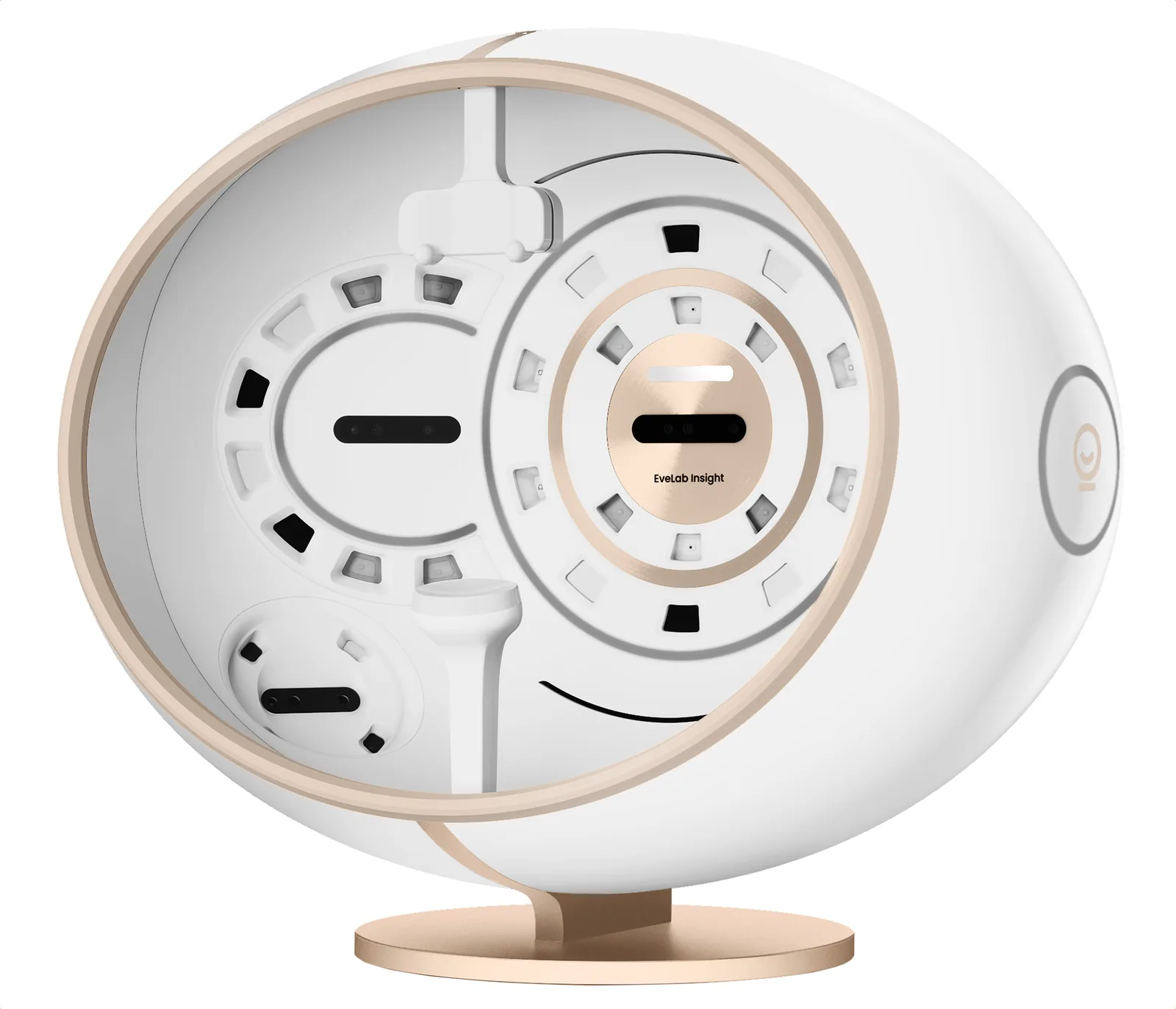
EVE Muse 3D imaging with AI analysis reads scar type, distribution and skin thickness. That reading is what produces the estimate of available improvement, zone by zone, and it is written down before a single setting is chosen or a session is sold.
Subcision and per-lesion work reward a steady hand more than almost anything else here. Your session is director-performed throughout, adjusted as the face is worked instead of run as one fixed pass over every zone.
We decline more scar bookings than people expect. Where the marks are level with the skin, the subcision route is refused and a pigment plan is proposed at a lower figure. Where a face wants erasure, we say what the ceiling is before any deposit is discussed. The named risks are bruising after release (how long it lasts varies from person to person), redness and a pinpoint grid after microneedling, small scabs where a lesion was worked individually, and, less often, a patch that stays lighter or darker for months, with sun on healing skin the usual cause. What is done for comfort during a session is confirmed with you at consultation. Outcomes vary between individuals and build over months.
Director-performed treatment is a Dear promise — your procedure is planned and performed by the doctors below.





Real verified reviews from our Google Business Profile.
4.9★★★★★ 310 Google ReviewsThe clinic was very professional from start to finish. Doctor Jung was excellent and gentle with the treatment. I felt well looked after and everyone was outstanding. Happy with my service!
I've visited clinic for LDM procedure. I don't speak Korean, so there was an interpreter who assisted me while consulting. The staff was very attentive, they asked me every time before applying products/covering my face during the procedure and it went smoothly. Planning to visit the clini…
All the staff are kind, the doctor is professional. They recommended us the treatment that fit us best and last the longest. A very nice experience overall.
I did a hydrofacial, white/black head removal, and 1 day lasers. Really kind staff and reasonable prices. The only thing I would advise is that your first consultation is with a salesperson and you don’t see the doctor until after you decide what you want and after you pay.
Had a great experience here as a foreigner! The doctors and staff were knowledgeable, friendly, and not pushy. They made recommendations in my consultation and were happy to work within my budget.
Your questions, answered in English as soon as possible.
The claim on this page — improvement in degrees, with clearance absent from the literature — rests on the studies listed below. Needle-delivered radiofrequency has been tested against fractional carbon dioxide in a randomised split-face design after a single treatment, and against micro-plasma radiofrequency in a separate split-face study. A pooled analysis gathers fractional radiofrequency results across acne and acne scarring. One of the scar studies was run in Asian patients, which is why it informs depth and energy choices in Cheongdam, and one addresses inflammatory acne, the condition treated before scar work begins.
Each reference carries a resolvable DOI from an indexed journal. They describe outcomes across treatment courses and are the basis for quoting a range at your scan instead of a result in advance.
References are provided for information — outcomes vary by individual and are assessed at your diagnosis.