

★★★★★
The clinic was very professional from start to finish. Doctor Jung was excellent and gentle with the treatment. I felt well looked after and everyone was outstanding. Happy with my service!
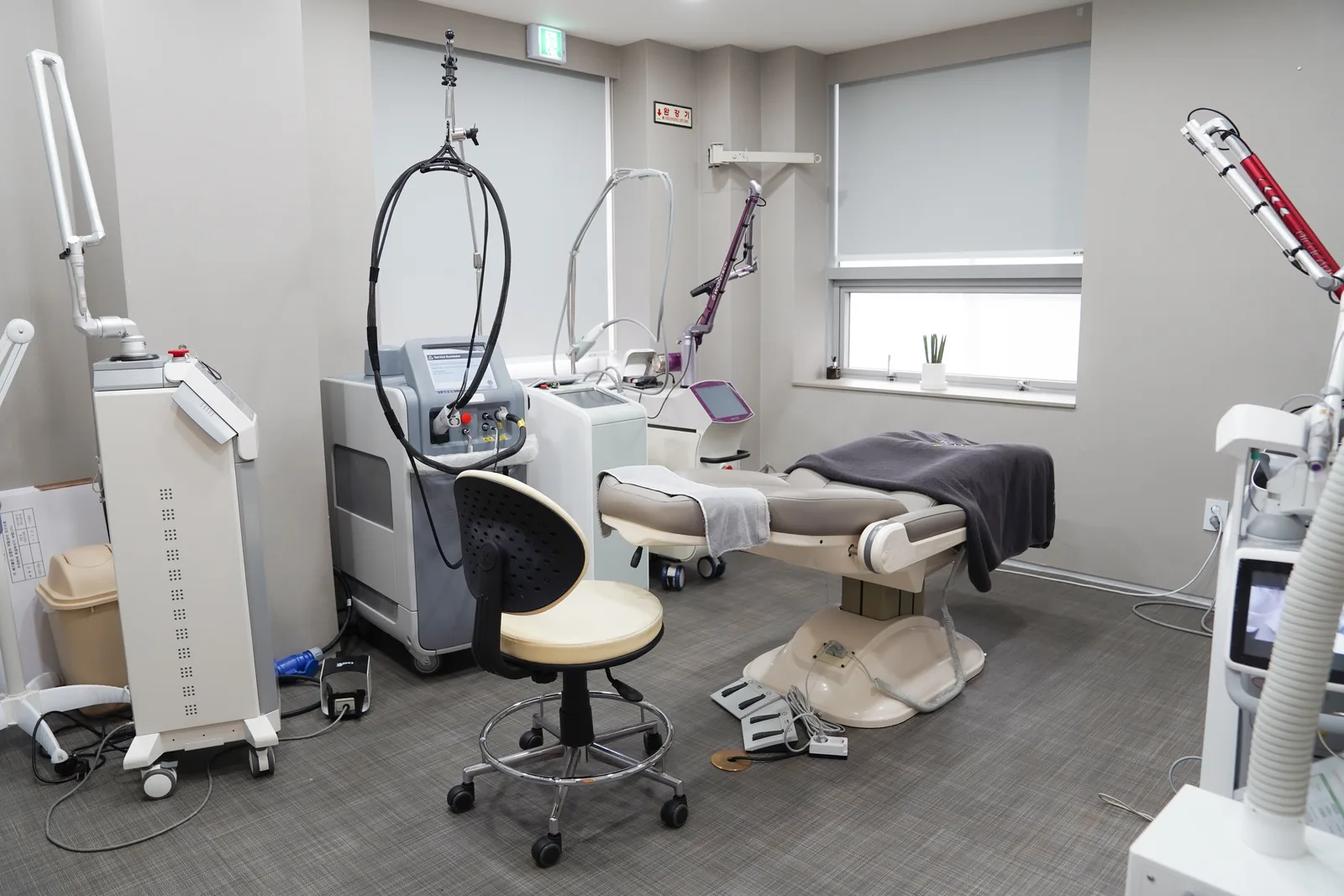
Dear Clinic publishes no course count for scar work. A likely range is written at your scan and revised as the skin responds, and the ablative laser lines here are billed one lesion at a time, so the arithmetic follows the map of your face instead of a package sold on day one.
The question usually carries an assumption worth unpicking. Most session-count articles describe a full-face fractional ablative course, where an entire face is resurfaced repeatedly at set intervals. That is not the shape of the published lines in Cheongdam. Carbon dioxide and erbium work here is focused and local: a lesion is taken down in controlled passes and charged at ₩10,000 (≈ $5) for each one treated. Full-face ablative resurfacing does not appear on the price list at all.
Where a whole field genuinely needs work, the energy is delivered through needles instead, and a fractional laser step at spaced intervals sits inside the D-ARC Solution programme for texture. So "how many fractional sessions" turns into two separate answers: how many lesions are on your list, and how many field visits the rest of the face needs.
Both answers come out of the same twenty minutes at the scan. The full sequence those visits belong to is described on the acne scar treatment page; what follows here is the reasoning that produces the number.
None of these can be read from a photograph sent in advance. All six are taken at the scan and written into the plan before a figure is quoted.
A narrow pit that is deeper than it is wide needs focused passes and returns slowly. A shallow, wide depression answers to field energy sooner. A face carrying both is treated on two schedules at once, which is the usual reason a plan runs longer than a friend's did.
Because ablative work is billed by the lesion, a list of four is a short appointment and a modest figure. Spread across cheeks, temples and jawline, the same depth of scarring becomes several visits, since energy is not stacked onto one field repeatedly in a short window.
Light absorbed by melanin calls for lower energy and longer gaps as pigment rises, so a deeper tone usually means a slower course of gentler visits. That trade buys protection from the patch of altered colour which is the main risk of pushing a beam hard.
Each treated lesion carries a small scab for several days, and a release step leaves a bruise whose duration varies from person to person. If your weeks cannot hold that, the plan is split into more, lighter visits, which raises the count and lowers the disruption per visit.
The change from any scar session accrues while you are away from the clinic, as collagen rebuilds over weeks. Your second visit is planned against what the first one actually produced, so a strong early response can shorten the plan and a slow one can extend it.
A depression anchored from beneath will keep returning to its old level no matter how many field passes it receives. Released first at ₩500,000 (≈ $355), it stops fighting every subsequent visit, and the rest of the plan usually needs fewer of them.
A course price tells you very little when the unit being charged is a single lesion. Here is what each line actually counts.
| Line | What one charge covers | What raises the total | Listed rate |
|---|---|---|---|
| Carbon dioxide / erbium | One lesion, worked in passes until it sits level | The number of lesions on your list | ₩10,000 (≈ $5) |
| RF microneedling, standard tip | One field visit, depth reset zone by zone | The number of visits the field needs | ₩250,000 (≈ $180) |
| Subcision | One release session on tethered scars | How many anchored zones are found | ₩500,000 (≈ $355) |
Figures current for September 2026, quoted in KRW with a USD equivalent shown for orientation only. The same published line applies to residents and to visitors. Nothing is pre-sold as a package, so a plan that stops after two visits leaves no unused balance behind. What a diagnosis visit or a later review costs is confirmed with you when the appointment is booked. Each line above also sits on the price list.
Subcision passes a fine needle beneath an anchored depression and divides the strands pulling its floor down. Once the anchor is gone, the floor can settle at a higher level and stay there, and visits that follow are spent on refinement instead of on fighting the same pull. The line is ₩500,000 (≈ $355), and a bruise, whose duration varies from person to person, is part of the booking.
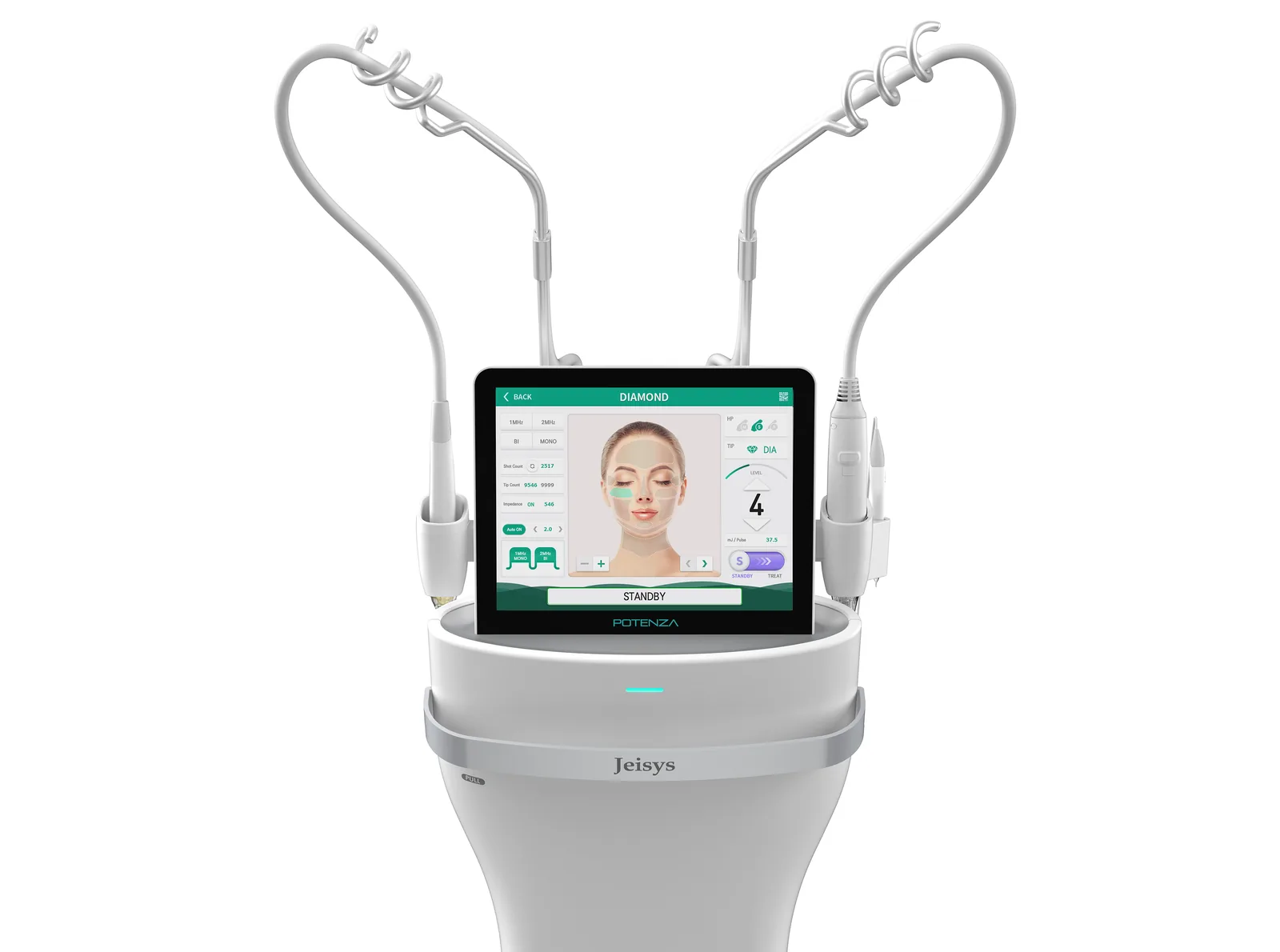
Radiofrequency microneedling pushes fine needles through the surface and releases energy from their tips inside the dermis, where scar walls and coarse texture sit. Because melanin does not absorb it the way it absorbs light, it can carry a deeper tone at full depth. A standard-tip visit is ₩250,000 (≈ $180); the Potenza page covers both tip configurations.
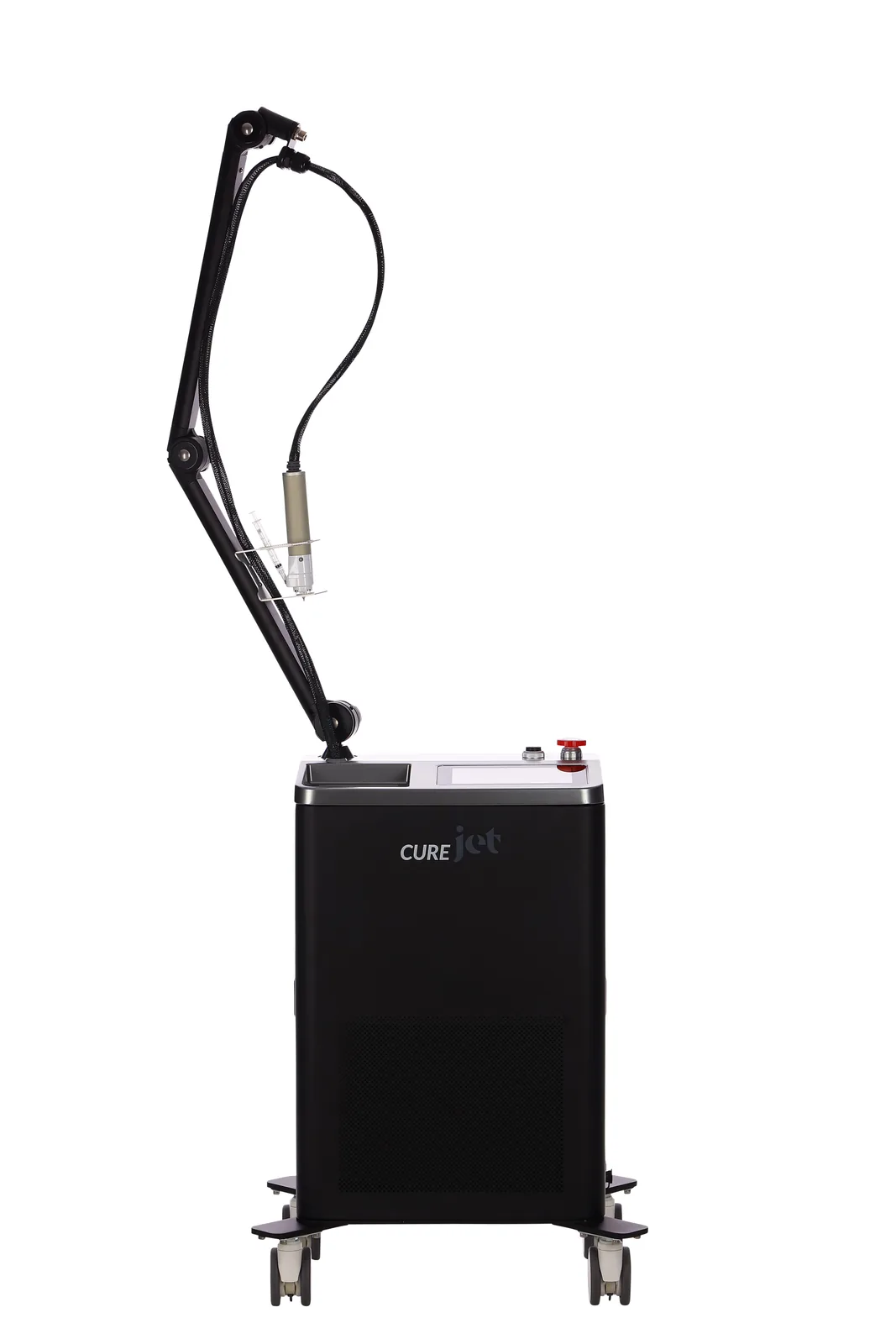
Sequencing is what keeps the count down. Where breakouts are still running, those are settled first on the Agnes route, since scar visits spent on skin that is still flaring are visits paid for twice. Where a face needs material delivered across a wide area without a needle passing through it, CureJet takes that job. Every one of these steps is on the same floor, which is why a plan can be rewritten between visits without sending you somewhere new.
Release, needle energy, jet delivery and per-lesion beam work are all published separately. A plan can therefore use one line for two visits, and nothing has to be padded to reach a package minimum.
EVE Muse 3D imaging under five light sources with AI analysis separates depressions from flat colour and reads skin thickness zone by zone. Counting what is actually there is what turns a session question into an estimate, and it happens before any energy is switched on.
Your session is director-performed, and the next date is set from what the previous visit produced on your skin. A strong early response shortens the plan; a slow one extends it, and you are told which is happening.
Two of these get a straight no at the scan. Where the real complaint is post-inflammatory colour we do not recommend scar sessions at all, and the face is sent to a pigment route at a lower figure with nothing booked here. A trip too short to hold the intervals buys the first visits of a plan that cannot finish, and we say so before anything is taken. The named risks across these steps are bruising after release, redness and a pinpoint grid after microneedling, a small scab at each treated lesion, and, less often, a patch of skin that stays lighter or darker for months. What is done for comfort during a session is confirmed with you at consultation. Outcomes vary between individuals and accumulate over months.

Director-performed treatment is a Dear promise — your procedure is planned and performed by the doctors below.





Real verified reviews from our Google Business Profile.
4.9★★★★★ 310 Google ReviewsThe clinic was very professional from start to finish. Doctor Jung was excellent and gentle with the treatment. I felt well looked after and everyone was outstanding. Happy with my service!
I've visited clinic for LDM procedure. I don't speak Korean, so there was an interpreter who assisted me while consulting. The staff was very attentive, they asked me every time before applying products/covering my face during the procedure and it went smoothly. Planning to visit the clini…
All the staff are kind, the doctor is professional. They recommended us the treatment that fit us best and last the longest. A very nice experience overall.
I did a hydrofacial, white/black head removal, and 1 day lasers. Really kind staff and reasonable prices. The only thing I would advise is that your first consultation is with a salesperson and you don’t see the doctor until after you decide what you want and after you pay.
Had a great experience here as a foreigner! The doctors and staff were knowledgeable, friendly, and not pushy. They made recommendations in my consultation and were happy to work within my budget.
Your questions, answered in English as soon as possible.
The studies below are listed for what their designs show about repetition. One randomised split-face trial assessed acne scars after a single treatment, comparing fractional carbon dioxide against needle-delivered radiofrequency. A retrospective series followed 75 patients in ordinary practice. A pooled analysis gathers fractional radiofrequency results across acne and acne scarring, and two further trials examine needle-delivered radiofrequency in moderate-to-severe and in randomised controlled acne settings, which is the condition treated before scar visits begin.
Each reference carries a resolvable DOI from an indexed journal. They describe study populations and endpoints, and none of them is a forecast for a particular face; your own range is written at the scan and revised as the skin answers.
References are provided for information — outcomes vary by individual and are assessed at your diagnosis.