

★★★★★
The clinic was very professional from start to finish. Doctor Jung was excellent and gentle with the treatment. I felt well looked after and everyone was outstanding. Happy with my service!

Two published routes answer a deflating face here. Hyaluronic acid replaces a measured contour by the cubic centimetre; a collagen-stimulating vial or hybrid works on the tissue itself across a course. Which one your face is asking for is settled at the reading, before anything is opened.
The distinction matters because the two routes fail in different ways when they are misapplied. Gel placed into skin that has thinned diffusely tends to read as a patch somewhere it was never wanted. A collagen-stimulating course prescribed for a sharply defined hollow can disappoint, because it builds slowly and broadly while the complaint was narrow and structural.
So the consultation is spent on one question before it is spent on any product. Is the face short of shape, or short of substance? Both answers are common past the mid-thirties, and plenty of faces return both at once.
They arrive together and look like one change in the mirror. They are treated differently.
| What changes | How it reads in the mirror | What it asks of the plan |
|---|---|---|
| Fat pad deflation | Facial fat sits in discrete compartments. As those empty and shift downward, the upper cheek flattens while the lower face gains weight it did not have before, and a shadow appears at the transition between them. | A defined contour deficit. This is the finding that hyaluronic acid answers directly, placed deep where the compartment used to sit. |
| Bone remodelling | The orbital rim opens, the mid-face platform retreats and the jaw angle softens over decades. Nothing on the surface has moved, yet every soft tissue above it now has less to sit on. | Deep structural support. Volume is placed against what remains of the platform, so the soft tissue above regains a shelf to sit on. |
| Dermal thinning | Skin becomes finer and less springy, light no longer bounces off it evenly, and creases hold their shape after the expression has ended. The face can look tired at a volume the contour has barely lost. | Collagen stimulation across a course. The target here is the quality of the tissue itself, which no single syringe of gel can change. |
Any one of the three can dominate a particular face. Reading which one is dominant is the whole job of the first appointment, and it is why a plan written for your neighbour is worthless to you.
Your face is captured on the EVE Muse 3D unit under five light sources before any route is named. Multi-angle imaging gives the director the depth of each depression, the plane it falls away on and the symmetry between the two halves, while the surface channels report texture and the condition of the dermis. Those are two different datasets, and a volume decision needs both.
A deep, localised, asymmetric depression with good overlying skin behaves as a structural problem. Broad flatness with fine crepey texture and slow recoil behaves as a tissue problem. Where the reading returns the first pattern, gel is prescribed by the cubic centimetre. Where it returns the second, a collagen-stimulating course is the better use of your money and your calendar.
Your director performs every injection here, so the person who interpreted the scan is the person holding the syringe. Where the reading finds that the complaint is descent and not deflation, we do not recommend adding volume at all, and the conversation moves to the lifting category instead. Filling a face that has dropped only makes it heavier.

Both are performed at Dear Clinic. They are not interchangeable, and the published card prices them on different units.
| Hyaluronic acid, per cc | Collagen stimulation, per vial or cc | |
|---|---|---|
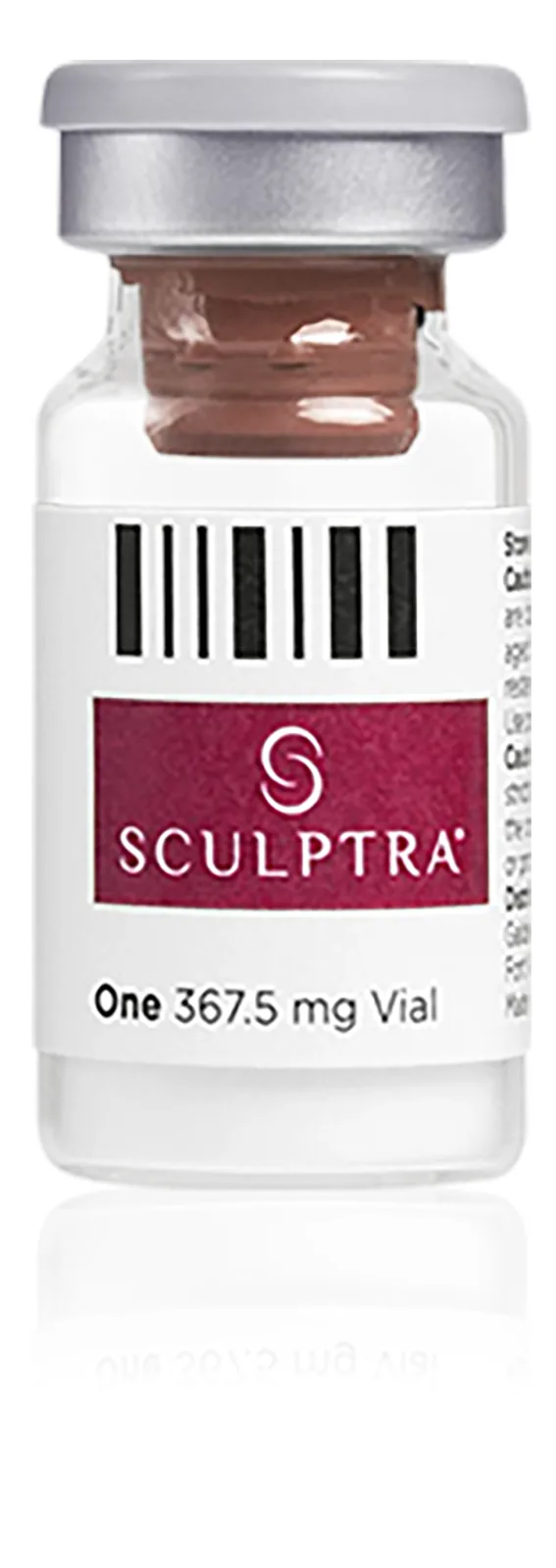
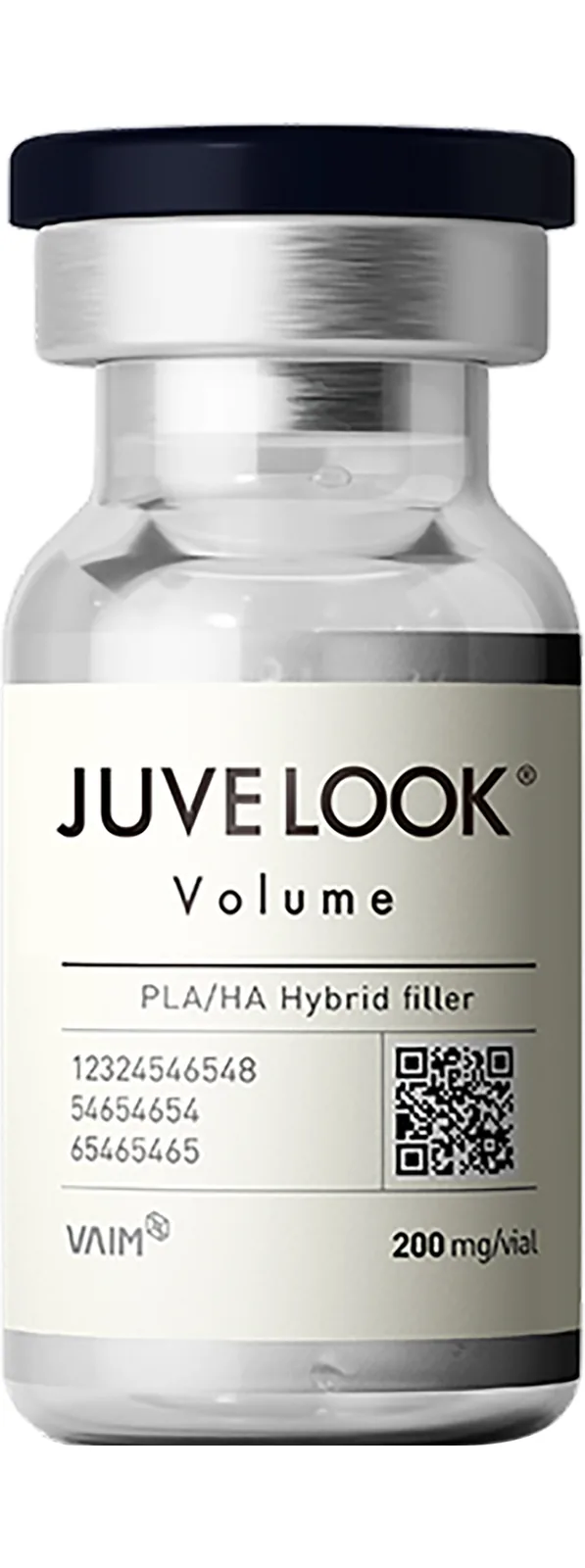
| What it is | Cross-linked hyaluronic acid gel. The Chaeum is the Korean family stocked here; Restylane and Juvederm are the imported structured lines. | Sculptra is poly-L-lactic acid, supplied by the vial. Juvelook is a PDLLA and hyaluronic acid hybrid, supplied by the cubic centimetre. |
| What it does | Occupies space. The gel itself is the correction, so the contour it creates is there the moment placement finishes. | Prompts your own tissue to lay down collagen. The injected material is the stimulus, and the change accumulates in the weeks after the appointment instead of during it. |
| What it suits | A defined, mappable deficit: a flattened upper cheek, a retreated temple line, a groove with a clear edge to it. | Broad, diffuse thinning where no single edge can be drawn, and skin quality that has declined alongside the volume. |
| How it is measured | In tenths of a cubic centimetre, zone by zone, agreed with you before the first syringe is opened. | Sculptra by whole vials across a planned course; Juvelook by the cubic centimetre, with the Volume line kept off the forehead and the under-eye. |
| Reversibility | Hyaluronic acid responds to a hyaluronidase enzyme injection, so a placement can be reduced or cleared. | No enzyme reverses a collagen-stimulating injectable. This is the reason the course is planned conservatively and reviewed between steps. |
| Listed rate | The Chaeum ₩130,000 (≈ $95) · Restylane ₩350,000 (≈ $250) · Juvederm ₩400,000 (≈ $285) per cc | Sculptra ₩1,000,000 (≈ $715) per vial · Juvelook ₩100,000 (≈ $70) per cc |
Cross-linked gels differ measurably in firmness, cohesivity and how they behave under load, which is why the family is picked from the scan and not from the price column. A structural mid-face placement and a fine surface correction ask for different material.
Poly-L-lactic acid has been studied as a volumising agent for the ageing face in the indexed literature for close to two decades. It works gradually, which suits diffuse loss and frustrates anyone expecting a result on the day.
A PDLLA and hyaluronic acid hybrid, so the hyaluronic component gives some immediate hydration while the polymer component drives the slower collagen response. Published comparisons of the early-stage volume behaviour of the two polymer types exist, and the director will talk you through what they do and do not show.
Many faces need both routes. Doing them in the wrong sequence wastes material.
Where the reading found a skeletal or deep compartment deficit, that goes first, because everything above it will sit differently once it is corrected. A surface assessment taken before the deep support is placed will over-estimate what the skin needs.
Swelling distorts any reading of facial fullness for a period after injection, so the stimulation plan is confirmed at a review appointment instead of being booked blind the same afternoon. Frequently the quantity needed turns out to be smaller than the first estimate.
Because a stimulated result accumulates, each step is judged against the last before the next is agreed. Your director gives you the expected pattern for the specific product in your plan; this page publishes no timeline, because the range depends on the material, the quantity and your own tissue.
Hyaluronic acid billing follows the cubic centimetre and Sculptra billing follows the vial, so a small correction at a review is a small quote. Volume is never stacked to buy time; where that is the request, we do not recommend it and the discussion returns to proportion.
Judge the shadow where the cheek meets the lower face, and how light now crosses that boundary.
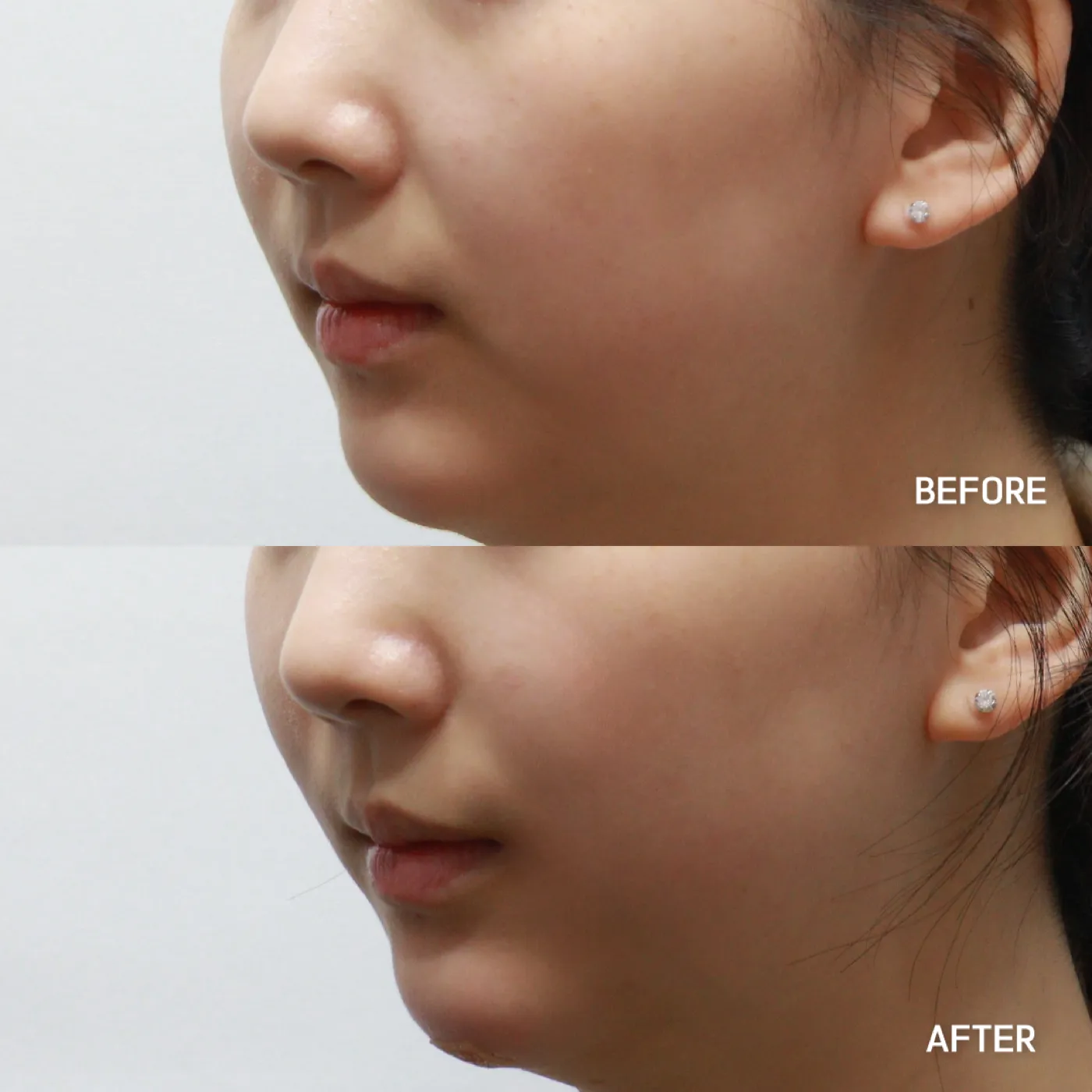
All photos are unretouched cases of the same person under the same conditions, treated at Dear Clinic. Each photo shows only the treatment it is labelled with. Individual results may vary.
A collagen-stimulating course photographs differently, because the change is spread across a wider field and appears between appointments. Case images for that route sit on the Sculptra page and the Juvelook page.
| Material | Unit | Listed rate |
|---|---|---|
| The Chaeum | 1 cc, general facial area | ₩130,000 (≈ $95) |
| Restylane | 1 cc | ₩350,000 (≈ $250) |
| Juvederm | 1 cc | ₩400,000 (≈ $285) |
| Juvelook | 1 cc, Skin or Volume line | ₩100,000 (≈ $70) |
| Sculptra | 1 vial | ₩1,000,000 (≈ $715) |
Specialty areas such as the lips and the temple carry their own line on the filler card and are quoted separately. Residents and visiting patients read the same published card. What a consultation or a later review appointment is charged at is advised to you directly at the diagnosis, along with the quantity. The dermal filler hub sets out every area and family, the skin booster category covers the stimulation side, and the transparent price list carries the rest of the clinic.
Director-performed treatment is a Dear promise — your procedure is planned and performed by the doctors below.





Real verified reviews from our Google Business Profile.
4.9★★★★★ 310 Google ReviewsThe clinic was very professional from start to finish. Doctor Jung was excellent and gentle with the treatment. I felt well looked after and everyone was outstanding. Happy with my service!
I've visited clinic for LDM procedure. I don't speak Korean, so there was an interpreter who assisted me while consulting. The staff was very attentive, they asked me every time before applying products/covering my face during the procedure and it went smoothly. Planning to visit the clini…
All the staff are kind, the doctor is professional. They recommended us the treatment that fit us best and last the longest. A very nice experience overall.
I did a hydrofacial, white/black head removal, and 1 day lasers. Really kind staff and reasonable prices. The only thing I would advise is that your first consultation is with a salesperson and you don’t see the doctor until after you decide what you want and after you pay.
Had a great experience here as a foreigner! The doctors and staff were knowledgeable, friendly, and not pushy. They made recommendations in my consultation and were happy to work within my budget.
Describe what has changed and where — answered in English as soon as possible.
The papers below document what each material class has been studied for: poly-L-lactic acid as a volumising agent in the ageing face, the physical differences that separate one hyaluronic acid product from another, and the vascular anatomy that governs where either one may be placed. None of them describes an outcome for an individual patient, and neither does this page.
Each reference resolves to a DOI in an indexed journal.
References are provided for information — outcomes vary by individual and are assessed at your diagnosis.