

★★★★★
The clinic was very professional from start to finish. Doctor Jung was excellent and gentle with the treatment. I felt well looked after and everyone was outstanding. Happy with my service!
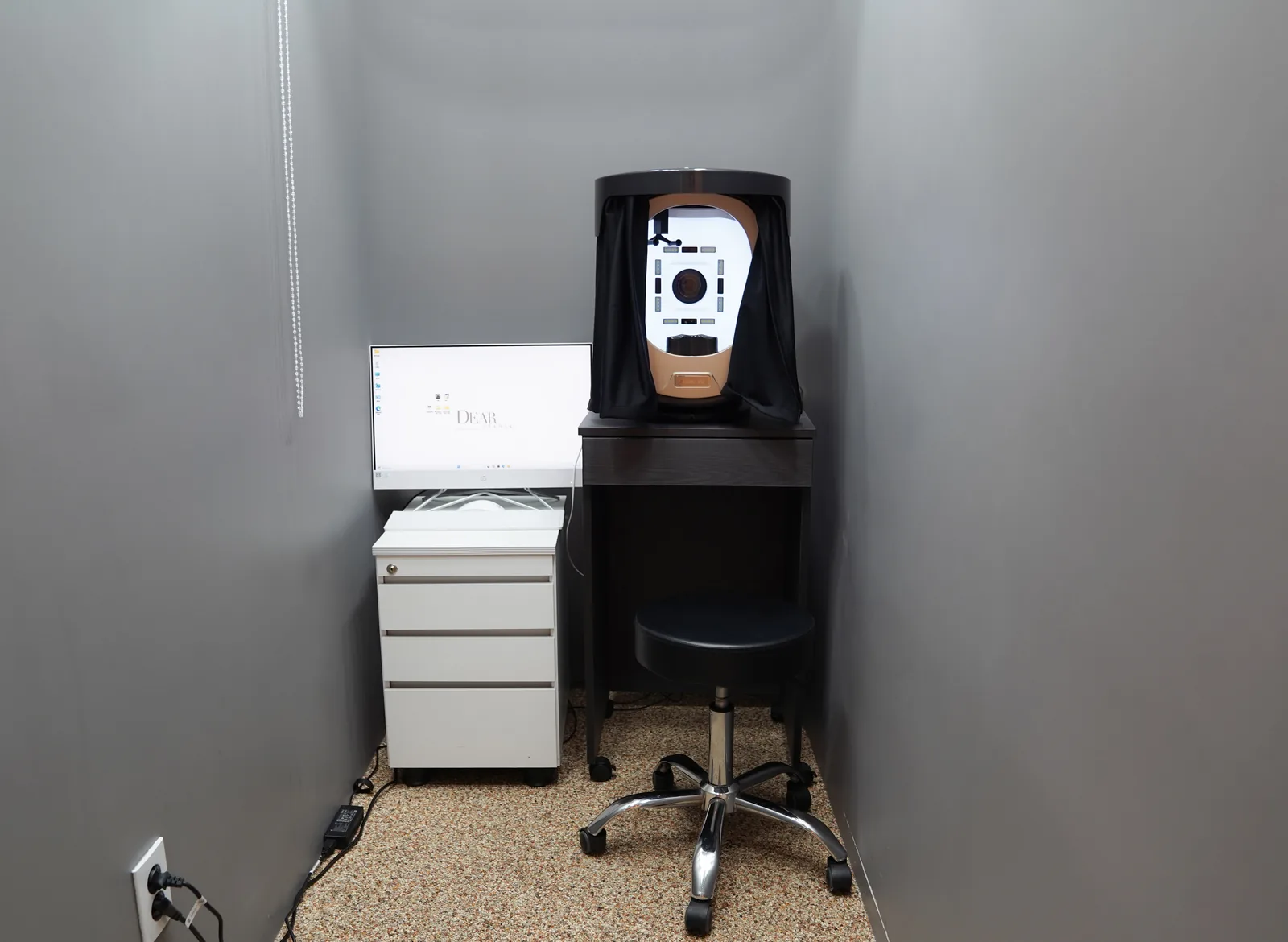
No photo pair is published here. What is published is the standard a Prime photo pair has to meet before it means anything — the timeline, the camera conditions and the disclosures.
Dear Clinic publishes no Ultherapy Prime gallery. Our audited photo archive holds no Prime case that meets the captioning standard the clinic applies to before-and-after images, and filling the gap with a photo from a different treatment would misname it. So this page does the other useful thing: it sets out how to judge any Prime pair you are shown, here or anywhere.
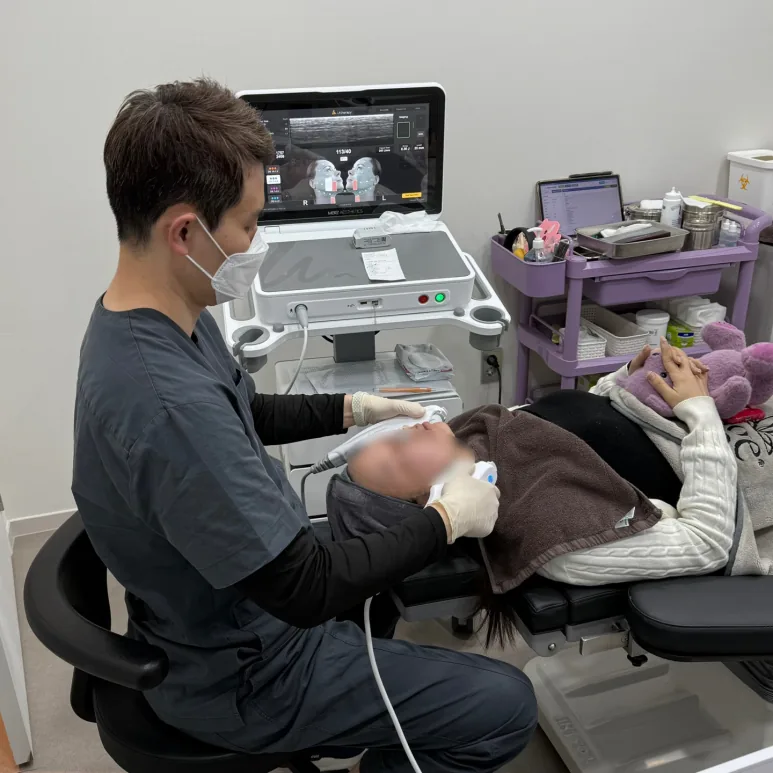
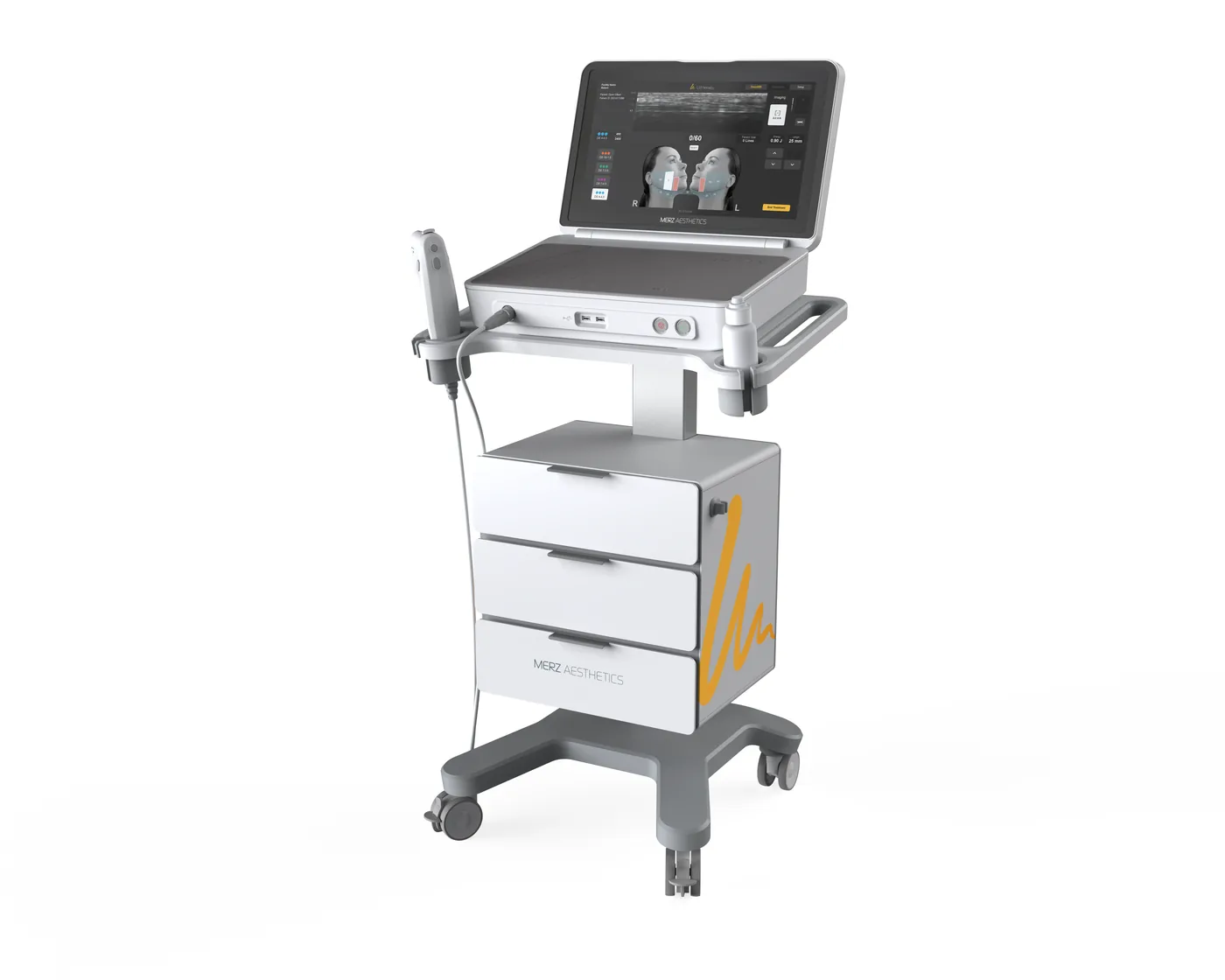
The treatment itself — depths, zones, imaging, aftercare — is documented on the Ultherapy Prime page, and the platform sits alongside the rest of the menu on the lifting and tightening hub. Prime is published at ₩400,000 (≈ $285) per 100 shots.
Four windows, each one answering a different question. A pair shot in the wrong window answers none of them.
Mild flush, a pulling or tender feeling along treated lines, sometimes small bruises or raised welts. Nothing here is a result; it is the tissue responding to heat at depth.
Early tightening may read to you before it reads to a camera. Swelling and settling are still in play, so a photograph taken now is measuring the wrong thing.
Remodelling is slow, and the published MFU-V studies listed below assess their outcomes across months of follow-up. This is the window an honest comparison photograph belongs in.
How long an effect holds varies with skin, age and lifestyle. Any interval is set with your director at follow-up instead of promised in advance.
Individual results may vary, and the timeline above describes a pattern, and your face has not signed up to the calendar. If a pair you are looking at carries no interval at all — no "12 weeks", no "6 months" — then the single most important variable in it has been left out.
Jawline definition is the thing Prime is most often asked to change, and jawline definition is also the thing most easily faked by a camera. Tilt the chin down five degrees and a jawline sharpens. Move a light from front to side and the same cheek gains a contour it did not have. Step closer with a short lens and the face slims at the edges. None of that is collagen.
Camera conditions are the mechanical half. The other half is disclosure, and it is where most published pairs quietly fall apart. A pair earns its place only when it can answer these questions on its face: how long after treatment, how many shots and to which zones, and what else happened to that face in the meantime. A course of skin boosters, a filler session or eight kilos of weight loss between frames will change a jawline far more visibly than any lifting device, and a pair that does not mention them is not a Prime result.
Two further disclosures matter. The first is consent, which is why the archive a clinic can publish from is always smaller than the archive it holds. The second is that the same person under the same conditions is the only valid comparison — a different patient with a similar concern proves nothing about your own face, whatever the resemblance.
Risks belong in the same frame as results. Bruising and raised welts along treated lines occur. Numbness or tingling where a line runs near a nerve is uncommon and usually settles over weeks. Temporary weakness in one facial muscle has been reported after focused-ultrasound treatment and is rare. A gallery that shows only outcomes and names none of these has edited the picture before you ever see it.
EVE Muse 3D capture with five-light-source AI analysis is made before the plan is drawn. It records laxity zone by zone at a fixed distance under fixed light, which is precisely what a phone photograph taken at home cannot do. At follow-up that baseline is what your director reads the change against.
Where the reading shows surface crepiness over an intact SMAS, we do not recommend Prime; radiofrequency answers that picture better, and a Thermage FLX or Density plan is priced for you instead. Choosing the platform that suits the layer is what makes any later photograph worth taking.
Prime sessions are performed by our directors, Merz-certified as Ultherapy providers, and the follow-up is theirs too.
The change accrues long after most trips end, so plan for a remote follow-up. Book the session early in the stay, take your own comparison frames before you fly home using the conditions listed above, and repeat them at the same interval afterwards under the same window light. The clinic opens 365 days a year, Sundays and public holidays included, which usually means the scan and the session can share one afternoon instead of two separate trips across town.
Questions after you leave are answered in English by the same team that treated you. If something feels wrong before the assessment window closes, that goes on the follow-up call and not into a waiting game. The session itself is published at ₩400,000 (≈ $285) per 100 shots, and the count your map comes to is agreed before any of it starts.
Director-performed treatment is a Dear promise — your procedure is planned and performed by the doctors below.





Real verified reviews from our Google Business Profile.
4.9★★★★★ 308 Google ReviewsThe clinic was very professional from start to finish. Doctor Jung was excellent and gentle with the treatment. I felt well looked after and everyone was outstanding. Happy with my service!
I've visited clinic for LDM procedure. I don't speak Korean, so there was an interpreter who assisted me while consulting. The staff was very attentive, they asked me every time before applying products/covering my face during the procedure and it went smoothly. Planning to visit the clini…
All the staff are kind, the doctor is professional. They recommended us the treatment that fit us best and last the longest. A very nice experience overall.
I did a hydrofacial, white/black head removal, and 1 day lasers. Really kind staff and reasonable prices. The only thing I would advise is that your first consultation is with a salesperson and you don’t see the doctor until after you decide what you want and after you pay.
Had a great experience here as a foreigner! The doctors and staff were knowledgeable, friendly, and not pushy. They made recommendations in my consultation and were happy to work within my budget.
Tell us what you want changed and when you are in Seoul; we reply in English as soon as possible.
The four papers below are the reason this page talks about months instead of days. They examine intense focused ultrasound tightening in Asian skin with histological findings, a quantitative analysis of face and neck tightening in Asian patients, micro-focused ultrasound with visualization for tightening and lifting, and the wider field of noninvasive ultrasound techniques.
Two of them study Asian cohorts specifically, which is the relevant comparison for treatment planned in Seoul. They are cited here as sources for the mechanism and its assessment intervals; no specific outcome is being forecast for any individual from them.