

★★★★★
The clinic was very professional from start to finish. Doctor Jung was excellent and gentle with the treatment. I felt well looked after and everyone was outstanding. Happy with my service!

No. What the treatment delivers is long-term reduction — a lasting fall in how much hair grows in a treated field, how coarse it is and how much of it you can see. That is the claim the published work supports, and it is the only one made here.
Everyday English uses the word for something absolute, and that gap is where disappointment is manufactured. Someone told the result would last for ever reads a few fine hairs at month nine as a failure. Someone told the endpoint is reduction reads the same field as working exactly as described, and books an occasional visit without feeling misled.
So the wording on every Dear Clinic page is reduction, in the hero, in the price notes and in the consultation room. It is a narrower promise and a keepable one. Your director will tell you at diagnosis roughly how much fall in density a given field is likely to show, and will say when the honest expectation is modest.
The mechanism, the wavelengths and the full grid of listed zones are on the laser hair removal page. Other treatments offered below the neck are grouped under body and wellness.
Each one is biology doing what biology does, and each is discussed before a plan is agreed.
A pulse only damages what it can reach, and a dormant follicle holds too little pigment to be reached. Those follicles were never treated at all. When they wake and push a shaft through, what you see is first growth from a follicle nothing ever reached.
Heat delivered below the threshold weakens a follicle without finishing it. What it produces afterwards is thinner, lighter and slower, which is a real change and a visible one. It is still a follicle, and under the right stimulus it can strengthen again.
Puberty, pregnancy, menopause, thyroid disease and polycystic ovary syndrome can all convert fine vellus hair into coarse pigmented hair in fields that were quiet before. No laser treats a field in advance against a hormone that has not arrived yet.
Some drugs stimulate growth as a side effect, and hair patterns shift across a life without anyone doing anything. A field held at a low density for several years and then drifting upward is an ordinary outcome, and it answers to a maintenance visit.
A follicle destroyed by a pulse does not regenerate. That is the durable half of the answer, and it is why a completed plan changes a field for years and not for weeks. The trials behind this page measure exactly that: density counted in a marked area months after the final pass, compared against the same area before the first one.
Patients usually describe the change in three ways before they describe it in numbers. Shaving drops from a daily chore to an occasional one. What does grow comes back finer and lighter, so it catches the light differently. Ingrown bumps and razor irritation, which were often the real complaint, become uncommon because there is far less shaft pushing through.
Maintenance is the other half and it is planned openly. A single visit at the listed rate, taken when a field starts reading heavier, holds it where you liked it. Underarm is ₩30,000 (≈ $20) on the women’s grid and ₩50,000 (≈ $35) on the men’s, so a top-up stays a small, predictable line and no second course has to be sold as a rescue.
| Listed line | Rate | Where it fits |
|---|---|---|
| Underarm, women — one visit | ₩30,000 (≈ $20) | A single maintenance pass, or a trial before anything larger |
| Underarm, women — block of five | ₩75,000 (≈ $55) | The working unit for a first plan on an untreated field |
| Underarm, men — one visit | ₩50,000 (≈ $35) | The men’s equivalent line, coarser hair and a larger surface |
Underarm is used here because it is the line most people measure the idea against. Rates are current for September 2026, charged in KRW with a USD figure printed for orientation only. Every other listed zone on both grids appears on the price list, and appointments run every day of the year.
Some fields are poor candidates for durability and we say so before money moves. Where the hair is white, grey or very pale blond, the beam has almost no pigment to absorb and we do not recommend buying a plan against it. Where growth is driven by an untreated hormonal condition, the expectation set at diagnosis is control with ongoing visits, because a field driven that way is never finished and forgotten.
Freshly tanned skin moves a date rather than a plan. Pigment concentrated at the surface changes the safe setting and raises the chance of a burn, a blister or patchy lightening, so a session is postponed or a test area is taken first. Broken or infected skin waits until it has settled; tattooed areas are worked around.
Redness and small bumps around the follicles for about a day are the ordinary reactions. Temporary pigment change, and less often blistering or a superficial burn, are the named risks, and they rise with recent sun. Tell your director about photosensitising medication, recent isotretinoin, a pregnancy or a history of keloid scarring, since any of those can change what is offered on the day. Response varies between individuals.
Ingrown bumps that turn out to be a skin problem have their own room on the same floor.
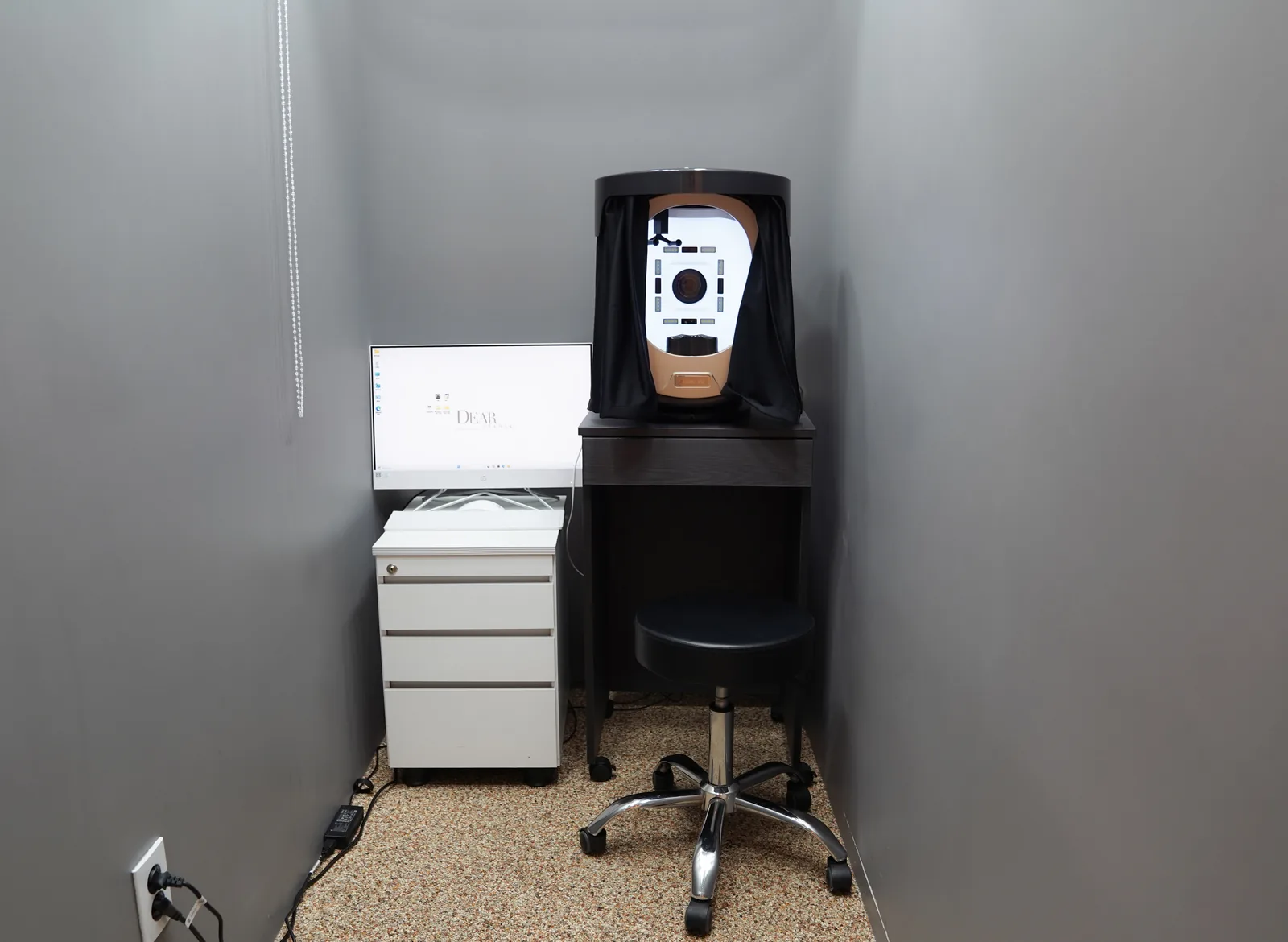
Three-dimensional imaging under five light sources with AI analysis captures the skin and the field as they are on day one. That baseline is what a later review is measured against, so the durability of your own result is measured against a record instead of remembered, and recent sun is visible on it before a fluence is set.
Sessions are director-performed, and the same director sees the field at each return. Where regrowth is heavier than the plan predicted, the reason is named out loud — a missed interval, waxing between visits, or a hormonal driver that deserves its own investigation.
Most people settle into a rhythm of occasional visits and stop thinking about it. The fields that need the closest watching are the hormonally driven ones on the face, where a chin or an upper lip can recruit new growth years after a plan finished cleanly.

Director-performed treatment is a Dear promise — your procedure is planned and performed by the doctors below.





Real verified reviews from our Google Business Profile.
4.9★★★★★ 310 Google ReviewsThe clinic was very professional from start to finish. Doctor Jung was excellent and gentle with the treatment. I felt well looked after and everyone was outstanding. Happy with my service!
I've visited clinic for LDM procedure. I don't speak Korean, so there was an interpreter who assisted me while consulting. The staff was very attentive, they asked me every time before applying products/covering my face during the procedure and it went smoothly. Planning to visit the clini…
All the staff are kind, the doctor is professional. They recommended us the treatment that fit us best and last the longest. A very nice experience overall.
I did a hydrofacial, white/black head removal, and 1 day lasers. Really kind staff and reasonable prices. The only thing I would advise is that your first consultation is with a salesperson and you don’t see the doctor until after you decide what you want and after you pay.
Had a great experience here as a foreigner! The doctors and staff were knowledgeable, friendly, and not pushy. They made recommendations in my consultation and were happy to work within my budget.
Your questions, answered in English as soon as possible.
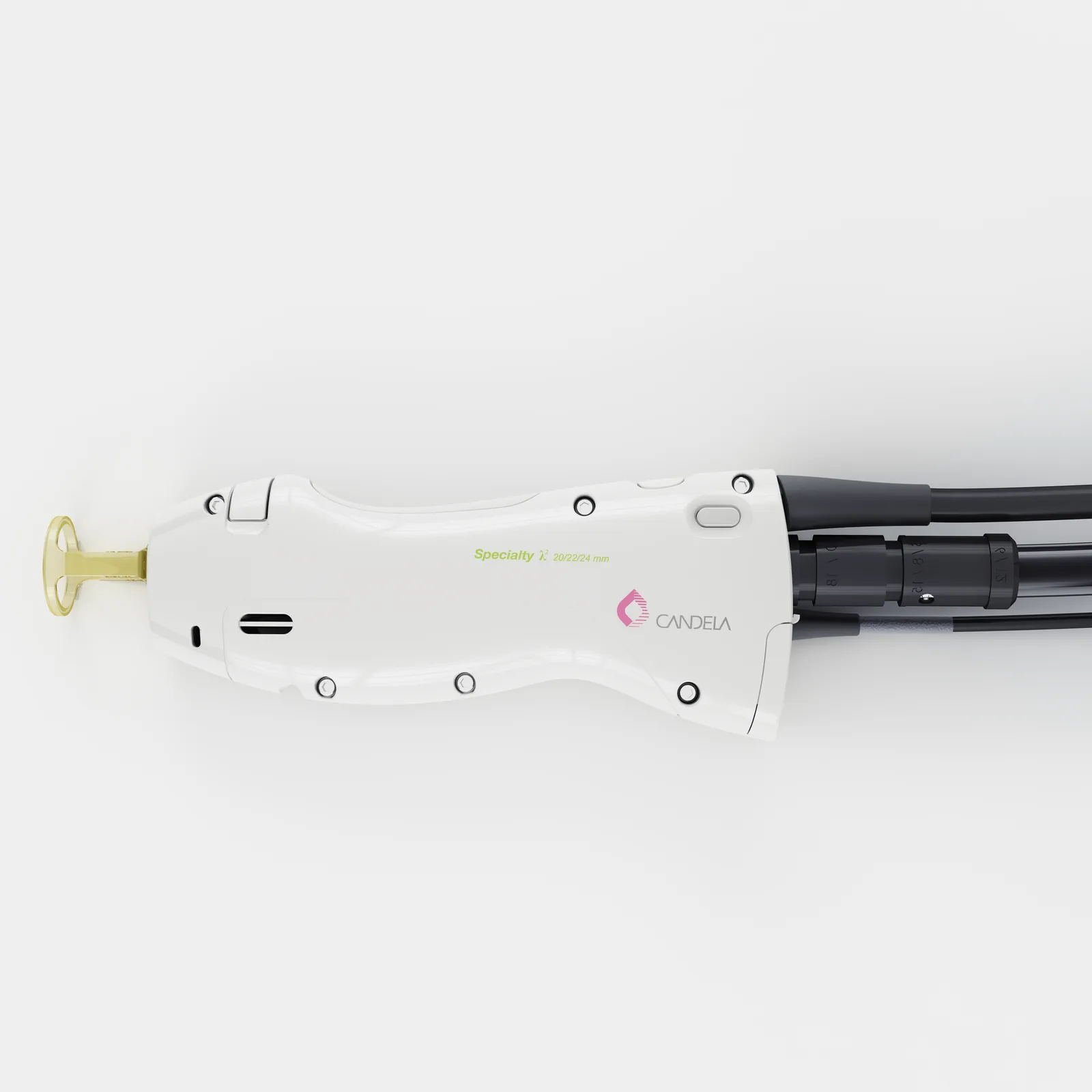
The first entry below is a systematic review whose title carries the endpoint verbatim, which is the simplest available answer to the question this page is named after. The remaining four are the controlled studies behind the two wavelengths on the console here: an intra-individual axillary comparison, a randomised trial against intense pulsed light in dark skin, a long-pulsed 1064 nm series across all skin types, and a 30 mm spot handpiece safety and efficacy report.
Every entry resolves to an indexed journal through its DOI. They are the reason this page says reduction and declines to say anything stronger; what your own field holds is measured against your baseline scan at review.
References are provided for information — outcomes vary by individual and are assessed at your diagnosis.