

★★★★★
The clinic was very professional from start to finish. Doctor Jung was excellent and gentle with the treatment. I felt well looked after and everyone was outstanding. Happy with my service!
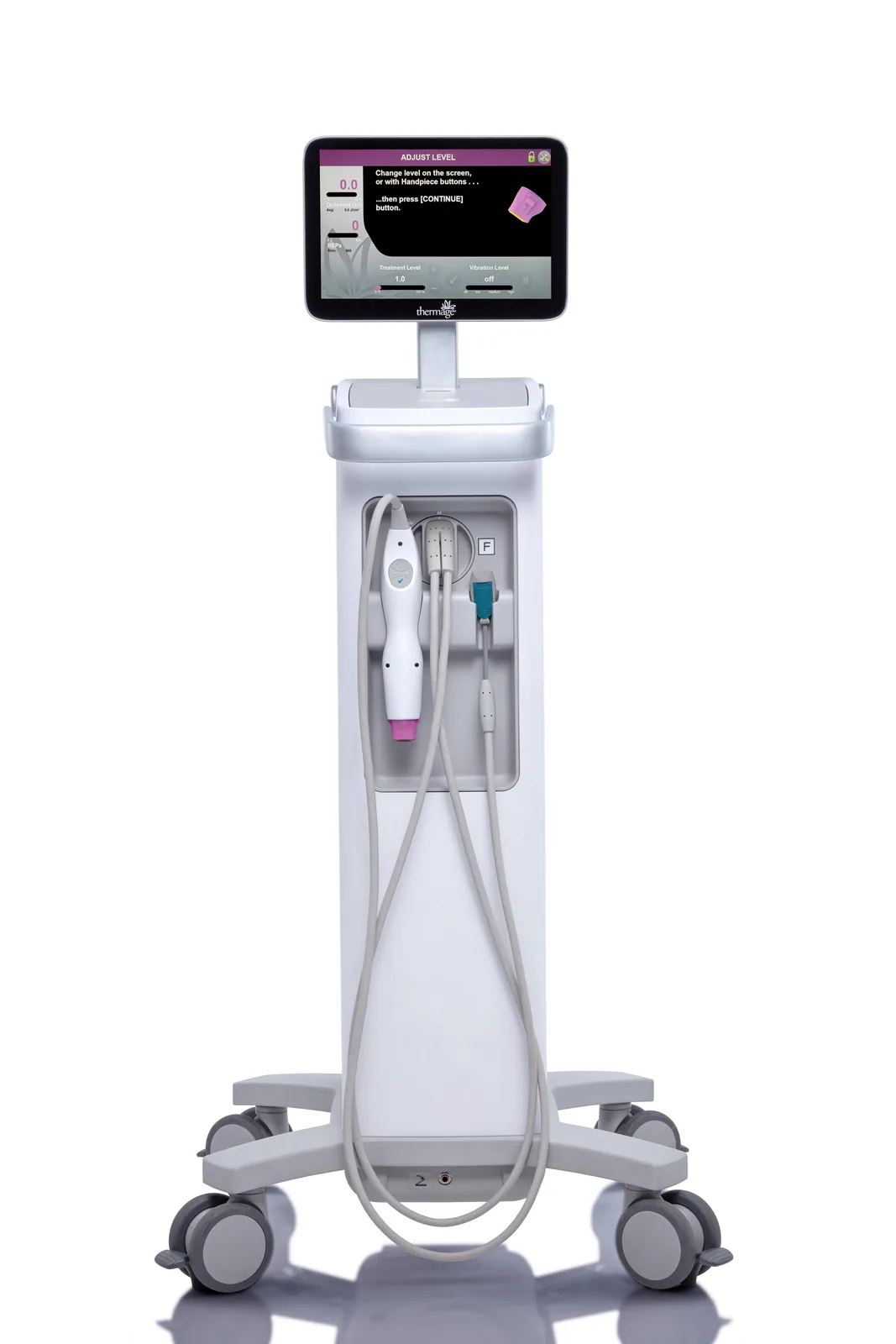
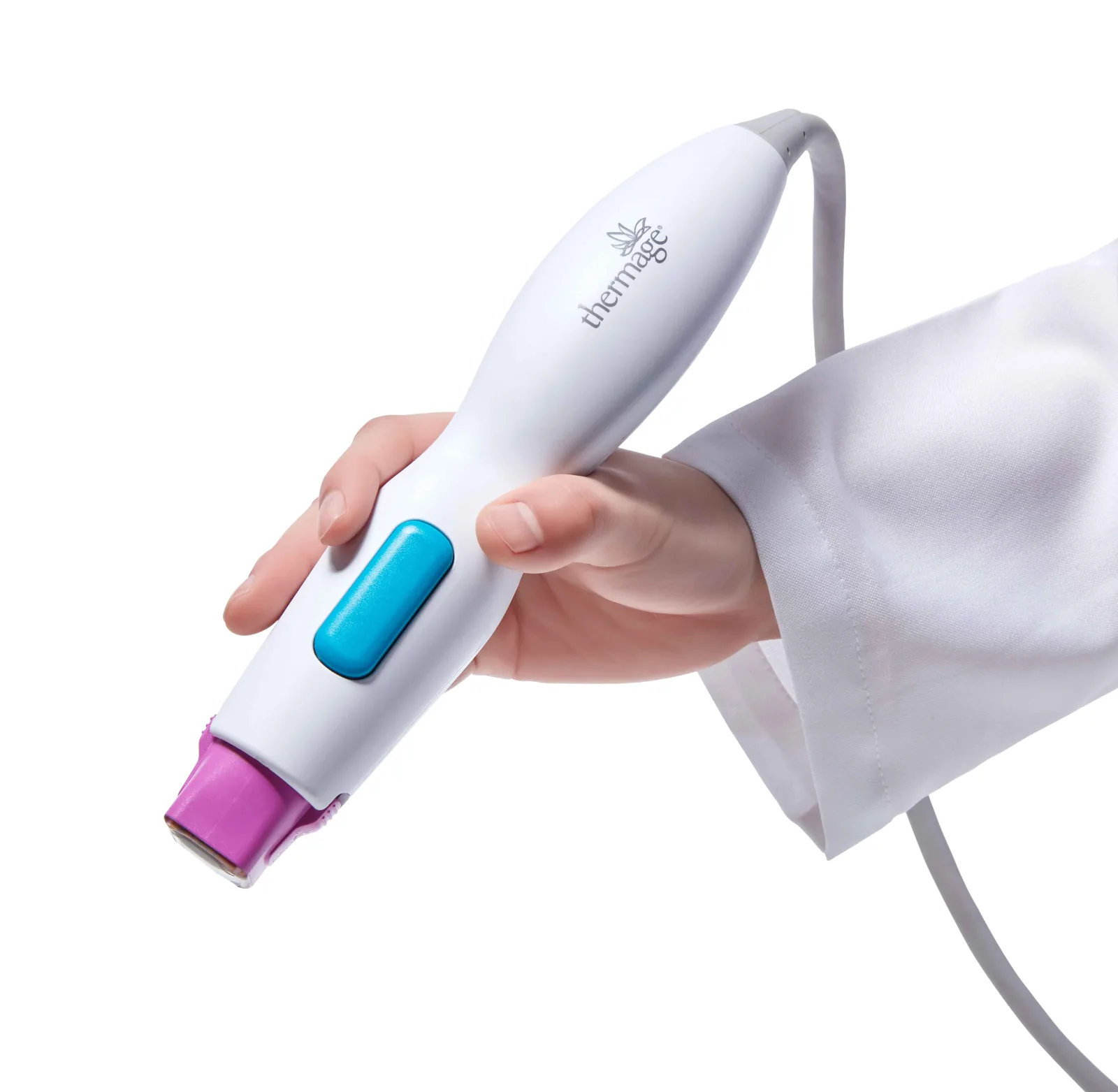
Thermage FLX runs a dedicated eye tip, sealed and counted in 450 shots, for crepey lid and under-eye skin. It is published as its own line because the tip is its own object.
Under-eye skin is the thinnest on the face, and that single fact shapes everything about this protocol. A tip built for the cheek is the wrong instrument here, and the settings that suit a thick jaw are the wrong settings. The reason the eye line exists separately on the price sheet is that it is a separate consumable with a separate shot count, opened for this region alone.
Where radiofrequency is aimed matters as much as what it does. It works in the dermis, so it addresses the skin envelope: laxity, crepiness, fine surface texture. What it does not do is remove a fat pad or fill a hollow, and most of what people call an eye bag or a dark circle is one of those two things. Separating the laxity from the volume is the whole job of the consultation.
Most disappointment with under-eye treatment comes from treating the wrong one of these. They look similar in a bathroom mirror and behave completely differently under a capture.
Fine surface wrinkling that gathers when you smile and stays visible at rest. This is the finding the eye tip is built for.
A true bag with a defined bulge. Heat in the dermis does not move fat, and no number of shots will change that.
Lost volume reading as a shadow. It is a filling question, and tightening the skin over a hollow can make the groove read deeper.
Brown discolouration in the skin itself, with no shadow involved. It answers to pigment-directed routes on another part of the menu.
In practice these arrive mixed. A lower lid can have genuinely lax skin sitting over a mild fat bulge with a shallow trough beneath it, and the reading has to say which of the three is producing most of what bothers you. Where laxity is the minor component, we do not open an eye tip for it. That conversation happens before anything is sealed or unsealed, because a tip cannot be half-used.
A Thermage tip arrives sealed with a fixed number of shots inside it, and the eye tip holds 450 of them. That number is the budget for the whole periorbital region on both sides: upper lid skin, the area beneath the lower lashes, and the outer corner where crepiness usually shows first. Nothing can be carried over to another day and nothing can be added mid-session, so the distribution is planned and agreed before the seal is broken.
Energy is not uniform across that map. AccuREP™ reads the skin and tunes delivery to it, and the director sets the level differently over thin lid skin than over the firmer tissue at the orbital rim. Passes are delivered with the skin cooled at the surface while the heat is deposited underneath — the mechanism that lets a dermal treatment run on skin this thin at all.
Treatment is director-performed here. The judgement calls in this protocol are about where to spend shots and where to hold back, and they are made by the person holding the handpiece instead of being passed down a protocol sheet. Anything to do with comfort during the session is discussed and confirmed at consultation.
There are three readings that get a straight no. A prominent fat bulge with taut skin over it is a surgical or volume question and dermal heating will not touch it — we do not recommend the eye tip for it. A deep tear trough with good skin quality is a filling discussion, and tightening the envelope over a hollow can emphasise the groove. And under-eye darkness that turns out to be pigment sits on a different page of the menu altogether.
The fourth situation is subtler: skin so thin and so depleted that it has little collagen left to contract. Radiofrequency works by acting on collagen that exists, so where there is very little of it the honest expectation is a small change, and it is worth knowing that before paying for a sealed tip.
Risks get named here in plain words. Redness and a warm, tender feeling after the session are ordinary and usually brief. Swelling around the lids can appear the next morning and settle over a few days. Bruising is possible. Burns and blistering are uncommon but real with any device that puts heat into skin, which is why energy levels are set by a director and tuned to the reading instead of being run at a fixed maximum. Small irregularities or dents in the treated contour have been reported after radiofrequency treatment and are rare. Individual results vary, and the collagen response builds over months, so nothing here is a promise about your own lids.
| Published tip | What the tip is for | Rate |
|---|---|---|
| Eye Thermage · 450 shots | The dedicated periorbital tip: upper lid skin, under-lash area and outer corner | ₩2,200,000 (≈ $1,570) |
| Thermage FLX face · 600 shots | The standard face tip, planned across cheeks, jaw edge and neck line | ₩1,900,000 (≈ $1,355) |
| Both in one visit | Two tips, each opened for its own region; the two lines are simply added | both rates, added |
| How your shots are distributed | Drawn from the capture and agreed in writing before the seal is broken | confirmed at consultation |
Published rates as of September 2026, shown in Korean won with a dollar figure for orientation; settlement is in won. The same sheet is quoted to residents and to visiting patients, with nothing added for a foreign passport. Anything outside the treatment line itself is confirmed at consultation. Every figure here also appears on the clinic price list.
If the capture says the upper face is descending as a whole and the lid skin is only following it, focused ultrasound at set depths is the more logical purchase; Ultherapy Prime is published here for that. Movement lines at the outer corner answer to wrinkle botulinum toxin. Skin quality in that thin tissue can be worked on with polynucleotide injections. And where a hollow is casting the shadow, the answer lives in the filler menu instead.
All of these are published side by side on the lifting and tightening hub, which is the point of listing them. A clinic that sells one device has one answer for every lower lid. A clinic with seven has to justify which one it writes down, and the justification is the capture.
Ultherapy Prime, Density, XERF, Onda, New Titanium and Shurink Universe sit on the same published sheet as Thermage FLX. When the reading says the problem under an eye is volume or pigment, the plan that gets written is not a Thermage plan, and the consultation ends with a smaller number than the one you came in expecting. Having every alternative on the price list is what makes that possible.
EVE Muse 3D capture with five light sources and AI analysis records surface texture and the way light falls under the lid, which is how laxity is told apart from a hollow.
Because a Thermage tip cannot be part-used, what gets signed off is what gets delivered. Treatment is director-performed, energy is tuned zone by zone, and there is no upgrade conversation at the desk afterwards.
Most people leave and carry on with the day. The lids can look pink and feel warm for some hours, and a puffiness that is most obvious on waking the next morning is common; this skin holds fluid more readily than the cheek does. Makeup over the area is usually fine once the redness has gone, and there is no dressing to manage.
For a few days, heat is the thing to keep away from: saunas, very hot baths and hard exercise all make swelling more obvious, and alcohol does the same. Sun protection matters across the whole upper face. The visible part of the result is slow — immediate contraction is only the first half of the mechanism, and the collagen response that follows builds across months, which is why the assessment appointment sits well after the session. Exact aftercare for your own plan is confirmed at consultation.
Results vary between individuals; nothing on this page predicts what your own lids will do.
Director-performed treatment is a Dear promise — your procedure is planned and performed by the doctors below.





Real verified reviews from our Google Business Profile.
4.9★★★★★ 310 Google ReviewsThe clinic was very professional from start to finish. Doctor Jung was excellent and gentle with the treatment. I felt well looked after and everyone was outstanding. Happy with my service!
I've visited clinic for LDM procedure. I don't speak Korean, so there was an interpreter who assisted me while consulting. The staff was very attentive, they asked me every time before applying products/covering my face during the procedure and it went smoothly. Planning to visit the clini…
All the staff are kind, the doctor is professional. They recommended us the treatment that fit us best and last the longest. A very nice experience overall.
I did a hydrofacial, white/black head removal, and 1 day lasers. Really kind staff and reasonable prices. The only thing I would advise is that your first consultation is with a salesperson and you don’t see the doctor until after you decide what you want and after you pay.
Had a great experience here as a foreigner! The doctors and staff were knowledgeable, friendly, and not pushy. They made recommendations in my consultation and were happy to work within my budget.
Describe what you see under your eyes and when you are in Seoul; we reply in English as soon as possible.
Periorbital tissue has its own literature within radiofrequency research, which is useful for a region where general face data does not transfer cleanly. The four references below cover a multicentre study of non-invasive radiofrequency for periorbital tightening, a study of fractionated microneedle radiofrequency for periorbital wrinkles, a review of radiofrequency for skin laxity, and a histometric comparison of radiofrequency with focused ultrasound.
Different devices and protocols appear across these papers, so they describe the modality and not this clinic's tip. They are listed so the mechanism can be read at the source; what your own lids will do is assessed at your consultation.