Home
Doctors Pricing Cost FAQ Book a Consultation
ENES
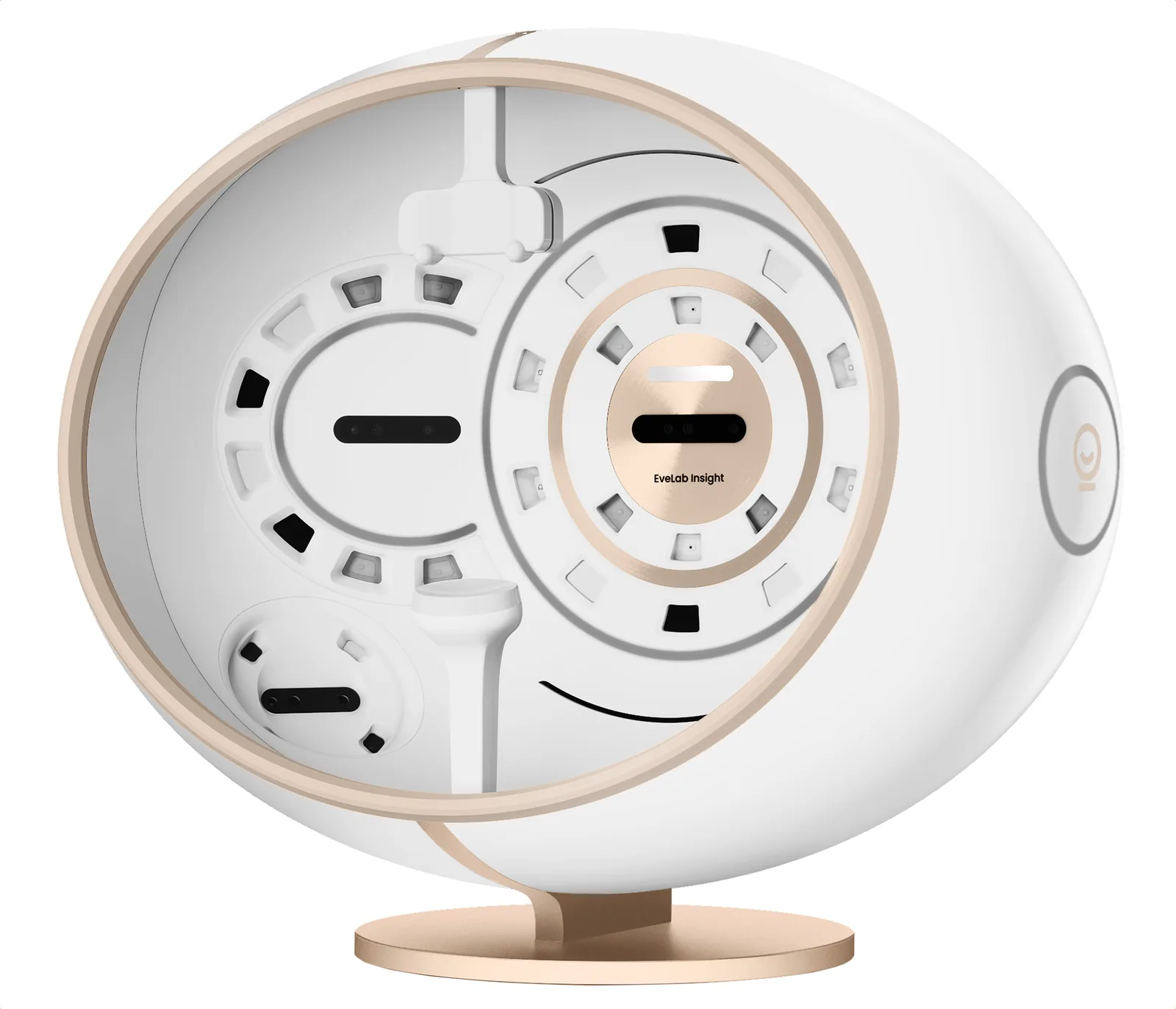
EVE Muse skin analysis device open at Dear Clinic, used to measure the layer before a lifting platform is chosen
Dear Clinic · Guides · Lifting Guide
First-Timer's Guide — Read Before You Book

Lifting Guide for Cheongdam, Gangnam, Seoul

Seven energy lifting platforms and a thread tray sit on our two floors. This guide explains what the units on the price list mean, what the first appointment decides, and what each family costs you in recovery time — before you choose anything.

Written for a first lifting visit From ₩400,000 (≈ $285) / 100 shots Open 365 days
Book a Consultation Read the Units First
Start Here

What a first lifting consultation at Dear settles

A first lifting appointment in Cheongdam settles four things in a fixed order: which layer of your face has actually moved, which of our platforms reaches that layer, how many shots or kilojoules that layer needs, and what the total comes to before anything is switched on. The device name is the fourth answer, never the first.

Most people arrive with a device name already in mind, collected from a friend, a video or a price comparison. That is a fine place to start and a poor place to finish, because one English word covers four different jobs. Ultrasound reaches a fibrous layer deep under the fat. Radiofrequency warms the dermis across a wide field. Microwave energy is taken up by tissue that holds water. Threads move tissue mechanically on the day.

This page is the orientation. The lifting category page lists every platform we carry with its depth and its base rate, and each device has its own page underneath it. What you get here instead is the reading order: units, then the shortlist, then the visit, then recovery.

A client leans into the EVE 3D skin analysis unit while the scan is reviewed on a tablet
The scan comes before the shortlist. Thickness, elasticity and the direction of descent are recorded as figures at the first appointment.
Reading a Quote

Shots, tips and kilojoules — the three units a lifting quote is written in

No two rows on a lifting price list are comparable until you know the unit each is sold in. Three units cover our whole floor.

UNIT 01

The shot, for ultrasound and for threads of energy

A shot is one pulse of energy placed at one depth, and focused ultrasound is planned in blocks of 100. A face that needs the jaw and the lower cheek covered takes several blocks, so one block is a starting unit and never a finished plan.

UNIT 02

The tip, for monopolar radiofrequency

Radiofrequency systems ship their shots inside a consumable tip, and a 600-shot tip is one sealed unit. Density sells three tip grades at 300 shots each, which is why one device appears on the list at three rates.

UNIT 03

The kilojoule, for microwave and multi-wavelength passes

Onda and New Titanium are dosed by the total energy delivered instead of by pulse count, so their rows read 60 kJ and 40 kJ. A kilojoule figure tells you the size of the session; it says nothing about the depth, which is a property of the platform.

Row on our listUnit it is sold inWhat a first-timer should knowListed rate
Ultherapy Prime, 100 shotsShot blockThe base block; your face may be planned across several₩400,000 (≈ $285)
Thermage FLX, 600 shotsConsumable tipOne sealed tip covers a full-face pass₩1,900,000 (≈ $1,355)
Eye Thermage, 450 shotsConsumable tipA separate eye tip, quoted apart from the face tip₩2,200,000 (≈ $1,570)
Density Classic tip, 300 shotsTip gradeThe entry grade of the three Density tiers₩700,000 (≈ $500)
Density High tip, 300 shotsTip gradeMiddle grade; same shot count, different tip₩900,000 (≈ $645)
Density Alpha tip, 300 shotsTip gradeTop grade at the 300-shot size₩1,300,000 (≈ $930)
Density Alpha tip, 600 shotsTip gradeThe double-size Alpha session₩2,000,000 (≈ $1,430)
XERF, 300 shotsShot blockListed on our lifting price list at two session sizes₩1,300,000 (≈ $930)
XERF, 600 shotsShot blockThe larger of the two listed sizes₩1,600,000 (≈ $1,145)
Onda, 60 kJKilojoulesEnergy budget for a facial Coolwaves session₩500,000 (≈ $355)
New Titanium, 40 kJKilojoulesA milder pass, often scheduled between deeper courses₩600,000 (≈ $430)

Listed rates as of September 2026 in KRW with an approximate USD conversion beside them; the KRW figure is the one you settle. Visitors from abroad are quoted these same figures with no surcharge. Thread lifting is priced per thread and is quoted on the thread lift page; the complete list lives on the published price list.

The Shelf

Seven lifting platforms and one thread tray, in plain order

Each entry below names its family and links to the full page for that platform.

01

Ultherapy Prime, the imaging-guided ultrasound

Focused ultrasound at 1.5, 3.0 and 4.5 mm, with DeepSEE™ imaging showing tissue to 8 mm before a shot is placed. Detail on the Ultherapy Prime page.

02

Thermage FLX, the monopolar tip session

Monopolar radiofrequency aimed at the dermis for firmness and texture, with AccuREP™ adjusting energy pulse by pulse. The eye tip is a separate row on the Thermage FLX page.

03

Density, the three-tier radiofrequency course

High-density monopolar radiofrequency from Jeisys Medical, built around Classic, High and Alpha tips. The tier decides the rate while the shot count stays at 300. Detail on the Density page.

04

XERF, listed at two session sizes

XERF appears on our lifting price list as a 300-shot and a 600-shot session and has its own page at XERF. Whether it suits your reading is answered at consultation.

05

Onda Coolwaves for facial contour

DEKA Coolwaves™ microwaves, which are neither radiofrequency nor laser, absorbed by water-rich tissue under the skin and dosed in kilojoules. See the Onda lifting page.

06

New Titanium Portra Quattro, the mild pass

A multi-wavelength lifting laser dosed in kilojoules, used between deeper courses for upkeep. See the New Titanium page.

07

Shurink Universe, the accessible HIFU tier

Classys HIFU planned in 300-shot sessions, positioned for a first experience of focused ultrasound. See the Shurink Universe page.

08

Threads, the only mechanical option here

Absorbable PDO and PCL threads, Silhouette Soft included, placed along a mapped vector and priced per thread. Everything else here works by heating tissue. See the thread lift page.

Two platforms are sometimes planned across separate visits when the scan shows two layers involved. Stacking them into one afternoon because a trip is short is how tissue gets overheated, so the interval is written into the plan.

Prescription Logic

How the EVE Muse reading narrows eight lifting options to two

EVE Muse captures the face in 3D under five light sources and runs an AI analysis over the result. For a lifting plan the useful outputs are skin thickness, elasticity and the direction in which tissue is travelling. Those three figures fix the layer, the layer fixes the family, and only then does a platform name and a shot count appear on your quote.
Deep structural slack, heavier lower face. The reading points at the fibrous layer under the fat, which is where focused ultrasound is aimed and where a thread vector does its mechanical work.
Thin, crepe-like surface with fine lines. That is dermal, and monopolar radiofrequency treats a wide dermal field in one broad pass instead of at pinpoint depths.
Soft, water-heavy contour along the jaw. Microwave energy is absorbed selectively by tissue that holds water, which is the reason Onda exists on a lifting list at all.
Mild laxity, first time, nervous. The accessible HIFU tier or a kilojoule-dosed mild pass gives you a real experience of the sensation without committing to the largest session on the list.
Two layers involved at once. Your director writes an order and an interval, and the second platform is scheduled against what the first produced.

There is a fifth outcome that sends people home. Where the scan reads volume loss instead of descent, an energy platform is not the right tool and you would be paying for heat that cannot replace what is missing; where skin is inflamed, sunburnt or healing, the session is postponed. Both of those are said at the consultation, before a slot is held.

The Visit

A first lifting visit at Dear, from arrival to the review date

Diagnosis and treatment usually sit in the same appointment once suitability is confirmed, so plan the day accordingly.

Before you come. Tell us about recent injectable work in the same area, any implant or metal near the field, pregnancy or breastfeeding, and medication affecting bleeding or healing. Arrive without heavy make-up; the scan reads a clean face better.
First part of the visit. The EVE Muse capture, then the reading with your director, then the shortlist with a number attached to each option. You approve a figure before anything is opened, and a sealed tip is opened only after that.
The session itself. Comfort measures as confirmed at consultation, then the pass. Energy platforms are felt as heat that rises and releases at each shot; thread work uses local anaesthesia and is felt as pressure and pulling.
The rest of the day. Most people go back to their plans with redness that fades over a few hours. Thread patients are the exception and should keep the evening quiet.
The review. Energy-driven collagen is assessed in months, so the review is set two to three months out; threads are checked at one to two weeks once tightness has eased. Maintenance is decided at that review.

If your trip is short, say the departure date at the first message. The sequence is planned backwards from the flight, and anything that carries visible swelling into your last two days is moved or dropped.

Recovery

What recovery actually looks like across the lifting families

The phrase "no downtime" is used loosely in this industry. Here is the version with names attached.

Focused ultrasound. Redness settling within hours and a tight, heavy feeling in the treated band for some days. Small bruises happen. Numbness or altered sensation is uncommon and usually temporary; tell us if it persists.
Monopolar radiofrequency. Warmth and mild redness on the day, occasionally a little swelling. The energy is heat, so a burn is the risk that has to be named, and contact, glide and cooling matter more than the console number.
Microwave and mild multi-wavelength passes. Generally the quietest sessions on the list, with warmth during the pass and colour settling the same day.
Threads. The real recovery of the group: swelling and bruising for several days, tightness when opening the mouth wide, sometimes dimpling along a thread path. Infection and asymmetry are rarer, and both are managed by the director who placed them.
Everyone. Alcohol and saunas wait a few days, scrubs and acids are paused, and persistent discomfort or colour change is reported before the review date.

How long a result holds is individual and we publish no month figure for it. The literature at the foot of this page describes measured outcomes in study populations.

Dear, Knowhow

What a first-timer gains from a floor that carries every lifting family

01 — THE FULL ARSENAL

Ultrasound, radiofrequency, microwave and threads, all in the building

Seven energy platforms and a thread tray sit on the same two floors, 5F and 7F, alongside the filler and booster ranges the scan sometimes points to instead. A clinic that owns one machine has to make your face fit it. The shortlist you are given here reflects a wider shelf.

02 — DIAGNOSIS FIRST

A measured layer before a device name

Thickness, elasticity and direction of descent are recorded as numbers on the EVE Muse capture.

03 — DIRECTOR-PERFORMED

The hand that read your scan holds the handpiece

Lifting outcomes turn on placement: where the shot lines run, how evenly a tip is glided, at what angle a thread is anchored. Your session is director-performed by the doctor who read your scan and wrote your plan, and that same doctor sees you at the review.
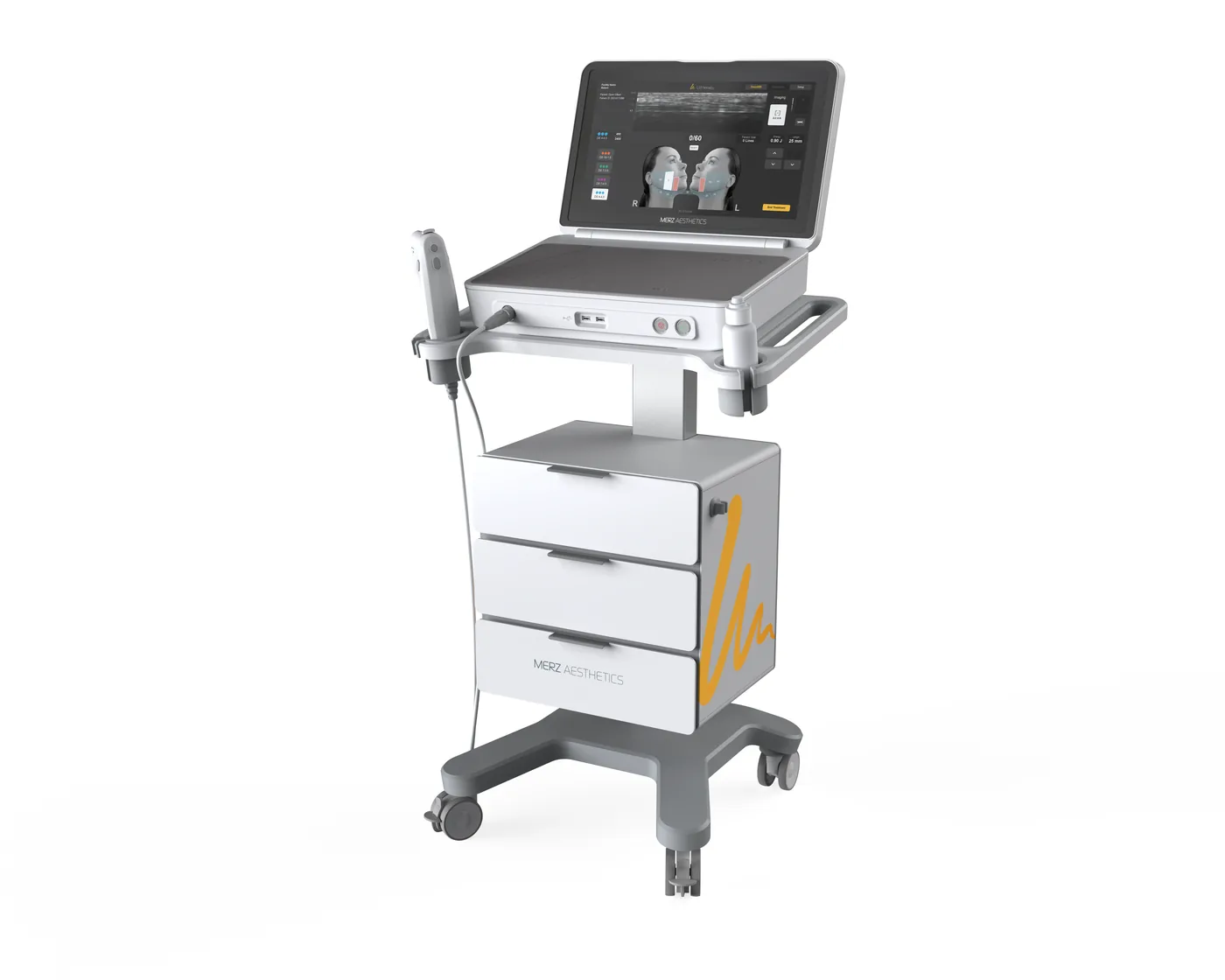
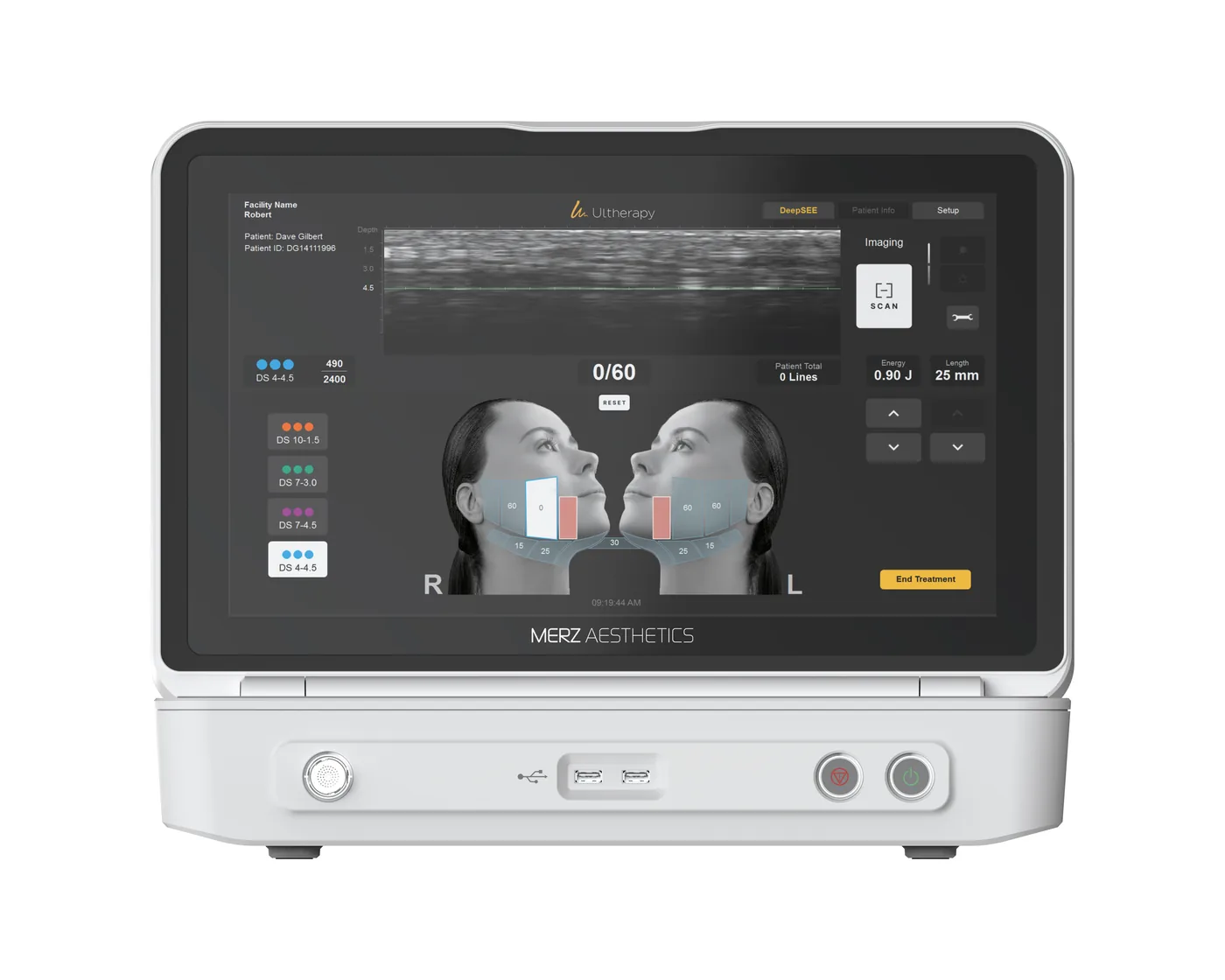
Ultherapy Prime system at Dear Clinic Cheongdam, seen from the front with its treatment screen
The ultrasound platform with its planning screen active — shot blocks are set before the transducer touches skin.
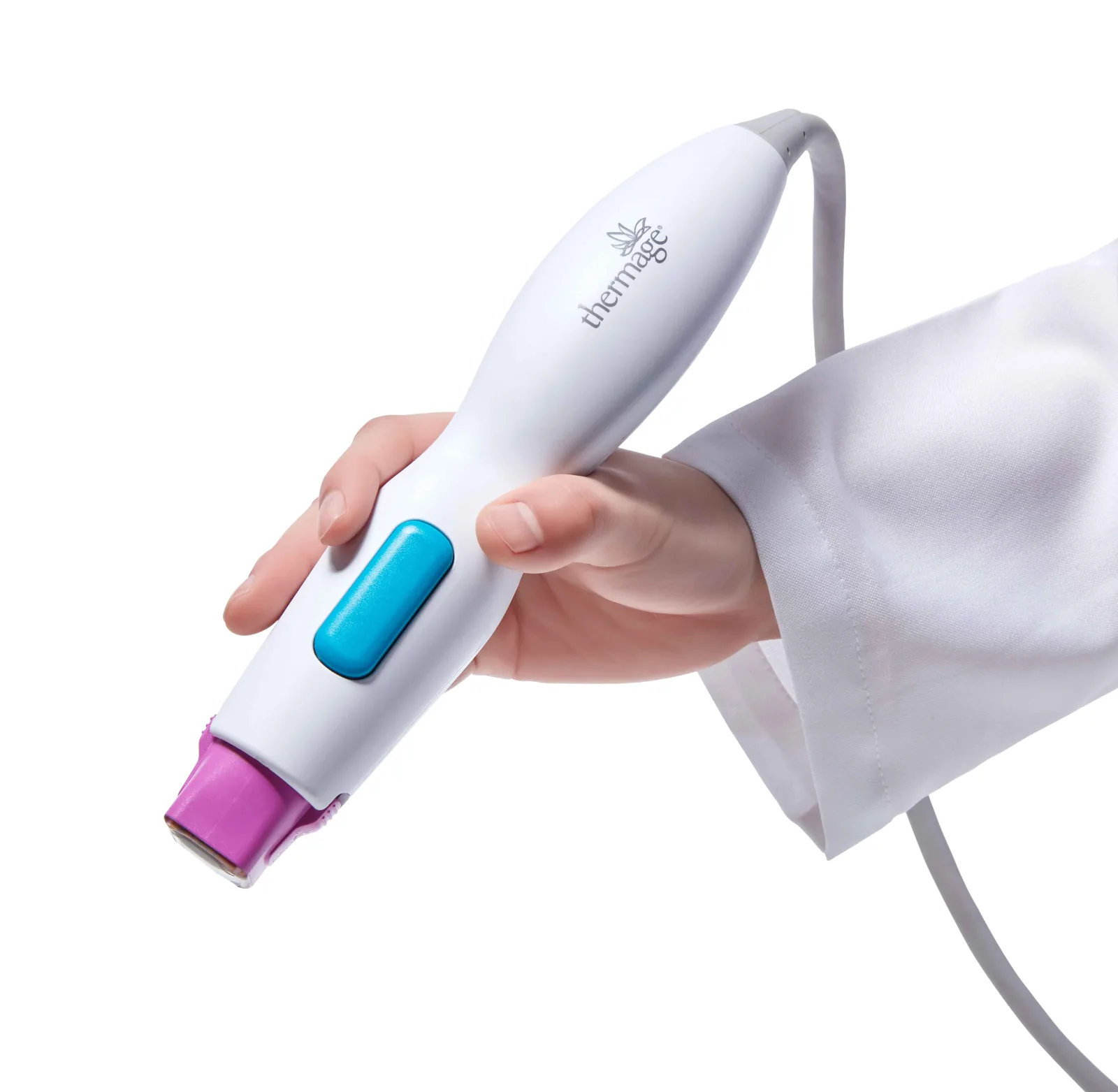
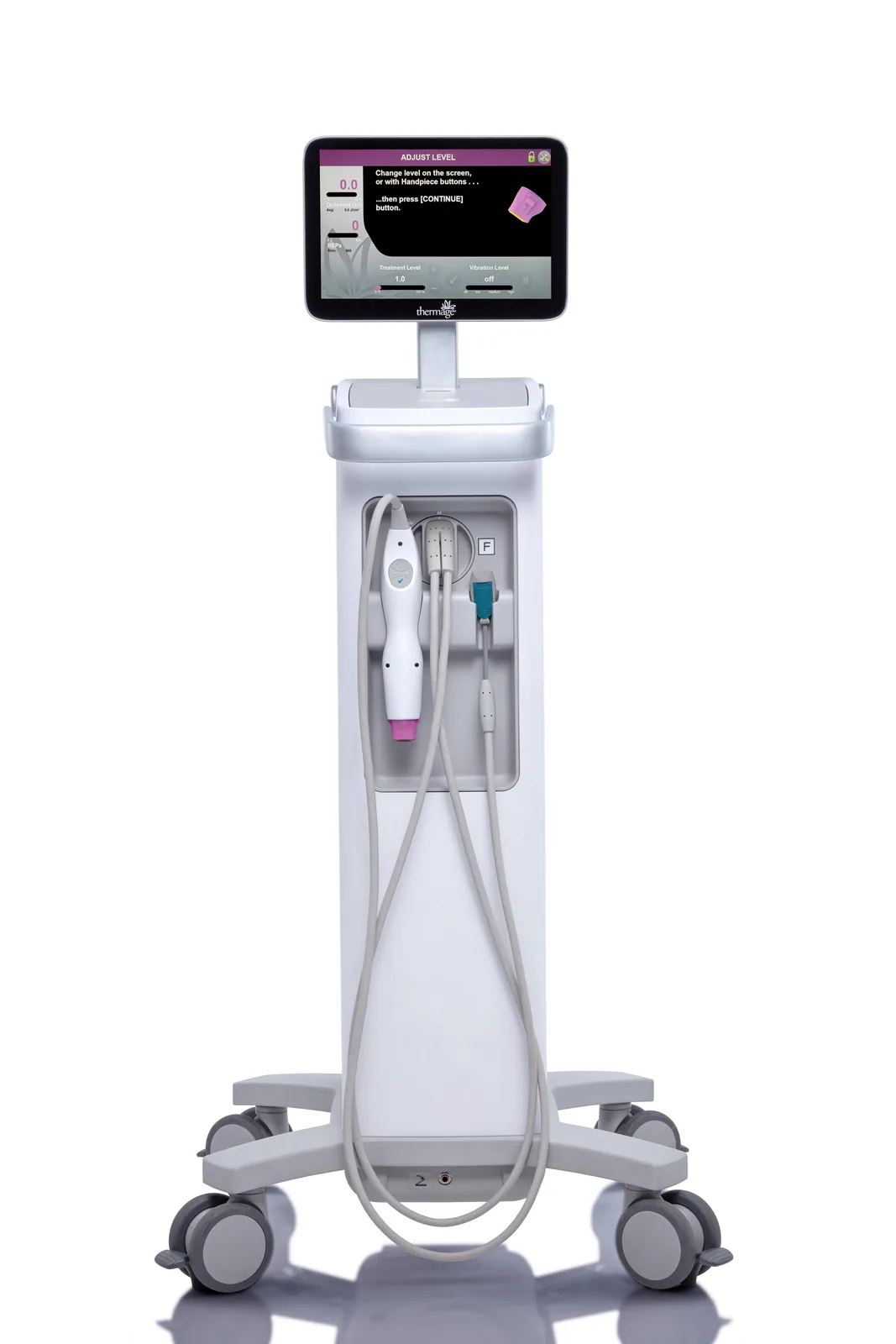
A hand in a white coat holding the Thermage handpiece with a pink treatment tip fitted at Dear Clinic
A radiofrequency tip fitted to the handpiece. The tip is the unit you are billed in, and it is opened after you approve the quote.
Cases

Two lifting families, photographed at Dear

Only cases with audited in-house photography appear here, and each frame is labelled with the single treatment it shows.
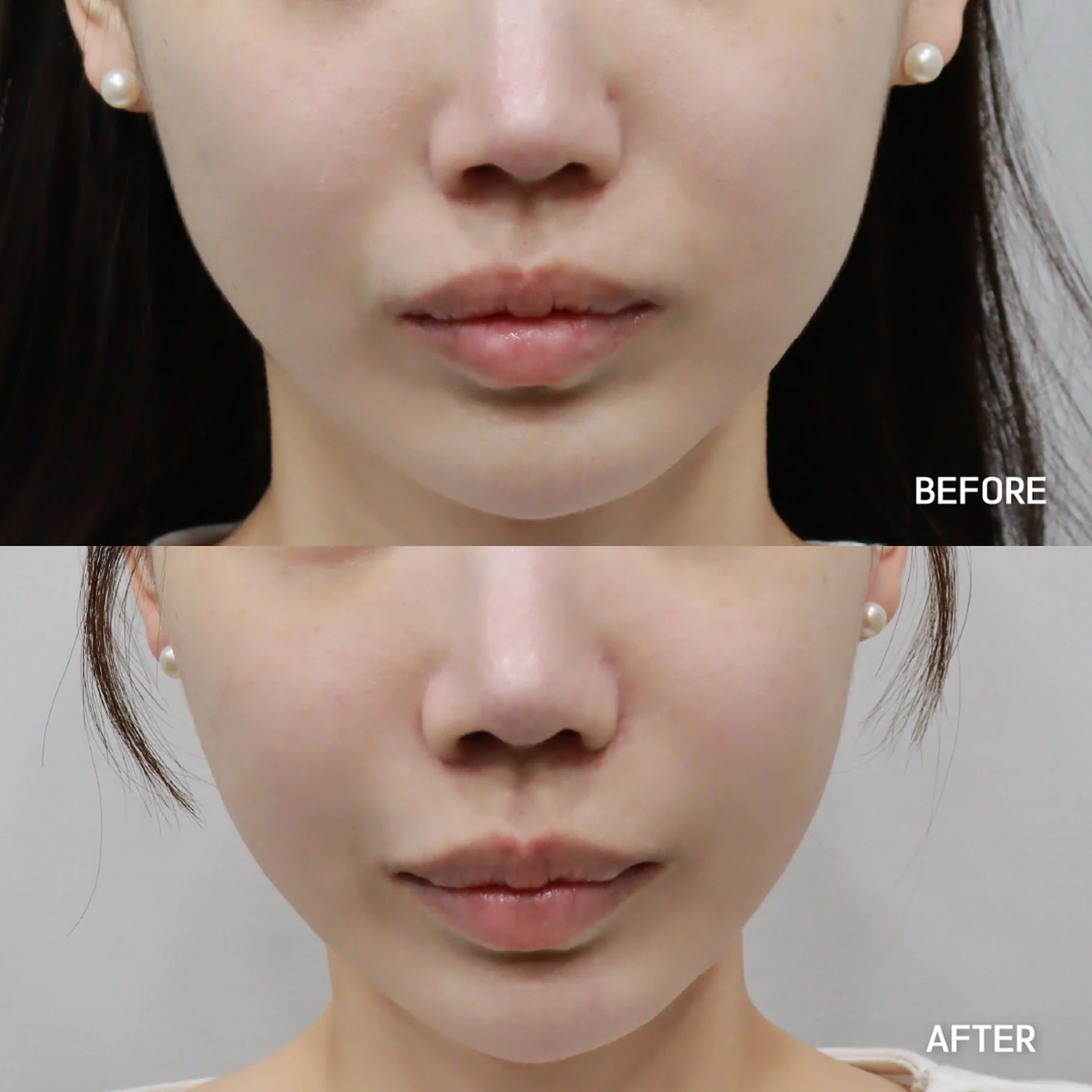
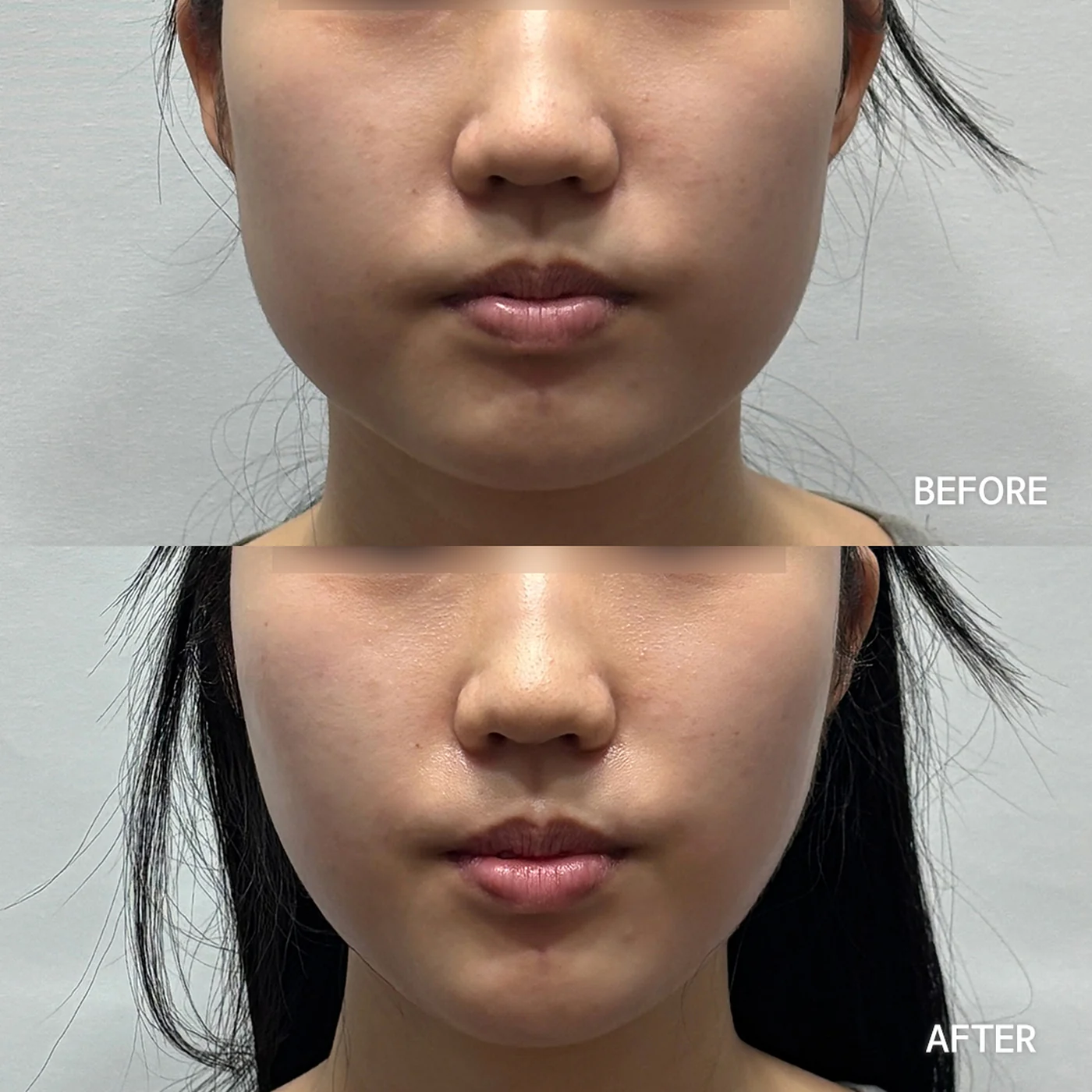
Thread lift before and after at Dear Clinic, showing a tighter lower-face outline
Thread lift · mechanical family — lower-face outline, same angle
Onda Coolwaves facial lifting before and after at Dear Clinic, showing a cleaner jaw contour
Onda lifting · microwave family — jaw contour, same lighting

Photographs show the same person under the same conditions, treated at Dear Clinic and unretouched. Each frame is labelled with only the treatment it received. Individual results may vary.

01
Layer measured first
02
Unit explained before quote
03
Shortlist of two, with reasons
04
Review date set on the day

Outcomes differ between individuals and are assessed at your in-person diagnosis.
In the clinic

The devices and hands behind this treatment

Ultherapy Prime console seen from the front, showing the ultrasound planning screen
The ultrasound cart with its transducer docked, between shot blocks
Thermage system viewed head-on with its handpiece and treatment tip in the cradle
A radiofrequency console head-on, handpiece and tip in the cradle
Budget

How much should a first lifting plan
cost in Cheongdam?

The entry point on our lifting list is the accessible HIFU tier, and the largest single rows are the 600-shot radiofrequency sessions. Between those two ends sit a facial microwave session at ₩500,000 (≈ $355) for 60 kJ, a mild multi-wavelength pass at ₩600,000 (≈ $430) for 40 kJ, and a focused-ultrasound block at ₩400,000 (≈ $285) per 100 shots. Your total is a function of how many units your layer needs, decided at the scan.

Three budget shapes cover most first visits. A cautious start is one accessible session with a review booked before anything larger is discussed. A committed single course is one substantial platform — the 600-shot tip at ₩1,900,000 (≈ $1,355), for instance — done properly in one sitting. A two-layer plan runs one platform now and a second at a written interval, quoted per item.

International visitors are charged the published rates with no visitor surcharge of any kind. Where the eye area is part of the plan it is quoted on its own tip at ₩2,200,000 (≈ $1,570) for 450 shots, because the eye tip is a separate consumable. Consultation and aftercare arrangements are explained at the appointment.

If the diagnosis lands outside this page — a filler for lost support, a booster course for surface quality, or simply a review in six months — that is what appears on your quote instead.

Caution

Aftercare rules that apply to every lifting session here

Redness is expected and brief. Our Korean aftercare records mild redness after an energy session as normal, fading over the hours that follow.
A tight, heavy feeling is normal for a while. Tension or soreness in the treated band is temporary. It is the commonest thing patients call about on day two.
Alcohol and saunas wait a few days. Both raise blood flow and heat in tissue that has just been heated deliberately.
Keep skincare gentle. Strong exfoliation, acids and aggressive facial treatments are paused until the skin has settled.
Persistent discomfort gets a phone call the same day. Lasting pain, spreading swelling, blistering or a colour change means you contact the clinic immediately instead of waiting for the scheduled review.

Tell your director about pacemakers or implanted electronic devices, metal in the treatment field, recent fillers or threads in the same area, pregnancy, breastfeeding and any history of keloid scarring. Several of those change which platform is appropriate, and one or two rule out the session entirely.

Medical Team

Five doctors, one standard

Director-performed treatment is a Dear promise — your procedure is planned and performed by the doctors below.

Dr. Jemin Kim — Medical Director and Founder, Dear Clinic
Dr. Jemin Kim
Yonsei University College of Medicine
Medical Director · Founder
Dr. Sanghyun Lee — Director, Dear Clinic
Dr. Sanghyun Lee
Seoul National University College of Medicine
Director
Board-certified · Family Medicine
Dr. Seonhaeng Lee — Director of Aesthetic Medicine, Dear Clinic
Dr. Seonhaeng Lee
Chosun University College of Medicine · Residency, Samsung Medical Center
Director, Aesthetic Medicine
Dr. Daeun Jung — Director, Dear Clinic
Dr. Daeun Jung
Ajou University College of Medicine
Director
Board-certified · Family Medicine
Dr. Woojae Jung — Director of Aesthetic Medicine, Dear Clinic
Dr. Woojae Jung
Seoul National University — B.S. in Medicine
Director, Aesthetic Medicine
Patient Reviews

What our patients say

Real verified reviews from our Google Business Profile.

4.9★★★★★ 310 Google Reviews
FAQ

First-timer lifting questions, answered

I have never had a lifting treatment. Where should I start?
Start with the scan and not with a device name. The EVE Muse capture tells your director which layer has moved, and that single fact removes most of the list. A first session is often one of the milder platforms with a review booked afterwards, so you learn how your own skin answers before a larger course is discussed.
What does 100 shots or 600 shots actually buy?
A shot is one pulse of energy at one depth, so a shot count is a measure of coverage. Focused ultrasound is planned in blocks of 100 and a full lower face commonly needs several blocks. Radiofrequency shots arrive inside a sealed tip, so a 600-shot tip is a single consumable that is spent in one session. Your director states the count at the quote.
What is a kilojoule doing on a lifting price list?
Onda and New Titanium are dosed by the total energy delivered instead of by pulse count, which is why their rows read 60 kJ and 40 kJ. It is a measure of session size. It tells you nothing about depth, because depth is set by the physics of the platform and by the handpiece, and those are fixed before the kilojoule figure is chosen.
Which lifting treatment has the least recovery time?
The microwave and mild multi-wavelength sessions are generally the quietest, with warmth during the pass and colour settling the same day. Focused ultrasound leaves a tight feeling that can last some days. Threads are the outlier and genuinely need a week of care. Nobody can promise you an uneventful recovery, and swelling or a bruise is possible after any of them.
Can I have two lifting platforms in the same visit?
Occasionally, and only where the scan shows two separate layers involved and the plan sets a written interval. Two heating platforms on the same tissue in one afternoon is how skin gets overtreated, so where the correct interval does not fit inside your trip, you are told which one to do now and which one to book for a later visit.
How long will a lifting result last?
We do not publish a month figure, because the range depends on your age, skin thickness, sun exposure and how quickly your collagen responds. The peer-reviewed papers listed below report measured outcomes in study populations, and none of them is a forecast for one face. Your director gives you a conservative expectation in person and a review date to test it against.
Does a lifting session hurt?
Energy platforms are felt as heat that builds and releases at each shot, deeper and more noticeable over bone. Comfort measures are confirmed at consultation. Thread placement uses local anaesthesia and is felt as pressure and pulling rather than as heat. Tell your director during the pass if the sensation is too strong; the settings are adjustable.
Is there an age when lifting treatment starts making sense?
There is no threshold year. What matters is whether the scan shows laxity in a layer that energy or a vector can address. People in their late twenties sometimes have a genuine reading at the jaw; people in their fifties sometimes have volume loss that a lifting platform will not fix. The measurement decides, and the measurement is free of any assumption about your birthday.
What is XERF, and is it part of the lifting line-up?
XERF is carried on our published lifting price list at two session sizes, 300 shots and 600 shots, and it has its own page on this site. Whether it belongs in your plan is a question for the consultation, once the scan has shown which layer needs work. Any device detail beyond what the price list states is confirmed with you in person.
Who should not have an energy lifting session?
Anyone with active inflammation, an infection or sunburn in the treatment field waits until it has resolved. Implanted electronic devices, metal in the field, pregnancy and breastfeeding all change or rule out the session, and a history of keloid scarring alters what is appropriate. Where the scan reads volume loss instead of descent, heat is the wrong instrument and you are quoted for something else.
Do foreign patients pay a different price for lifting in Seoul?
No. The figures on this page are the same figures a Korean patient is quoted, with no visitor surcharge attached. Consultations are held in English, the quote is written down before anything is opened, and the complete rate list is published rather than given out on request.
I land on a Sunday and fly out on Thursday. Can this work?
Usually, and the plan is built backwards from the flight. Our door opens every day of the year — weekdays 10:00 to 19:00, weekends and public holidays 10:00 to 16:00, with no lunch-hour close — so a Sunday scan is a normal appointment here, 365 days included. Send your dates with the consultation form and we reply in English as soon as possible.
Consultation

Ask which lifting layer is yours

Your questions, answered in English as soon as possible.

Scientific Evidence

Science behind ultrasound, radiofrequency and thread lifting — peer-reviewed references

This guide covers three mechanisms, so the reading list is grouped the same way: focused ultrasound, monopolar radiofrequency, and absorbable suspension threads. One entry is a direct split-face comparison of the first two, included because it is the question first-timers ask most often.

Each reference is given as title, journal and year with a verifiable DOI. None of them is evidence of a particular outcome for your face, which is assessed at your in-person diagnosis.
  1. Fabi S. Microfocused Ultrasound With Visualization for Skin Tightening and Lifting. Dermatologic Surgery. 2014. doi:10.1097/dss.0000000000000233
  2. Lu P, et al. Quantitative Analysis of Face and Neck Skin Tightening by Microfocused Ultrasound With Visualization in Asians. Dermatologic Surgery. 2017. doi:10.1097/dss.0000000000001181
  3. Khan U, et al. A Systematic Review of the Clinical Efficacy of Micro-Focused Ultrasound Treatment for Skin Rejuvenation and Tightening. Cureus. 2021. doi:10.7759/cureus.20163
  4. Alhaddad M, et al. A Randomized, Split-Face, Evaluator-Blind Clinical Trial Comparing Monopolar Radiofrequency Versus Microfocused Ultrasound With Visualization for Lifting and Tightening of the Face and Upper Neck. Dermatologic Surgery. 2019. doi:10.1097/dss.0000000000001653
  5. Araújo A, et al. Radiofrequency for the treatment of skin laxity: mith or truth. Anais Brasileiros de Dermatologia. 2015. doi:10.1590/abd1806-4841.20153605
  6. Ali Y. Two years’ outcome of thread lifting with absorbable barbed PDO threads: Innovative score for objective and subjective assessment. Journal of Cosmetic and Laser Therapy. 2017. doi:10.1080/14764172.2017.1368562

References are provided for information — outcomes vary by individual and are assessed at your diagnosis.

Book WhatsApp Call