

★★★★★
The clinic was very professional from start to finish. Doctor Jung was excellent and gentle with the treatment. I felt well looked after and everyone was outstanding. Happy with my service!
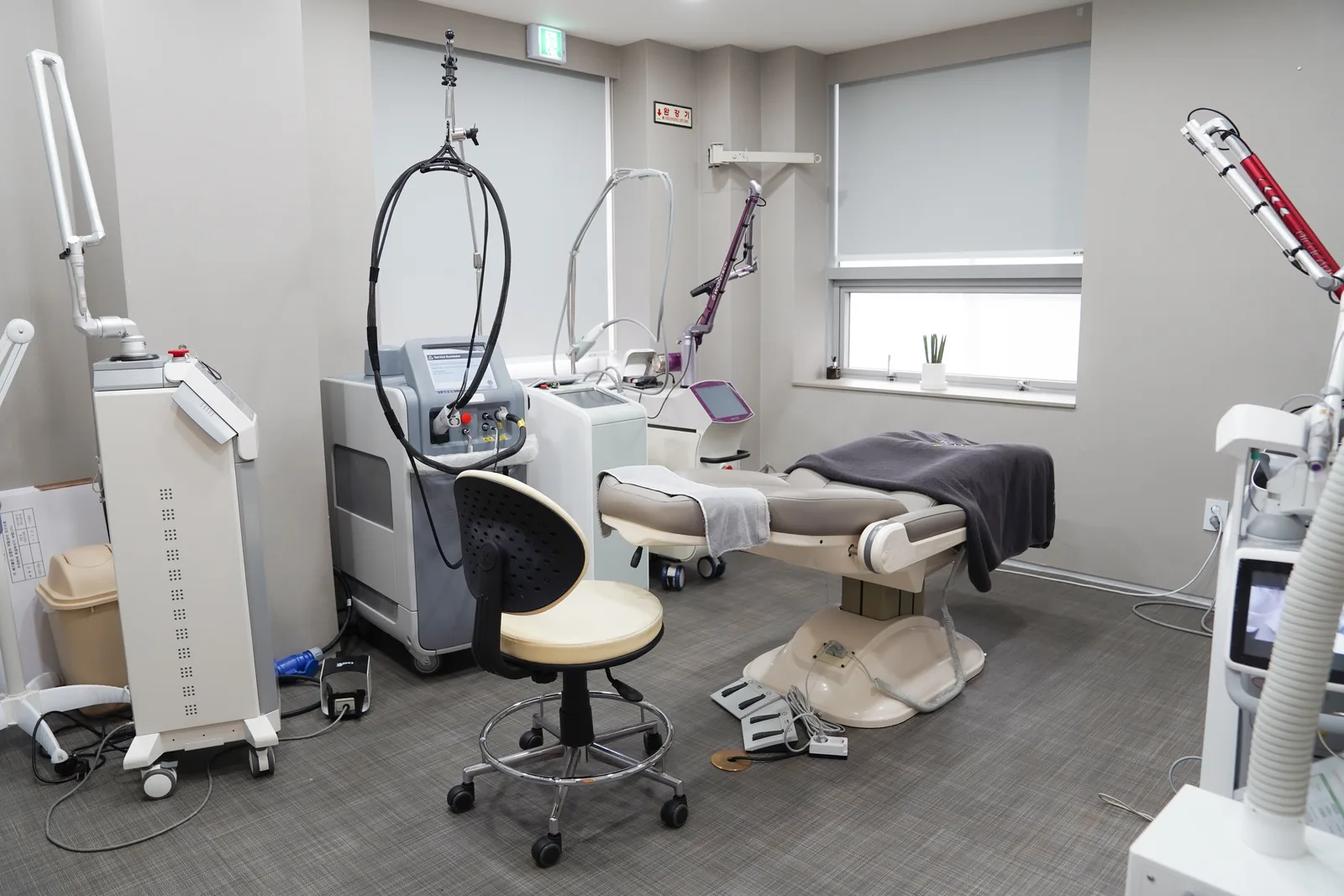
Four energy classes run on this floor — low-fluence toning, vascular laser, radiofrequency microneedling and per-lesion ablative work — and each one carries its own named risk. Set out below: those risks, the readings taken before a setting is chosen, and who gets turned away.
Anyone searching for reassurance about lasers in Seoul is usually holding one worry at a time: a friend who came home with pale patches, a colleague whose cheeks went purple for a fortnight, a photograph of a crusted chin. Each belongs to a different machine and a different decision.
So this page is organised by energy class. Each section names what that class is documented to do when it is misapplied, what is read beforehand, and where the line sits. The routes themselves are described on the laser, pigment and acne hub, and the wavelength-by-wavelength tour lives on the laser treatment guide.
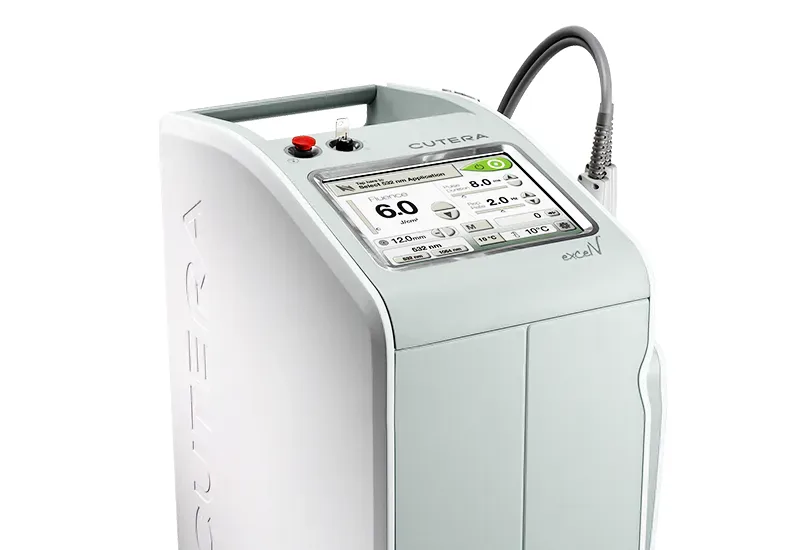
Low-fluence toning. Gentle passes at 1064 nm, delivered over a course. The pigmentary complication attached to this class in the literature is mottled hypopigmentation: patchy loss of colour, reported in melasma patients treated too frequently or for too long, and stubborn once it has arrived. Relapse of the original pigment is the other documented limit, and it is not a complication so much as a fact about pigment that had a cause. Richly pigmented skin can also answer heat with more pigment, which is post-inflammatory hyperpigmentation.
Vascular laser. Light tuned to haemoglobin, used on redness and visible vessels. Purpura — a deep bruise-coloured mark at the treated spot — is the characteristic short-term outcome, and comparative studies of 532 nm and pulsed dye devices are largely studies of how much of it each approach produces. Swelling for a day or two is ordinary. Crusting, blistering and a temporary lightening or darkening of the treated line are the less common ones, and recent sun exposure makes all of them likelier.
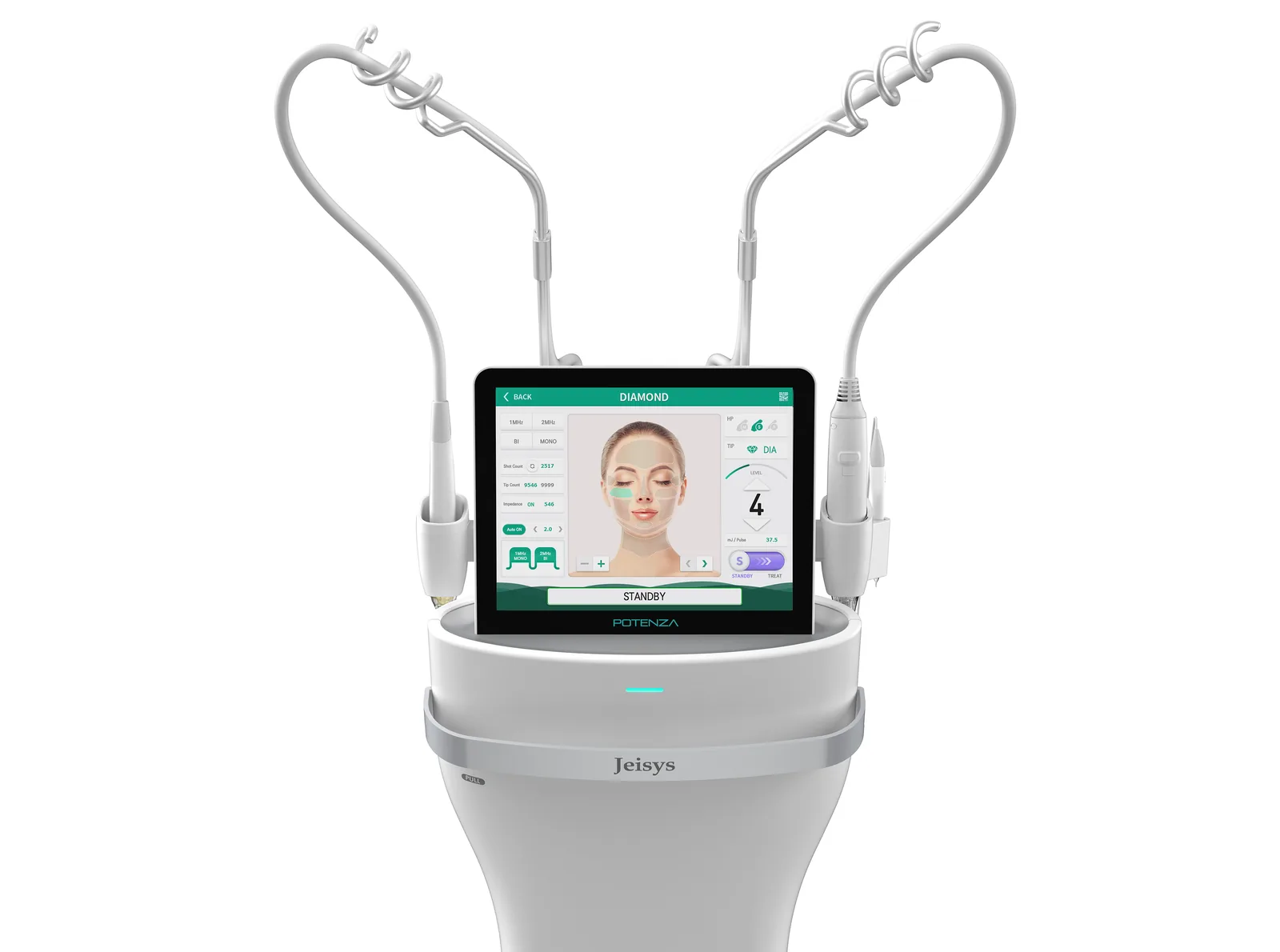
Radiofrequency microneedling. Needles carry heat below the surface. Here the failure mode is coupling: a needle that does not seat properly, a plate that is not flush against the skin, or energy delivered where the epidermis is not protected, and the result is a burn or a row of visible marks along the needle track. Pinpoint bleeding, grid-patterned redness and swelling for a day or two are the normal picture. On deeper skin tones the same heat can provoke pigment, so energy is dialled back.
Per-lesion ablative work. Removing a discrete mark with an ablative laser leaves a small open wound by design. That means the risks of a wound: infection if the crust is lifted or the site is kept wet, a depressed or raised mark if healing runs badly, and a pale or dark patch where the skin was. People who scar thickly are the group most carefully questioned before this route is agreed at all.
Individual responses differ, and nothing here forecasts what your own skin will do. It describes what has been published and what we watch for.
Two things happen on every laser appointment regardless of which console is wheeled in, and they are worth understanding because they are the parts patients can check for themselves.
Some of these end the conversation for now; some of them simply move it to a later date. All of them are better known before you book a flight.
One more category leads to a smaller plan instead of a refusal: dates too short for a paced course. A single appointment plus a written plan to take home is what we suggest for that trip.
Most of what follows a laser appointment is unremarkable and settles by itself. Warmth for a few hours, a flush that fades, mild swelling on a vascular day, pinpoint dots after needle work, a crust over an ablated mark. None of that needs a phone call.
Four things do. Pain that rises after the first day instead of falling. Redness that spreads outward, with heat, or with anything discharging from the site — the pattern that suggests infection. Blistering, or a crust that has come off early, because a wound left open behaves differently from one left alone. And any patch changing colour in a way you did not expect, lighter or darker, in the weeks that follow.
Timing is the whole point of telling us. Reported early, most of these change what happens next; waited out at home for a fortnight, several of them stop being fixable. Reception answers 365 days a year, holidays included, so there is no date on the calendar where a worry has to sit until Monday.
Between appointments the work is yours: daily sun protection, a simplified routine, no picking at a crust, nothing abrasive or acidic near a treated zone until you are told it is fine. Comfort measures during a session, and any product used afterwards, are confirmed with your director at consultation.
The largest single safety factor in laser work is whether a clinic owns more than one answer. Toning, vascular light, needle radiofrequency and ablative work all run on this floor, so a complaint belonging to haemoglobin is never treated as though it belonged to melanin.
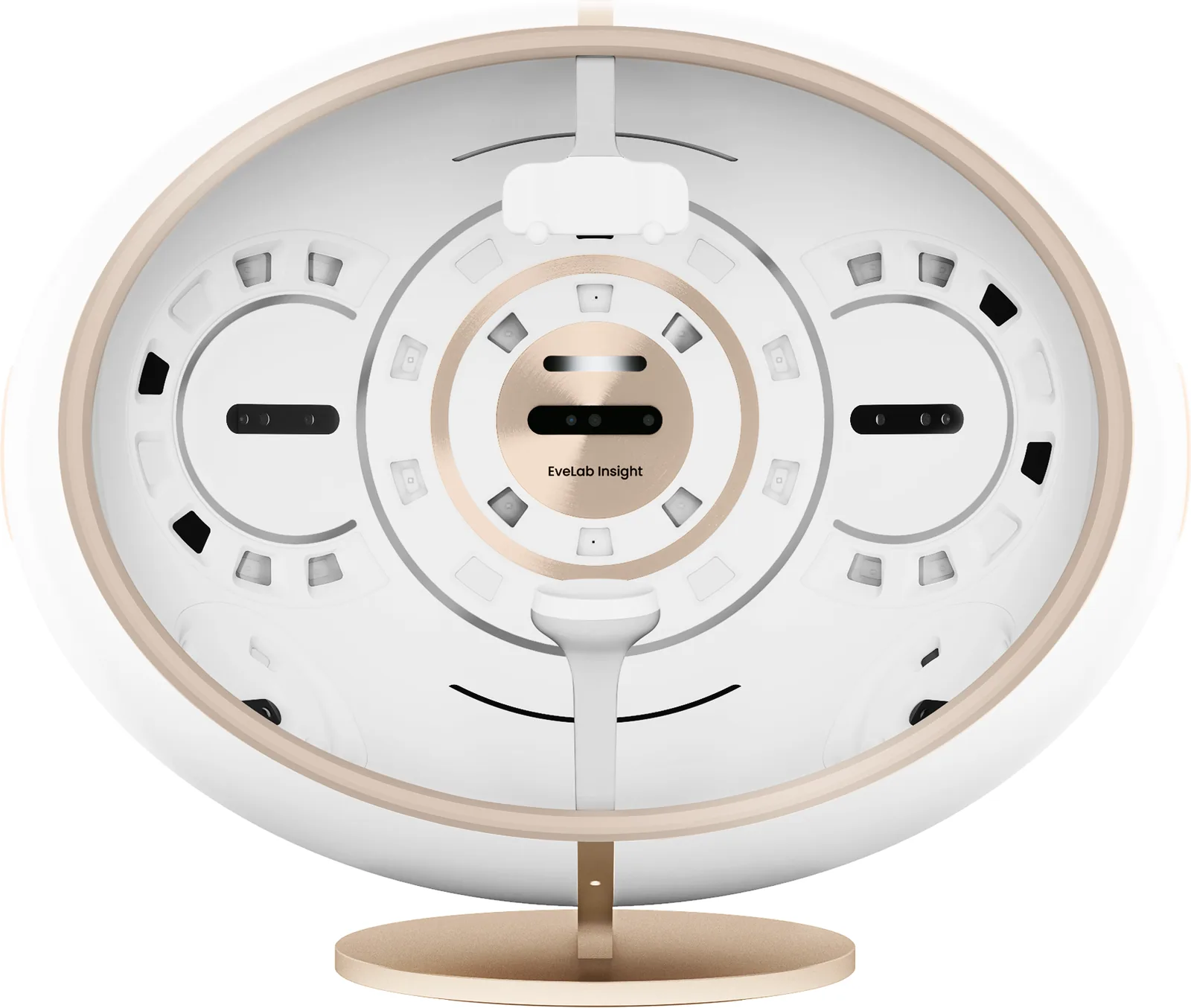
3D imaging with five light sources and AI analysis reads depth, vascularity and barrier condition, so the class is chosen from a finding.
Sessions are director-performed. Lower the power, skip a zone, end the appointment early: on this menu those calls have to belong to whoever is holding the handpiece.
Responses vary by individual, by skin type and by what is being treated.
Because the cautious way into any of these is a single appointment, the per-visit figures are the relevant ones on a safety page.
| Energy class | The risk that governs it | Listed rate |
|---|---|---|
| Low-fluence toning, one visit | Mottled hypopigmentation with over-frequent courses; relapse of pigment | ₩200,000 (≈ $145) |
| Vascular laser, one visit | Purpura at the treated spot; crusting where sun exposure is recent | ₩150,000 (≈ $105) |
| Radiofrequency microneedling, standard tip | Burns and needle-track marks from poor coupling; pigment response on deeper tones | ₩250,000 (≈ $180) |
| Ablative work, per lesion | Wound infection, textural change, pale or dark patch at the site | ₩10,000 (≈ $5) |
Every figure is published in Korean won and settled in won at the desk, and a passport from outside Korea adds no surcharge to any line. Anything beyond these four rows is quoted at the consultation before it is agreed, and the whole published menu sits on the full price list. Individual routes are described on the laser toning page, the Excel V page and the Potenza page.
Director-performed treatment is a Dear promise — your procedure is planned and performed by the doctors below.





Real verified reviews from our Google Business Profile.
4.9★★★★★ 310 Google ReviewsThe clinic was very professional from start to finish. Doctor Jung was excellent and gentle with the treatment. I felt well looked after and everyone was outstanding. Happy with my service!
I've visited clinic for LDM procedure. I don't speak Korean, so there was an interpreter who assisted me while consulting. The staff was very attentive, they asked me every time before applying products/covering my face during the procedure and it went smoothly. Planning to visit the clini…
All the staff are kind, the doctor is professional. They recommended us the treatment that fit us best and last the longest. A very nice experience overall.
I did a hydrofacial, white/black head removal, and 1 day lasers. Really kind staff and reasonable prices. The only thing I would advise is that your first consultation is with a salesperson and you don’t see the doctor until after you decide what you want and after you pay.
Had a great experience here as a foreigner! The doctors and staff were knowledgeable, friendly, and not pushy. They made recommendations in my consultation and were happy to work within my budget.
Tell us how your skin has answered heat and light before, and what happened afterwards; we reply in English as soon as possible.
Six references, two per energy class where the class has a literature of its own. Two examine low-fluence toning of melasma, including the melanocyte changes seen in mottled hypopigmentation. Two compare vascular platforms in facial redness and telangiectasia. Two cover fractional radiofrequency microneedling, one against an ablative comparator and one as a meta-analysis.
They are listed as published, including the findings that are unflattering to a route, because a safety page assembled only from favourable work would not be one. None of them describes your skin, and none replaces the reading done in the room.