Home
Doctors Pricing Rates FAQ Book a Consultation
ENES
Close portrait of skin quality across the cheek and lower face, the kind of frame a Juvelook comparison is judged in at Dear Clinic
Dear Clinic · Results · Juvelook
Reading a PDLLA hybrid pair · Cheongdam, Gangnam

Juvelook Before and After in Cheongdam, Gangnam, Seoul

One audited Dear case sits further down this page. Everything above and below it is about a problem specific to this material: Juvelook puts two substances into the same skin, they work on two different timetables, and a single photograph cannot tell you which one you are looking at.

PDLLA in an HA carrier Two published lines, per 1 cc Open 365 days
Ask What Your Own Field Would Need Go to the Case
The short answer

What a Juvelook before and after is a photograph of

A Juvelook frame records skin quality over the injected field: grain, the way light returns off the surface, and how deeply fine lines sit. Two materials produce that, on two clocks. The hyaluronic acid carrier acts immediately and fades. The PDLLA part works through a collagen response and arrives slowly.

Which means the date written beside each frame is doing more work here than in almost any other injectable comparison. A pair shot ten days apart is largely a portrait of the carrier and of the skin recovering from having been injected. A pair with a long gap between the frames is the only one in which the stimulated part of the material has had any opportunity to appear.

The material itself, where it is placed and how a dose is decided are set out on the Juvelook treatment page, and the wider injectable shelf sits on the skin booster category page. This page stays on one question: what a pair of Juvelook photographs is entitled to claim.
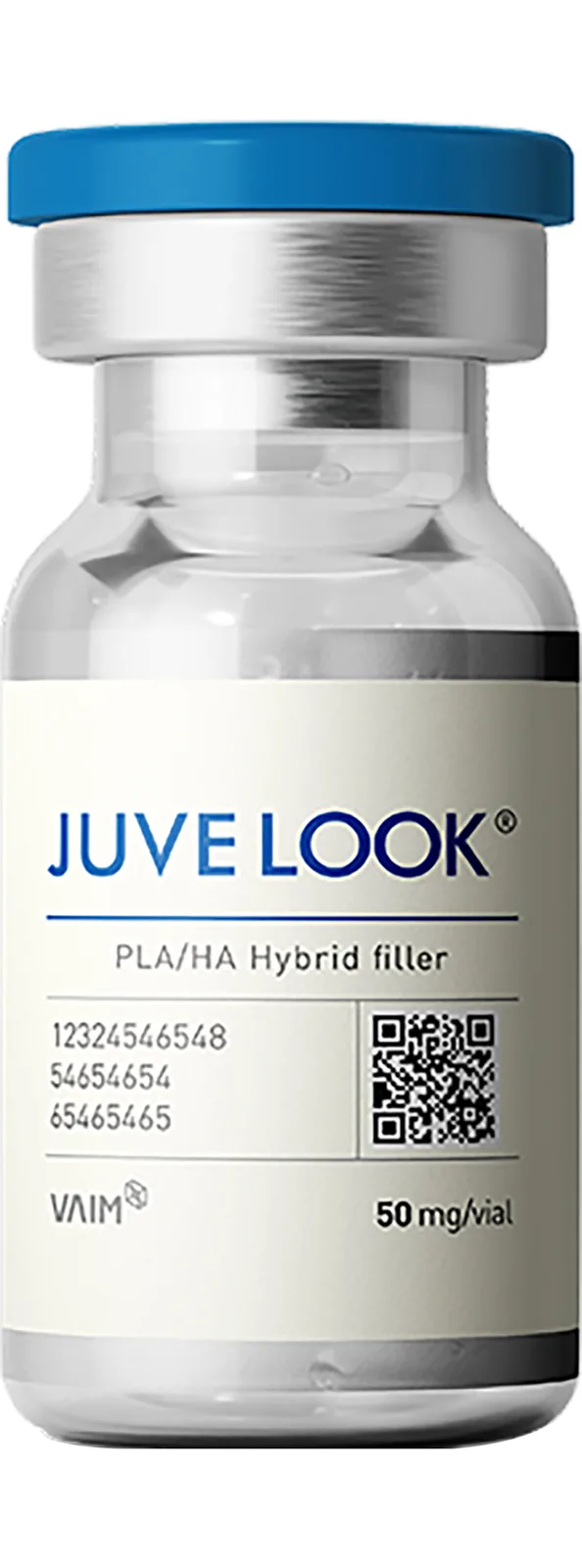
Juvelook vial with a blue cap, the PDLLA and hyaluronic acid hybrid injectable stocked at Dear Clinic in Cheongdam
One vial, two substances, two timetables — the reason a Juvelook pair needs its interval written down.
Two Clocks

The two timetables superimposed in every Juvelook frame

Separate them and the photographs become readable. Leave them mixed and any pair can be made to prove anything.

CLOCK 01

The hyaluronic acid carrier

Juvelook arrives suspended in an HA vehicle. Hyaluronic acid binds water, so the field looks fuller and smoother almost at once. That part of the picture is genuine, it is also temporary, and it is what most early Juvelook galleries are actually showing.

CLOCK 02

The PDLLA collagen response

Poly-D,L-lactic acid is a biostimulator. It does nothing on the day. The tissue responds to its presence over a long stretch, and whatever comes of that is what a late frame is for. An early photograph has not waited long enough to say anything about this half of the vial.

CLOCK 03

The injection itself

Pinpoint entry marks, small raised deposits that have not dispersed, bruising where a vessel was crossed and general puffiness across the field all read as change in a close frame. None of them are the material working. They are the needle, and they resolve on their own schedule.

Three processes, one field, one camera. A caption that names only the material has quietly assigned all three to the same cause. The indexed work on lactic-acid biostimulators listed at the foot of this page is largely about the second clock, and one of the entries exists specifically to compare the early volume behaviour of the L-form with that of the D,L-form.

What Moves Slowly

Four properties that a Juvelook field changes gradually, if at all

Surface grain across the treated patch. Fine irregularity over the cheek, the temple or the lower face is the property a hybrid biostimulator is aimed at most directly. It moves in small increments and it moves late, so the useful evidence is a macro frame taken months apart at the same distance.
How light comes back off the injected field. The immediate version of this belongs to the water-binding carrier. The durable version, if it appears at all, follows the collagen response. Both look identical in a single photograph, which is exactly why the interval has to be disclosed.
Fine lines where the skin is thin. Shallow lines at rest on a thin cheek, or the crepe texture at the outer eye area, sit close enough to the surface to be recorded by a camera. Deeper folds that move with expression are a different finding and do not belong in this comparison.
And the settling of the deposits themselves. A field injected as a spread of small aliquots takes time to even out. Photographs taken while that is still in progress show lumpiness that is neither the result nor a complication, and reading them as either is a mistake.

All four want the same treatment in front of a lens: bare skin in both frames, the same flat source of light, the same lens at the same distance, and no beauty processing on the phone. Change any one of those and the pair has stopped being about Juvelook.

What Does Not Move

Four claims a Juvelook pair is not entitled to make

Each of these belongs to a different tissue layer or a different treatment. Where a Juvelook caption claims one, the credit has been taken from something else in the file.

A redrawn facial contour. Outline is a function of volume and of support, both of which sit deeper than an injected skin field. Where a gallery shows a changed jaw line beside the word Juvelook, ask what else was placed and when.
A lift. Laxity is mechanical slack in deeper tissue and it answers to energy platforms and threads, which are listed on the lifting and tightening page. No injected skin field substitutes for that reading, and we say so at the consultation when the finding is laxity.
Brighter or more even tone. Pigment runs on its own schedule, shifts with sun exposure across the weeks between two frames, and moves with white balance in the camera. Nothing on this page is offered as a whitening treatment.
Smaller pores as a measured fact. A photograph records the shadow inside a pore, which changes with surface condition and with the angle of the light. It is a real observation about a treated field and it is not a diameter.
The Interval

Why the gap between two Juvelook frames decides what the pair means

Take the second photograph in the first days and you have documented the carrier plus the aftermath of the needle. Take it once the entry marks have gone and the deposits have evened out, and the carrier is already receding while the stimulated component has barely started. Take it much later and the carrier is no longer part of the picture at all, so whatever remains is the part of the result the tissue built for itself.

Three intervals, three different and equally true answers to the same question. That is the specific reason a Juvelook gallery carrying no dates cannot be interpreted at all, and the reason the review appointment at Dear is booked on the day of the injection.

No month figure is published here. How long any individual holds a result varies with age, skin thickness, sun history, the depth the material was placed at, how much was placed and what else is being done to the same field. Your director gives you a conservative date for the comparison frame at the appointment, and gives you the range they expect in your case with the capture on screen. A clinic that quotes a number to you over a message has not examined your skin.
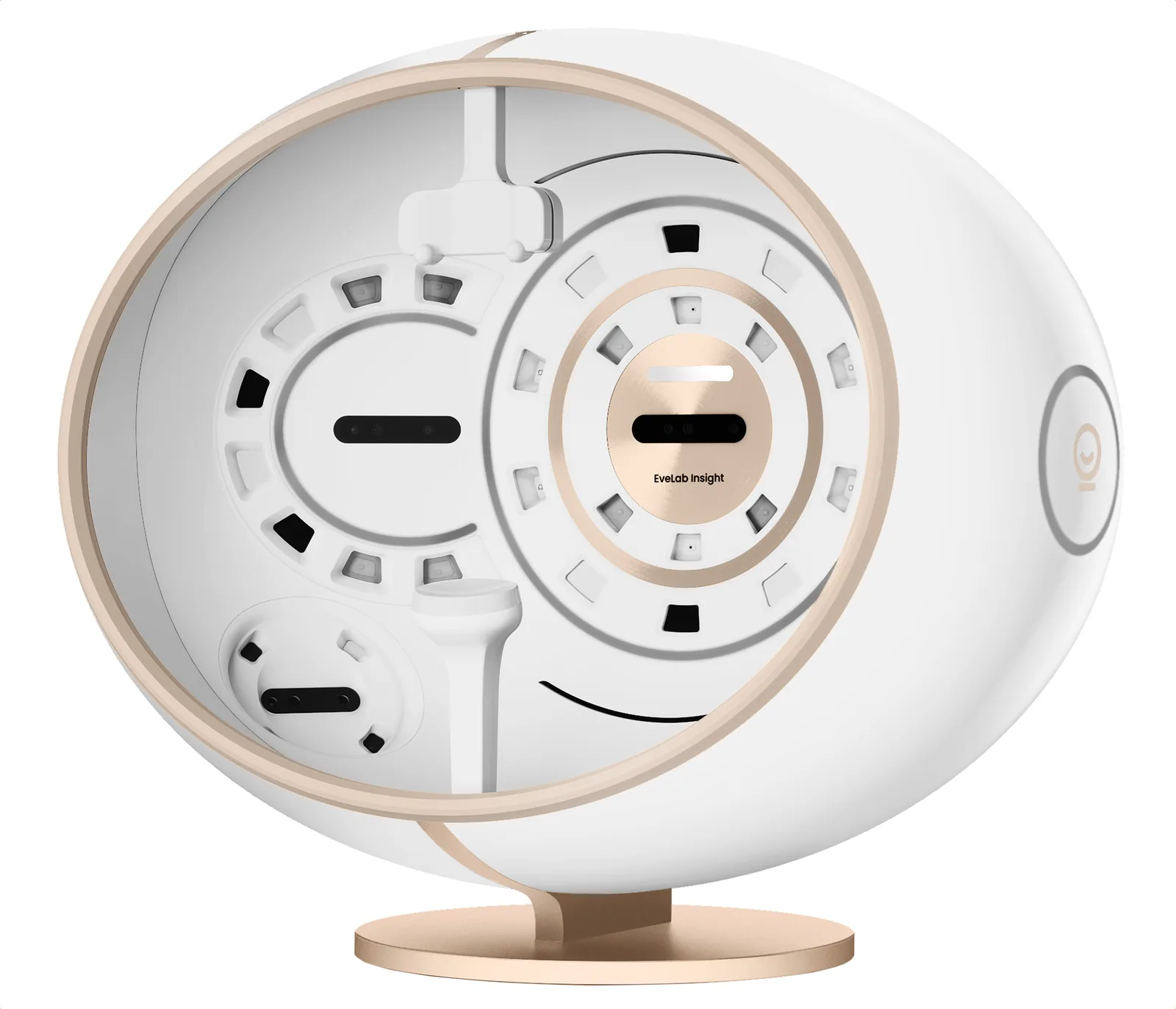
EveLab Insight skin analysis device open at Dear Clinic, showing the multi-spectrum camera array used to capture a Juvelook baseline
The baseline that a later Juvelook frame is compared against is an instrument capture, taken under fixed light before any vial is opened.
Before & After

The audited Juvelook case Dear Clinic is able to publish

Unretouched, treated at Dear Clinic, published with written consent. Individual results vary.
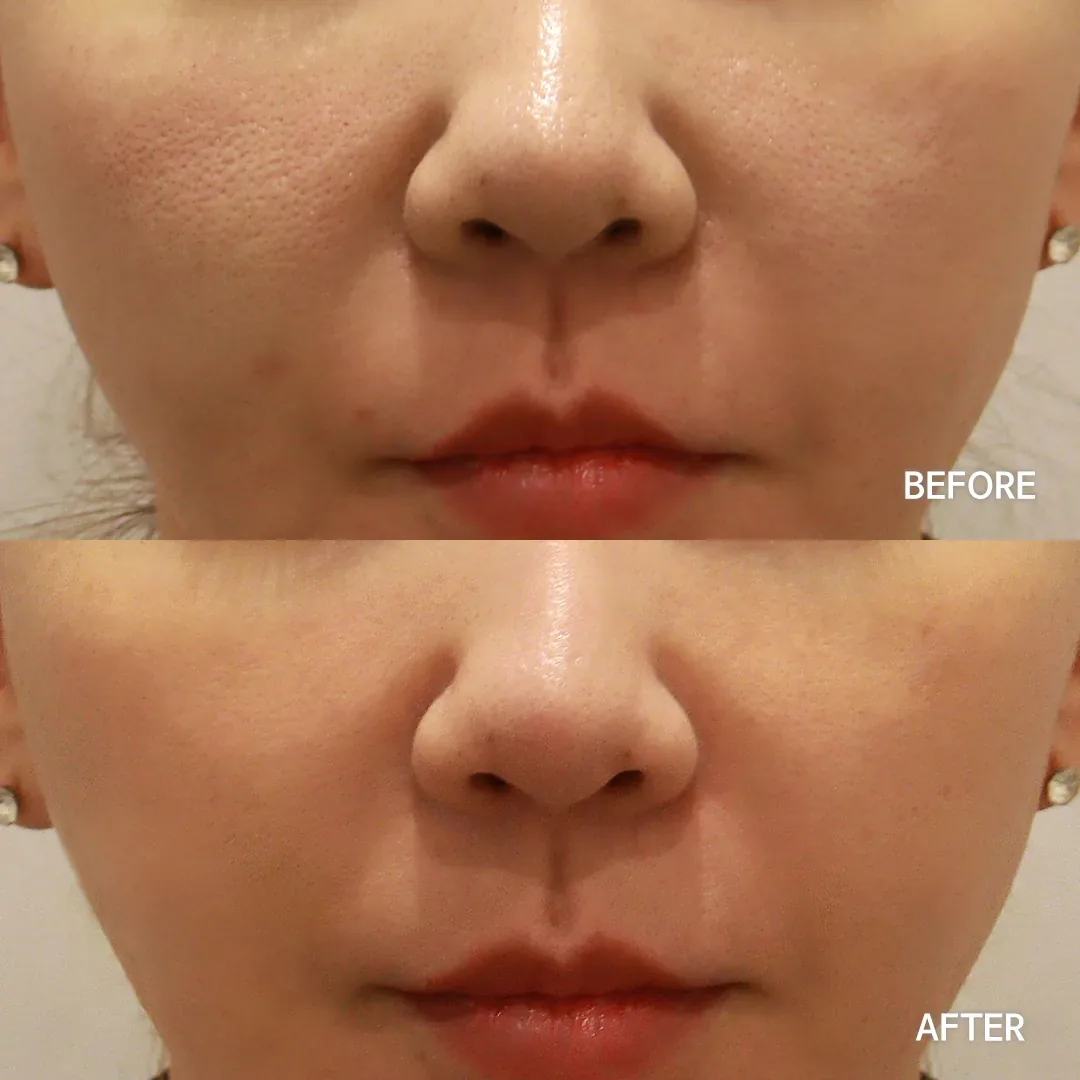
Juvelook PDLLA and hyaluronic acid hybrid case at Dear Clinic Cheongdam, the same patient photographed before and after treatment of the same skin field
Juvelook · PDLLA with an HA carrier · one person, one field, photographed under the same conditions before and after. Individual results may vary.

This photo is an unretouched before/after case of the same person under the same conditions, treated at Dear Clinic and shown with consent. Individual results may vary; no specific outcome is implied or promised.

One case, published deliberately. The Juvelook archive held here is larger, and most of it stays in the patient file because a frame is only published when consent and a caption that survives the standard set out above travel together.

The Two Lines

Both Juvelook rates published at Dear, and what a pair of each can be asked

Quoted by the cubic centimetre, in KRW with an approximate dollar figure beside it, and identical whichever passport is on the file.

Published lineQuoted inWhat a comparison of it can reasonably be askedListed rate
Juvelook — skin and volume lines1 ccSurface grain, the behaviour of light over the field, and fine lines in thin skin. Because part of the effect is collagen-driven, a frame worth publishing is a late one₩100,000 (≈ $70)
Juvelook Volume — specialty area1 ccThe same material quoted at the specialty-area rate for the zones it is designated for. A pair showing it somewhere outside those zones is mislabelled₩200,000 (≈ $145)

Each line is quoted per cubic centimetre. How much a given field takes is settled at the review with the capture on screen, and anything beyond the line you booked is quoted to you before a vial is opened. No course length and no session count is promised in advance on this page. Other materials on the same trolley, including the ones a Juvelook result is most often confused with, are on the booster rate page and the full published price list.

Mislabelled Pairs

Three Juvelook galleries that are photographing something else

The pair that is really a repair-focused booster. Polynucleotide materials are aimed at fine texture in thin skin and they photograph early and well. A hybrid biostimulator does not behave that way in the same weeks. The two are set side by side on our Rejuran and Juvelook comparison.
The pair that is really a pure collagen stimulator. The L-form of polylactic acid comes as a vial with no water-binding carrier attached, so its early frames genuinely show nothing. Placing its late photographs under a hybrid name flatters the hybrid. The distinction is worked through on the Sculptra and Juvelook comparison.
The pair that is really a gel filler. A shaped, contoured result in a thirty-second clip is volume placed in a plane, not a field of small deposits in skin. Where the outline of a face has changed, look at the filler category for what actually did it.
Dear, Knowhow

How a Juvelook result is measured and reviewed at Dear Clinic

01 — DIAGNOSIS FIRST

The Juvelook baseline is an instrument reading

EVE Muse captures the face in 3D under five light sources with AI analysis before a vial is chosen, and the texture, moisture and fine-line scores go on file. The later comparison is made against those figures with the doctor present. A phone photograph from three months ago is not a baseline.

02 — THE FULL ARSENAL

Nine injectable lines on one trolley

Every booster family on the rate card is stocked here, so the answer to a skin-quality complaint can be a different vial or no vial at all. Where the reading is laxity or lost volume we do not recommend a Juvelook course, and the reason is given at the consultation.

03 — DIRECTOR-PERFORMED

Depth is chosen and defended by the same hand

Placed too superficially, a deposit of this material shows as a palpable bump. Placed too deep, it does nothing for the surface the photograph is about. Your injection is director-performed, and the doctor who set the depth is the one who has to read the later frame against the capture.
In the clinic

The devices and hands behind this treatment

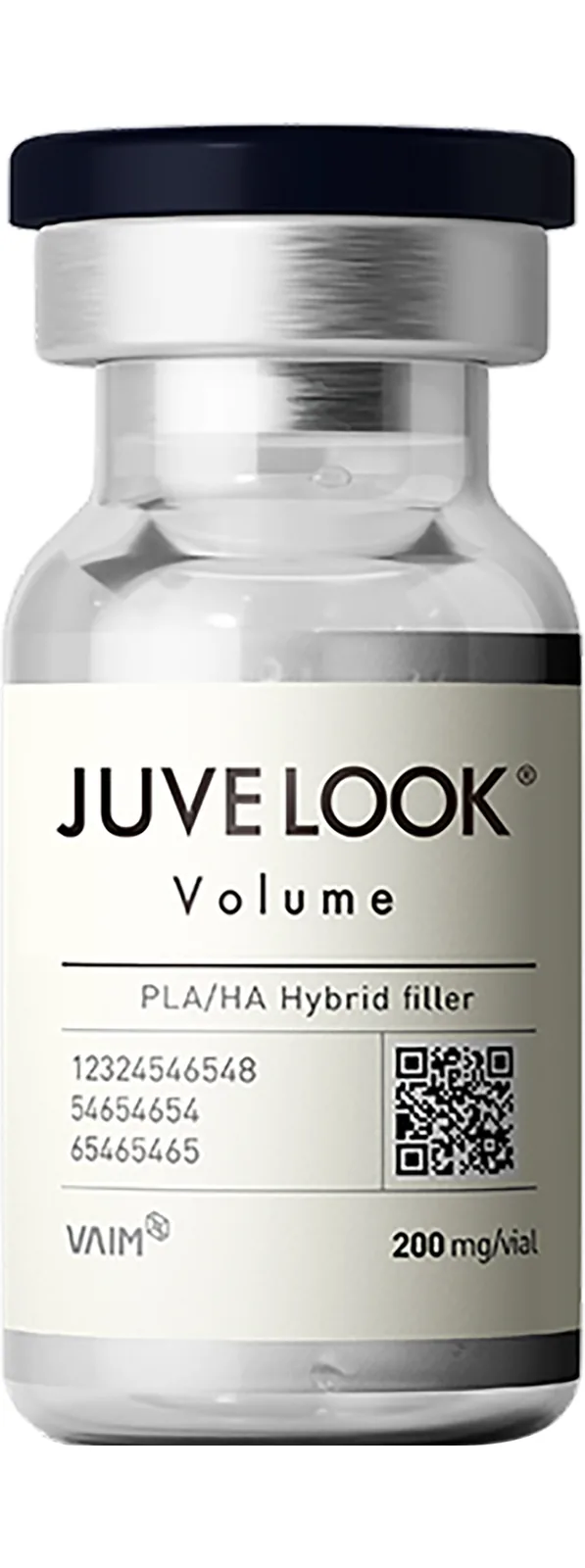
Juvelook Volume vial, the PDLLA and hyaluronic acid hybrid injectable line quoted on this page, stocked at Dear Clinic
Both published lines are held here, so the vial follows the reading
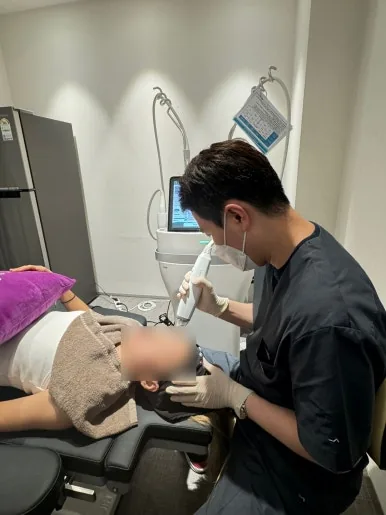
Practitioner applying a treatment handpiece to a patient's cheek at Dear Clinic Cheongdam, the field a Juvelook comparison photograph covers
Spacing and depth across the field are set by the director who read the capture
Caution

What belongs beside a Juvelook frame besides the result

A comparison that shows only the upside has been edited before it reached you.

The ordinary reactions. Redness and pinpoint swelling on the day, bruising across the field that can last several days, tenderness, and small palpable deposits while the material spreads out.
The less common ones. A visible bump or nodule where a deposit sat too superficially, a lump that persists past the expected settling, and infection at an entry point. Each of these is reviewed by the director who performed the injection.
Who is turned away. Active infection or inflamed skin over the field postpones the appointment. Pregnancy and breastfeeding change what is appropriate. Where the complaint is laxity, lost structural volume or pigment, Juvelook is not the right treatment and we say so instead of selling it.
What a caption has to disclose. The line used, the volume placed, the field treated, the interval between the two frames, and anything else done to the same area in between.
When to call ahead of the review. Spreading redness, pain that is increasing instead of easing, a hard lump that is growing, or any change in skin colour over the field means contacting the clinic immediately.

Comfort measures during an injected session are confirmed at your consultation and are set to the material and to you. Tell your director about bleeding disorders, blood-thinning medication, previous injectable treatment in the same field, autoimmune conditions, pregnancy and breastfeeding.

Medical Team

Five doctors, one standard

Director-performed treatment is a Dear promise — your procedure is planned and performed by the doctors below.


Dr. Jemin Kim — Medical Director and Founder, Dear Clinic
Dr. Jemin Kim
Yonsei University College of Medicine
Medical Director · Founder
Dr. Sanghyun Lee — Director, Dear Clinic
Dr. Sanghyun Lee
Seoul National University College of Medicine
Director
Board-certified · Family Medicine
Dr. Seonhaeng Lee — Director of Aesthetic Medicine, Dear Clinic
Dr. Seonhaeng Lee
Chosun University College of Medicine · Residency, Samsung Medical Center
Director, Aesthetic Medicine
Dr. Daeun Jung — Director, Dear Clinic
Dr. Daeun Jung
Ajou University College of Medicine
Director
Board-certified · Family Medicine
Dr. Woojae Jung — Director of Aesthetic Medicine, Dear Clinic
Dr. Woojae Jung
Seoul National University — B.S. in Medicine
Director, Aesthetic Medicine
Patient Reviews

What our patients say

Real verified reviews from our Google Business Profile.

4.9★★★★★ 310 Google Reviews
FAQ

Reading Juvelook photographs, question by question

What is actually visible in a Juvelook before and after photograph?
Skin quality over the injected field: the grain of the surface, the way light returns off it, and how deeply shallow lines sit. Two separate things produce that. The hyaluronic acid carrier acts at once and fades; the PDLLA works through a collagen response and arrives late.
Why does the early change after Juvelook look different from the late one?
Because you are looking at different halves of the same vial. In the first weeks the water-binding carrier dominates the picture and the injected field is still settling. Months later the carrier has receded and whatever remains is the part of the result the tissue built.
How long should I wait before taking the comparison photograph?
Long enough for entry marks, bruising and undispersed deposits to clear, and then longer still if the question you want answered is about the collagen half. No interval is published here in advance. Your director sets a conservative date at the appointment and the review is booked for it.
Does Juvelook change the shape of a face in these photographs?
No. An injected skin field sits far above the layers that carry outline and support, so a changed jaw line or a lifted cheek in a pair captioned Juvelook came from something else in the same file. Ask which material and which date before reading the pair as evidence.
How long does a Juvelook result hold?
No month figure is published here, and the variables are real: age, skin thickness, sun history, the depth the material was placed at, the volume placed, and what else is being done to the same field. Your director gives you the range they expect for your case at the consultation.
Why is only one Juvelook case published on this page?
Because one case in the audited archive carries both written consent and a caption that meets the standard this page describes. The number reflects what can be published, and says nothing about how much of this material is injected here.
What separates the standard line from the specialty-area line in a photograph?
Nothing in the material. The specialty-area rate covers the designated zones, which are quoted differently on the card. If a pair labelled with the specialty line shows a field outside those zones, the label is wrong and the rate quoted with it would be wrong too.
Will bruising and swelling be visible in an early frame?
Yes, and that is the main argument for waiting. Pinpoint entry points, raised deposits that have not yet spread, bruising where a vessel was crossed and puffiness across the field are all ordinary, all temporary, and all unmissable in the close frame this material has to be judged in.
Can I photograph my own Juvelook field at home?
You can, under conditions you have to fix yourself: bare skin in both frames, the same flat light from the same position, the same lens at the same distance, every enhancement setting switched off, and the date written next to the file. Compare home frames only against home frames.
How many sessions are needed before a pair shows anything?
No session count is promised before you are examined. What is agreed at the consultation is the line, the volume and the field to be treated, with the rate beside it. Whether anything further is worth buying is decided at the review with the baseline capture open.
Are there people who should not have Juvelook?
Yes. Active infection or inflamed skin over the intended field postpones treatment, pregnancy and breastfeeding change what is appropriate, and where the finding is laxity, lost structural volume or pigment we do not recommend this material at all and explain why.
Can the capture and a first Juvelook dose happen on one trip to Cheongdam?
Usually, once the reading confirms the material suits the finding. The baseline is taken on the day and the comparison frame is taken later at the date your director sets, from home if you have travelled. We are open 365 days a year and reply to English enquiries as soon as possible.
Consultation

Bring your own field to the capture

Tell us what you are seeing in your skin and where. Answered in English as soon as possible.

Scientific Evidence

Indexed work on the lactic-acid biostimulators behind this page

Four indexed entries are listed below: a 2005 paper and a 2011 paper on facial volumetric correction with injectable poly-l-lactic acid, a 2022 comparison of early-stage volume behaviour between the L-form and the D,L-form, and a 2024 clinical histology study of biostimulatory activity over time.

Each is given as title, journal and year with a verifiable DOI. No outcome figure from any of them is reproduced here, and none of them is evidence of a result in your own skin.

  1. Vleggaar D. Facial Volumetric Correction with Injectable Poly‐l‐Lactic Acid. Dermatologic Surgery. 2005. doi:10.2310/6350.2005.31236
  2. Fitzgerald R, et al. Facial volume restoration of the aging face with poly-l-lactic acid. Dermatologic Therapy. 2011. doi:10.1111/j.1529-8019.2010.01375.x
  3. Lin J, et al. Early‐stage volume effect difference between injectable poly‐l‐lactic acid and injectable poly‐d,l‐lactic acid. Journal of Cosmetic Dermatology. 2022. doi:10.1111/jocd.15595
  4. Arruda S, et al. A Clinical Histology Study Evaluating the Biostimulatory Activity Longevity of Injectable Poly-L-Lactic Acid for Facial Rejuvenation. Journal of Drugs in Dermatology. 2024. doi:10.36849/jdd.8057

References are provided for information — outcomes vary by individual and are assessed at your diagnosis.

Book WhatsApp Call