

★★★★★
The clinic was very professional from start to finish. Doctor Jung was excellent and gentle with the treatment. I felt well looked after and everyone was outstanding. Happy with my service!
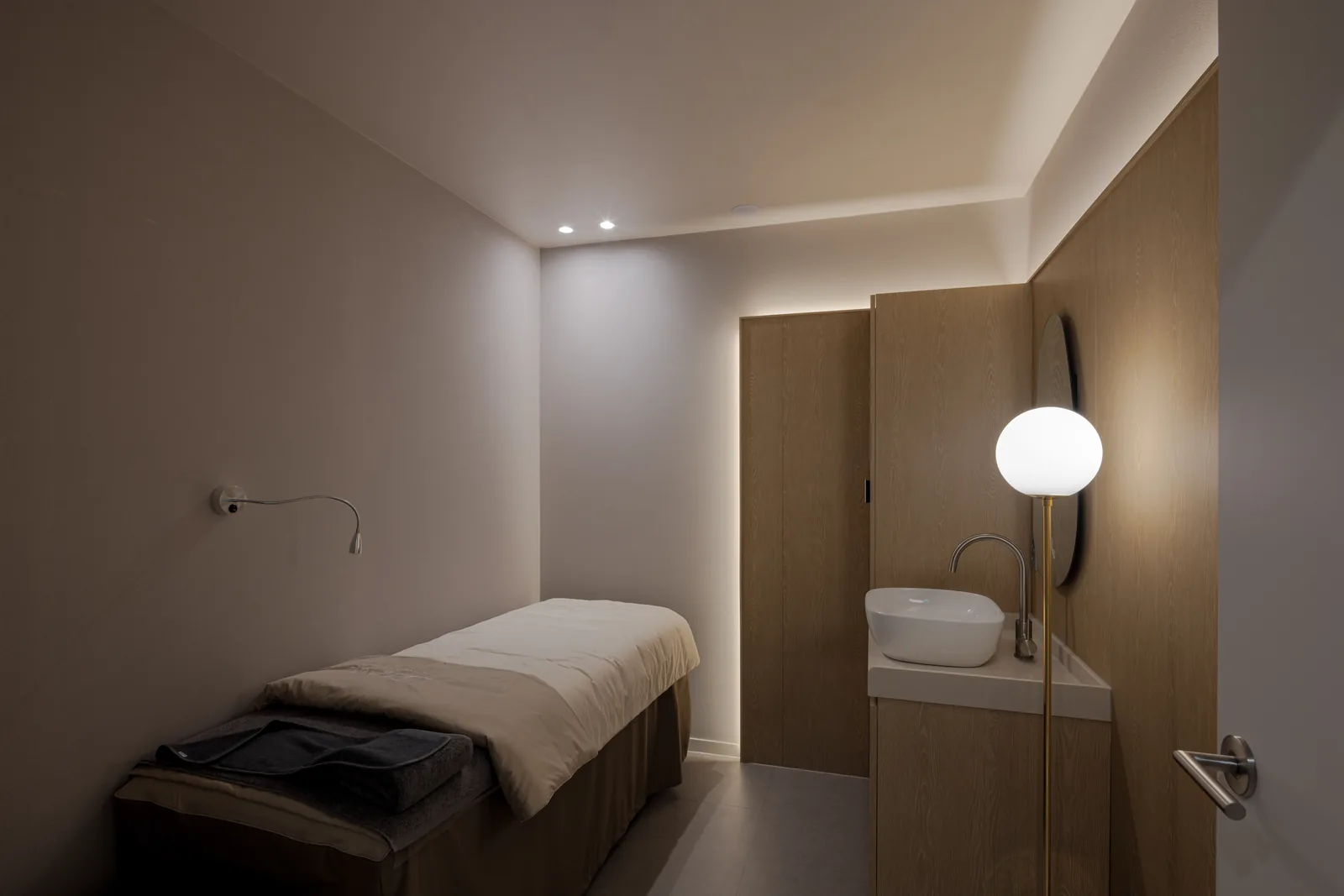
One removes tissue at the point it strikes. The other passes through an intact surface and works underneath it. That single distinction decides how long you are visibly recovering, how many visits a plan takes, and which device on this floor you are booked onto.
The two categories are aimed at different things. Ablative work is local: a lesion is taken down layer by layer, which is why it is charged one lesion at a time. Non-ablative work is distributed across a field, so that a chromophore inside the skin absorbs it selectively — haemoglobin in a vessel, or melanin in a patch of uneven tone.
A third group gets filed under the same question and belongs to neither category. Radiofrequency devices generate heat through electrical resistance inside tissue and use no light at all. Two of them run on this floor.
CO2 and erbium are the ablative wavelengths used here, and both are run per lesion instead of across a whole face.
Water inside the tissue absorbs the wavelength and the treated layer is vaporised. The lesion comes down in controlled passes until it sits level with the skin around it, an endpoint judged by eye.
Because the target is a single spot, the work is counted by the spot. Each lesion treated is charged at ₩10,000 (≈ $5), so a short list is inexpensive and a long list is arithmetic you can do before you arrive.
A small scab forms at each treated point and stays for several days while the surface closes. This is the only route on the floor that breaks the skin deliberately, and it is the reason travel plans get discussed before the appointment is set.
Full-face ablative resurfacing is a different proposition and is not on the price list here. Where a whole field needs work, the plan is built from needle-delivered energy; the acne scar page sets out that sequence.
Dual and triple laser toning deliver 1064 nm Nd:YAG at deliberately low energy across the whole field, with in-clinic skincare closing the session. Nothing is removed, which is precisely why it is sold as a repeated course instead of a single heavy treatment. One session is ₩200,000 (≈ $145) on the dual configuration and ₩300,000 (≈ $215) on the triple. The full route is described on the laser toning page.
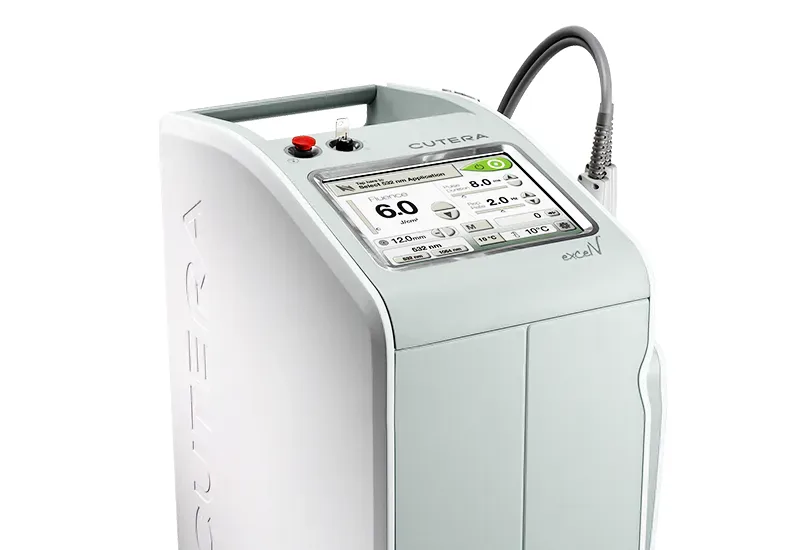
The Cutera Excel V is a vascular and pigment platform carrying two wavelengths. Light passes through an intact surface and is absorbed by haemoglobin in a vessel or by melanin in a flat brown mark, with the shorter wavelength taking surface targets and the longer one reaching deeper vessels. A session is ₩150,000 (≈ $105) for the laser itself, and the device has its own treatment page.
Hair reduction belongs in this category too. The GentleMax Pro platform delivers 755 nm alexandrite and 1064 nm Nd:YAG with dynamic cooling through an unbroken surface, targeting melanin in the follicle. Rates are published per body area on the hair removal page.
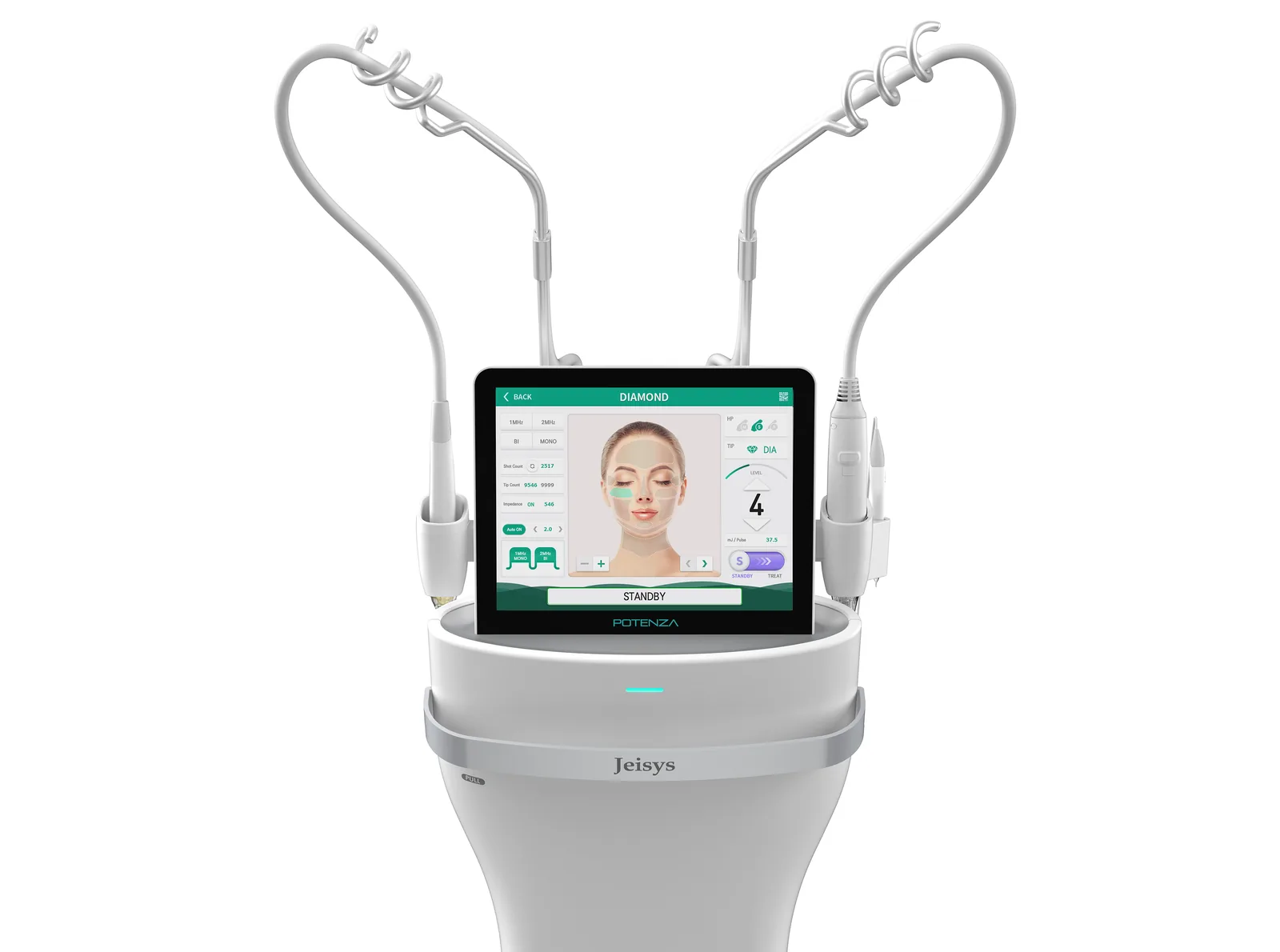
Radiofrequency microneedling drives fine needles through the skin and releases energy from their tips inside the dermis. The surface is punctured mechanically and is not vaporised, so a grid of pinpoint marks appears where the needles landed. A standard-tip visit is ₩250,000 (≈ $180); the Potenza page covers both tip configurations.
The needle is insulated along its length so radiofrequency is released only at the tip, heating one sebaceous gland while the epidermis above it is spared. A full-face visit is ₩250,000 (≈ $180), and the route is described on the Agnes page.
This matters at the consultation because radiofrequency energy is not absorbed by melanin the way light is. Where higher melanin would force a light-based route to be dialled well down, a needle-delivered plan can reach the same depth without asking the pigment question.
| Ablative laser | Non-ablative laser | Radiofrequency by needle | |
|---|---|---|---|
| What reaches the target | Light absorbed by water, removing tissue | Light absorbed by haemoglobin or melanin | Electrical energy released at the needle tip |
| The surface afterwards | Open, then scabbed at each point | Intact throughout | Punctured in a fine grid |
| How it is sold here | Per lesion treated | Per session, or a block of ten for toning | Per visit |
| On this floor | CO2 and erbium | Toning, Excel V, GentleMax Pro | Potenza and Agnes |
| Listed rate | ₩10,000 (≈ $5) | ₩150,000 (≈ $105) for Excel V | ₩250,000 (≈ $180) standard tip |
Figures current for September 2026, quoted in KRW with a USD equivalent shown for orientation only. Toning blocks, pumping-tip Potenza and the combined single-day laser plan each carry their own line on the price list. The same published line applies to residents and to visitors.
Recovery is the first filter. An open surface has to close, so per-lesion ablative work carries a visible scab for several days at each treated point. Non-ablative light leaves the surface sealed: toning settles quickly, while Excel V can darken treated vessels and turn pigment spots into fine crusts. Needle radiofrequency sits between the two.
Skin type is the second filter, and it works differently in each category. Light-based routes are read against melanin: the more pigment a skin carries, the more carefully energy is lowered and intervals lengthened, because heat into melanin-rich skin can leave temporary darkening behind. Published follow-up on repeated low-fluence toning also describes mottled loss of pigment, which is why fluence here stays conservative and a course is reviewed between visits. Radiofrequency is comparatively indifferent to melanin, and much of the peer-reviewed scar work on it was conducted in Asian patient groups.
The third filter is what you want changed. Distinct raised or pigmented lesions favour the ablative route, since the work is local and finishes. Standing redness and visible vessels favour non-ablative light, since the target sits inside a sealed surface. Dents, scars and slack texture favour needle radiofrequency. Where two apply at once, the order is set at diagnosis.
Ablative per-lesion work, two non-ablative light platforms and two radiofrequency needle systems sit on the same floor. The category is therefore an open decision, and the cheapest published line wins whenever the scan supports it.
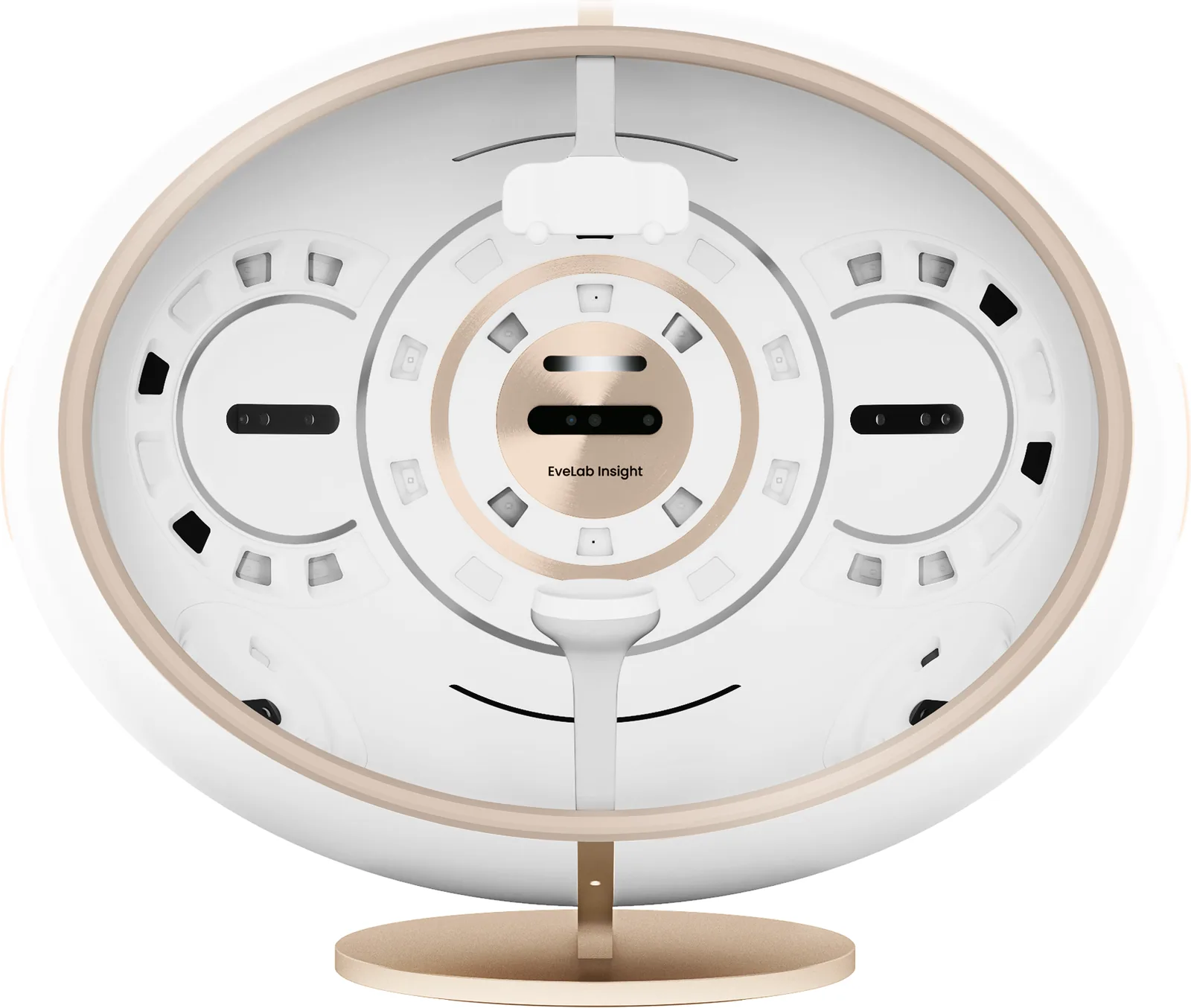
EVE Muse 3D imaging with AI analysis separates haemoglobin from melanin, and surface pigment from deeper pigment, before the word ablative is used. Knowing what absorbs the energy makes the category obvious; guessing it is how a course gets paid for twice.
Per-lesion work stops when the lesion is level, which is a judgement made pass by pass at the handpiece. Your session is director-performed from the first pass to the last, so the hand deciding the endpoint is the hand that read the scan.
This is not for everyone who asks for it. We do not recommend firing light into hot or recently tanned skin: a burn and post-inflammatory darkening are the realistic outcomes, and both last longer than the appointment saved. Brown patches reading as melasma are sent to the low-fluence toning route. Bruising, swelling, burns, temporary lightening or darkening of treated skin and, on the needle routes, infection are the named risks. Outcomes vary between individuals.
Director-performed treatment is a Dear promise — your procedure is planned and performed by the doctors below.





Real verified reviews from our Google Business Profile.
4.9★★★★★ 310 Google ReviewsThe clinic was very professional from start to finish. Doctor Jung was excellent and gentle with the treatment. I felt well looked after and everyone was outstanding. Happy with my service!
I've visited clinic for LDM procedure. I don't speak Korean, so there was an interpreter who assisted me while consulting. The staff was very attentive, they asked me every time before applying products/covering my face during the procedure and it went smoothly. Planning to visit the clini…
All the staff are kind, the doctor is professional. They recommended us the treatment that fit us best and last the longest. A very nice experience overall.
I did a hydrofacial, white/black head removal, and 1 day lasers. Really kind staff and reasonable prices. The only thing I would advise is that your first consultation is with a salesperson and you don’t see the doctor until after you decide what you want and after you pay.
Had a great experience here as a foreigner! The doctors and staff were knowledgeable, friendly, and not pushy. They made recommendations in my consultation and were happy to work within my budget.
Your questions, answered in English as soon as possible.
The comparison on this page rests on published studies from each category. Ablative fractional carbon dioxide has been tested head to head against needle-delivered radiofrequency for acne scars in a split-face randomised design. Non-ablative low-fluence 1064 nm has been followed over the long term and examined for mottled loss of pigment after repeated exposure. Vascular wavelengths have been compared against each other for facial telangiectasia, and needle-delivered radiofrequency has been assessed for atrophic scars in Asian patients.
Each reference below carries a resolvable DOI from an indexed journal. They inform how the category and the settings are chosen here; what your own skin needs is decided after your scan.
References are provided for information — outcomes vary by individual and are assessed at your diagnosis.