Home
Doctors Pricing Cost FAQ Book a Consultation
ENES
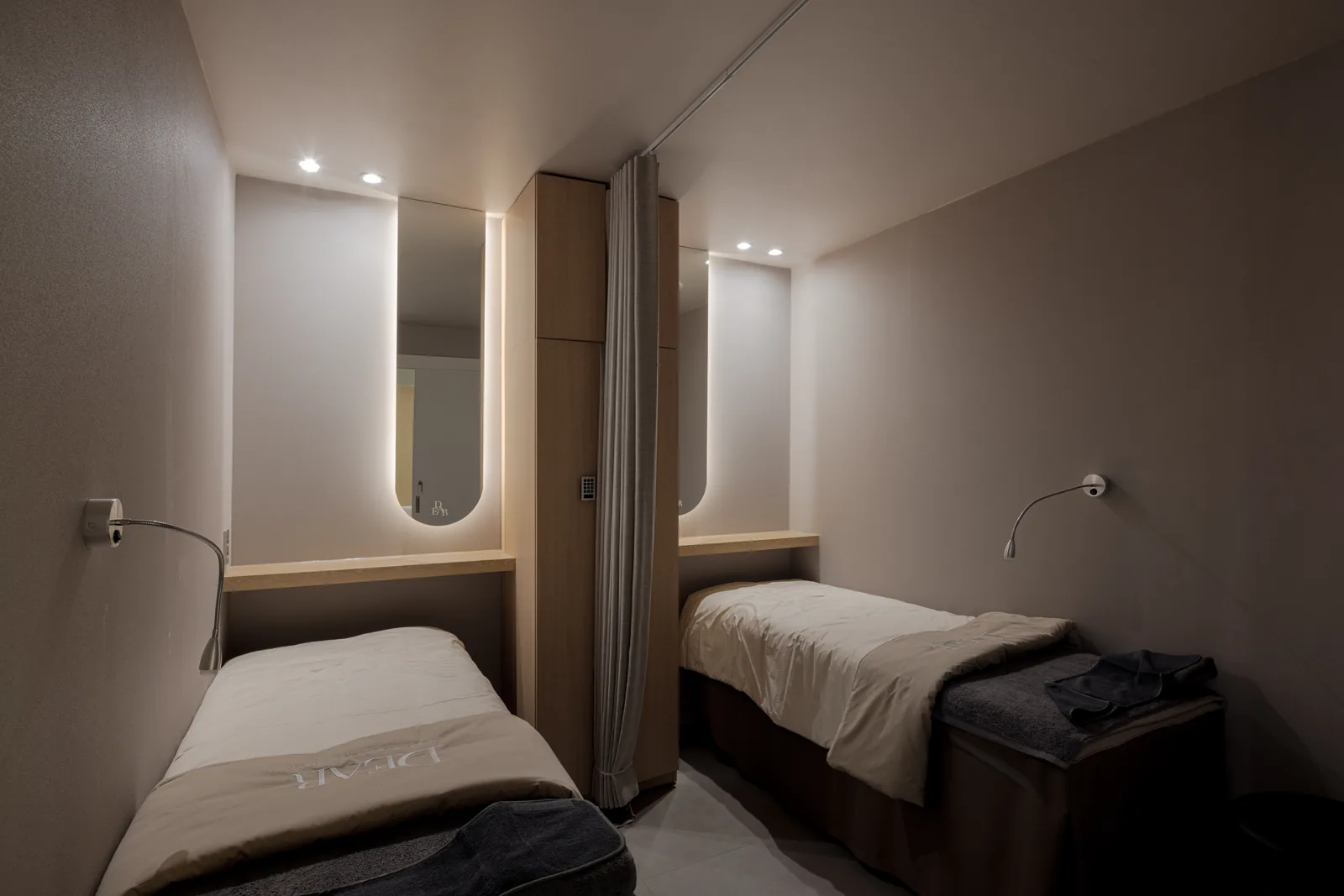
Twin recovery room at Dear Clinic with two beds, backlit arch mirrors and oak cabinetry
Dear Clinic · Skin Concerns · Redness
Rosacea is managed for life · Cheongdam, Gangnam

Rosacea & Redness Treatment in Cheongdam, Gangnam, Seoul

Standing flush and visible vessels, the red marks acne leaves behind, and skin that has simply been irritated raw are three different problems. Only the first two answer to a vascular laser; the third is a reason to hold off.

Excel V session ₩150,000 (≈ $105) 532 / 1064 nm vascular laser Open 365 days
Have Your Redness Read Three Kinds of Red
Direct answer

What can be done about rosacea at an aesthetic clinic

Rosacea is a chronic condition of the facial skin and blood vessels. It is managed, never finished. What a vascular laser addresses is the visible part — the standing flush and the fine dilated vessels feeding it — and what a toning course addresses is the discolouration left behind. Neither removes the underlying tendency to flush.

That framing is set out before any session is sold, because rosacea is one of the conditions where expectations do more damage than the laser ever could. People who arrive expecting a single visit to end the redness leave disappointed by a result that was, in fact, good.

The second thing said early is that a formal rosacea diagnosis, and any medication for it, belongs with a physician who can examine you and follow you over time. What this page describes is in-clinic device work on the appearance of the skin, run alongside that and not in place of it.

Three kinds of red

Facial redness is not one finding, and the routes differ

Where the red sits, what provokes it and whether it blanches under pressure all change the answer.

01

Standing flush and visible capillaries

A background of red across the central face that never fully clears, with fine threads visible around the nostrils and inner cheeks. Heat, alcohol and cold wind make it worse for hours. This is the vascular component, and it is what the 532 and 1064 nm wavelengths are aimed at.

02

Red marks where spots used to be

Flat pink or red patches sitting exactly where lesions were, fading slowly over months. They are dilated vessels left behind by inflammation and not scars, which is why a vascular pass helps them and a toning course addresses whatever brown has settled alongside.

03

An irritated barrier pretending to be rosacea

Redness that arrived with a new routine, an acid, a course of strong actives or too many treatments too close together. It stings, it reacts to everything, and shooting a laser at it makes the week worse. Here the plan begins by stopping things.

Plenty of faces carry the first and the third together, which is the situation where sequence matters most: the barrier is calmed over several weeks, and only then is the vascular component treated.

Diagnosis

Separating vessels from irritation on the EVE Muse capture

EVE Muse 3D imaging records the face under five light sources with AI analysis. Vascular patterns and surface inflammation register differently, so a face that reads uniformly red to the eye resolves into where vessels actually run and where the skin is simply reacting.

That distinction decides whether anything is switched on at all. Treating an inflamed barrier as if it were a vascular problem is the most common way a redness plan goes wrong, and it is the reason a first visit here sometimes ends with a skincare conversation and no device.

The capture is stored. Because redness fluctuates with the room, the hour and what you drank last night, comparing photographs taken under identical light is the only fair way to judge whether a course is working.
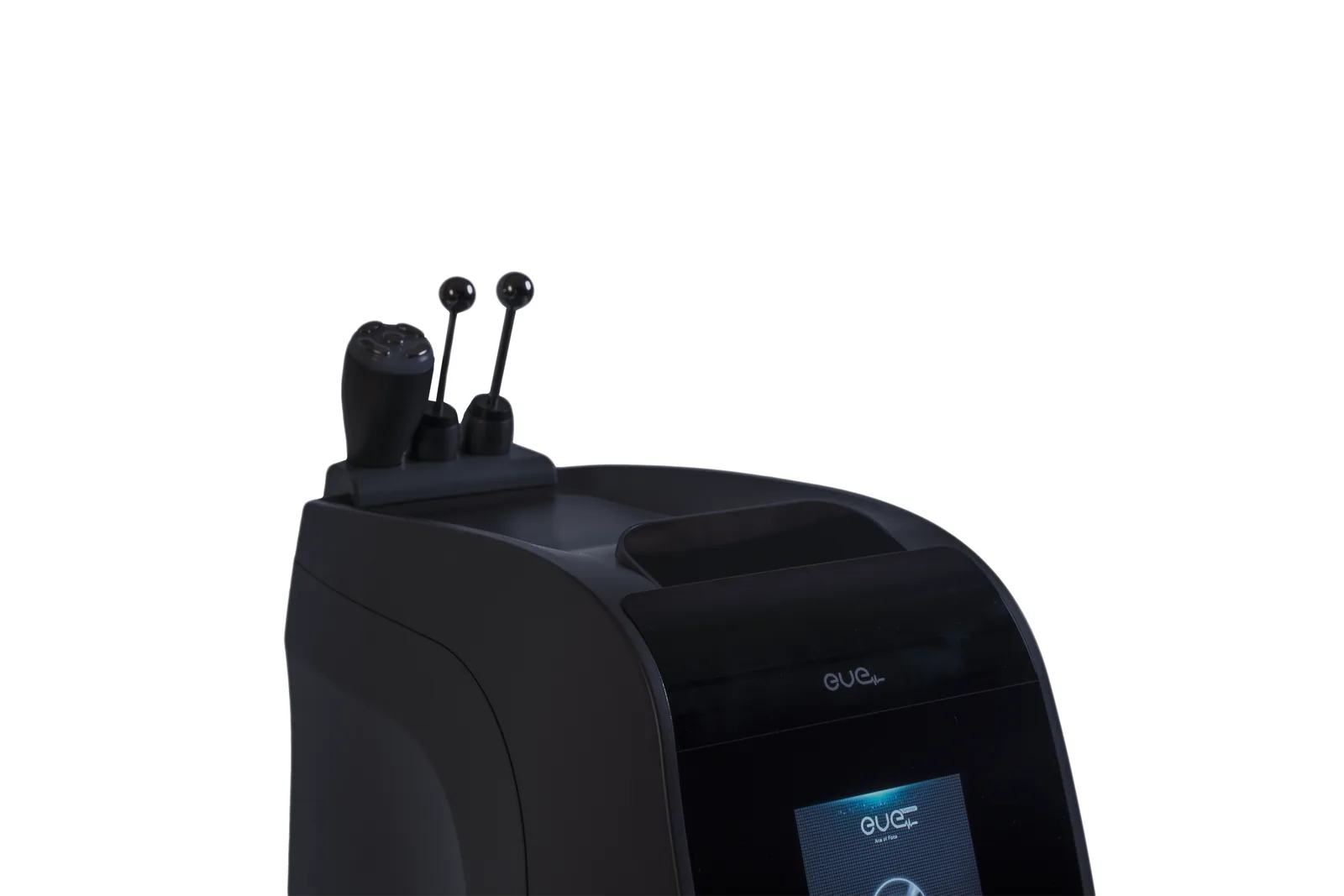
Detail of the EVE Synergy console top showing its docked handpieces and touchscreen
Capture under fixed lighting is what makes a slow change measurable.
What is offered

The redness routes Dear Clinic actually runs

One vascular platform and a toning programme. That is the whole list, and what is absent is stated below it.

RouteMechanismWhat it is aimed atListed rate
Excel V, laser onlyA Cutera 532/1064 nm vascular and pigment laser. The shorter wavelength works on fine superficial vessels, the longer one reaches deeper and larger ones.Standing central flush, visible capillaries, red marks left by lesions₩150,000 (≈ $105)
Dual Laser Toning with in-clinic skincareLow-fluence 1064 nm Nd:YAG passes worked across a field as a dual-wavelength session, with skincare in the same appointment.The brown discolouration that settles alongside post-inflammatory red₩200,000 (≈ $145)
Triple Laser Toning with in-clinic skincareThe same low-fluence approach in a triple configuration, chosen at diagnosis for long-standing or stubborn fields.Mixed discolouration that has shown limited movement on the dual configuration₩300,000 (≈ $215)

September 2026 published rates in KRW, with a USD equivalent shown for orientation. Visitors and Seoul residents are quoted the identical line. The Excel V figure covers the laser session itself; the toning lines are sold as laser plus in-clinic skincare in one appointment, and any charge for products or follow-up care is explained at the consultation.

Both platforms have pages of their own: Excel V covers the device and its two working depths, and laser toning covers the programme and its blocks. Barrier support sits with Rejuran Healer and the wider skin booster shelf, and the category as a whole is on the laser, pigment and acne hub. Everything published appears on the price list.

The boundary

What a laser will not do for a chronic flushing condition

Read this before the table above turns into a plan.

Rosacea is chronic and is managed, not cured. Vessels treated today can be replaced by new ones over the following years, and the tendency to flush is unchanged by anything on this page. A maintenance rhythm is agreed at the end of a course for exactly that reason.
Papules, pustules and eye symptoms are medical. Where rosacea presents with inflammatory lesions, thickened skin on the nose, or burning and gritty eyes, that is a physician's consultation. We will say so and treat nothing that day.
We do not run a pulsed-dye laser. The vascular platform in this building is a 532/1064 nm system. Published comparisons between wavelength classes are listed at the foot of this page, and if your reading of them points somewhere else, that is a reasonable decision to make.
Named risks come with vascular work. Expect transient redness and swelling; bruising, crusting, blistering, and temporary lightening or darkening of the treated skin are all possible, more so on deeper skin tones and on faces that are sun-exposed before or after a session. Results vary between individuals.
Some skin is turned away. A barrier that is currently stinging and reactive, recent sun exposure or a tan, an active flare at its peak, and certain photosensitising medications are all reasons the session is rescheduled, and we do not recommend treating through any of them.
Between sessions

Triggers, and the part of redness management that happens at home

A laser removes vessels that are already there. It does nothing about what provokes the next flush, which is why the trigger conversation takes up a real part of the consultation. The common provocations are unglamorous and well known: sudden temperature change, hot drinks, spicy food, alcohol, ultraviolet exposure, vigorous exercise in heat, and stress. Which of them matter is personal, and a two-week note of what preceded each flush is more useful than any general list.

The second half of home management is the barrier. Reactive skin generally does better on a short routine than a long one: a gentle cleanser, something bland and occlusive, and daily broad-spectrum sun protection. Where a barrier is already compromised, in-clinic skincare within a toning appointment and the booster shelf are the conservative options, and both are discussed before any laser date is set.

STAGE 01

Calm the surface before any pulse

Strong actives stop, the routine shortens, and the face is given weeks instead of days. Where the capture shows irritation dominating, this stage is the entire first plan.

STAGE 02

Treat the vessels that are visible

Wavelength is chosen lesion by lesion: the shorter for fine superficial threads, the longer where the vessel sits deeper. Sessions are spaced so the skin is read again before the next one.

STAGE 03

Address the colour that remains

Brown discolouration left alongside post-inflammatory red goes to the low-fluence toning route once the field has settled, in whichever configuration the capture supports.

Dear, Knowhow

How a redness plan is settled at Dear Clinic

01 — THE FULL ARSENAL

The barrier route competes with the laser route

Vascular laser, toning and the booster shelf all sit on one published list, so a first visit that ends in skincare and no device costs the clinic a session it could have sold.

02 — DIAGNOSIS FIRST

Vessels and reactivity separated before a wavelength is chosen

EVE Muse 3D capture under five light sources with AI analysis distinguishes where vessels genuinely run from where the surface is inflamed. It is also the step that catches the faces that should be seen by a physician before they are seen by a laser.

03 — DIRECTOR-PERFORMED

Wavelength and energy chosen vessel by vessel

Sessions are director-performed, and the choice between the two wavelengths is made at each lesion instead of being set once for the face. Where the skin responds badly mid-session, the session stops.
In the clinic

The devices and hands behind this treatment

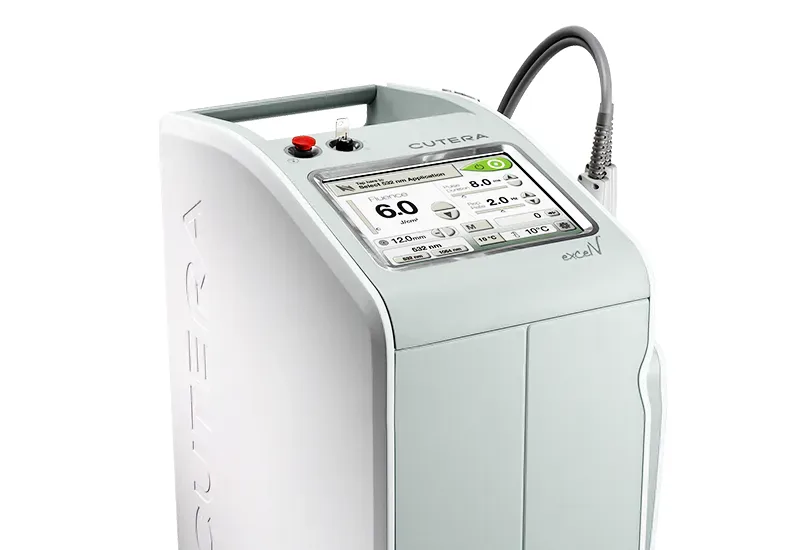
Cutera excel V vascular laser console with its touchscreen and delivery fibre
The console whose two wavelengths are chosen vessel by vessel
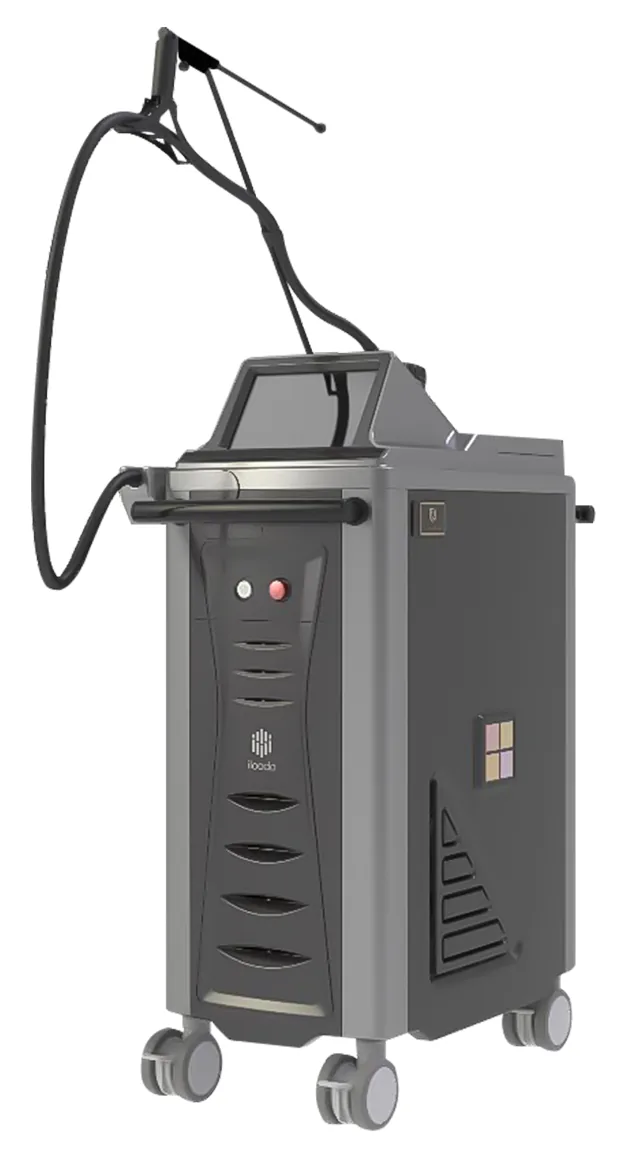
New Titanium (Portra Quattro) lifting laser platform on castors with its articulated delivery arm and handpiece at Dear Clinic
A laser platform in the laser room at Dear Clinic
Caution

The first week after a vascular session, and the months after that

Expect the treated area to look worse before it looks better. Deeper redness, mild swelling and occasionally a grey-purple cast over treated vessels are ordinary in the first days. Makeup timing is confirmed with your director for your own skin.
Keep the face cool. Saunas, hot showers, heated yoga and long hot drinks are worth pausing while the skin settles, since heat is both an aftercare issue and a trigger in its own right.
Broad-spectrum sun protection every morning. Ultraviolet exposure both provokes flushing and raises the risk of pigment change after a session, and a tan acquired before a booking is a reason to postpone it.
Hold the actives. Acids, retinoids and scrubs stay off for the window you are given, and a bland routine does more for a reactive face in that period than anything marketed as calming.
Report blistering, spreading pain or a wound that is not closing. Those are reasons to be seen in person rather than messaged about, and the clinic is open 365 days a year so that a same-week check is realistic.

Comfort measures during the session are confirmed with your director at the consultation. Consultation is conducted in English, and sessions can be spaced around travel dates when a course begins during a visit.

Medical Team

Five doctors, one standard

Director-performed treatment is a Dear promise — your procedure is planned and performed by the doctors below.


Dr. Jemin Kim — Medical Director and Founder, Dear Clinic
Dr. Jemin Kim
Yonsei University College of Medicine
Medical Director · Founder
Dr. Sanghyun Lee — Director, Dear Clinic
Dr. Sanghyun Lee
Seoul National University College of Medicine
Director
Board-certified · Family Medicine
Dr. Seonhaeng Lee — Director of Aesthetic Medicine, Dear Clinic
Dr. Seonhaeng Lee
Chosun University College of Medicine · Residency, Samsung Medical Center
Director, Aesthetic Medicine
Dr. Daeun Jung — Director, Dear Clinic
Dr. Daeun Jung
Ajou University College of Medicine
Director
Board-certified · Family Medicine
Dr. Woojae Jung — Director of Aesthetic Medicine, Dear Clinic
Dr. Woojae Jung
Seoul National University — B.S. in Medicine
Director, Aesthetic Medicine
Patient Reviews

What our patients say

Real verified reviews from our Google Business Profile.

4.9★★★★★ 310 Google Reviews
FAQ

Rosacea and facial redness, your questions answered

Can rosacea be cured?
No. It is a chronic condition of the facial skin and vessels, and treatment manages how it looks and how often it is provoked. Visible vessels can be reduced and the standing flush can be lightened, but the tendency to flush remains, so a maintenance rhythm is agreed instead of a finishing date.
How much does redness treatment cost in Seoul?
A vascular laser session is ₩150,000 (≈ $105) for the laser itself. Where discolouration also needs work, dual toning with in-clinic skincare is ₩200,000 (≈ $145) per session and the triple configuration is ₩300,000 (≈ $215). Your own plan is totalled at the consultation before anything is booked.
Which laser do you use for facial redness?
A Cutera 532/1064 nm vascular and pigment platform. The 532 nm wavelength is used on fine superficial threads and the 1064 nm on deeper, larger vessels, and the choice is made lesion by lesion during the session instead of being set once for the whole face.
Do you offer a pulsed-dye laser?
We do not. The vascular device in this building works at 532 and 1064 nm, and that is what your session would be run on. Head-to-head comparisons between the wavelength classes are published and several are listed at the foot of this page, so the decision is one you can inform yourself about.
How many sessions will I need?
No number is published, because vessel density, how long the redness has been present and your own trigger load all change it. What is fixed is the method: sessions are spaced, the stored capture is compared each time under identical lighting, and the plan is stopped and rethought when the images stop moving.
Will the redness come back?
New vessels can appear over the years, because the condition that produced the first ones has not gone anywhere. How quickly that happens is influenced by sun exposure, heat, alcohol and how reactive your barrier is kept. Most people who hold a result are doing something deliberate about those between visits.
Is my redness rosacea or just sensitive, irritated skin?
That is precisely what the first consultation is for, and the two are frequently confused. Redness that arrived with a new product, an acid or a run of treatments, stings on application and reacts to everything usually points at a damaged barrier. The scan helps, your history helps more, and a formal diagnosis is a physician's job.
Can a laser treat the red marks left by acne?
Yes, those flat red patches are dilated vessels left behind by inflammation and they respond to a vascular pass. The waiting matters more than the wavelength: the surrounding skin must be calm and the lesions settled first. Where brown has also been left behind, that goes to the toning route alongside.
Will you treat me if my skin is stinging and reactive right now?
No. A compromised barrier is a reason to postpone; reducing the energy is not an answer. The plan in that state is to shorten the routine, stop the actives and give the face several weeks, which frequently improves the redness on its own and makes the eventual session safer and easier to judge.
What does a session feel like and how long is the downtime?
Expect the treated area to be redder and slightly swollen for the first days, occasionally with a grey-purple cast over the treated vessels or some crusting. Comfort measures during the session are confirmed with your director at the consultation, and makeup timing is agreed for your own skin at the visit.
Does treatment make future flushing worse?
There is no reason to expect it to, since the work removes vessels rather than altering the nervous and vascular responses behind a flush. What can make a week worse is treating a face that is already inflamed, which is why a session is rescheduled when the barrier is reactive on the day.
I am visiting Seoul. Can I start a course on a short trip?
A consultation, a capture and a first vascular session generally fit one visit, and the clinic runs 365 days a year so a date is rarely the obstacle. What does not compress is the spacing between sessions, so visitors are usually planning a first treatment here and a continuation at home, and that is said before you book.
Consultation

Ask what is driving your own redness

Your questions, answered in English as soon as possible.

Scientific Evidence

What the trials report on 532 nm vascular lasers for facial redness

Four of the five references below are controlled or comparative studies of a 532 nm laser in facial telangiectasia, diffuse telangiectatic erythema, rosacea and spider naevi. Three of them compare that wavelength class against a pulsed dye laser, which is the comparison people ask about most often when a clinic does not run one.

The fifth concerns low-fluence 1064 nm work and is included because that is the toning route used here for discolouration, and because it documents mottled hypopigmentation after repeated treatment — the reason toning energy at this clinic stays conservative.

  1. Nguyen L et al. Rosacea treatment with 532 nm KTP versus 595 nm pulsed dye laser—A prospective, controlled study. Journal of Cosmetic Dermatology. 2024. doi:10.1111/jocd.16300
  2. Uebelhoer NS et al. A Split-Face Comparison Study of Pulsed 532-nm KTP Laser and 595-nm Pulsed Dye Laser in the Treatment of Facial Telangiectasias and Diffuse Telangiectatic Facial Erythema. Dermatologic Surgery. 2007. doi:10.1111/j.1524-4725.2007.33091.x
  3. Nam CH et al. Fractional 532‐nm KTP diode laser and 595‐nm pulsed dye laser in treatment of facial telangiectatic erythema. Journal of Cosmetic Dermatology. 2018. doi:10.1111/jocd.12692
  4. Erceg A et al. A Comparative Study of Pulsed 532-nm Potassium Titanyl Phosphate Laser and Electrocoagulation in the Treatment of Spider Nevi. Dermatologic Surgery. 2010. doi:10.1111/j.1524-4725.2010.01517.x
  5. Vachiramon V et al. Low‐fluence Q‐switched Nd: YAG 1064‐nm laser and intense pulsed light for the treatment of melasma. Journal of the European Academy of Dermatology and Venereology. 2014. doi:10.1111/jdv.12854

References are provided for information — outcomes vary by individual and are assessed at your diagnosis.

Book WhatsApp Call