Home
Doctors Pricing Cost FAQ Book a Consultation
ENES
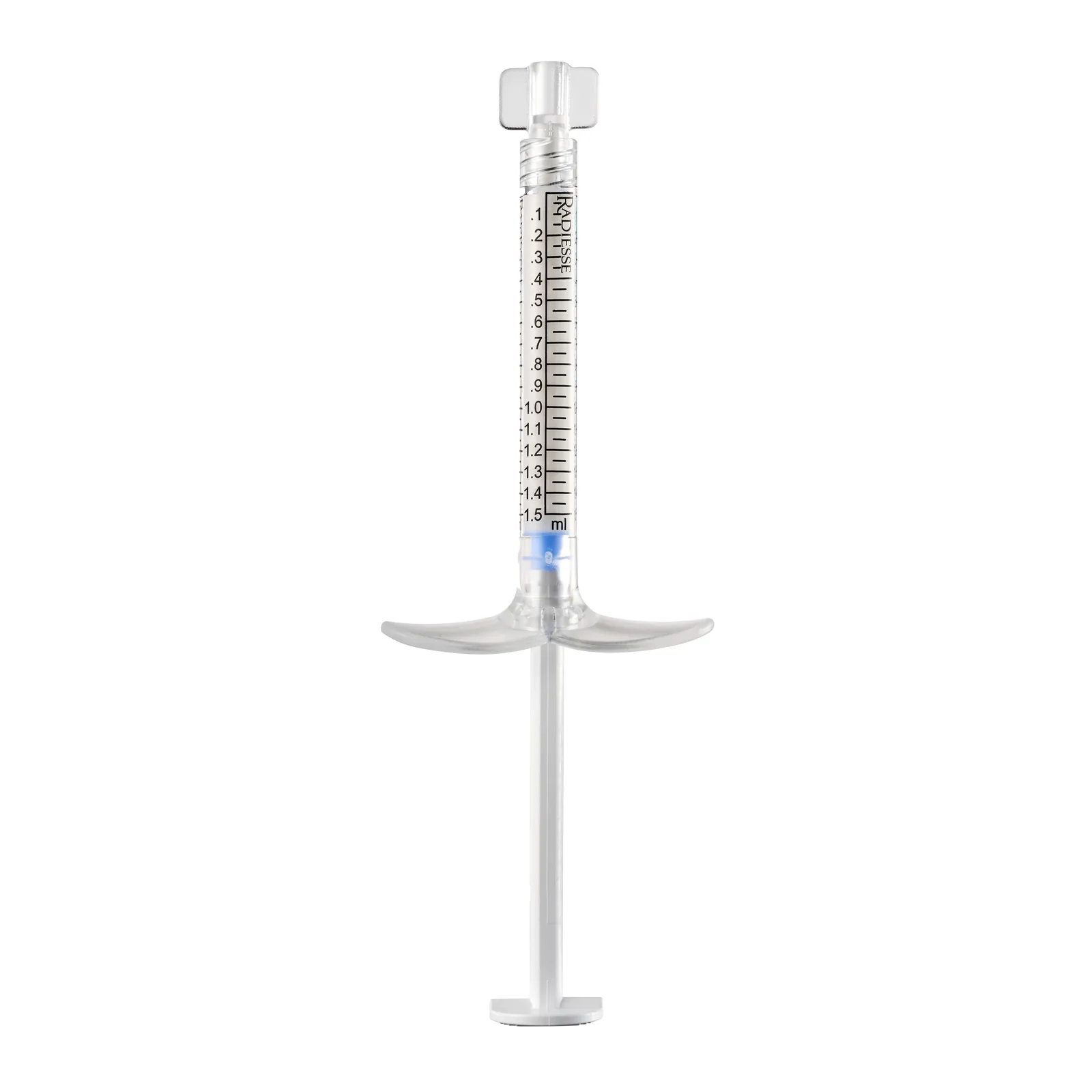
Radiesse pre-filled syringe on a transparent background
Dear Clinic · Stimulator Comparison · Injectables
Radiesse vs Sculptra in Cheongdam, Gangnam, Seoul

Radiesse vs Sculptra

Two collagen stimulators, one shared vial rate, and two chemistries that behave differently from the first minute. Calcium hydroxylapatite carries its own gel and changes the contour on the day. Poly-L-lactic acid changes nothing on the day and works across the weeks that follow.

CaHA against PLLA Radiesse ₩1,200,000/vial · Sculptra ₩1,000,000/vial Open 365 days
Ask Which Material Fits See Both Rates
Direct Answer

Same vial rate, two unrelated chemistries

Radiesse is calcium hydroxylapatite: ceramic microspheres suspended in a gel. Sculptra is poly-L-lactic acid, supplied dry and reconstituted into a suspension before it is drawn up. Both ask your own tissue to lay down collagen. Only one of them puts something physical under the skin on the day of the appointment, and that gap drives most of the choosing.

The carrier gel inside a CaHA syringe occupies space the moment it is placed, so a treated groove reads differently on the walk out. That gel is absorbed over the following weeks, and what stays behind is whatever collagen the mineral particles have provoked. A PLLA vial carries no such gel. Its suspension is largely water, disperses within days, and leaves particles that work quietly and show nothing for a while.

So the two materials are judged on two different clocks. A patient who checks the mirror on the way to the lift is reading the right clock for one of them and the wrong clock for the other, which is the single most common source of disappointment with a stimulator course.

Both sit on the same line of the published card, both are charged by the vial, and both are mapped from the same EVE Muse 3D capture taken before anything is quoted. What follows sets out the chemistry, the zones each material is used across, the way a course total is built, and the one safety fact that makes this decision heavier than choosing a hyaluronic acid filler.

The Two Materials

What a CaHA syringe holds, against what a PLLA vial holds

Both are made by long-established manufacturers and both are stocked here. The difference begins in the packaging and never closes.

Radiesse — a mineral in a gel

Merz supplies Radiesse pre-filled. Calcium hydroxylapatite microspheres sit inside a gel carrier, so the syringe is ready as it comes out of the carton and the injection is done in a single visit per zone. The gel is doing the visible work at first; the mineral is doing the durable work later, as fibroblasts organise around the particles.

The same syringe behaves as two different treatments depending on how far it is thinned before injection. Kept at full strength it supports a border. Thinned with saline or lidocaine and spread through a wider plane, it stops behaving as a contour material and starts behaving as a firmness material, which is the technique the published consensus work on diluted and hyperdiluted CaHA describes. The dilution is decided in the consultation room, after the capture, and it is written on your chart before the carton is opened.
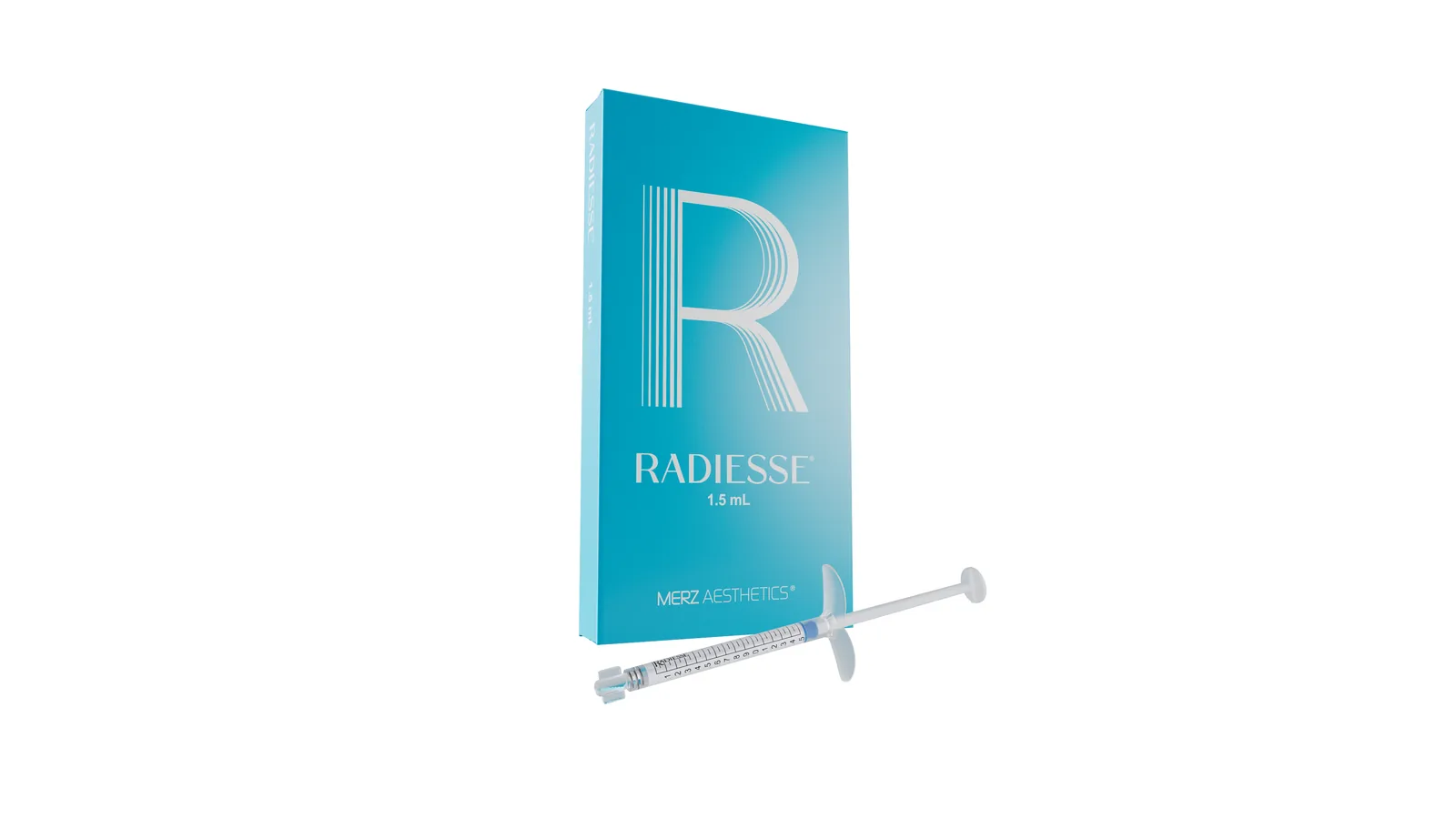
Radiesse 1.5 mL carton beside its pre-filled syringe on a transparent background
Radiesse arrives pre-filled. How far the syringe is thinned before it is injected changes what it does.
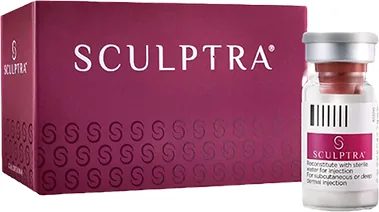
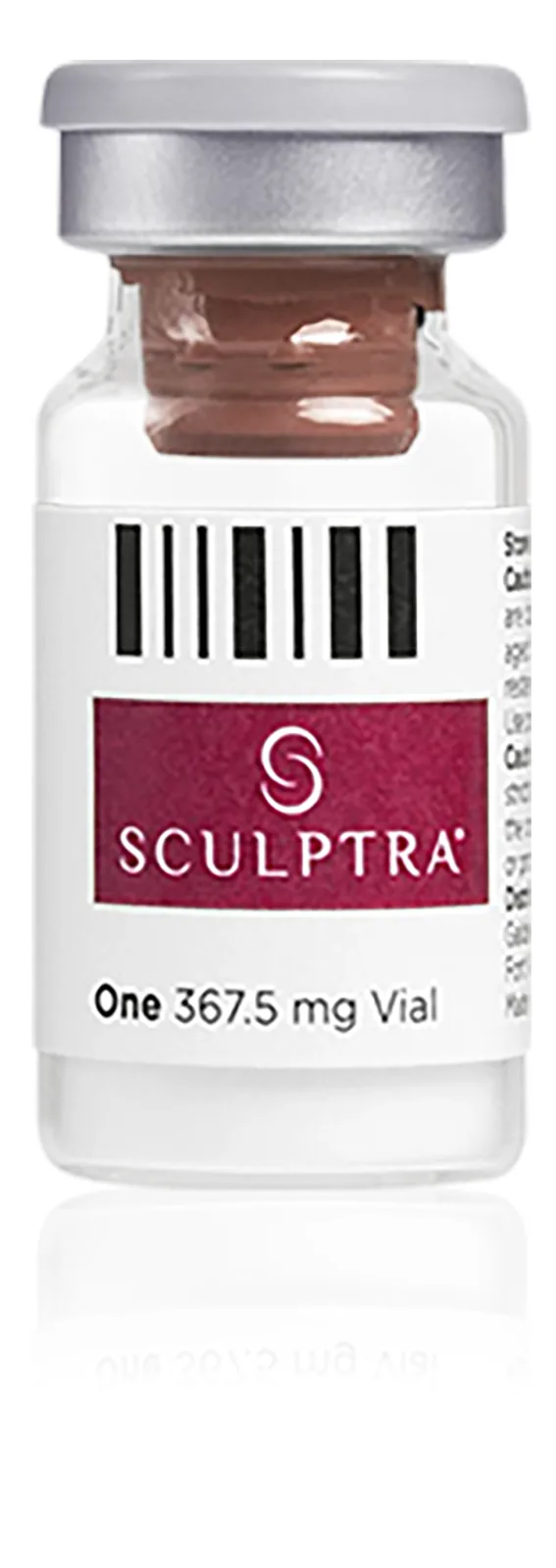
Sculptra 367.5 mg single vial with its reflection on a transparent background
Sculptra arrives as a dry vial. It is reconstituted and left to stand before a syringe is drawn.

Sculptra — a powder mixed before you sit down

Galderma supplies Sculptra as a lyophilised vial of poly-L-lactic acid. It has to be reconstituted with sterile water and given time to hydrate evenly before a syringe is drawn, which is why a PLLA appointment has preparation built into its timetable while a CaHA appointment does not.

Once placed, the fluid leaves and the particles stay. There is no gel doing an opening act. The published volumetric work on PLLA describes a response that accumulates across a course of sessions and is assessed at review appointments, which is exactly how a vial plan is written here: a first vial, a wait, a measured look, then a decision about the next one.

Side by Side

Radiesse against Sculptra, row by row

Both materials are stocked in this building and both are in daily use. On a narrow screen the table slides sideways while the row labels stay put.

 RadiesseSculptra
MaterialCalcium hydroxylapatite (CaHA) microspheres in gelPoly-L-lactic acid (PLLA)
ManufacturerMerzGalderma
Supplied asPre-filled syringe, ready at the chairDry vial, reconstituted and rested before use
On the dayContour changes immediately, from the gel carrierNothing to see beyond injection marks and short-lived puffiness
How it buildsGel absorbs, mineral-driven collagen takes overCollagen response accumulates across the weeks after each vial
Technique variableDilution — full strength for a border, thinned for a planeVial count and spacing across a course
Unit chargedPer vialPer vial
Listed rate₩1,200,000 per vial₩1,000,000 per vial
Judged whenPartly on the day, properly at reviewOnly at review — never on the way out
Reversible with hyaluronidaseNoNo
Named risksBruising, swelling, palpable lumps or nodules, uneven placementBruising, swelling, papules and late nodules, uneven build
Used togetherSometimes — different zones, sequencedSometimes — never stacked in one plane on one day

The table describes the materials. Which of them appears on your chart is settled after the EVE Muse capture has measured skin thickness and separated lost support from lost surface quality. Individual responses vary, and the review appointment is where yours is read.

Case by Case

Which complaint sends a face to CaHA, and which to PLLA

Three readings cover most consultations that open with the question at the top of this page. The capture places you in one of them before either carton is touched.

LEANS RADIESSE

A soft border that wants definition

A jaw margin that has gone indistinct, a pre-jowl hollow, a fold that reads deep on the capture. Where the complaint is about an outline and the patient wants to see something move at the appointment, a mineral suspension with its own carrier answers the brief that CaHA was built for. Thinned down, the same vial covers a wider plane where skin has gone slack but not descended.

LEANS SCULPTRA

Broad thinning with time to spare

Temples that have hollowed, a mid-face that has flattened, skin that photographs thinner than it did. A PLLA course suits a patient who is not chasing an appointment-day change and who will come back for review, because that is the only place the work can be judged. It is the harder plan to sell and the better plan for the reading it matches.

LEANS NEITHER

Descent, or a genuine volume gap

Tissue that has physically dropped is a lifting question and no stimulator answers it. A frank volume deficit that has to be corrected on the day goes to hyaluronic acid filler. Lips and fine dynamic lines stay off the list for both materials entirely, and we do not recommend either vial for them.

01
Contour on the day (CaHA)
02
Collagen over weeks (both)
03
Firmness across a plane
04
Vial-by-vial review
Pricing

What Radiesse and Sculptra
are charged at in Cheongdam

Both materials are published at the same unit rate here: Radiesse at ₩1,200,000 (≈ $855) per vial and Sculptra at ₩1,000,000 (≈ $715) per vial. The vial is the billing unit for each, so the figure that matters to you is the vial count your capture argues for, and that count is written down and agreed before a carton is opened. Korean residents and international visitors are quoted from one card.
MaterialWhat the unit buysListed rate
Radiesse — 1 vialCaHA in its carrier gel, diluted to the strength written on your chart for the mapped zone₩1,200,000 (≈ $855)
Sculptra — 1 vialPLLA reconstituted on the day and placed across the mapped plane, then reviewed₩1,000,000 (≈ $715)

Published rates as of September 2026. We do not publish a vial count for either material, because a count promised before a capture is a guess with a price tag on it. Consultation, review and aftercare arrangements are confirmed with you at consultation, in writing, before the plan is approved.

In the clinic

The devices and hands behind this treatment

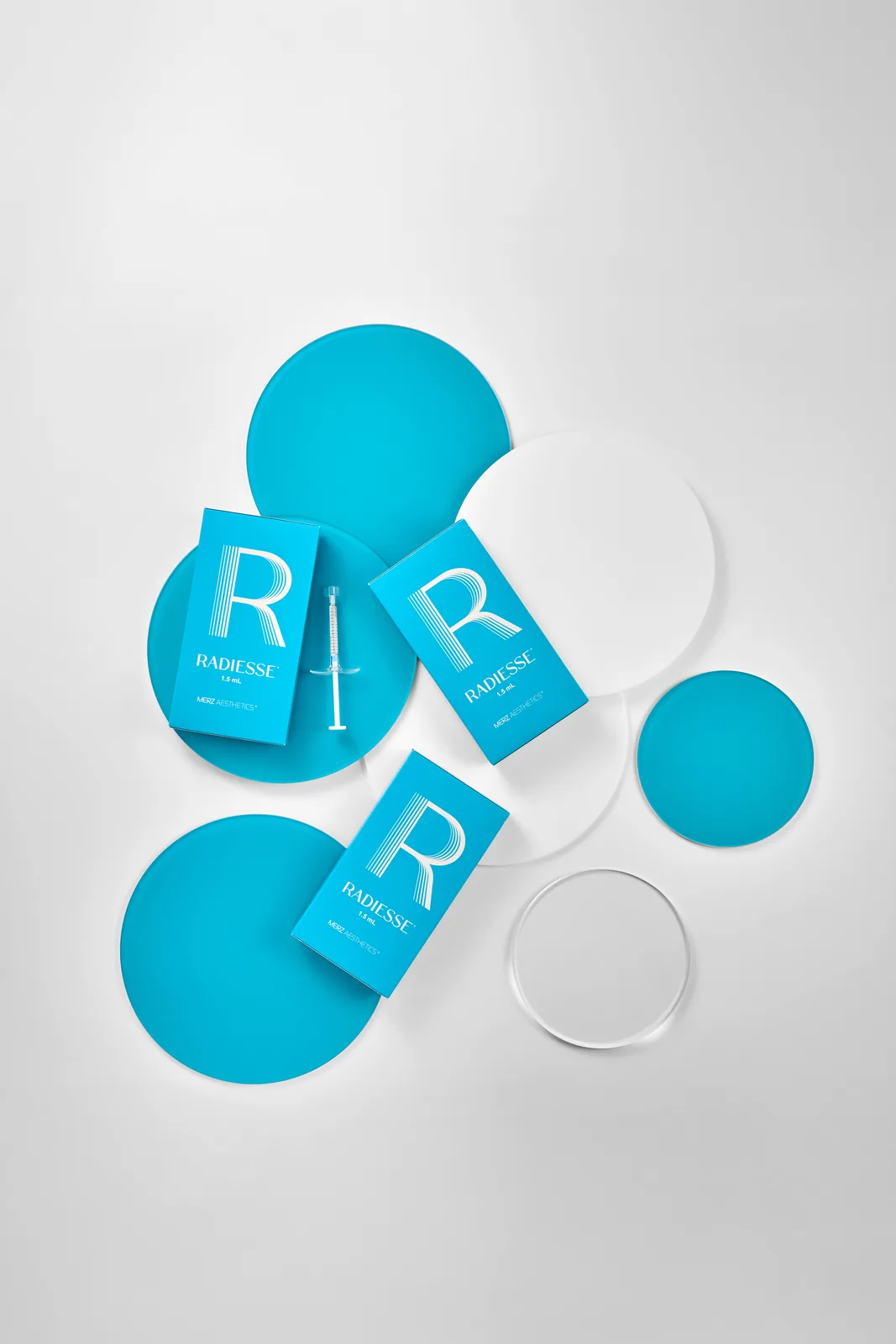
Three Radiesse cartons and a syringe arranged on blue and clear discs, seen from above
The CaHA line as it is stocked, carton and syringe together
Doctor administering an injectable treatment along the jawline at Dear Clinic Cheongdam
A director placing an injectable along a mapped jaw margin
Sculptra box and vial at Dear Clinic
The Heavy Part

Why neither vial can be dissolved back out

Hyaluronidase is an enzyme that breaks down hyaluronic acid. That is the whole of its usefulness. Calcium hydroxylapatite is a mineral and poly-L-lactic acid is a polymer; neither is a substrate for the enzyme, so an injection of it will do nothing to either material. A hyaluronic acid filler placed badly can be taken away in an afternoon. A stimulator placed badly is waited out, massaged, and in some cases treated, but it is not deleted.

That single fact changes how these two vials are planned. Depth is more conservative. Volumes per pass are smaller. Mobile zones and thin-skinned areas are treated with restraint or left alone, because a palpable lump in a moving area is the complaint patients remember longest. Lumps and nodules are the named risk for both materials, along with bruising, swelling and tenderness for several days after a session; a nodule can appear weeks after the injection that caused it, which is why the review appointment exists and why we ask you to keep it even when everything feels fine.

Aftercare is part of the safety margin. Massage instructions for the treated zones are given in writing on the day and they are worth following exactly, because they are the cheapest insurance available against an uneven result. Any new lump, any area that changes colour, any spreading pain gets a call and a same-week appointment. Here our directors inject every vial themselves, and the person who mapped your capture is the person who sets the depth and the dilution.

Neither CaHA nor PLLA is dissolved by hyaluronidase — that option belongs to hyaluronic acid alone
Bruising, swelling and tenderness are common; palpable lumps and late nodules are the risk both materials share
Written massage instructions and a booked review are part of the plan, for both materials
When We Say No

Consultations where we quote neither CaHA nor PLLA

Naming these before you book is cheaper for you than finding them after a vial has been opened.

The capture reads descent where you expected deflation. Nothing in either carton lifts tissue that has physically dropped, so the quote goes to a lifting protocol built against the same photograph.
You need the change to exist before a wedding that is three weeks away. A PLLA course cannot meet that date and we will say so at the consultation; whether a CaHA plan can is a separate judgement, made against the capture and not against the calendar.
The request is for lips or for fine dynamic lines. Both materials are kept away from those areas, and we do not recommend them there at any dilution.
There is an active infection or inflamed acne inside the mapped zone, or you are pregnant or breastfeeding. The appointment is moved to a later date and the reason is written on your chart.
You would rather not accept a material that cannot be dissolved. That is a legitimate position and it points straight at the hyaluronic acid range instead.
Caution

The weeks after a Radiesse or Sculptra appointment

Injection marks, puffiness and bruising are expected in the first days after either material and settle without intervention.
Follow the written massage schedule for the treated zones exactly, for as many days as your chart specifies.
Keep saunas, hot yoga and heavy training out of the diary while the first swelling settles.
Do not book facial massage, energy devices or a peel over a treated plane until your director has reviewed it.
Call the clinic about any firm lump, colour change or spreading pain, whether it appears in the first week or two months later.
Medical Team

Five doctors, one standard

Director-performed treatment is a Dear promise — your procedure is planned and performed by the doctors below.


Dr. Jemin Kim — Medical Director and Founder, Dear Clinic
Dr. Jemin Kim
Yonsei University College of Medicine
Medical Director · Founder
Dr. Sanghyun Lee — Director, Dear Clinic
Dr. Sanghyun Lee
Seoul National University College of Medicine
Director
Board-certified · Family Medicine
Dr. Seonhaeng Lee — Director of Aesthetic Medicine, Dear Clinic
Dr. Seonhaeng Lee
Chosun University College of Medicine · Residency, Samsung Medical Center
Director, Aesthetic Medicine
Dr. Daeun Jung — Director, Dear Clinic
Dr. Daeun Jung
Ajou University College of Medicine
Director
Board-certified · Family Medicine
Dr. Woojae Jung — Director of Aesthetic Medicine, Dear Clinic
Dr. Woojae Jung
Seoul National University — B.S. in Medicine
Director, Aesthetic Medicine
Patient Reviews

What our patients say

Real verified reviews from our Google Business Profile.

4.9★★★★★ 310 Google Reviews
FAQ

CaHA against PLLA, question by question

What is the actual difference between Radiesse and Sculptra?
Radiesse is calcium hydroxylapatite carried in a gel, so it occupies space from the moment it is placed and stimulates collagen afterwards. Sculptra is poly-L-lactic acid with no such carrier: the fluid leaves within days and the particles work quietly from there. One shows a contour change at the appointment and one does not.
Which of the two shows a change first?
Radiesse, and the credit belongs to the carrier gel, not yet to collagen. That early appearance is temporary by design; it recedes as the gel is absorbed and is replaced by whatever the mineral particles have provoked. Sculptra offers nothing to look at early, which is why a PLLA plan is judged at booked reviews.
Do Radiesse and Sculptra cost the same in Seoul?
On this card, yes. Radiesse is ₩1,200,000 per vial and Sculptra is ₩1,000,000 per vial. Because both are billed by the vial, your total is decided by how many vials the mapped area argues for, and that number is agreed with you in writing before anything is opened.
Is either of them a filler?
Neither is a hyaluronic acid filler. Radiesse behaves partly like one on the day because of its gel, which is where the confusion comes from, and Sculptra behaves like one in no respect at all. Both are classed as collagen stimulators, and the practical consequence is that neither can be dissolved once placed.
How many vials will I need?
We do not publish a number, because it depends on how wide the mapped zone is, how much support has gone and how your tissue answers the first vial. The capture gives a starting figure, the review gives the real one. A count quoted before either of those has happened is a sales number.
Can Radiesse or Sculptra be dissolved if I dislike the result?
No. Hyaluronidase breaks down hyaluronic acid and has no effect on a mineral or on a polymer, so neither of these materials can be removed that way. An uneven result is managed over time with massage, review and in some cases treatment. If the possibility of reversal matters to you, the hyaluronic acid range is the right shelf.
What are the risks, and what does a nodule feel like?
Bruising, swelling, injection marks and several days of tenderness are common for both. The risk that defines this category is a firm, palpable lump under the skin, sometimes appearing weeks after the session. It is felt before it is seen, usually in a mobile zone. Report any lump promptly; do not wait for the scheduled review.
Which areas of the face are off the list for both materials?
Lips and fine dynamic lines. The tissue there moves constantly and sits thin over the injection plane, which is exactly the setting in which a stimulator lump is most likely and most visible. Those requests are quoted with a different material or declined, at any dilution.
Can I have both, and in what order?
Sometimes, across different zones and separated in time. What we do not do is stack two stimulators in the same plane on the same day, because it removes any way of telling which material produced which outcome and doubles the lump risk in one place. The order is written by your director after the capture.
Does either one lift a jawline that has dropped?
No. Both materials work on support and skin quality inside a plane; neither repositions tissue that has descended. A dropped jawline is read as a lifting problem and quoted against the lifting menu. Where the capture finds deflation above a sagging line, a stimulator may sit alongside that plan without replacing it.
Can a first vial go in on the day I consult?
Often, once the capture has been read and the plan approved. A Sculptra vial needs reconstitution and standing time, so that appointment is longer than a Radiesse one; a pre-filled CaHA syringe can be prepared quickly. Both are booked as treatment slots of their own, and the clinic opens 365 days a year.
Do visitors from abroad pay the same vial rate?
Yes, ₩1,200,000 and ₩1,000,000 per vial respectively, with no surcharge for non-residents. One practical caution for a short trip: a PLLA course expects you back for review, so if you are in Seoul for a week, say so at the consultation and let it weigh on which material is recommended.
Consultation

Ask which material your capture argues for

Describe what has changed in your face and send your dates. A written answer comes back in English as soon as possible.

Scientific Evidence

Published work behind the calcium hydroxylapatite and poly-L-lactic acid rows

Six papers, split between the two materials compared above. Two concern calcium hydroxylapatite: a consensus document on injecting the material at reduced concentrations for tightening, and a long-term safety and efficacy report in the nasolabial indication. Four concern poly-L-lactic acid, including volumetric correction work, a histology study of the biostimulatory response and a direct comparison with the poly-d,l form.

They are listed with DOIs so the primary sources can be read in full. None of them prices a treatment, chooses between the two materials for you, or predicts what your own tissue will do.

  1. Goldie K et al. Global Consensus Guidelines for the Injection of Diluted and Hyperdiluted Calcium Hydroxylapatite for Skin Tightening. Dermatologic Surgery. 2018. doi:10.1097/dss.0000000000001685
  2. Bass L et al. Calcium Hydroxylapatite (Radiesse) for Treatment of Nasolabial Folds: Long-Term Safety and Efficacy Results. Aesthetic Surgery Journal. 2010. doi:10.1177/1090820x10366549
  3. Vleggaar D. Facial Volumetric Correction with Injectable Poly‐l‐Lactic Acid. Dermatologic Surgery. 2005. doi:10.2310/6350.2005.31236
  4. Fitzgerald R et al. Facial volume restoration of the aging face with poly-l-lactic acid. Dermatologic Therapy. 2011. doi:10.1111/j.1529-8019.2010.01375.x
  5. Arruda S et al. A Clinical Histology Study Evaluating the Biostimulatory Activity Longevity of Injectable Poly-L-Lactic Acid for Facial Rejuvenation. Journal of Drugs in Dermatology. 2024. doi:10.36849/jdd.8057
  6. Lin J et al. Early‐stage volume effect difference between injectable poly‐l‐lactic acid and injectable poly‐d,l‐lactic acid. Journal of Cosmetic Dermatology. 2022. doi:10.1111/jocd.15595

References are provided for information — outcomes vary by individual and are assessed at your diagnosis.

Book WhatsApp Call